The short answer
The eyes and the flat face lead Boston Terrier health. The large, prominent eyes are prone to corneal ulcers, cherry eye, cataracts, and glaucoma, so protect and monitor them, eye issues can worsen fast. The flat face brings milder-than-Frenchie breathing issues and heat sensitivity (a real Ottawa summer concern). Also plan for patellar luxation and congenital deafness in some dogs (more common with a lot of white). Bostons are long-lived, 11 to 15 years. Routine Ottawa care runs $700 to $1,300 a year plus HST. Watch the eyes closely, manage summer heat, keep the dog lean, and insure early for the eye and surgical wildcards. Make all health decisions with your vet.
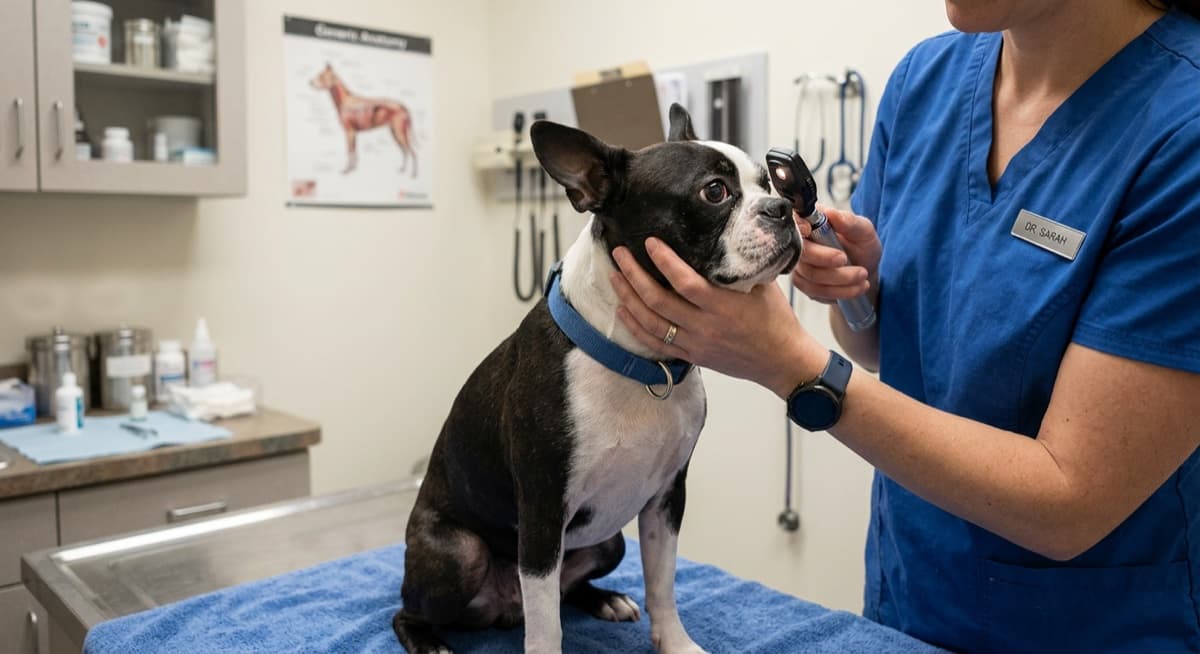
Boston Terriers are generally hardy, long-lived little dogs, one of the healthier flat-faced breeds, but the same big eyes and flat face that make them so appealing are where most of the breed’s health concerns lie. This is a planning list, so an Ottawa owner knows what to watch for and where the budget goes, and every point should be discussed with your own veterinarian.
Eye and heat emergencies
A sudden painful, red, cloudy, or squinting eye (a possible corneal ulcer or glaucoma) needs same-day vet care, eye problems deteriorate fast in this breed. And in summer, signs of overheating (frantic panting, distress, collapse) in this flat-faced breed are a heat emergency, cool the dog and get to a vet immediately. Ottawa has 24-hour care, including the Alta Vista Animal Hospital. Save the number now.
The eyes: protect and monitor
The Boston’s large, prominent eyes are the breed’s most vulnerable feature. Because they protrude with little bony protection, they are exposed to injury and drying, so the breed is prone to corneal ulcers and scratches (which worsen fast and are painful), cherry eye, cataracts, glaucoma, and dry eye. Watch for redness, squinting, cloudiness, discharge, excessive tearing, or pawing, and get any eye problem checked promptly.
Protect the eyes from injury during play and in brush, keep the eye area clean, and build an annual vet eye check into the routine. The eyes are the single most important health area to monitor in a Boston, and prompt attention to any change prevents small problems (a scratch) from becoming serious ones (a deep ulcer). Any sudden eye change warrants same-day care.
The flat face, knees, deafness, and skin
Breathing and heat. As a brachycephalic breed (usually milder than a Frenchie), Bostons snore and can have some airway restriction, and they overheat more easily, a real Ottawa summer concern. Keep the dog lean, use a harness not a collar, exercise in the cool of the day in summer, and have a vet assess any significant breathing struggle.
Knees. Patellar luxation (slipping kneecaps) occurs; keep the dog lean, avoid high jumps, and have your vet grade the knees if you see skipping on a back leg.
Deafness. Congenital deafness occurs, more often in mostly-white dogs. A deaf Boston lives a full life with hand-signal training and a safe (leashed) environment.
Skin and allergies. Bostons are prone to allergies and skin issues; work with your vet on any chronic itch or irritation. For routine-care savings, see our Ottawa low-cost vet guide.
Meet a healthy Boston in Ottawa
Rescue Boston Terriers come with a vet workup and honest health notes, so you know what you are adopting. Browse available Bostons and Boston mixes from Ottawa and NCR rescues.
See Available Boston Terriers →Frequently Asked Questions
What health problems are Boston Terriers prone to?
As a small, flat-faced (brachycephalic) breed with large, prominent eyes, the Boston’s most characteristic issues involve the eyes and the face. The prominent, exposed eyes are prone to corneal ulcers and scratches, cherry eye, cataracts, glaucoma, and dry eye. The flat face brings some degree of brachycephalic airway issues (usually milder than a French Bulldog, but present) and heat sensitivity. Beyond that, Bostons are prone to patellar luxation (slipping kneecaps), congenital deafness in some dogs (more common in those with a lot of white), allergies and skin problems, and, related to the screw tail, occasional spinal (hemivertebrae) issues. Some also have heart murmurs. Most are manageable, and the highest-value things an Ottawa owner can do are protect and monitor the eyes, manage heat carefully, keep the dog lean, and stay on top of the knees and skin. Always make health decisions for your individual dog with your veterinarian.
Why are Boston Terrier eyes such a concern?
The Boston’s large, round, prominent eyes are one of its most endearing features and also its most vulnerable area, much like the Shih Tzu and other flat-faced breeds. Because the eyes protrude and the flat face offers little bony protection, they are exposed to injury, irritation, and drying, so the breed is prone to corneal ulcers and scratches (which can worsen quickly and are painful), cherry eye (a prolapsed third-eyelid gland, usually corrected surgically), cataracts (including juvenile cataracts in some lines), glaucoma, and dry eye. Day to day, watch for redness, squinting, cloudiness, discharge, excessive tearing, or pawing at the eyes, and get any eye problem checked promptly, because eye issues can deteriorate fast, especially corneal ulcers. Keep the area around the eyes clean, protect the eyes from injury (Bostons can scratch them on bushes or in play), and build an annual vet eye check into the routine. The eyes are the single most important health area to monitor in the breed.
Do Boston Terriers have breathing problems like French Bulldogs?
To a lesser but real degree. The Boston Terrier is brachycephalic (flat-faced), so it shares the same category of issue as the French Bulldog, narrowed airways from the shortened skull, but Bostons are generally less severely affected than the more extreme flat-faced breeds, as many have a slightly less extreme muzzle. Many Bostons snore, snort, and breathe somewhat noisily, and some, especially those bred with very flat faces, have more significant brachycephalic airway problems that can benefit from veterinary assessment or surgery. The practical implications are the same as for any flat-faced dog, just usually milder: reduced heat tolerance (they overheat more easily, a real concern in Ottawa summers), some exercise intolerance, and the value of keeping the dog lean and using a harness rather than a neck collar. If your Boston breathes very noisily, struggles with exertion, or tires quickly, have a vet assess the airway. Choosing a dog (or breeder) with a slightly less extreme face means fewer breathing problems.
Are Boston Terriers prone to deafness?
Some are, and it is worth knowing. Congenital deafness occurs in Boston Terriers, and it is more common in dogs with a lot of white on the head or a predominantly white coat, because the same genetics that produce white markings can affect the inner ear. Deafness can be in one ear (unilateral, often unnoticed) or both (bilateral), and it is present from birth. A simple BAER hearing test can confirm a dog’s hearing status, and responsible breeders may test litters. A deaf or partially-deaf Boston can still live a happy, full life with appropriate accommodations, hand-signal training instead of voice cues, a safe environment (never off-leash near roads, since the dog cannot hear traffic or recall), and extra care not to startle the dog. If you adopt a Boston, especially a mostly-white one, and notice it does not respond to sounds, mention it to your vet, and know that deafness is a manageable difference, not a barrier to a wonderful pet, plenty of deaf Bostons thrive with understanding owners.
How much does Boston Terrier health care cost in Ottawa?
Relatively affordable for routine care given the small size, but with some breed-specific extras. A wellness exam, vaccines, parasite prevention, and dental attention run roughly $700 to $1,300 a year in Ottawa plus Ontario’s 13 per cent HST. The budget wildcards are the eyes (a corneal ulcer, cherry-eye or cataract surgery, or ongoing dry-eye management can be costly), any significant brachycephalic airway surgery, knee surgery for a bad patella, and allergy management. Overall the breed is more affordable than a giant or highly health-prone breed, and many Bostons are relatively healthy, but the eye issues in particular are an unpredictable cost, so pet insurance taken out while the dog is young helps. See our Ottawa low-cost vet guide for routine-care savings, and price insurance before any condition becomes a pre-existing exclusion. Budgeting a buffer for potential eye care is wise for the breed.
Is pet insurance worth it for a Boston Terrier?
It can be, mainly to cover the unpredictable eye, breathing, and knee costs the breed is prone to. Routine Boston care is affordable, so the case is less overwhelming than for a giant or high-risk breed, but the eyes are a genuine wildcard, a corneal ulcer, cherry-eye or cataract surgery, or glaucoma can each be expensive, and brachycephalic airway or patella surgery adds up. Insurance taken out while your Boston is young and healthy locks in coverage before any condition becomes a pre-existing exclusion, which matters for the eye and breathing issues that can appear over time. Premiums for a young Boston commonly run $40 to $70 a month in Ottawa. Weigh it against your savings buffer, and if you insure, do it early and confirm the eye and airway conditions are covered. For many owners, a combination of a modest savings buffer plus insurance for the bigger surgical risks is a sensible approach for the breed.
How long do Boston Terriers live?
Boston Terriers are a fairly long-lived breed, typically 11 to 15 years, and a well-cared-for Boston, kept lean with attentive eye care and heat management, has the best chance of reaching the upper end. Longevity depends on the usual levers: protecting and monitoring the eyes, managing heat given the flat face, keeping the dog lean to reduce joint and breathing strain, staying on top of the knees, skin, and any allergies, and annual vet checks that catch conditions early. For Ottawa owners, that lifespan means a decade or more of a friendly, adaptable companion, and budgeting for the ongoing eye vigilance and possible senior care. A Boston adopted as an adult still has many good years ahead, and the breed’s general hardiness (aside from the eye and flat-face considerations) makes those years relatively low-drama medically for many dogs. A Boston is, on balance, one of the healthier and longer-lived of the flat-faced breeds.
Related Guides
New dog? Start with these care guides
Everything a new adopter needs to set up a safe, happy home.