The short answer
The Boston is a friendly, adaptable “American Gentleman.” Affectionate, lively, sociable, and generally great with kids and other pets, with just a mild terrier streak of stubbornness or excitability. The small size and moderate exercise needs make Bostons one of the best breeds for apartments and first-time owners. They are intelligent and trainable with positive, reward-based methods, keep sessions short and fun. House-training takes some patience (small bladders, cold Ottawa winters), but consistency works. Give a couple of daily walks plus play and mental work, mind summer heat (flat face) and provide a winter sweater. A well-exercised Boston is a quiet, easy, delightful companion.
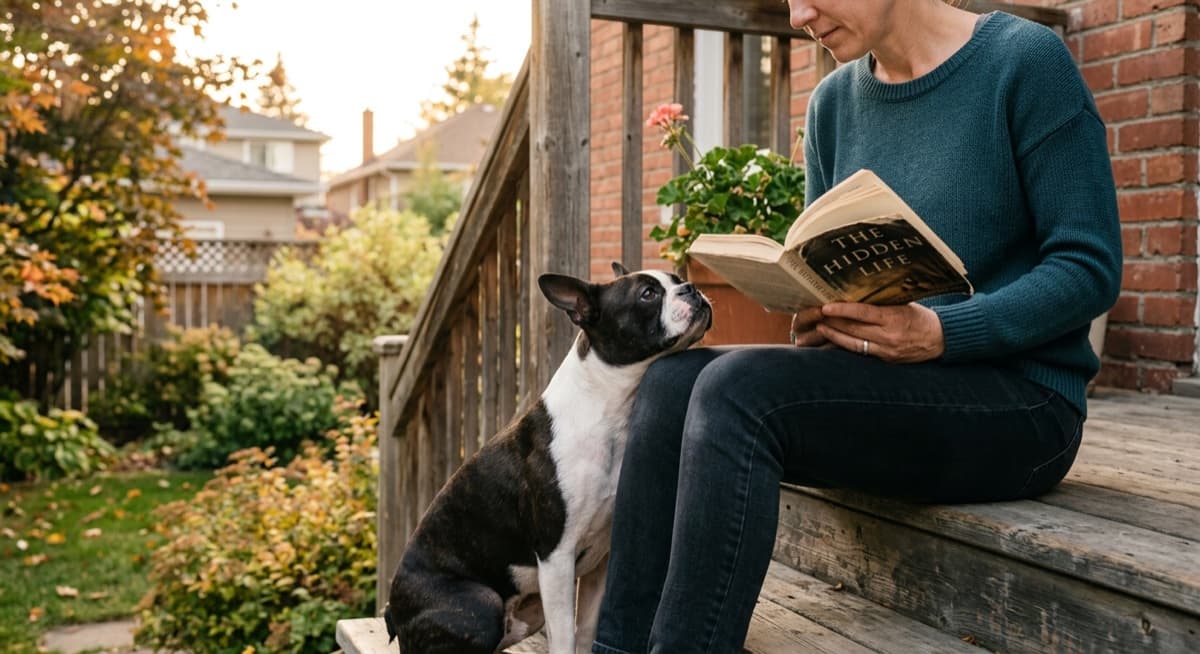
The American Gentleman temperament
The Boston Terrier earned its “American Gentleman” nickname for its tidy tuxedo markings and its famously friendly, well-mannered nature, and the Canadian Kennel Club describes the breed as a friendly, lively companion. Bostons are typically affectionate, sociable, playful, and eager to please, good with children, welcoming to strangers and other dogs, and comical in a way families adore.
There is a mild terrier streak, the occasional stubborn or excitable moment, a spark of independence, some vocalness, but overall the breed is one of the most easygoing and adaptable companion dogs, without the intense drive of working breeds or the extreme guarding of others. That balanced, people-oriented temperament, plus a manageable size and moderate energy, is exactly why Bostons make such good family dogs, first dogs, and apartment companions. The broader picture of the breed is in our Boston Terrier adoption guide.
Apartment life, house-training, and positive training
Apartments. The Boston’s small size, moderate exercise needs, and adaptable temperament make it one of the better breeds for Ottawa apartment and condo living, content with a couple of walks and play rather than a yard. Manage any excitable barking with training, meet the exercise and companionship needs, and confirm your building allows the breed.
House-training. Takes some patience (small bladders, and a reluctance to go out in Ottawa cold), but consistency wins: frequent scheduled trips, immediate reward for going in the right spot, supervision or confinement to prevent unseen accidents, and enzymatic cleanup. An indoor potty option helps for the coldest stretches.
Training. Bostons are intelligent and eager to please, so positive, reward-based, short and fun sessions bring out the breed’s cleverness. Start early with socialisation and basics, keep it kind and consistent, and a Boston becomes a well-mannered, responsive companion. Settling a newly adopted Boston is covered in our first-week rescue dog guide.
Find your Boston Terrier in Ottawa
Adult rescue Bostons come with foster notes on temperament and how they do with kids and pets, so you can match the individual to your home. Browse live NCR inventory.
See Available Boston Terriers →Exercise, seasons, and family fit
A Boston needs a moderate amount of exercise, a couple of daily walks plus play and mental stimulation, less than a working breed but real, and this manageable need is part of the breed’s family and apartment appeal. Engage the mind with training games and toys to prevent boredom. Two Ottawa caveats: do not over-exercise a flat-faced Boston in summer heat (stick to cool morning and evening activity), and in winter provide a sweater and shorter cold-day outings with indoor play to make up the difference, both tie into the health considerations in our Boston health guide.
With family, Bostons are typically gentle, playful, and sociable, good with children (supervised, and mindful of the prominent eyes) and usually friendly with other dogs and cats, especially when socialised early. The breed’s companionable, non-aggressive nature makes multi-pet and family households generally straightforward, and a well-socialised Boston is a sociable, easygoing addition to almost any home.
Frequently Asked Questions
What is a Boston Terrier’s temperament really like?
The Boston Terrier is famous for a friendly, gentle, well-mannered temperament, hence the nickname "American Gentleman." Bostons are typically affectionate, lively, sociable, and eager to please, they tend to be good with children, welcoming to strangers and other dogs, and playful and comical in a way that endears them to families. They bond closely with their people and thrive on companionship and inclusion in family life. There is a mild terrier streak, some Bostons have a stubborn or excitable moment, a spark of independence, or a tendency to be a little vocal, but overall the breed is one of the most easygoing and adaptable companion dogs, without the intense drive of working breeds or the extreme guarding of others. This balanced, people-oriented temperament, combined with a manageable small size and moderate energy, is exactly why Bostons make such good family dogs, first dogs, and apartment companions.
Are Boston Terriers good apartment dogs?
Yes, Bostons are among the better breeds for apartment and condo living, which matters in a city like Ottawa with lots of apartment and townhouse living. Their small size, moderate exercise needs, and adaptable, people-focused temperament suit smaller spaces well, and they are content with a couple of walks and some play rather than needing a big yard or hours of running. They are also generally friendly with neighbours and other dogs, easing shared-building life. A few apartment considerations: Bostons can be a little vocal (manageable with training), they need their exercise and companionship met to prevent boredom, and, as a flat-faced breed, they should not be over-exercised in summer heat. But overall, a well-exercised, well-trained Boston is a quiet, adaptable, easy apartment companion, and the breed’s suitability for smaller urban homes is one of its real strengths. Confirm your building and lease allow the breed, then a Boston fits apartment life beautifully.
Are Boston Terriers easy to train?
Generally yes, Bostons are intelligent and eager to please, which makes them quite trainable, though the mild terrier streak means they can have a stubborn or distracted moment. They respond very well to positive, reward-based training, short, upbeat, food-motivated sessions bring out the breed’s cleverness and willingness, while harsh methods are unnecessary and counterproductive for a sensitive companion dog. Start early with socialisation and the basics, and Bostons pick up obedience, tricks, and manners readily; many enjoy learning and do well in fun activities and light dog sports. Consistency matters, especially for house-training (see below) and managing any excitable barking. Overall, the Boston’s trainability is another reason it suits first-time owners and families: it is willing, capable, and motivated, and with kind, consistent training it becomes a well-mannered companion. Keep training positive and fun, and a Boston is a rewarding, responsive student.
Are Boston Terriers hard to house-train?
They can take some patience, like many small breeds, but they are not especially difficult, and consistency is the key. Small dogs have small bladders and need frequent potty opportunities, and in an Ottawa winter a small, thin-coated Boston may resist going out into the cold, which can slow training. Success comes from the standard fundamentals applied consistently: frequent, scheduled potty trips (especially after eating, waking, and play), generous reward the instant the dog goes in the right place, close supervision or confinement to prevent unwitnessed accidents, and thorough enzymatic cleanup of any mistakes. A crate or a defined space, introduced positively, helps many Bostons learn. For the coldest winter stretches, some owners set up an indoor potty option so the dog is not fighting both house-training and dangerous cold. Bostons are willing and trainable, so with a consistent routine most house-train reliably, just allow patience through the small-breed and winter challenges.
How much exercise does a Boston Terrier need?
A moderate amount, less than a working or sporting breed but real. A couple of daily walks plus some play and mental stimulation keeps most Bostons happy and healthy, they are lively and playful but not tireless, and they are content with a moderate routine rather than needing hours of hard exercise. This moderate need is part of what makes the breed so apartment- and family-friendly. Mental engagement matters too: Bostons enjoy training games, toys, and interactive play, which tire the mind and prevent boredom. Two important caveats for Ottawa: as a flat-faced breed, do not over-exercise a Boston in summer heat (stick to cool morning and evening activity), and in winter the thin coat means a sweater and shorter cold-day outings, with indoor play to make up the difference. Overall, a Boston’s manageable exercise needs are a genuine plus, easy to meet for most households, while still giving the dog the activity and enrichment it needs to be well-behaved and content.
Are Boston Terriers good with children and other pets?
Generally very good, which is a big part of the breed’s family appeal. Bostons are typically gentle, patient, playful, and sociable, and they tend to do well with children, enjoying being part of family life, though as with any dog, interactions with young children should be supervised and kids taught to handle the dog gently (and mindful of the Boston’s prominent, vulnerable eyes). With other dogs and pets, Bostons are usually friendly and adaptable, often getting along well with other dogs and cats, especially when socialised early, and their non-aggressive, companionable nature makes multi-pet households generally straightforward. As always, individual temperament varies, and a rescue’s foster notes will tell you how a particular Boston does with kids, dogs, and cats. But the breed’s reputation as a friendly, easygoing family companion is well-earned, and a well-socialised Boston is typically a sociable, gentle addition to a household with children or other pets.
Do Boston Terriers do okay when left alone?
Reasonably, better than some intensely bonded breeds, but they are companion dogs that thrive on human company and do best when not left alone for very long every day. A Boston that gets adequate exercise, mental stimulation, and a gradual introduction to alone time generally copes with a normal working day, especially with a midday break or enrichment, but a Boston left alone for long stretches every day with nothing to do can become bored, and some may develop mild separation-related behaviours like barking or chewing. Set the dog up to succeed: a good walk and play before you leave, safe chews or puzzle toys while you are out, gradual build-up of alone time rather than all at once, and, for long days, a dog walker or a break. Bostons are adaptable and not as prone to severe separation anxiety as some breeds, but they are people-focused companions, so plan for reasonable companionship, and a Boston will settle happily into a household’s routine.
Related Guides
New dog? Start with these care guides
Everything a new adopter needs to set up a safe, happy home.