The short answer
A cavapoo can inherit conditions from both parents, so “hybrid vigour” is only partly true, and the Cavalier side brings the biggest concern: mitral valve disease (MVD), a common heart condition, so heart monitoring is essential. Also know syringomyelia (a Cavalier-associated neurological condition, watch for “air scratching”), luxating patella, eye conditions (PRA), and ear infections (floppy ears). The Poodle cross may reduce but does not eliminate the Cavalier-side risks. The biggest protective factor is breeding quality (heart-tested parents). Cavapoos live 12 to 15 years. Have the heart checked at every vet visit, keep the dog lean, and insure early (before any murmur is recorded). Make all health decisions with your vet.
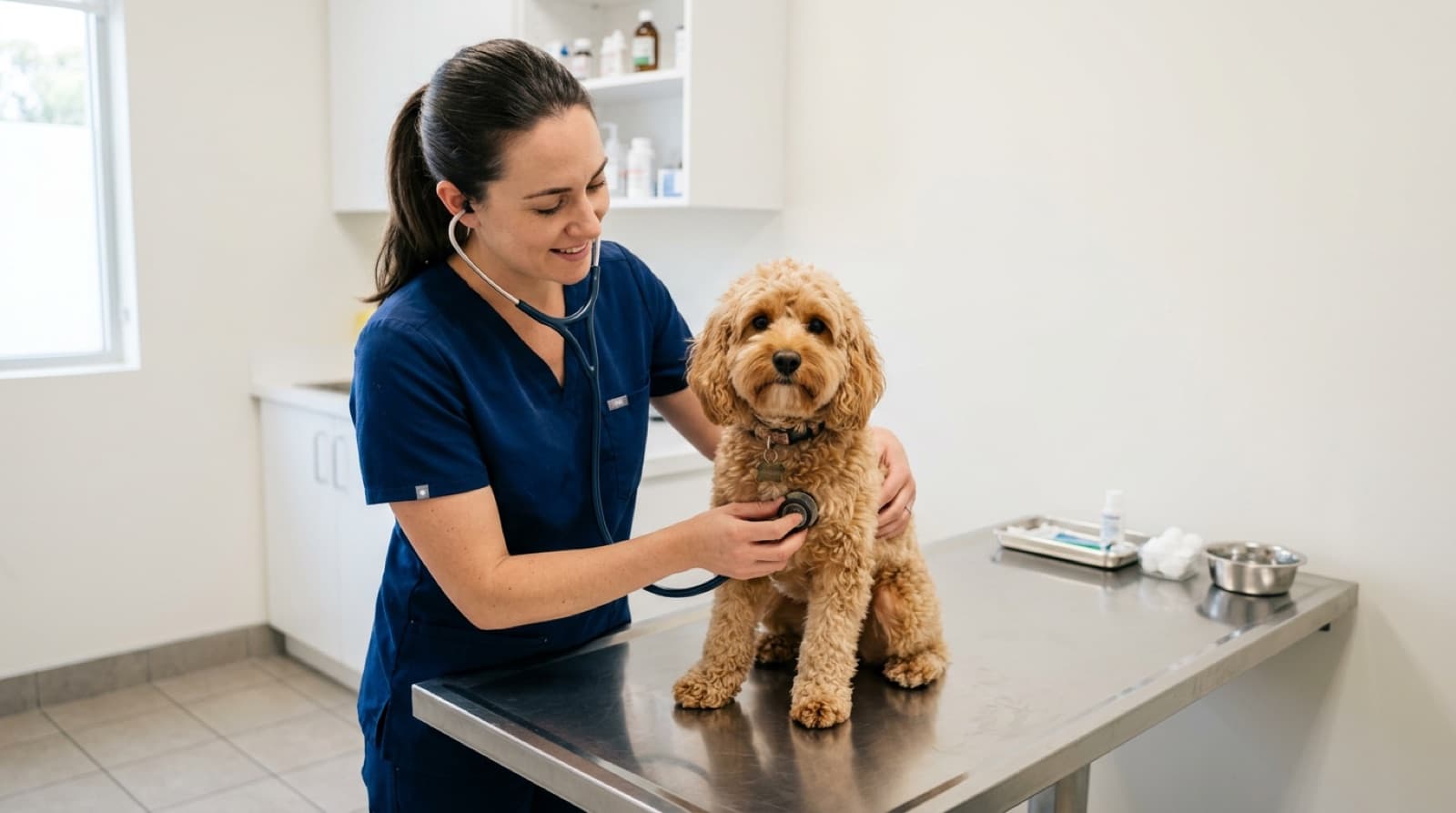
The most important thing to understand about cavapoo health is that a cavapoo is not a magically healthy dog, and its Cavalier heritage brings genuinely serious concerns, especially heart disease. Crossing with the Poodle may soften some of the Cavalier’s risks, but it does not erase them. Heart health, in particular, deserves real attention. This is a planning list; every point should be discussed with your own veterinarian.
Have the heart checked, and know the “air scratch”
Given the Cavalier heritage, ask your vet to listen to the heart at every visit, mitral valve disease often shows first as a murmur before any symptoms, and early detection matters. Also learn the sign of syringomyelia: “air scratching” toward the neck or shoulder without making contact, often with signs of neck or head pain. Report coughing, exercise intolerance, or air-scratching to your vet promptly.
The combined risk list
Heart (MVD). The defining cavapoo concern from the Cavalier side, common, often age-related, frequently manageable with medication if caught early. Regular heart checks are the key.
Syringomyelia. A Cavalier-associated neurological condition; severity varies widely, and awareness (knowing the air-scratch sign) matters more than worry. Knees. Luxating patella is common in small dogs; keeping the dog lean helps.
Eyes and ears. PRA and other eye conditions occur (from both sides); floppy ears trap moisture, so routine ear care prevents infections (see our grooming guide). Source from heart-tested lines where you can. For routine-care savings, see our Ottawa low-cost vet guide, and the Canadian Kennel Club for parent-breed background.
Meet a healthy cavapoo in Ottawa
Rescue cavapoos come with a vet workup and honest health notes, including any heart findings. Browse available Cavapoos and cavapoo mixes from Ottawa and Ontario rescues.
See Available Cavapoos →Frequently Asked Questions
What health problems are Cavapoos prone to?
Because a cavapoo is a Cavalier King Charles Spaniel crossed with a Poodle, it can inherit health conditions common to either parent breed, so the honest health picture is the combined risk list of both, not the “healthier hybrid” the marketing suggests, and the Cavalier side in particular brings some serious concerns worth understanding. From the Cavalier side, the most important is mitral valve disease (MVD), a heart condition that is very common in Cavaliers and often develops with age, and syringomyelia (a serious neurological condition related to skull/spinal-cord conformation), along with eye conditions and luxating patella. From the Poodle side come possibilities like progressive retinal atrophy and other eye conditions, luxating patella, and, in some lines, other issues. Both parent breeds can have ear problems (the floppy ears trap moisture) and allergies. The degree to which crossing with the Poodle reduces the Cavalier-side risks (especially MVD and syringomyelia) is debated and not guaranteed, a cavapoo can still inherit them. The key myth to dispel is “hybrid vigour”, crossing does not guarantee a healthier dog, and the Cavalier heritage means heart health in particular deserves attention. The single most protective factor is breeding quality (health-tested parents, especially heart-tested on the Cavalier side). Always discuss your dog’s health with your veterinarian.
Do Cavapoos get heart disease like Cavaliers?
This is the most important cavapoo health question, and the honest answer is that cavapoos can inherit the Cavalier King Charles Spaniel’s predisposition to mitral valve disease (MVD), a heart condition, so heart health deserves real attention in the breed. MVD is a degenerative disease of one of the heart’s valves that is extremely common in Cavaliers, often developing in middle age or later, and while crossing with the Poodle may reduce the risk somewhat compared to a purebred Cavalier, it does not eliminate it, and a cavapoo can still develop MVD. The condition often starts silently (detected as a heart murmur on a vet exam before any symptoms), and can progress to signs like coughing, reduced exercise tolerance, and, in advanced cases, congestive heart failure, but it can often be managed with medication for a good quality of life, especially when caught early. For an owner, the practical implications are: source from health-conscious breeding where the Cavalier-side parent was heart-tested if possible; have your cavapoo’s heart checked at every vet visit (a simple stethoscope listen catches murmurs early); watch for coughing or exercise intolerance as the dog ages and report them promptly; and consider pet insurance, since cardiac care can be ongoing and costly. For a rescue cavapoo, you cannot know the breeding, so regular heart monitoring is the key. Heart health is the defining cavapoo health consideration.
What is syringomyelia, and should Cavapoo owners worry?
Syringomyelia (SM) is a serious neurological condition associated with the Cavalier King Charles Spaniel, in which a mismatch between skull size and brain size disrupts the flow of cerebrospinal fluid, leading to fluid-filled cavities in the spinal cord that can cause pain and neurological signs, and because cavapoos have Cavalier heritage, it is worth being aware of, though not a reason for constant alarm. In affected dogs, signs can include sensitivity or pain around the head, neck, and shoulders, “air scratching” (scratching toward the neck/shoulder without making contact, often on one side), yelping or discomfort when touched or when moving the neck, and, in more severe cases, neurological deficits. The condition varies enormously in severity, many mildly affected dogs live comfortable lives, while severely affected ones need pain management or, rarely, surgery. Crossing with the Poodle may reduce the risk compared to a purebred Cavalier, but it is not eliminated. For an owner, the practical approach is awareness rather than worry: know the signs (especially the characteristic air-scratching), and if you see them, have your vet assess the dog, as diagnosis may involve referral and imaging, and management (usually medication) can help. For a rescue cavapoo, watch for the signs and mention the Cavalier heritage to your vet. Most cavapoos never develop significant SM, but knowing about it means you can act if needed.
How much does Cavapoo health care cost in Ottawa?
Routine annual care for a small dog, a wellness exam, vaccines, parasite prevention, and dental attention, runs roughly $800 to $1,400 a year for a cavapoo in Ottawa, plus Ontario’s 13 per cent HST, and on top of that comes the ongoing grooming cost (professional grooming every 6 to 8 weeks). The budget wildcards are the inherited conditions, and the Cavalier-side ones can be significant: mitral valve disease often means lifelong cardiac medication and monitoring once it develops (ongoing cost); syringomyelia, if significant, can require pain management, referral, imaging, and rarely surgery (potentially expensive); plus luxating-patella surgery if severe, eye conditions, and ear-infection and allergy management. Because cavapoos vary by breeding quality, a well-bred one from health-tested parents may cost little beyond routine care and grooming, while one that inherits Cavalier-side heart or neurological issues can face bigger bills. This mix, guaranteed grooming plus the real potential for cardiac or neurological costs, is exactly why many owners find pet insurance particularly worthwhile for this breed, ideally taken out while the dog is young and healthy, before any heart murmur or condition is documented. See our Ottawa low-cost vet guide for routine-care savings, and remember grooming is a separate, ongoing cost insurance does not cover.
Is pet insurance worth it for a Cavapoo, and how long do they live?
Cavapoos typically live around 12 to 15 years, a good lifespan for a small dog, and a well-cared-for cavapoo, kept lean with attentive heart, dental, and ear care, has a good chance of reaching the upper end, though the Cavalier-side heart risk can affect longevity in some dogs. On insurance: it is often particularly worthwhile for this breed, precisely because of the Cavalier-inherited risks, mitral valve disease and syringomyelia can each become ongoing and expensive, and insurance taken out while the dog is young and healthy locks in coverage before anything becomes a pre-existing exclusion. This matters enormously for the heart: MVD often shows up first as a murmur on a routine exam, and once a murmur or heart condition is on the record, no insurer will cover the eventual cardiac care, so enrolling before that happens is the whole game. Premiums for a young cavapoo commonly run $40 to $75 a month in Ottawa. Note that insurance covers illness and injury, not the routine grooming this breed requires. Weigh it against your savings buffer, but given the breed’s specific, potentially costly inherited risks, early coverage is more compelling for a cavapoo than for many breeds. For an adopted adult cavapoo, ask the rescue whether a heart murmur or other condition has been noted, since that may already be excluded. Either way, regular heart monitoring and keeping the dog lean are the biggest health levers.
Related Guides
New dog? Start with these care guides
Everything a new adopter needs to set up a safe, happy home.