The short answer
Entropion (eyelids rolling inward) is the Chow’s signature health issue, common because of the heavy facial wrinkling, painful, and usually needing surgery, so watch the eyes closely. Also plan for hip and elbow dysplasia, patellar luxation, hypothyroidism, and skin conditions. Critically, the thick coat plus a shortish muzzle make the breed seriously heat-sensitive, heatstroke is a real Ottawa summer risk, so manage heat carefully. Chows live 9 to 12 years. Routine Ottawa care runs $1,000 to $1,700 a year plus HST, before grooming, and entropion or joint surgery can add real cost. Watch the eyes, keep the dog lean, manage summer heat, and insure early. Make all health decisions with your vet.
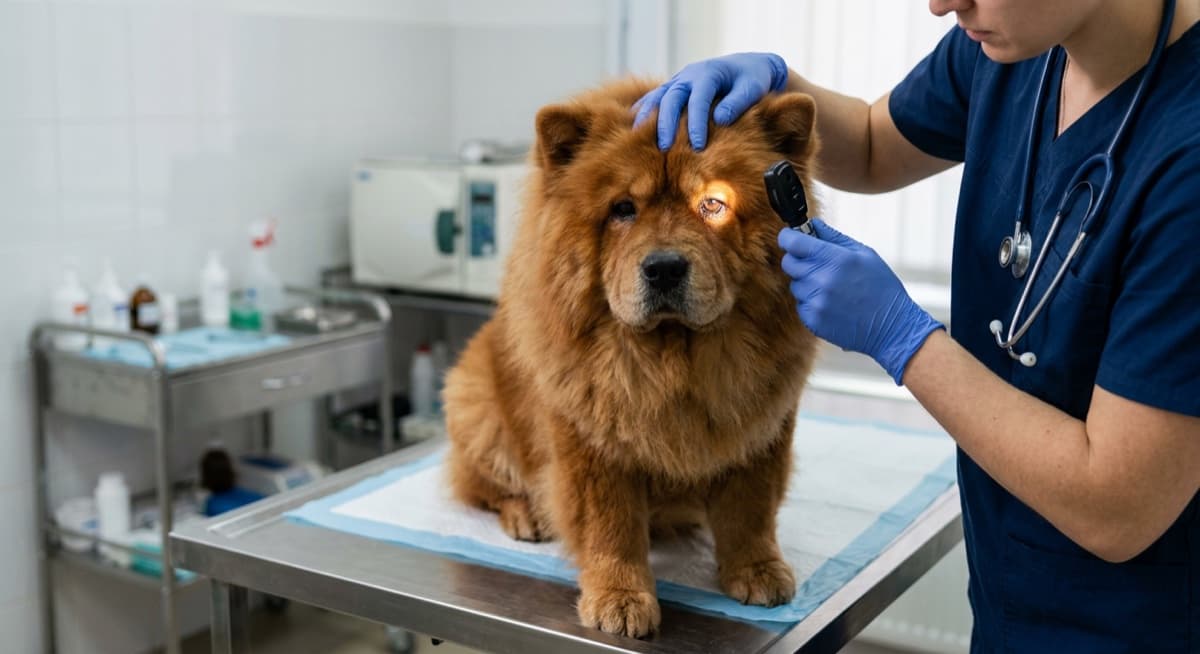
Chow Chows are sturdy, dignified dogs, but the same heavy, wrinkled features and profuse coat that define the breed are where most of its health concerns lie, and heat sensitivity is a genuine Ottawa summer issue. This is a planning list, so an Ottawa owner knows what to watch for and where the budget goes, and every point should be discussed with your own veterinarian.
Heat and eye emergencies
In summer, signs of overheating (heavy frantic panting, drooling, weakness, bright red gums, collapse) in this thick-coated, short-muzzled breed are a heatstroke emergency, cool the dog and get to a vet immediately. And a sudden painful, red, squinting, or tearing eye (possible entropion or a corneal ulcer) needs prompt care. Ottawa has 24-hour care, including the Alta Vista Animal Hospital. Save the number now.
Entropion: the signature eye issue
Entropion, the eyelid rolling inward so lashes and hair rub the eye, is one of the most characteristic and common Chow health issues, driven by the breed’s heavy, folded facial skin and deep-set eyes. It is painful and, untreated, can cause corneal ulcers, scarring, and vision damage. Signs include squinting, excessive tearing, redness, and pawing at the eyes.
The good news is that entropion is correctable with a relatively routine surgery that returns the eyelid to its normal position, after which the dog is comfortable, but it is a real cost to budget for, and some Chows need it. Watch closely for the signs, and have any suspected entropion assessed promptly, because leaving it untreated damages the eye. The deep-set eyes also mean somewhat limited peripheral vision, worth remembering when handling or approaching a Chow.
Heat, hips, thyroid, and skin
Heat. The thick coat plus a shortish muzzle make the Chow seriously prone to overheating, heatstroke is a real Ottawa summer risk. Keep the dog cool with AC, shade, and water, exercise in the cool of the day, never leave the dog in a hot car or space, and never shave the coat to cool it (that backfires). Manage the environment instead.
Hips and joints. Hip and elbow dysplasia and patellar luxation occur; keep the dog lean, avoid overexercising a growing puppy, and screen through breeders who test. Distinguish the breed’s naturally stilted gait from genuine lameness.
Thyroid and skin. Hypothyroidism (easy to test and treat) and autoimmune and other skin conditions occur in the breed; routine checks and attention to any coat or skin change catch them. For routine-care savings, see our Ottawa low-cost vet guide.
Meet a healthy Chow in Ottawa
Rescue Chows come with a vet workup and honest health and temperament notes, so you know what you are adopting. Browse available Chow Chows and mixes from Ottawa and NCR rescues.
See Available Chow Chows →Frequently Asked Questions
What health problems are Chow Chows prone to?
The Chow Chow’s distinctive features drive its main health concerns. The most characteristic is entropion, an eyelid rolling inward so the lashes and hair rub against the eye, extremely common in the breed because of the heavy, folded facial skin and deep-set eyes, and it causes pain and eye damage and usually needs surgical correction. Beyond the eyes, Chows are prone to hip and elbow dysplasia, patellar luxation, hypothyroidism, autoimmune and other skin conditions, and, because of the heavy double coat plus a somewhat short muzzle, serious heat sensitivity. As a deep-bodied breed they carry some bloat risk, and, like many breeds, cancer with age. The breed’s deep-set eyes also mean somewhat limited peripheral vision, worth knowing for handling. Most conditions are manageable, and the highest-value things an Ottawa owner can do are watch the eyes closely (entropion), keep the dog lean, manage summer heat carefully, and use a good vet. Always make health decisions for your individual dog with your veterinarian.
What is entropion, and why is it common in Chow Chows?
Entropion is a condition where the eyelid rolls inward, causing the eyelashes and facial hair to rub against the surface of the eye (the cornea), and it is one of the most characteristic and common health issues in Chow Chows, driven by the breed’s heavy, folded facial skin, deep-set eyes, and abundant wrinkling. It is painful and, if untreated, can cause corneal ulcers, scarring, and vision damage. Signs include squinting, excessive tearing, redness, pawing at the eyes, and apparent eye discomfort. The good news is that entropion is correctable with surgery (a relatively routine procedure that turns the eyelid outward to its normal position), and once corrected the dog is comfortable, though it is a real cost to budget for, and some Chows need it. For an adopted Chow, watch closely for the signs, especially squinting and tearing, and have any suspected entropion assessed by a vet promptly, because leaving it untreated damages the eye. Responsible breeders select against the most extreme wrinkling that worsens entropion.
Are Chow Chows sensitive to heat?
Yes, seriously, and it is a genuine Ottawa summer concern. The Chow’s thick, profuse double coat, combined with a somewhat short muzzle that makes panting less efficient than in a long-nosed breed, means the breed is notably prone to overheating, and heatstroke is a real, potentially fatal risk in Ottawa’s hot, humid July and August. Signs of overheating, heavy frantic panting, drooling, weakness, bright red gums, and collapse, are an emergency needing immediate cooling and veterinary care. Prevention is the key: in summer, keep the dog cool with air conditioning, shade, and water, exercise only in the cool of early morning or evening, never leave a Chow in a parked car or a hot space, and never over-exert the dog in heat. Do not shave the coat to cool the dog, that is a myth and can make things worse, and can also damage the coat; instead manage the environment. The flip side is that the Chow’s coat makes it very comfortable in Ottawa winters, so heat, not cold, is the season to plan around.
Do Chow Chows have hip and joint problems?
Yes, hip and elbow dysplasia occur in the breed, as in many medium-large dogs, and the Chow’s stocky, straight-legged build can contribute to joint stress. Hip and elbow dysplasia are inherited malformations that lead to arthritis, with signs including stiffness, difficulty rising, reluctance to jump or climb, and lameness. Patellar luxation (slipping kneecaps) also occurs. Management ranges from weight control, joint supplements, physiotherapy, and anti-inflammatory medication for milder cases to surgery for severe ones. Prevention starts with breeders who screen hips and elbows (OFA or PennHIP), and the biggest lever an owner controls is keeping the dog lean and providing appropriate, non-jarring exercise, and not overexercising a growing puppy. The Chow’s characteristic stilted, stiff gait is a breed feature, but genuine stiffness, difficulty rising, or lameness warrants a vet check. For an adopted Chow, weight management and joint support are among the most valuable things you can do for long-term comfort and mobility.
How much does Chow Chow health care cost in Ottawa?
Routine annual care for a medium-large heavy-coated breed, a wellness exam, vaccines, parasite prevention, and dental attention, runs roughly $1,000 to $1,700 a year for a Chow in Ottawa, plus Ontario’s 13 per cent HST, and on top of that comes significant grooming for the profuse coat. The budget wildcards are the breed-specific conditions: entropion surgery (relatively common in the breed and a real cost), hip or elbow surgery if severe, thyroid and skin management (ongoing but inexpensive), and any cancer care in older age. Heatstroke, if it occurred, would be a serious emergency cost, another reason to manage summer heat carefully. This combination of predictable grooming plus the potential for eye and orthopedic surgery is exactly why pet insurance, taken out while the dog is young and healthy, tends to pay off for the breed, ideally before entropion or a joint issue becomes a pre-existing exclusion. See our Ottawa low-cost vet guide for routine-care savings.
Is pet insurance worth it for a Chow Chow?
Often yes, given the breed’s predictable and potentially expensive conditions. Chows carry real wildcards, entropion surgery (common enough in the breed to be a genuine consideration), hip and elbow issues, thyroid and skin conditions, and cancer risk with age, several of which can be costly. Insurance taken out while your Chow is young and healthy, before any condition is documented, locks in coverage before exclusions apply. This matters especially for entropion and joint issues, which, once on the record, become pre-existing exclusions no insurer will cover, and they are exactly where the big Chow bills can come from. Premiums for a young Chow commonly run $50 to $85 a month in Ottawa. Note that insurance covers illness and injury, not routine grooming, which stays your ongoing cost. Weigh it against your savings buffer, and if you insure, do it early and confirm the breed’s known conditions, especially eye and joint conditions, are covered from the start. For a breed with real surgical risks, early insurance is sensible.
How long do Chow Chows live?
Chow Chows typically live around 9 to 12 years, on the shorter side for a medium-large breed. A well-cared-for Chow, kept lean with attentive eye and joint care and careful heat management, has the best chance of reaching the upper end, while untreated entropion, joint disease, or heat-related problems can affect quality of life. Longevity depends on the usual levers: watching and treating the eyes (entropion), keeping the dog lean to protect the joints, managing summer heat carefully, staying on top of thyroid and skin issues, and annual (later twice-yearly) vet checks that catch conditions early. For Ottawa owners, that lifespan means around a decade of a dignified, loyal companion, and budgeting for the ongoing grooming plus the possibility of eye or joint surgery. A Chow adopted as an adult still has good years ahead, and with attentive care, especially eye vigilance and heat management, most enjoy a comfortable life, thriving in the Ottawa winters their coat was built for.
Related Guides
New dog? Start with these care guides
Everything a new adopter needs to set up a safe, happy home.