The short answer
IVDD is the defining Dachshund health issue, affecting roughly one in four dogs, and obesity multiplies the risk, so weight control is the number-one lever. The long back comes from a form of dwarfism that degenerates the discs early. Beyond the back, plan for dental disease (crowded small mouths), eye conditions (PRA), and patellar luxation. Dachshunds live a long 12 to 16 years. Routine Ottawa care runs $700 to $1,300 a year plus HST, but a serious IVDD surgery can run $5,000 to $10,000+. Insure early, before a back episode becomes a pre-existing exclusion.
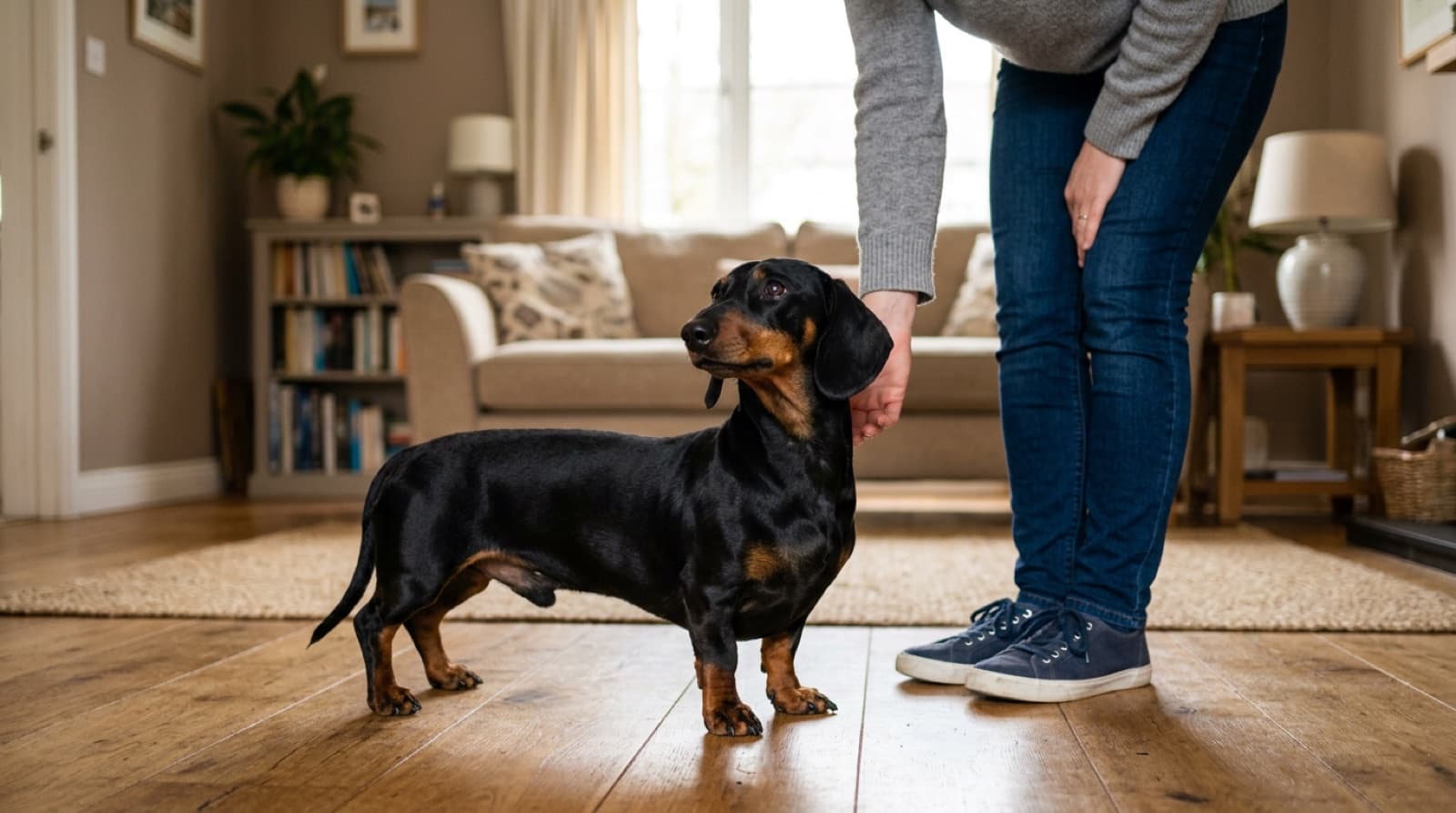
Dachshunds are hardy, long-lived, and delightful, but the same build that defines them, a long spine on short legs, is also their central health vulnerability. Nearly everything about caring for a Dachshund comes back to protecting that back, and keeping the dog lean is the foundation of it. This is a planning list, so an Ottawa owner knows what to watch for and where the budget goes.
Emergency: sudden back pain or weakness
Sudden signs of a disc problem, yelping in pain, a hunched or trembling back, reluctance to move, wobbly or dragging hind legs, or loss of the ability to walk, are a medical emergency. The speed of treatment strongly affects recovery, so go to an emergency vet immediately; do not “wait and see.” Ottawa has 24-hour care, including the Alta Vista Animal Hospital. Save the number now. Full prevention and warning signs are in our back care guide.
IVDD and weight: one linked problem
The Dachshund’s long body comes from chondrodystrophy, a form of dwarfism that also causes the spinal discs to harden and degenerate early, which is why the breed is affected by intervertebral disc disease far more than any other. Roughly a quarter of Dachshunds have an IVDD episode in their lifetime. That is the single most important fact about the breed’s health.
Weight is the lever you control. Excess body weight loads the already-vulnerable spine directly and sharply raises the odds of a disc herniating, so keeping a Dachshund lean is not cosmetic, it is spinal protection. Measure every meal, count treats in the daily calories, skip scraps, and keep the ribs easily felt and a waist visible. Because the back is so central, we give it a full dedicated guide, our Dachshund back care and IVDD guide, covering ramps, lifting, stairs, and warning signs.
Dental, eyes, and knees
Dental disease. Very common in the breed’s crowded small mouths. Brush several times a week (daily is better), provide dental chews, and schedule professional cleanings. Neglected teeth cause pain, tooth loss, and infection.
Eyes. Progressive retinal atrophy causes gradual blindness; dogs adapt well. Cataracts also occur. An annual eye check catches problems early.
Knees. Patellar luxation (slipping kneecaps) appears especially in miniatures, from a minor skip to a surgical problem.
Older Dachshunds can also develop hormonal conditions like Cushing’s disease. For routine-care savings, see our Ottawa low-cost vet guide.
Meet a healthy Dachshund in Ottawa
Rescue Dachshunds come with a vet workup and honest health notes, including any back history, so you know what you are adopting. Browse available Dachshunds and Doxie mixes from Ottawa and NCR rescues.
See Available Dachshunds →Frequently Asked Questions
What health problems are Dachshunds prone to?
The defining Dachshund health issue is intervertebral disc disease (IVDD), a back condition the breed is more prone to than any other, in which spinal discs degenerate and can herniate, causing pain and, in severe cases, paralysis. Roughly one in four Dachshunds is affected in its lifetime, so this is the concern that shapes everything about how you care for one. Obesity dramatically worsens the back risk and drives other problems, making weight control the single most important lever. Beyond the back, Dachshunds are prone to dental disease (their small mouths crowd teeth), eye conditions including progressive retinal atrophy, patellar luxation (slipping kneecaps), and hormonal conditions like Cushing’s disease with age. Most are manageable, and protecting the back plus keeping the dog lean are the highest-impact things an Ottawa owner can do.
What is IVDD and how common is it in Dachshunds?
Intervertebral disc disease (IVDD) is a condition where the cushioning discs between the vertebrae degenerate and can bulge or rupture, pressing on the spinal cord and causing pain, weakness, or paralysis. Dachshunds are affected far more than any other breed because they are chondrodystrophic, a form of dwarfism that gives them their long body and short legs and also causes the discs to harden and degenerate early, and studies suggest roughly a quarter of Dachshunds experience an IVDD episode in their lifetime. Because it is so central to the breed, we cover prevention, warning signs, and treatment in depth in our dedicated Dachshund back care guide. The short version: keep the dog lean, ban stairs and jumping, use ramps, lift correctly, and treat sudden back pain or hind-leg weakness as an emergency.
Why is obesity so dangerous for Dachshunds?
Because every extra gram loads a spine that is already the breed’s weak point. A Dachshund’s long back is under constant mechanical stress, and excess weight increases that load directly, sharply raising the risk of a disc herniating, and it also strains the joints and organs. An overweight Dachshund is a Dachshund heading for a back crisis. The trouble is they are food-driven and easy to overfeed, and their small size means even a little extra food is a lot proportionally. The management is strict but simple: measure every meal precisely, count treats as part of the daily calories, skip table scraps, and keep the dog lean enough to feel the ribs and see a waist. For this breed, weight control is not about looks, it is direct spinal protection, and your vet can set a target weight.
Do Dachshunds have dental problems?
Yes, dental disease is very common in Dachshunds and other small breeds, because their small jaws crowd the teeth, trapping plaque and food and accelerating tartar and gum disease. Left unmanaged, it causes pain, tooth loss, and infections that can affect overall health. Prevention is routine home care plus professional cleanings: brush the teeth several times a week with dog toothpaste, ideally daily, provide appropriate dental chews, and have your vet assess the teeth at annual checkups and schedule cleanings under anaesthesia as needed. Starting a brushing routine early, and gently with a rescue dog who may not be used to it, pays off in fewer extractions and lower lifetime dental bills. Bad breath, reluctance to chew, or red gums are signs to get the teeth checked.
How much does Dachshund health care cost in Ottawa?
Routine annual care, a wellness exam, vaccines, parasite prevention, and dental attention, runs roughly $700 to $1,300 a year for a Dachshund in Ottawa, plus Ontario’s 13 per cent HST. The breed’s small size keeps medication and anaesthesia costs low. The budget wildcard, and it is a big one, is the back: a mild IVDD episode may need only crate rest and medication, but a serious disc herniation requiring spinal surgery and rehabilitation can run $5,000 to $10,000 or more. Dental cleanings and eventual extractions add up over the years too. This combination of a common, potentially very expensive signature condition with an otherwise affordable small dog is exactly why pet insurance, taken out while the Dachshund is young, tends to pay off strongly for the breed. See our Ottawa low-cost vet guide for routine-care savings.
Is pet insurance worth it for a Dachshund?
For Dachshunds, more than almost any breed, yes, and the reason is IVDD. Roughly a quarter of Dachshunds have a back episode in their lifetime, and a serious one requiring spinal surgery can cost $5,000 to $10,000 or more, a bill that arrives suddenly and without warning. Insurance taken out while your Dachshund is young and healthy, before any back issue is documented, locks in coverage before exclusions apply. This is critical, because once a single IVDD episode is on the record, no insurer will cover future back problems, and the back is exactly where a Dachshund’s big costs come from, so waiting until after the first episode defeats the entire purpose. Premiums for a young Dachshund commonly run $40 to $70 a month in Ottawa. Insure early, read the exclusions, and confirm back coverage is included from the start.
What eye and joint conditions affect Dachshunds?
Dachshunds carry a few inherited conditions beyond the back. Progressive retinal atrophy (PRA), a gradual degeneration of the retina leading to blindness, occurs in the breed, and responsible breeders screen for it; dogs adapt remarkably well to vision loss. Some Dachshunds also develop cataracts. Patellar luxation, where the kneecap slips out of its groove, appears in the miniature variety especially and can range from a minor intermittent skip to a problem needing surgery. Being long and low, Dachshunds can also strain other joints. For an adopted Dachshund, an annual vet check that includes eyes and a movement assessment catches these early, and any change in vision, bumping into things, cloudiness, or reluctance to move should be checked promptly. Ask the rescue for any health records that came with the dog.
How long do Dachshunds live?
Dachshunds are a long-lived breed, typically 12 to 16 years, and a lean, well-cared-for Dachshund with a protected back often reaches the upper end. Longevity is a real strength, but it depends heavily on the things within your control: rigorous weight management (an obese Dachshund risks disabling back disease that shortens both mobility and life), diligent dental care, back protection throughout life, and annual vet checks that catch conditions early. For Ottawa owners, that long lifespan means budgeting for senior care in the later years, including possible management of arthritis, dental work, or age-related hormonal conditions like Cushing’s disease, and staying vigilant about the back for the dog’s entire life. A Dachshund adopted as an adult still has many good years ahead.
Related Guides
New dog? Start with these care guides
Everything a new adopter needs to set up a safe, happy home.