The short answer
The bulldog’s extreme flat face drives its health issues. The big one is BOAS (a breathing disorder that also makes bulldogs dangerously heat-intolerant, often needing surgery). Also plan for skin-fold infections, hip and joint issues, eye conditions (cherry eye, dry eye, ulcers), dental crowding, obesity (worsens everything), and anesthesia sensitivity. Bulldogs live 8 to 10 years. Routine Ottawa care runs $1,000 to $1,700 a year plus HST, but surgery and chronic care make this one of the most expensive breeds to own. Keep the dog lean, manage heat rigorously, clean the folds, use a harness, and insure early. Make all health decisions with your vet.
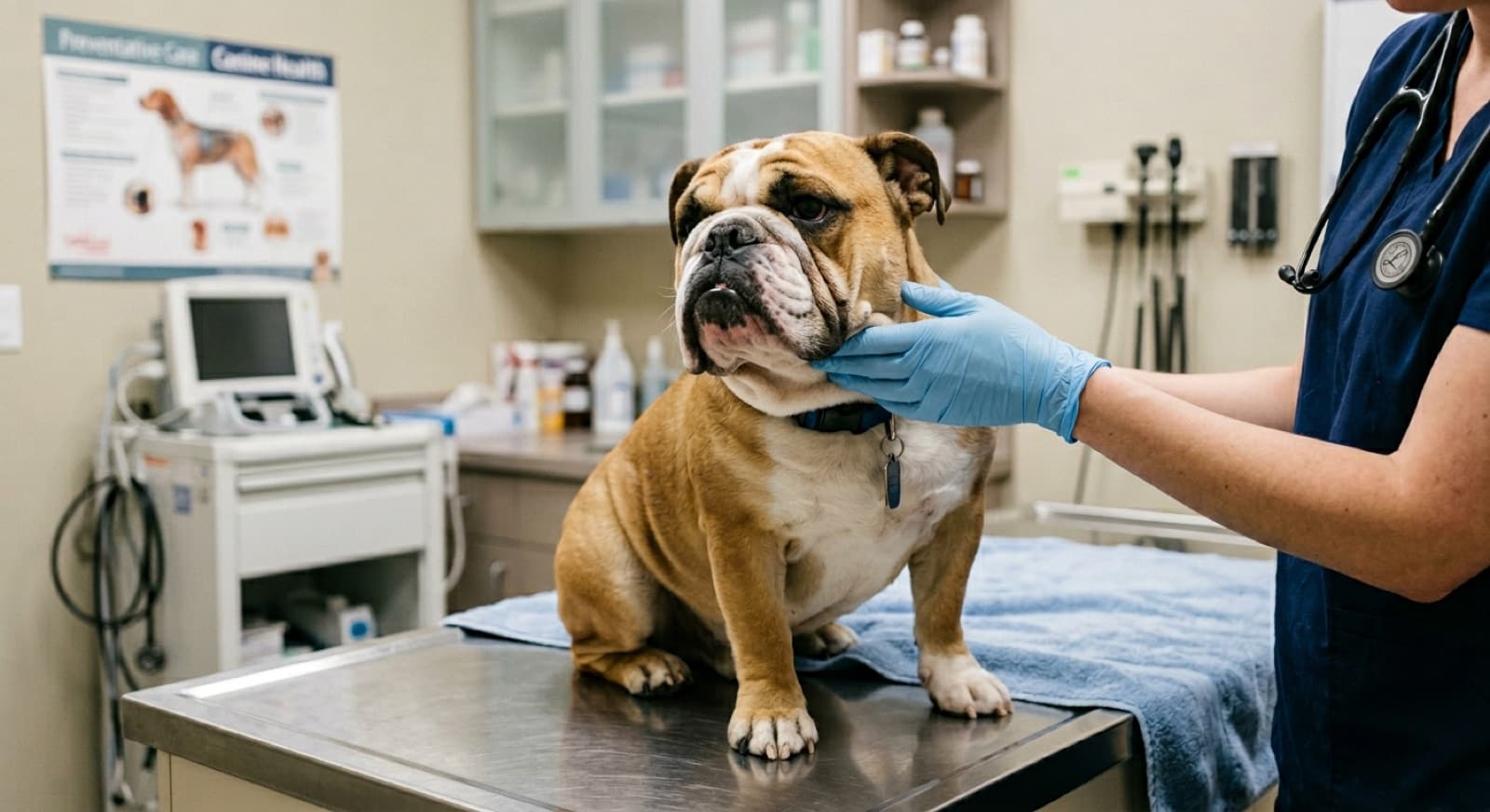
There is no honest way to write about English Bulldogs without putting health front and centre. This is a breed whose defining features, the flat face and heavy build, are also the source of most of its problems, and a responsible owner needs to understand that going in. Many bulldogs live happy lives with good care, but they ask more of an owner than almost any breed. This is a planning list; every point should be discussed with your own veterinarian.
Heat is a life-or-death emergency
Because of BOAS, bulldogs cool themselves poorly and can suffer fatal heatstroke far more easily than a normal-nosed dog, signs like frantic laboured breathing, blue-tinged gums, weakness, or collapse in heat are an emergency, cool the dog and get to a vet immediately. A sudden painful, cloudy, or injured eye is also urgent. Ottawa has 24-hour care including the Alta Vista Animal Hospital. Save the number now.
Breathing, heat, folds, and more
BOAS and heat. The defining issues, a breathing disorder from the shortened skull that also makes bulldogs dangerously heat-intolerant. Many benefit from corrective surgery. Keep the dog lean, avoid heat and exertion, and use a harness not a collar. See our daily-care guide for heat and fold management.
Skin folds. The facial wrinkles, tail pocket, and other folds trap moisture and get infected; clean and dry them routinely. Joints. Hip and elbow dysplasia and mobility issues occur, keeping the dog lean helps a lot.
Eyes, teeth, and weight. Cherry eye, dry eye, entropion, and ulcers occur; dental crowding needs care; and obesity worsens everything, making weight control the top daily lever. Ensure any vet knows the breed’s anesthesia sensitivity. For routine-care savings, see our Ottawa low-cost vet guide, and the Canadian Kennel Club for breed background.
Meet a bulldog in Ottawa
Rescue bulldogs come with a vet workup and honest health notes, so you know exactly what you are taking on. Browse available English Bulldogs and bulldog mixes from Ottawa and Ontario rescues.
See Available English Bulldogs →Frequently Asked Questions
What health problems are English Bulldogs prone to?
The English Bulldog is one of the most health-intensive breeds there is, and its exaggerated, flat-faced conformation drives most of its problems, so a prospective owner should understand them clearly. The central issue is Brachycephalic Obstructive Airway Syndrome (BOAS), a breathing disorder from the shortened skull, narrowed nostrils, and elongated soft palate that causes snoring, snorting, laboured breathing, and exercise intolerance, and which often requires corrective surgery, and which also makes bulldogs dangerously heat-intolerant. Skin-fold dermatitis (infection in the facial wrinkles, tail pocket, and other folds) is common and needs routine care. They are prone to hip and elbow dysplasia and other joint and mobility issues (partly from their heavy, low-slung build), a range of eye conditions (cherry eye, dry eye, entropion, ulcers), dental crowding and disease, obesity (which worsens everything), and various skin and allergy problems, and the breed has reproductive difficulties (most need C-sections). Bulldogs can also be sensitive to anesthesia. This is a genuinely long list, and while many bulldogs live happily with good care, the breed requires an owner prepared for higher-than-average vet involvement plus diligent heat, weight, and skin management. Always make health decisions for your individual dog with your veterinarian, and ensure any vet knows the breed.
What is BOAS, and how serious is it in bulldogs?
BOAS (Brachycephalic Obstructive Airway Syndrome) is the breathing disorder caused by the bulldog’s extreme flat-faced anatomy, and it is the breed’s defining health issue and a serious welfare concern. The shortened skull crowds the soft tissue a normal-nosed dog has into far less space, producing narrowed nostrils, an elongated soft palate, and other obstructions that make breathing genuinely hard work. Signs range from the snorting and snoring many people consider “normal for bulldogs” (but which reflect real airway compromise) to noisy laboured breathing, gagging, exercise intolerance, blue-tinged gums, and collapse in severe cases. Crucially, BOAS makes bulldogs dangerously unable to cool themselves, since dogs cool by panting and a compromised airway does it poorly, so they are at high risk of life-threatening heatstroke, a serious concern in Ottawa summers. Many bulldogs benefit significantly from BOAS surgery (widening the nostrils and shortening the soft palate), which can dramatically improve quality of life, so a bulldog with meaningful breathing difficulty should be assessed by a vet, ideally one experienced with brachycephalic airways. Day to day, management means keeping the dog lean (excess weight worsens BOAS), avoiding heat and exertion, and using a harness not a collar. BOAS is the single most important thing to understand about bulldog health.
Why are English Bulldogs so sensitive to heat?
Bulldogs are extremely heat-sensitive, and it is a genuine, potentially fatal Ottawa summer concern that every owner must take seriously. The reason is the same brachycephalic anatomy behind BOAS: dogs cool themselves primarily by panting, moving air across the moist surfaces of the airway, and a bulldog’s compromised, obstructed airway does this very inefficiently, so the dog simply cannot shed heat the way a normal-nosed dog can. Combined with a heavy, stocky body, this makes bulldogs prone to rapid, dangerous overheating, and heatstroke is a leading cause of preventable bulldog deaths. In Ottawa’s hot, humid July and August, this means keeping the dog in air conditioning or a cool space, providing constant water and shade, exercising only in the cool of early morning or evening (and never strenuously in warm weather), never leaving the dog in a parked car even briefly, and watching for the signs of overheating, heavy frantic panting, excessive drooling, bright red or bluish gums, weakness, and collapse, which are an emergency needing immediate cooling and veterinary care. A useful rule: if it is a day you find uncomfortably hot, it is a dangerous day for your bulldog, so keep activity minimal and indoors. This heat vigilance is not optional, it is a core, life-or-death responsibility of owning the breed.
How much does English Bulldog health care cost in Ottawa?
English Bulldogs are one of the most expensive breeds to care for, precisely because of the many brachycephalic and conformational issues. Routine annual care, a wellness exam, vaccines, parasite prevention, and dental attention, runs roughly $1,000 to $1,700 a year for a bulldog in Ottawa, plus Ontario’s 13 per cent HST, but the breed’s budget wildcards are significant and common: BOAS surgery (widening nostrils, shortening the soft palate) can run well into four figures; skin-fold infections need ongoing management; eye conditions (cherry eye, dry eye, ulcers) may need medication or surgery; joint problems can require costly orthopedic care; and dental work is often needed. Anesthesia carries added care given the breed’s sensitivity. Because bulldog health issues are both likely and expensive, the breed’s lifetime care costs are among the highest of any breed, which is exactly why pet insurance is so strongly recommended, and why a substantial vet-and-surgery fund is essential if you do not insure. Keeping the dog lean is the single most cost-effective health measure, as obesity worsens breathing, joints, and more. See our Ottawa low-cost vet guide for routine-care savings, and always ensure your vet is aware of the breed for anesthesia and airway considerations.
Is pet insurance worth it for an English Bulldog?
For English Bulldogs, pet insurance is one of the most clearly worthwhile investments among all breeds, precisely because the breed’s many health issues are both likely and expensive. BOAS surgery, skin and eye conditions, joint problems, and dental work add up to a genuinely high lifetime cost, and insurance taken out while the dog is young and healthy locks in coverage before anything, especially the breathing, skin, and eye issues that so often surface, becomes a pre-existing exclusion. This is the crux for bulldogs: the conditions they are prone to are exactly the ones insurers will exclude if already documented, so early enrolment is the whole game. Premiums for a young bulldog are typically among the highest of any breed, precisely because insurers know the risks, often $70 to $120-plus a month in Ottawa, but the potential payouts (multiple surgeries over a lifetime) are correspondingly large. For an adopted adult bulldog, insurance is trickier because existing conditions may already be excluded, so ask the rescue about the dog’s known health first. Whatever you decide, treat a generous health budget or insurance as a non-negotiable part of the commitment, this is a breed where the health costs are, unavoidably, the ownership costs, and going in without a plan for them is how bulldogs end up back in rescue.
How long do English Bulldogs live, and how can I keep mine healthy?
English Bulldogs typically live around 8 to 10 years, shorter than many breeds, a reflection of the health burden of their exaggerated conformation, and a well-cared-for bulldog, kept lean and managed carefully, has the best chance of reaching the upper end and living a comfortable life. The highest-value things an Ottawa owner can do are: keep the dog lean (obesity worsens breathing, joints, and every other bulldog problem, so this is the number-one lever), manage heat rigorously (no hot-weather exertion, AC and shade in summer, because heatstroke is a real killer for this breed), keep exercise gentle and moderate (the breathing anatomy limits what is safe), clean and dry the skin folds routinely to prevent infection, protect and monitor the eyes, use a harness instead of a collar, keep up dental care, and see the vet promptly for any breathing, skin, or eye change. Establishing care with a good vet experienced with brachycephalic breeds, and considering BOAS assessment if the dog struggles to breathe, rounds out the picture. For an adopted bulldog, attentive weight, heat, and skin management plus prompt vet care can meaningfully improve both length and quality of life. The breed asks more of an owner than most, but a well-managed bulldog rewards it with years of gentle, comedic, devoted companionship.
Related Guides
New dog? Start with these care guides
Everything a new adopter needs to set up a safe, happy home.