The short answer
Bulldog care is hands-on maintenance, not exercise. Clean and thoroughly dry the facial folds and tail pocket several times a week (moisture breeds fold infections, and the tail pocket is easily missed). Manage heat rigorously (bulldogs can’t cool themselves and heatstroke is a real Ottawa summer killer, AC, shade, water, exercise only in the cool of the day). Keep the dog lean (obesity worsens everything, and bulldogs gain easily, so control it through diet). Exercise gently on a harness. Winters are manageable, short walks with a coat, wipe off road salt, thanks to the breed’s low exercise needs. Watch for fold redness, odour, or eye changes and act fast.
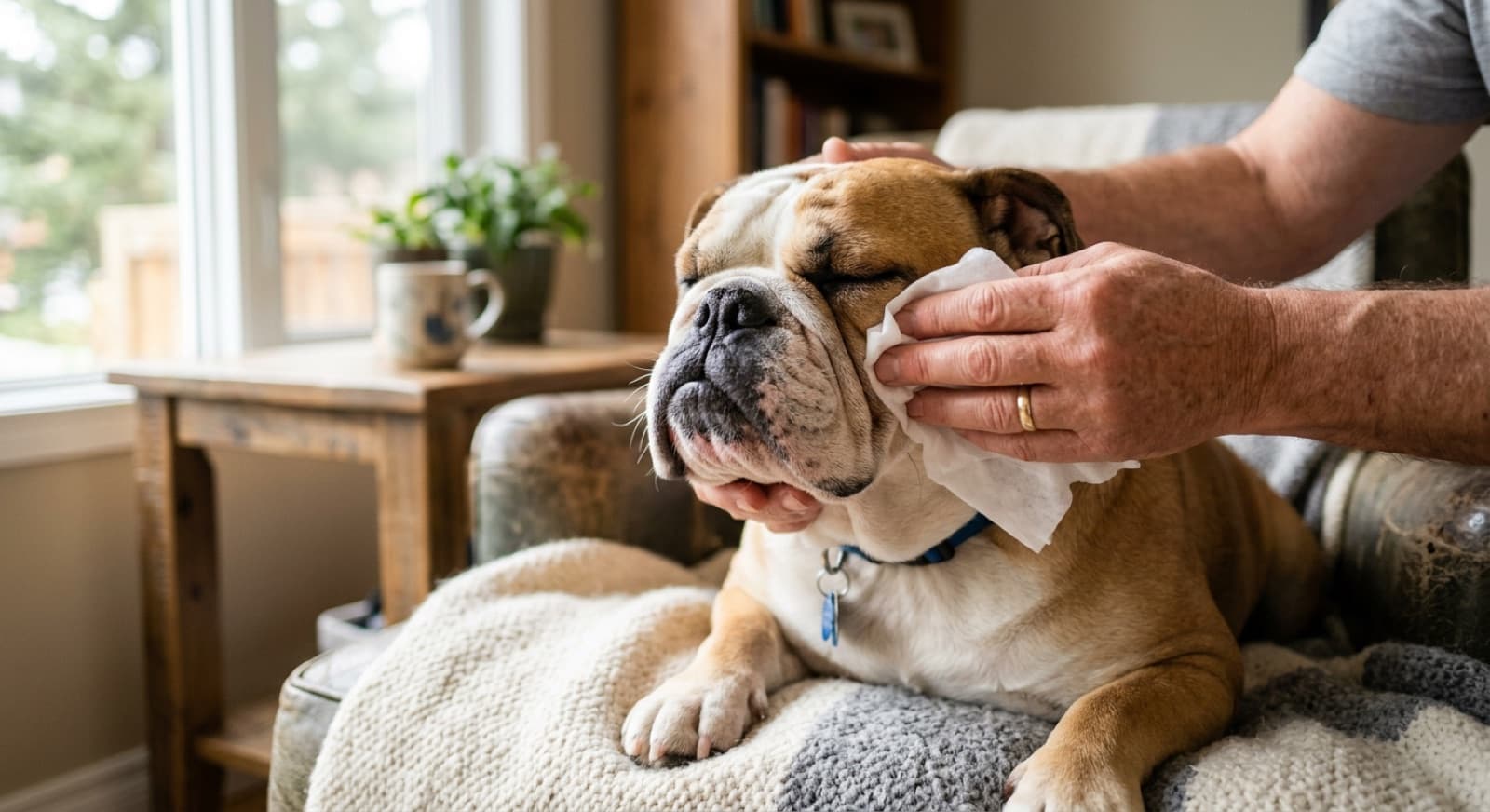
A bulldog is not a demanding dog in terms of exercise, but it is a hands-on dog in terms of maintenance. The wrinkles that make the breed so charming are also infection-prone creases that need routine care, and the flat face that gives it that comedic expression is why heat is so dangerous. Almost everything that keeps a bulldog comfortable comes down to a handful of daily habits, and once they become routine, bulldog care is straightforward.
Don’t forget the tail pocket
The tail pocket, the deep fold beneath a bulldog’s tight screw tail, is one of the most commonly overlooked and most infection-prone spots on the dog. Many bulldogs have one; check yours, clean it a few times a week, and dry it thoroughly. Neglected, it becomes a painful, chronic infection that can, in severe cases, need surgery. The same goes for the deep nose wrinkle under the eyes.
Folds, heat, and weight, the daily trio
Folds. Wipe and thoroughly dry the facial wrinkles (especially the nose rope), the tail pocket, and any body folds several times a week with a vet-approved wipe or damp cloth. Moisture is the enemy. Watch for redness, odour, or discharge, and see the vet if you suspect a fold infection.
Heat. The number-one danger, bulldogs cool themselves poorly and can suffer fatal heatstroke. AC, shade, water, exercise only in the cool of the day, never a parked car, never exertion in heat. Learn the signs of overheating (frantic panting, red or bluish gums, weakness, collapse) and treat them as an emergency.
Weight. The most powerful daily lever, obesity worsens breathing, heat tolerance, and joints, and bulldogs gain easily, so measure food and limit treats. Exercise gently on a harness, and add routine ear, nail, coat, and dental care. See our bulldog health guide for the medical background, and the Canadian Kennel Club for breed information.
Ready to care for a bulldog?
If you can commit to the folds, heat, and weight, a bulldog is a gentle, comedic companion. Browse available English Bulldogs and bulldog mixes from Ottawa and Ontario rescues, refreshed regularly.
See Available English Bulldogs →Frequently Asked Questions
How do I clean my English Bulldog’s skin folds?
Cleaning the folds is one of the most important daily-care tasks for a bulldog, because the breed’s deep facial wrinkles, nose rope, tail pocket, and other skin folds trap moisture, dirt, food, and debris, creating warm, damp creases where bacteria and yeast flourish and cause fold dermatitis (a red, sore, smelly infection). The routine is simple but must be regular. Several times a week (daily for dogs prone to problems, and especially the facial folds and any deep tail pocket), gently wipe inside each fold with a soft damp cloth or a vet-approved pet wipe to remove buildup, then, crucially, dry the fold thoroughly, since leftover moisture is exactly what breeds infection, some owners use a dry cloth or even a cotton pad to make sure the crease is dry. Do not use harsh human products; your vet can recommend appropriate wipes or cleansers, and for dogs with recurring problems may suggest a medicated product. Pay special attention to the deep nose wrinkle (which sits right under the eyes and collects tears and debris) and the tail pocket (the fold beneath a tight screw tail, which is easily missed and a common infection site). Watch for redness, odour, discharge, or the dog rubbing its face, which signal a fold infection needing veterinary attention. Built into a simple routine, fold care keeps a bulldog comfortable and catches problems early.
What is a bulldog tail pocket, and how do I care for it?
The tail pocket is a skin fold or pocket located underneath or around an English Bulldog’s tight, low-set, screw or corkscrew tail, and it is one of the most commonly overlooked, and most infection-prone, areas on the dog, so it deserves specific attention. Because the tail sits tightly against the body, the pocket beneath it is a deep, dark, moist crease that traps moisture, feces, and debris, making it a frequent site of painful fold dermatitis if neglected. Not every bulldog has a pronounced tail pocket, but many do, so check your dog. Care mirrors facial-fold care: gently clean inside the tail pocket a few times a week (more often if it is deep or the dog is prone to problems) with a damp cloth or vet-approved wipe, working carefully around the sensitive area, then dry it thoroughly, since moisture left in this deep fold is a recipe for infection. Watch for signs of trouble, a foul smell, redness, discharge, or the dog scooting, licking, or seeming sore around the tail, and see the vet if you suspect an infection, as tail-pocket infections can become chronic and painful and occasionally, in severe recurrent cases, require surgical removal of the pocket. Keeping the tail pocket clean and dry is an easy but genuinely important part of bulldog daily care that new owners often do not know about.
How do I keep my bulldog safe in Ottawa’s summer heat?
Heat management is a life-or-death daily-care skill for a bulldog owner, because as an extreme brachycephalic breed bulldogs cannot cool themselves efficiently and are at high risk of fatal heatstroke, and Ottawa’s hot, humid summers are genuinely dangerous for them. The rules: keep the bulldog in air conditioning or a cool space during hot weather, provide constant fresh water and shade, and exercise only in the cool of early morning or late evening, never in the heat of the day and never strenuously in warm weather. Avoid hot pavement (which burns paws and radiates heat up to a low dog), never leave a bulldog in a parked car even briefly, and watch for the signs of overheating, heavy frantic panting, excessive drooling, bright red or bluish gums, weakness, disorientation, and collapse, which constitute an emergency requiring immediate cooling (cool, not ice-cold, water) and a rush to the vet. Cooling mats, damp towels, and fans help at home. A useful mental rule for Ottawa summers: if it is a day you would find uncomfortably hot, it is a dangerous day for your bulldog, so keep activity minimal and indoors. This vigilance is not optional, it is the core, life-or-death responsibility of owning a brachycephalic breed, and heatstroke is a leading cause of preventable bulldog deaths.
How much exercise does an English Bulldog need, and why keep it lean?
English Bulldogs need only modest, gentle exercise, and getting the type and intensity right matters far more than the amount, because their breathing limitations make strenuous activity unsafe. A couple of short daily walks plus some gentle indoor play generally satisfy a bulldog, and this low requirement is part of what makes them good apartment and quieter-home dogs. The key is to keep it gentle and breathing-conscious: a bulldog should never be pushed into strenuous exercise or activity that leaves it struggling to breathe, walks should be paced with rests as needed, and exercise should be avoided entirely in the heat. Use a harness rather than a collar to avoid pressure on the airway. Keeping the dog lean is arguably the single most powerful thing an owner can do for a bulldog’s health and comfort, because obesity worsens virtually every bulldog problem: it makes the breathing worse (fat around the airway and chest compounds BOAS), increases heat intolerance, strains the joints, and raises the risk of numerous conditions. Bulldogs gain weight easily (they are food-motivated and low-activity), so weight control comes mainly through diet, measuring food, limiting treats, and resisting the pleading face. Because bulldogs cannot exercise heavily to burn off excess, portion discipline is essential. A lean, gently-exercised bulldog breathes easier, tolerates heat better, and lives longer, so it is one of the kindest daily choices you can make.
What does a bulldog’s daily and weekly care routine look like in Ottawa?
A bulldog’s care is not high-effort in terms of exercise, but it is hands-on in terms of maintenance, and building a simple routine keeps the dog comfortable. Daily or several times a week: clean and thoroughly dry the facial folds (especially the nose wrinkle) and the tail pocket to prevent infection, wipe the eyes and watch for any eye change (bulldogs are eye-prone), and monitor the dog’s breathing and comfort. Manage weight every day through measured food and limited treats, and keep exercise gentle and weather-appropriate, indoors on hot or bitterly cold days. Weekly to monthly: check and clean the ears, trim nails, brush the short coat (bulldogs shed more than people expect, and brushing helps), and brush the teeth or provide dental care (small, crowded bulldog mouths need it). Seasonally in Ottawa: in summer, prioritise heat safety above all; in winter, keep walks short with a coat (bulldogs tolerate cold poorly too) and wipe off irritating road salt, though the breed’s low exercise needs make winter manageable with indoor activity. Also establish care with a good vet early, ideally one experienced with brachycephalic breeds, since bulldogs sometimes need prompt attention. None of this is difficult, but the fold care, heat vigilance, and weight control in particular are genuine, ongoing responsibilities that owners of smooth-faced, athletic breeds simply do not have, and they are what keep a bulldog healthy and happy.
Related Guides
New dog? Start with these care guides
Everything a new adopter needs to set up a safe, happy home.