The short answer
A springer needs an hour or more of genuine daily activity, walks, running, fetch, swimming, plus daily mental work (training, scent games, a dog sport). It is a working gundog, and under-exercise is a top reason springers land in rescue. The working vs show line difference is real: working lines are higher-drive and need more, show lines are somewhat calmer (still energetic). Springers are intelligent, biddable, and very trainable with positive methods (they’re sensitive, so no harsh corrections) and excel at obedience, agility, and scent work. Ottawa’s trails, off-leash parks, and water suit them beautifully year-round. Match the individual dog’s energy to your lifestyle, that’s the whole game.
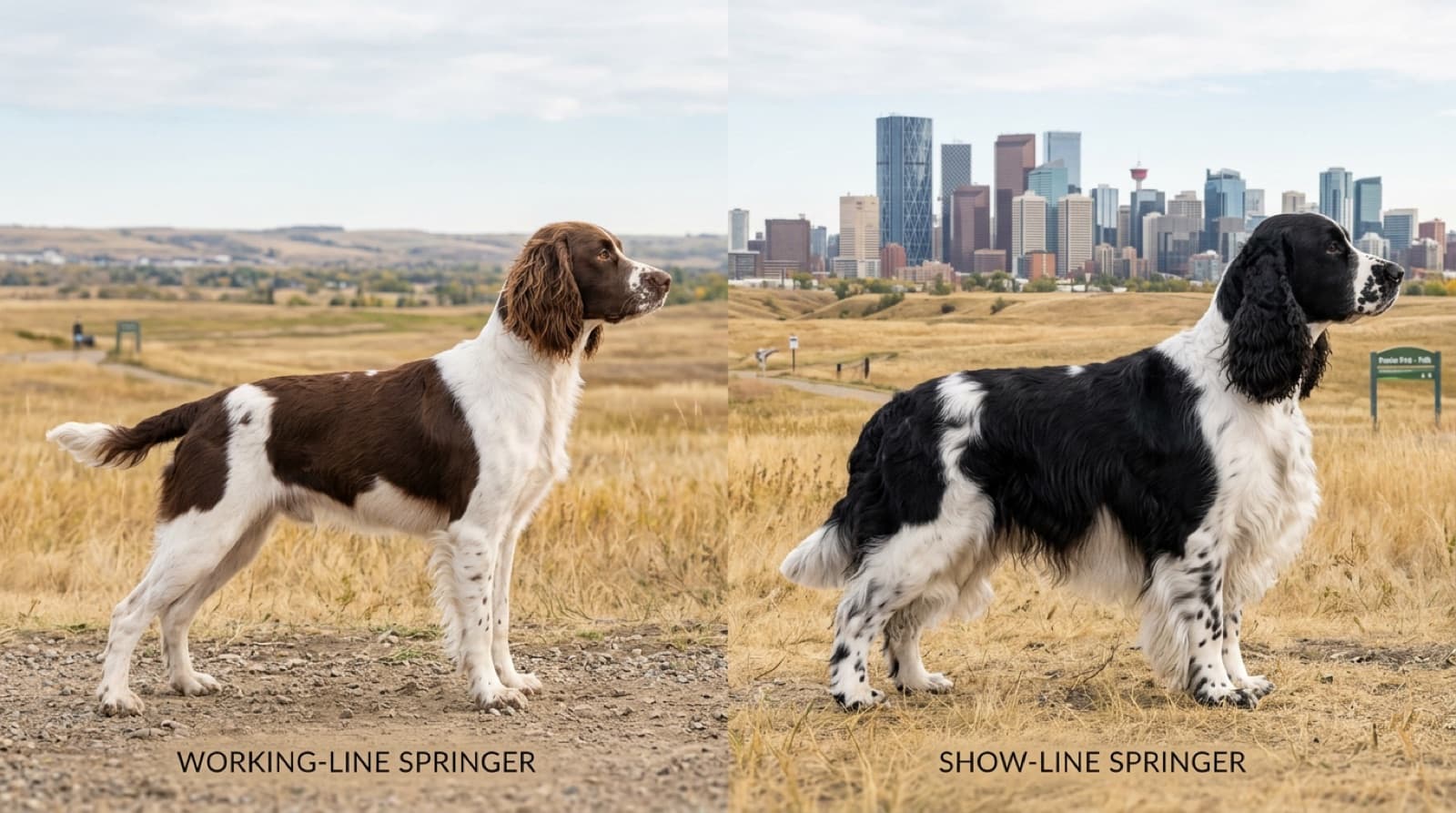
If there is one thing to understand about living with an English Springer Spaniel, it is that they are athletes with working brains. Bred to hunt alongside people all day, they come with real stamina and a keen, busy mind, and the whole success of springer ownership rests on giving both an outlet. Ottawa, with its trails, off-leash parks, and abundant water, is a fine place to do exactly that.
Match the individual dog’s energy to your life
Working-line springers are high-drive and need a serious outlet; a working-line dog in a low-activity home is a recipe for a frustrated, difficult dog. Show-line springers are somewhat calmer (still energetic). In rescue the line isn’t always clear, so ask the rescue about the individual dog’s assessed energy and match it honestly to your lifestyle, this is the single biggest factor in a successful placement.
Body, brain, and easy training
Plan on an hour-plus of real activity daily, walks, running, fetch, swimming, spread across the day, using Ottawa’s off-leash areas like Bruce Pit and Conroy Pit, and the region’s water for a breed that loves to swim (always assess water safety first).
But pair the exercise with mental work, training, puzzle feeders, scent and nose games (springers are scenting gundogs and adore it), and ideally a dog sport (obedience, agility, rally, flyball, scent work). Springers are intelligent, eager, and sensitive, so positive, reward-based training works beautifully and heavy-handed methods backfire; reliable recall and impulse control are priorities, and teaching comfort with alone-time helps a breed prone to separation anxiety. A force-free Ottawa trainer or dog-sport club is a great asset. See our springer adoption guide, and the Canadian Kennel Club for sport and breed background.
Ready to give a springer a job?
An active Ottawa home is exactly what this breed needs. Browse available English Springer Spaniels and mixes from Ottawa and Ontario rescues, refreshed regularly.
See Available Springer Spaniels →Frequently Asked Questions
How much exercise does an English Springer Spaniel need?
English Springer Spaniels are athletic gundogs bred to work in the field all day, and they need substantial daily exercise, realistically an hour or more of genuine activity, not a single stroll around the block. That means brisk walks, running, off-leash play in safe areas, fetch, swimming (springers love water), and ideally some form of purposeful activity that engages their working brain. An adult springer in good health has real stamina, and the amount needed varies with the individual and the line, a working-line springer may need considerably more than a show-line one, but all springers are an energetic breed, not a low-activity one. Crucially, the exercise must be paired with mental stimulation: a springer that gets a long walk but no mental engagement is only half-satisfied, because these are thinking, working dogs. Under-exercised springers are one of the most common reasons the breed lands in rescue, because pent-up energy turns into hyperactivity, destructiveness, mouthiness, and difficult behaviour. Ottawa is well-suited to meeting these needs, with abundant trails, off-leash areas like Bruce Pit and Conroy Pit, and plentiful water. If your lifestyle is active and outdoorsy, a springer thrives; if you want a low-maintenance, low-energy companion, this is the wrong breed.
Do English Springer Spaniels need mental stimulation as well as exercise?
Yes, and this is where many owners under-deliver. Springers are intelligent, biddable working dogs bred to work closely and thoughtfully with a handler, and a physically tired but mentally bored springer is still a restless, potentially problematic dog, because the working brain needs a job as much as the body needs a run. Mental stimulation for a springer includes training sessions (they learn fast and love to work with their people), puzzle feeders and food-dispensing toys, scent and nose work (springers are scenting gundogs and often adore it), retrieving games, and, ideally, a real outlet like a dog sport, springers excel at obedience, rally, agility, flyball, scent work, and, of course, field work. A springer with a job and regular training is a happy, settled dog. This intelligence and biddability are a big part of the breed’s appeal, they make springers wonderfully trainable and fun, but they also mean the dog needs engagement to be content. The winning formula for a springer is daily physical exercise plus daily mental work plus consistent, positive training, and an owner who enjoys teaching and doing things with their dog will find the springer one of the most rewarding breeds to work with. Enrichment is not a luxury for this breed; it is part of meeting its needs.
Are English Springer Spaniels easy to train?
Yes, springers are among the more trainable breeds, intelligent, eager to please, and highly responsive to positive, reward-based training, a legacy of being bred to work closely with people in the field. They learn quickly, retain well, and genuinely enjoy the interaction of training, so an owner who invests time gets a delightfully responsive, well-mannered dog, which is why springers do so well in obedience, agility, and other dog sports. The keys are to start early, use positive reinforcement (rewards, play, praise rather than harsh corrections, springers are sensitive and soft-tempered, so heavy-handed methods backfire and can create anxiety), keep sessions engaging, and give the working brain real outlets. The main training challenges are not stubbornness but energy and enthusiasm: a young springer can be bouncy, mouthy, and prone to jumping when excited, and they need clear guidance on impulse control and calm greetings, plus a reliable recall (important for a bird-loving dog with a nose). Because springers are people-oriented and can be prone to separation anxiety, teaching the dog to be comfortable alone is also worthwhile. Overall, a springer is a joy to train for anyone who enjoys the process, positive methods, plenty of engagement, and an outlet for the energy are the recipe. A force-free Ottawa trainer or dog-sport club is a great asset.
What is the difference between working and show line springers for energy?
The energy difference between the two springer lines is real and matters a great deal for a pet home. Working (or field) line springers are bred for hunting performance, and they carry higher energy, stronger drive, and more intensity, they are tireless, athletic dogs that genuinely need a serious outlet (long, vigorous exercise, and ideally a job or sport), and a working-line springer in a low-activity home is a classic recipe for a frustrated, hyperactive, difficult dog. Show (or bench) line springers, bred for the conformation ring and companionship, are generally somewhat calmer and lower-drive (though still an energetic breed that needs real daily exercise, not a couch dog). For most pet homes, especially moderately active families, a show-type or a moderate-energy individual is often the easier fit, while very active, sporty owners who want a running, hiking, or dog-sport partner can do beautifully with a working-line dog. In rescue, you may not always know a dog’s exact line, and the label can be unclear, so the practical approach is to focus on the individual dog’s assessed energy level rather than assuming from type, ask the rescue how much exercise the specific dog needs and how it does when its needs are met. Matching the individual springer’s energy to your lifestyle is the single biggest factor in a successful placement.
Is Ottawa a good place to own an energetic springer?
Yes, Ottawa is an excellent place to own an active springer, provided you use the region’s resources to meet the breed’s needs. Ottawa offers abundant trails, off-leash dog parks (Bruce Pit and Conroy Pit among them), the Greenbelt, and plentiful water, all ideal for an energetic, water-loving gundog, and an owner who takes advantage of these has everything needed to keep a springer happy and well-exercised. The four-season climate suits the breed well: springers generally handle Ottawa winters fine (they are hardy, active dogs that enjoy being out in the cold and snow, though you should manage paw and road-salt care and dry the coat and ears after wet, snowy outings), and they love the warmer months for hiking and swimming (observe sensible summer heat care and always assess water safety, current, cold, and toxic blue-green algae in late summer, before letting any dog swim). Winter does mean some creativity on the coldest days, but a springer’s exercise needs can be partly met with indoor mental work, training, and games when it is truly frigid. So Ottawa is genuinely well-suited to the breed for an active owner: the key, as always with springers, is not the location but whether you show up with the time and energy the breed requires, in every season. Meet those needs, and a springer thrives here.
Related Guides
New dog? Start with these care guides
Everything a new adopter needs to set up a safe, happy home.