The short answer
Springers are sturdy and generally healthy (12 to 14 years), but plan for chronic ear infections (the spaniel signature, the long hairy ears trap moisture, worse for a water-loving breed), hip and elbow dysplasia, and eye conditions (PRA, retinal dysplasia, cataracts). A few breed-specific conditions, PFK deficiency (DNA-testable, so avoidable through good breeding) and autoimmune disease, are worth knowing. Routine Ottawa care runs $900 to $1,500 a year plus HST, plus grooming. Stay rigorous about ear care (dry ears after every swim), keep the dog lean, monitor the eyes, and consider insuring early. Make all health decisions with your vet.
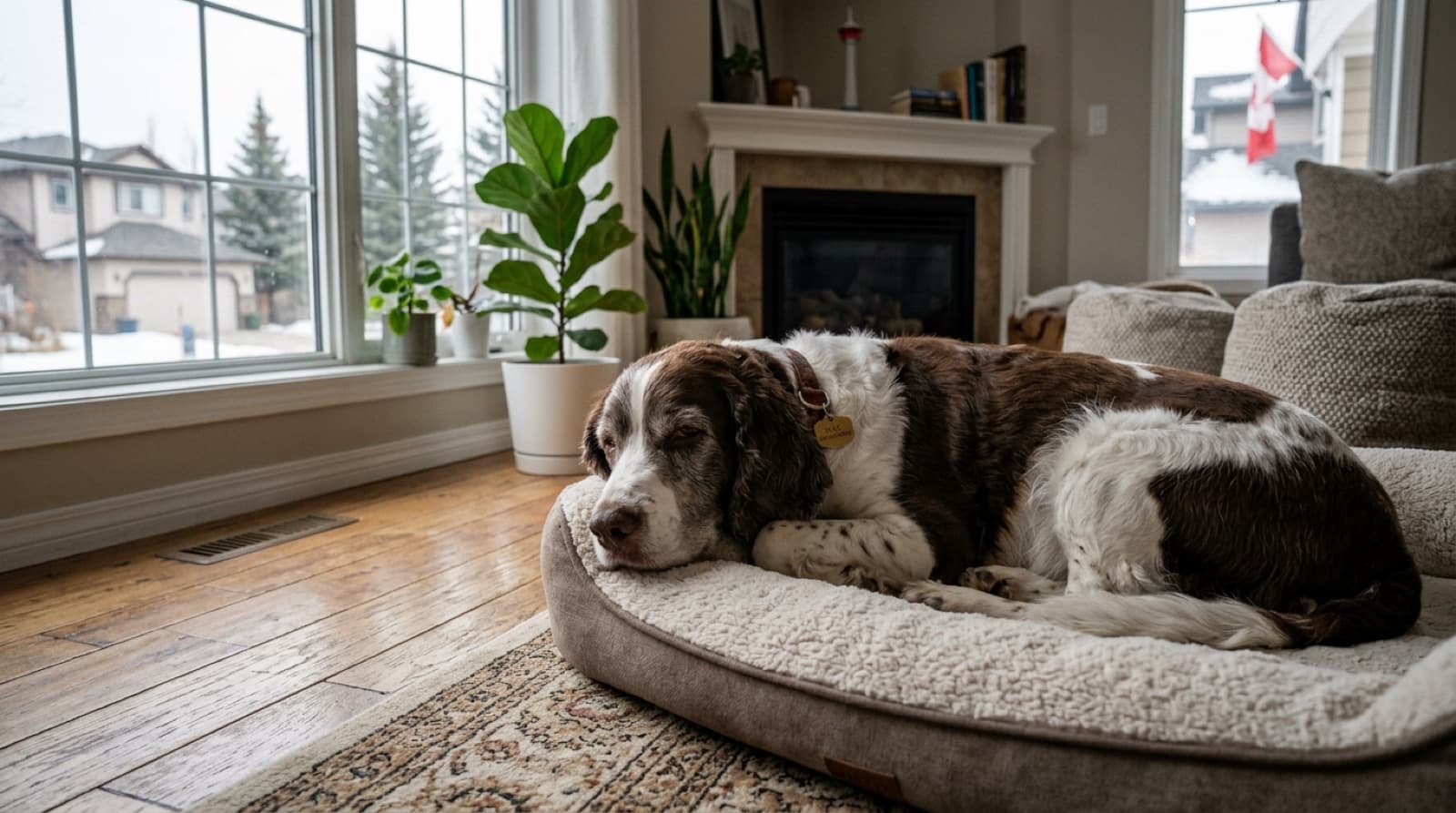
English Springer Spaniels are a robust, athletic breed, and most stay healthy for many years. But like all spaniels they come with the ear-care burden, and a handful of other conditions are worth understanding, some of which good breeding (and DNA testing) can prevent. Come in knowing what to watch for, and much of springer health is about consistent routine care. This is a planning list; every point should be discussed with your own veterinarian.
Dry the ears after every swim
Springers love water, and wet ears are the number-one trigger for the breed’s chronic ear infections. Dry the ears thoroughly after every swim, bath, or wet outing, clean regularly with a vet-recommended cleaner, and address any underlying allergy. Catch the early signs (head-shaking, odour, redness) and act fast. A sudden painful, red eye also warrants prompt care; Ottawa has 24-hour help including the Alta Vista Animal Hospital.
Ears, hips, eyes, and the tested conditions
Ears. The spaniel signature, long hairy ears trap moisture (worse for a swimmer), making chronic ear infections a lifelong susceptibility. Regular cleaning, thorough drying after water, managing inner-ear hair, and addressing allergies are the keys.
Hips and eyes. Hip and elbow dysplasia occur, keep the dog lean and value breeders who screen. Eye conditions (PRA, retinal dysplasia, cataracts) occur, so monitor for changes and source from eye-tested lines.
The tested and autoimmune conditions. PFK deficiency (an inherited enzyme disorder) has a DNA test, so responsible breeders avoid it; autoimmune conditions like AIHA also occur. Stay alert and mention the breed’s predispositions to your vet. For routine-care savings, see our Ottawa low-cost vet guide, and the Canadian Kennel Club for breed background.
Meet a healthy springer in Ottawa
Rescue springers come with a vet workup and honest health notes, including any known ear or eye history. Browse available English Springer Spaniels and mixes from Ottawa and Ontario rescues.
See Available Springer Spaniels →Frequently Asked Questions
What health problems are English Springer Spaniels prone to?
English Springer Spaniels are generally a healthy, sturdy breed, but they do have several characteristic concerns Ottawa owners should plan for. Like other long-eared spaniels, they are prone to chronic ear infections, the pendulous, hairy ears trap moisture and are a recurring issue needing routine care. Orthopedically, hip and elbow dysplasia occur, as in many active medium-sized breeds. Eye conditions are important in the breed: progressive retinal atrophy (PRA, inherited vision loss), retinal dysplasia, cataracts, and other eye issues, so eye screening matters. Springers also have a few breed-associated conditions worth knowing: phosphofructokinase (PFK) deficiency, an inherited metabolic/enzyme disorder for which a DNA test exists (so responsible breeders test and avoid it); certain autoimmune conditions (including autoimmune hemolytic anemia); and, historically in some poorly bred lines, a temperament issue sometimes called “rage syndrome,” which is rare and largely a breeding-quality issue. Skin conditions and allergies also occur. Most of these are managed through good breeding (health- and DNA-tested parents), rigorous ear care, keeping the dog lean, and attentive veterinary care. Always make health decisions for your individual dog with your veterinarian, and for a rescue springer, learn what you can about the individual dog’s health.
Why are English Springer Spaniels prone to ear infections?
Like other spaniels, English Springers are prone to ear infections because of their ear anatomy: the long, heavy, hairy ears hang down over the ear canal, trapping heat, moisture, wax, and debris and sealing off the airflow that would otherwise keep the ear dry, creating an environment where yeast and bacteria thrive. Add the breed’s love of water and outdoor activity (springers are enthusiastic swimmers and field dogs, so their ears get wet and dirty), plus any underlying allergies, and you get a breed that needs diligent, routine ear care to stay comfortable. The signs of an ear infection, head shaking, scratching at the ears, odour, redness, discharge, and pain, should never be ignored, as chronic or repeated infections can become difficult to treat and, if neglected long term, cause lasting damage. Prevention is largely management: clean the ears regularly with a vet-recommended cleaner, dry them thoroughly after every swim, bath, or wet outing (crucial for a water-loving breed), keep the inner-ear hair managed as part of grooming, and address any allergy that may be driving inflammation. Because this is a lifelong susceptibility, building ear care into the regular routine is one of the most valuable everyday things a springer owner can do, and recurrent infections warrant a vet visit to check for an underlying cause.
Do English Springer Spaniels have eye or hip problems?
Both occur and are worth knowing for the breed. On eyes, springers can develop progressive retinal atrophy (PRA, an inherited degeneration causing gradual, painless vision loss and eventual blindness, with DNA tests available for some forms), retinal dysplasia (an inherited malformation of the retina), cataracts, and other eye conditions, which is why responsible breeders screen eyes and why any change in your dog’s vision or the appearance of the eyes warrants a veterinary (or veterinary ophthalmologist) check. On hips and joints, hip and elbow dysplasia, inherited malformations leading to arthritis, occur as in many active medium-sized breeds, with signs including stiffness, difficulty rising, reluctance to jump or run, and lameness; responsible breeders screen hips and elbows (OFA or equivalent). For an owner, the biggest levers to manage joint risk are keeping the dog lean (excess weight worsens joint disease), providing appropriate exercise, and not overexercising a growing puppy, while eye risk is best managed through sourcing from tested lines and monitoring for changes. Neither condition is a reason to avoid this otherwise robust, athletic breed, they are simply what a springer owner watches for and what good breeding screens against. For an adopted springer, keeping the dog lean and having any eye change checked promptly are the practical protective steps, and you can ask the rescue about any known history.
How much does English Springer Spaniel health care cost in Ottawa?
Routine annual care for an active medium-sized dog, a wellness exam, vaccines, parasite prevention, and dental attention, runs roughly $900 to $1,500 a year for a springer in Ottawa, plus Ontario’s 13 per cent HST, plus regular grooming (every 6 to 8 weeks). The budget wildcards are the breed conditions: chronic ear infections (individually modest but frequent, adding up over a lifetime, and occasionally requiring more involved treatment); eye conditions (PRA leads to blindness that is not itself costly to manage, but cataract surgery or specialist eye care can be expensive); hip or elbow surgery if dysplasia is severe (into the thousands); and the possibility of costly care if an autoimmune condition develops. The good news is that some of the most serious breed-specific conditions (like PFK deficiency) are avoidable through DNA testing at the breeding stage, so a well-sourced springer is less likely to face them. Overall, springers are a reasonably economical breed to own, but the recurring ear care and the possibility of a surgical or chronic issue mean many owners still find pet insurance worthwhile, ideally taken out while the dog is young and healthy. See our Ottawa low-cost vet guide for routine-care savings, and remember grooming and ear care are ongoing responsibilities.
Is pet insurance worth it for an English Springer Spaniel?
It is a reasonable choice, and worth considering, because although springers are generally healthy, the breed does carry real possibilities, chronic ear infections, hip or elbow issues, eye conditions, and autoimmune disease, that can each become expensive, and insurance taken out while the dog is young and healthy locks in coverage before anything becomes a pre-existing exclusion. This matters most for the chronic and surgical items: recurrent ear disease, any diagnosed autoimmune condition, and joint issues tend to be ongoing once they appear, and if already documented, no insurer will cover them. Eye conditions and orthopedic surgery in particular can be individually expensive, the kind of unpredictable cost insurance smooths out. Premiums for a young springer commonly run $45 to $80 a month in Ottawa. Note that insurance covers illness and injury, not the routine grooming and ear care this breed requires, which remain your ongoing costs. Weigh it against your savings buffer: if you could comfortably absorb a surgical or specialist bill, self-insuring a generally healthy breed is defensible; if not, early coverage is sensible insurance against the breed’s few but potentially costly conditions. For an adopted adult springer, ask the rescue about any known ear, eye, or joint history before insuring, since those may already be excluded. Either way, enrolling early is the key.
How long do English Springer Spaniels live?
English Springer Spaniels typically live around 12 to 14 years, a good lifespan for a medium-sized dog, and a well-cared-for springer, kept lean and active with diligent ear, eye, and dental care, has a good chance of reaching the upper end. Longevity depends on the usual levers plus the breed-specific ones: stay rigorous about ear care to prevent chronic infections, keep the dog lean to protect the joints, monitor the eyes and act promptly on changes, keep up dental care, manage any allergies or skin conditions, provide the exercise and mental engagement this active breed needs (a well-exercised springer is a healthier, happier springer), and stay alert to signs of autoimmune disease so it is caught early. For Ottawa owners, that lifespan means well over a decade of a merry, affectionate, athletic companion, years spent very happily on the trails, in the water, and out in the Ottawa outdoors this active breed loves. A springer adopted as an adult still typically has good years ahead, and because so much of springer health is about consistent management (ears, weight, exercise), an attentive owner can make a real difference to both length and quality of life. With attentive care and enough activity, most springers enjoy long, healthy, vigorous lives.
Related Guides
New dog? Start with these care guides
Everything a new adopter needs to set up a safe, happy home.