The short answer
Hip and elbow dysplasia is the German Shepherd’s signature health issue, and joint surgery can run thousands per joint, so keeping the dog lean is the biggest lever you control. Also plan for bloat (a deep-chest emergency, feed smaller meals), degenerative myelopathy (DM) in older dogs, EPI (a manageable digestive enzyme deficiency the breed is prone to), and allergies. Shepherds live 9 to 13 years. Routine Ottawa care runs $1,000 to $1,800 a year plus HST, more with the breed’s conditions. Insure early, before hip dysplasia becomes a pre-existing exclusion.
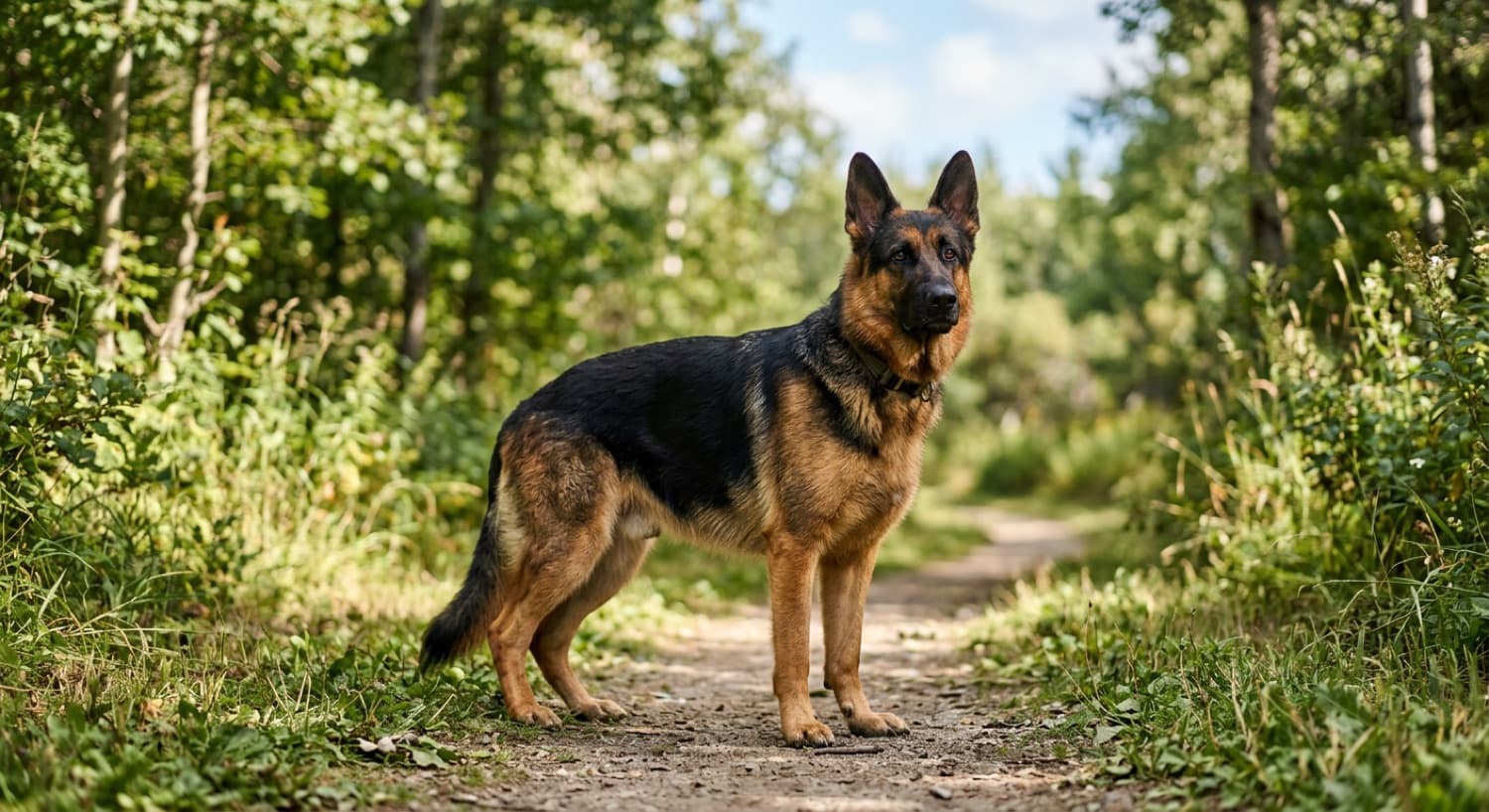
German Shepherds are athletic, capable dogs, but the breed carries a well-known set of health risks, several of them orthopedic and some of them expensive. This is a planning list, so an Ottawa owner knows what to watch for, where the budget goes, and which levers actually move the odds.
Emergency: bloat
A distended or hard belly with unproductive retching, restlessness, pacing, and drooling is possible bloat (GDV), a deep-chested-breed emergency where a dog can die within hours. Go to an emergency vet immediately; do not wait. Ottawa has 24-hour care, including the Alta Vista Animal Hospital. Program the number into your phone before you ever need it.
Hips and elbows: the signature risk
Hip and elbow dysplasia, inherited malformations that cause the joint to fit poorly and develop arthritis, are the German Shepherd’s defining health concern. The breed is among the most affected, partly from genetics and partly from the exaggerated sloped-back conformation bred into some show lines. Watch for stiffness, difficulty rising, reluctance to jump or do stairs, a bunny-hopping gait, and lameness.
Management ranges from weight control, joint supplements, physiotherapy, and anti-inflammatories for milder cases to surgery (including total hip replacement) for severe ones, at thousands of dollars per joint. The prevention that starts before ownership is choosing a breeder who screens hips and elbows (OFA or PennHIP). The prevention you control as an owner is keeping the dog lean, excess weight loads the joints directly, and providing appropriate, non-jarring exercise. Weight management is the single highest-value thing you can do for a Shepherd’s joints.
DM, EPI, and allergies
Degenerative myelopathy. A progressive, painless spinal-cord disease of older Shepherds that gradually weakens the hind legs to paralysis. No cure, but a DNA test identifies at-risk dogs and physiotherapy plus mobility aids maintain quality of life for a time. Distinguish it from treatable hip or disc problems.
EPI (exocrine pancreatic insufficiency). The breed most associated with it. A dog that eats well but loses weight with pale, greasy, voluminous stool needs an EPI test, it is very manageable with lifelong enzyme replacement once diagnosed.
Allergies and skin. Shepherds are prone to environmental and food allergies and related skin problems, which range from a minor nuisance to a chronic management task. For routine-care savings, see our Ottawa low-cost vet guide.
Meet a healthy Shepherd in Ottawa
Rescue German Shepherds come with a vet workup and honest health notes, so you know what you are adopting. Browse available Shepherds and Shepherd mixes from Ottawa and NCR rescues.
See Available German Shepherds →Frequently Asked Questions
What health problems are German Shepherds prone to?
The German Shepherd’s defining health concern is orthopedic: hip and elbow dysplasia, malformed joints that lead to arthritis and can be genuinely disabling, made worse by the breed’s size and, in some lines, an exaggerated sloping back. Beyond joints, Shepherds are prone to bloat/gastric torsion (a life-threatening emergency in deep-chested dogs), degenerative myelopathy (DM, a progressive spinal-cord disease the breed carries genetic risk for), exocrine pancreatic insufficiency (EPI, a digestive enzyme deficiency), allergies and skin problems, and, with age, arthritis. Most are manageable, and the highest-impact things an Ottawa owner can do are keep the dog lean to protect the joints, feed to reduce bloat risk, and buy insurance while the dog is young, since the orthopedic and digestive conditions can get expensive.
How serious is hip and elbow dysplasia in German Shepherds?
It is the breed’s signature health issue and can be serious. Hip and elbow dysplasia are inherited malformations of the joint that cause it to fit poorly, leading to pain, reduced mobility, and progressive arthritis, and German Shepherds are among the breeds most affected, partly from genetics and partly from the exaggerated sloped-back conformation bred into some show lines. Signs include stiffness, difficulty rising, reluctance to jump or climb stairs, a bunny-hopping gait, and lameness. Management ranges from weight control, joint supplements, physiotherapy, and anti-inflammatory medication for milder cases to surgery (including total hip replacement) for severe ones, which can cost thousands per joint. Prevention starts before you own the dog: reputable breeders screen hips and elbows (OFA or PennHIP). For an adopted Shepherd, keeping the dog lean and appropriately exercised is the biggest lever you control.
Are German Shepherds at risk of bloat?
Yes. German Shepherds are deep-chested, and deep-chested breeds are at elevated risk of gastric dilatation-volvulus (GDV, or bloat), where the stomach fills with gas and can twist, cutting off blood supply. It is a true emergency, a dog can die within hours, and signs include a distended or hard belly, unproductive retching, restlessness, pacing, drooling, and collapse. If you see these, get to an emergency vet immediately; do not wait. Reduce risk by feeding two or three smaller meals rather than one large one, avoiding vigorous exercise right after eating, using a slow-feeder if your dog gulps, and not letting the dog gorge on water after exertion. Some owners of at-risk deep-chested dogs elect a preventive gastropexy (surgically tacking the stomach), often done at the same time as spay or neuter, and worth discussing with your vet.
What is degenerative myelopathy in German Shepherds?
Degenerative myelopathy (DM) is a progressive, incurable disease of the spinal cord that German Shepherds carry a genetic predisposition for, typically appearing in older dogs, usually after age eight. It causes a gradual loss of coordination and weakness in the hind legs that slowly progresses to paralysis over months to a couple of years. It is not painful, which distinguishes it from a disc problem or severe hip disease, but it is degenerative and has no cure, though physiotherapy, mobility support, and eventually a cart can maintain quality of life for a time. A DNA test identifies dogs at genetic risk, which is why responsible breeders test breeding stock. If you adopt an older Shepherd developing painless hind-end weakness, ask your vet to distinguish DM from treatable causes like hip arthritis or a disc issue, because the management differs entirely.
What is EPI and do German Shepherds get it?
Exocrine pancreatic insufficiency (EPI) is a condition where the pancreas fails to produce enough digestive enzymes, so the dog cannot properly digest and absorb food, and German Shepherds are the breed most associated with it. The hallmark signs are dramatic: a dog that eats normally or ravenously but loses weight and stays thin, with large volumes of pale, greasy, foul-smelling stool. It usually appears in young adults. The good news is that once diagnosed, with a simple blood test, EPI is very manageable by adding pancreatic enzyme replacement to every meal for life, plus sometimes vitamin B12 supplementation and a suitable diet, and most dogs then thrive. It is a lifelong ongoing cost rather than a crisis. If your Shepherd is eating well but losing weight with abnormal stool, ask your vet specifically about EPI rather than assuming a passing digestive upset.
How much does German Shepherd health care cost in Ottawa?
Routine annual care for a large breed, a wellness exam, vaccines, parasite prevention, and dental attention, runs roughly $1,000 to $1,800 a year for a Shepherd in Ottawa, plus Ontario’s 13 per cent HST, and large-breed food and medication (dosed by weight) add to the baseline. The budget wildcards are significant: hip or elbow surgery can run several thousand dollars per joint, bloat surgery several thousand more, and lifelong conditions like EPI or DM mean ongoing costs. This combination of a large body and several potentially expensive breed conditions is exactly why pet insurance, taken out while the Shepherd is young and healthy, tends to pay off strongly. See our Ottawa low-cost vet guide for routine-care savings, and price insurance before any condition becomes a pre-existing exclusion.
Is pet insurance worth it for a German Shepherd?
For German Shepherds, more than for many breeds, yes, because the breed combines a large body (higher costs for everything) with several potentially expensive conditions, hip and elbow dysplasia, bloat, DM, EPI, and allergies among them. Insurance taken out while your Shepherd is young and healthy, before any condition is documented, locks in coverage before exclusions apply. This matters especially for the orthopedic conditions, since once hip or elbow dysplasia is on the record, no insurer will cover it, and joint surgery is exactly where the big Shepherd bills come from. Premiums for a young large-breed dog commonly run $50 to $90 a month in Ottawa. Compare a couple of providers, read the exclusions carefully (some exclude hip dysplasia or have waiting periods for it), and decide early rather than after the first limp.
How long do German Shepherds live?
German Shepherds typically live 9 to 13 years, which is on the shorter side, reflecting their large size, as bigger breeds generally live less long than small ones. A lean, well-cared-for Shepherd with good genetics reaches the upper end, while joint disease, bloat, or DM can shorten both quality and length of life. Longevity depends heavily on the levers you control: keeping the dog lean to protect the joints and reduce arthritis, feeding to lower bloat risk, staying current on parasite prevention and dental care, and annual (later twice-yearly) vet checks that catch problems early. For Ottawa owners, that lifespan means budgeting for senior care in the dog’s later years, including likely arthritis management and mobility support, and being prepared for the orthopedic issues that so often define a Shepherd’s golden years. An adopted adult Shepherd still has many good years ahead.
Related Guides
New dog? Start with these care guides
Everything a new adopter needs to set up a safe, happy home.