The short answer
A German Shepherd is a working dog that needs a job. The breed is brilliant, loyal, and trainable, naturally aloof with strangers and protective. Thorough socialisation is non-negotiable: it is what prevents the fear-based reactivity that makes a large, powerful dog a liability. Shepherds need 1 to 2 hours daily of exercise plus mental work (training, scent work, sport), or they get anxious and destructive. Train with positive, reward-based methods, harsh corrections damage a Shepherd’s trust and worsen reactivity. Get professional help early for any reactivity. An adult with a known, tested temperament is the safest choice.
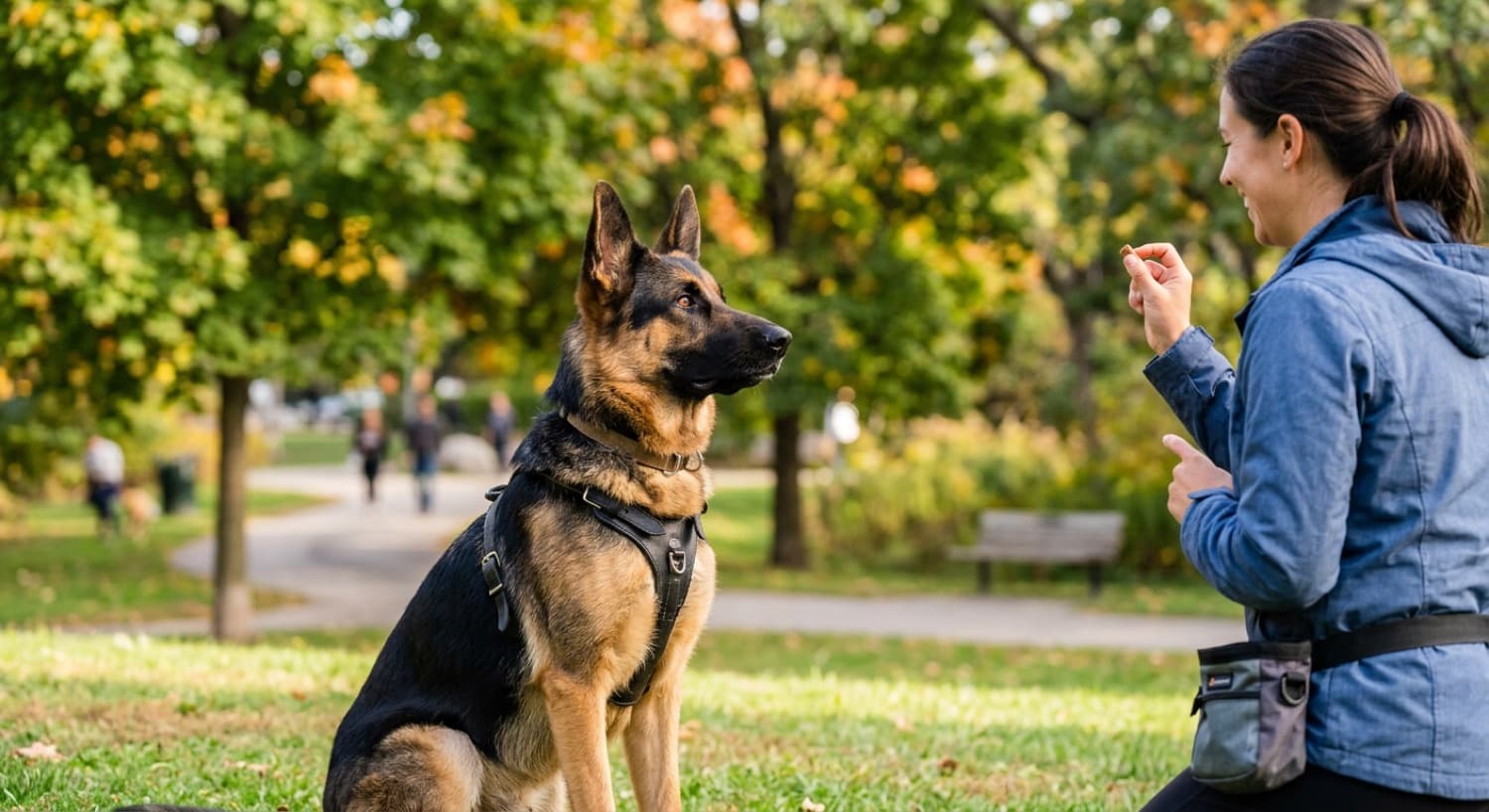
The working temperament shapes everything
The German Shepherd was developed as a versatile working dog, and that heritage explains the breed you live with: intelligent, driven, loyal, courageous, and happiest with a job. The Canadian Kennel Club describes the Shepherd as a direct, fearless, and confident dog, aloof rather than instantly friendly with strangers.
That natural aloofness and protectiveness are assets when balanced by good socialisation and training, and liabilities when they are not. A Shepherd is not a dog you can under-invest in and expect to coast; it is a partnership that rewards leadership, structure, mental engagement, and a strong bond. Meet those needs and you get one of the most capable, devoted companions in the dog world. Neglect them and the same intelligence and drive turn into anxiety, reactivity, and trouble.
Socialisation prevents reactivity
This is the single most important thing to get right with a Shepherd. The breed’s wariness of strangers plus its size and strength mean an under-socialised Shepherd can become fearful and reactive in ways that are hard to live with and potentially dangerous. Thorough, positive socialisation, calm exposure to many people, dogs, places, and situations, teaches the dog that its default should be confidence, not suspicion.
For a rescued adult who may have missed early socialisation, this becomes patient confidence-building at the dog’s pace, ideally with a positive-reinforcement trainer. If reactivity is already present, lunging or barking at people or dogs, treat it as fear-based and get professional help early: manage distance from triggers, build positive associations, and reward calm, never punish, which deepens fear. Settling a newly adopted Shepherd in the first days is covered in our first-week rescue dog guide.
Find your German Shepherd in Ottawa
Adult rescue Shepherds come with foster notes on temperament, drive, and how they do with strangers, kids, and other animals, so you can match the individual to your home. Browse live NCR inventory.
See Available German Shepherds →Exercise the body and the brain
A Shepherd needs one to two hours of activity a day, more for a young or working-line dog, and crucially it must include mental work. Physical exercise (walks, running, fetch, hiking) matters, but the breed craves the engagement of training, scent work, puzzle toys, and dog sports like tracking, agility, or rally, which Shepherds excel at. A Shepherd with a job is calm and content; an under-stimulated one becomes restless, anxious, and destructive.
In an Ottawa winter, keep the routine going, Shepherds love the cold, and use secure off-leash exercise at spaces like Bruce Pit or Conroy Pit once recall is reliable (see our off-leash parks guide), plus indoor mental work on the coldest days. Use positive, reward-based training to channel the brilliant mind, and remember that with this breed, mental fatigue settles the dog more reliably than physical exercise alone.
Frequently Asked Questions
What is a German Shepherd’s temperament really like?
A well-bred, well-raised German Shepherd is confident, intelligent, loyal, and deeply bonded to its family, courageous without being aggressive, and famously trainable, which is why the breed excels at police, military, service, and sport work. They are naturally somewhat aloof or reserved with strangers rather than instantly friendly, and protective of their people, which is a feature when balanced by good socialisation and a bug when it tips into fear or reactivity. Shepherds are working dogs to the core: they need a job, mental engagement, and a strong bond with an owner who provides leadership and structure. Poorly-bred or under-socialised Shepherds can be nervous, reactive, or over-protective, which is where the breed’s occasional bad reputation comes from. The temperament you get depends heavily on genetics, socialisation, and training, so adopting an adult with a known, tested temperament is a real advantage.
Why is socialisation so important for German Shepherds?
Because the breed’s natural wariness of strangers, combined with its size, strength, and protectiveness, means an under-socialised Shepherd can become fearful or reactive in ways that are genuinely difficult to live with and potentially dangerous. Thorough, positive socialisation, calm exposure to many people, dogs, environments, sounds, and situations from as early as possible, teaches the dog that the world is safe and that its default response should be confidence, not suspicion. For a puppy, the early weeks and months are critical. For an adopted adult who may have missed that window, socialisation becomes ongoing, patient confidence-building at the dog’s pace, ideally with help from a positive-reinforcement trainer. This is not optional polish for a Shepherd, it is core safety and welfare work, because a well-socialised Shepherd is a stable, trustworthy companion, while an unsocialised one is a liability the breed does not deserve.
Are German Shepherds aggressive or reactive?
Not inherently, but they can become reactive if poorly bred, under-socialised, or badly handled, and their size makes reactivity a serious matter. A stable, well-socialised Shepherd is confident and controlled, aloof with strangers but not aggressive. Reactivity, lunging, barking, or aggressing at people or dogs, is almost always rooted in fear, frustration, or lack of socialisation rather than the breed being "mean," and it is made worse by punishment, which increases fear. The right approach is prevention through early socialisation, and for an existing problem, a behaviour-modification programme with a qualified positive-reinforcement trainer or behaviourist: managing distance from triggers, building positive associations, and rewarding calm. Because a reactive large dog is both a welfare and a safety concern, get professional help early rather than hoping it resolves on its own. Most Shepherd reactivity is preventable and, with work, manageable.
How much exercise does a German Shepherd need?
A lot, and it must include mental work, not just physical exercise. A German Shepherd needs a minimum of one to two hours of activity a day, and often more for a young or working-line dog, split between physical exercise (walks, running, fetch, hiking) and the mental engagement the breed craves (training, scent work, puzzle toys, obedience, and dog sports like tracking, agility, or rally, at which Shepherds excel). A Shepherd is happiest with a job. An under-exercised, under-stimulated Shepherd becomes restless, anxious, destructive, and harder to manage, which is a leading path to surrender. In an Ottawa winter, keep up the routine, Shepherds love the cold and snow, and lean on secure off-leash exercise at spaces like Bruce Pit or Conroy Pit (once recall is solid) plus indoor mental work on the most brutal days. Physical tiredness alone does not satisfy this breed; the brain needs work too.
Are German Shepherds easy to train?
They are one of the most trainable breeds in the world, highly intelligent, eager to work, and quick to learn, which is exactly why they dominate police, military, and service roles. That trainability is a gift and a responsibility: a Shepherd will learn whatever you teach, good habits or bad, so consistency and early training matter. Use positive, reward-based methods, harsh corrections can damage the trust and confidence a Shepherd relies on and can worsen fear or reactivity in a sensitive dog. Start early, keep the brilliant mind engaged with progressively challenging work, and channel the drive into obedience, tricks, scent work, and sport. Enrol in a positive-reinforcement class both for the training and the socialisation. The main risk with a Shepherd is not that it cannot learn but that a bored, under-trained one will find its own outlets, so give this working brain a job.
Are German Shepherds good with kids and other pets?
A well-socialised, well-bred Shepherd is typically excellent with its family’s children, loyal, gentle, and protective, though the size and energy mean supervision with young kids is wise simply to prevent accidental knocks. As with any dog, teach children to respect the dog and never leave very young children unsupervised with any large dog. With other pets, early socialisation is key: many Shepherds live happily with other dogs and cats they were raised alongside, but some have a strong prey drive toward cats or small animals, and some are dog-selective, so introductions should be careful and a rescue’s notes on how the individual dog does with other animals are important. The breed’s protectiveness and drive make a specific dog’s tested temperament, rather than breed generalisations, the thing to go on, which is another argument for adopting an adult whose behaviour is known.
Do German Shepherds do okay when left alone?
They can, with training and enough exercise, but Shepherds bond intensely and are prone to boredom and separation-related distress if left too long without an outlet, which can show up as destruction, barking, or anxiety. Set them up to succeed: give a solid physical and mental workout before you leave, provide safe chews or puzzle feeders, build up alone-time gradually rather than all at once, and never use the crate as punishment. A Shepherd tired in body and brain settles far better than one merely left alone with pent-up energy. If you work long hours away from home, plan for a midday walk, a dog walker, or daycare, because a Shepherd left alone all day every day with nothing to do is a recipe for the very behaviours that lead to surrender. For a working breed, mental fatigue matters as much as physical, so a genuinely-tired Shepherd is a calm housemate.
Related Guides
New dog? Start with these care guides
Everything a new adopter needs to set up a safe, happy home.