The short answer
Bloat (GDV) is the Great Dane’s #1 health threat, a sudden, often-fatal stomach emergency the breed is highly prone to, so bloat awareness, prevention, and a preventive gastropexy are the most important part of ownership. Also plan for heart disease (DCM), hip and elbow dysplasia, wobbler syndrome, and bone cancer. The breed is short-lived (7 to 10 years). Routine Ottawa care runs $1,200 to $2,000 a year plus HST, but a bloat surgery, cardiac care, or cancer treatment can run into the thousands. Insure early, before any condition becomes a pre-existing exclusion. Keep the dog lean, feed a proper giant-breed diet, and make all health decisions with your vet.
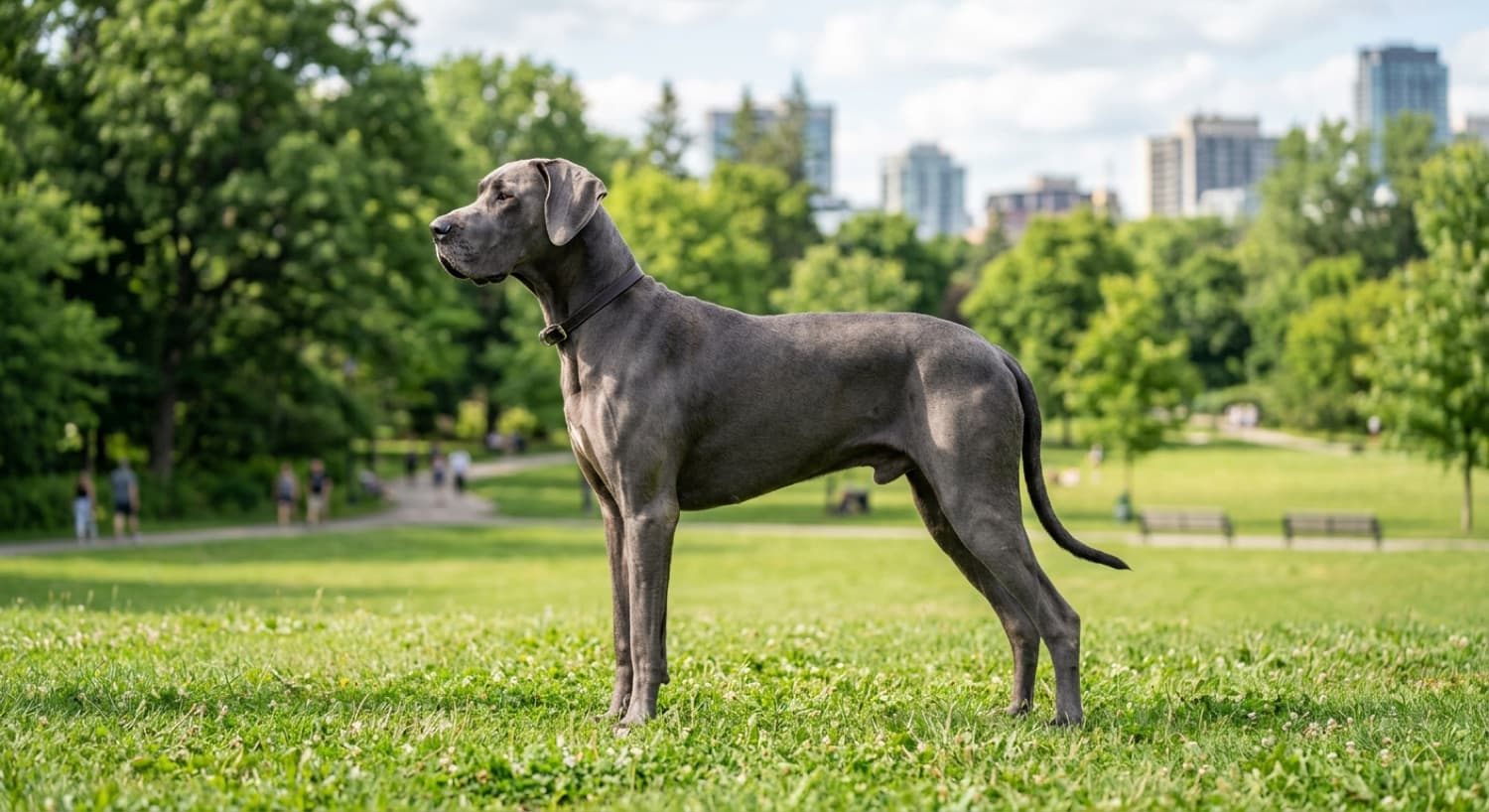
Great Danes are among the most gentle and affectionate of all dogs, and there is no honest health guide without being direct: this giant breed faces serious health challenges, with bloat, heart disease, and a short lifespan at the centre. Knowing this before you adopt lets you plan, prevent, monitor, and cherish the time. This is a planning list, and every point should be discussed with your own veterinarian for your individual dog.
Emergency: bloat
A distended or hard belly with unproductive retching, restlessness, pacing, drooling, and collapse is bloat (GDV), a giant-breed emergency where a dog can die within hours. Go to an emergency vet immediately; do not wait. This is the breed’s leading killer, learn the signs cold. Ottawa has 24-hour care, including the Alta Vista Animal Hospital. Save the number now, and read our full bloat guide.
Bloat: the defining emergency
Bloat (GDV) is the single biggest health threat to the breed, and Great Danes have one of the highest lifetime risks of any dog. The stomach fills with gas and twists, cutting off blood supply and becoming life-threatening within hours; without emergency surgery it is frequently fatal. Because the risk is so high and the emergency so severe, bloat awareness and prevention are arguably the most important part of owning a Dane.
That means knowing the warning signs cold, following feeding practices that reduce risk, and, very importantly for this breed, discussing a preventive gastropexy (a surgical stomach-tacking, often done at spay or neuter) with your vet. We cover all of this in depth in our dedicated bloat (GDV) guide, because for a Great Dane, being prepared for bloat can genuinely save the dog’s life.
Heart, joints, wobbler, and cancer
Heart (DCM). Dilated cardiomyopathy weakens the heart muscle and can cause heart failure or sudden death. Cardiac screening is valuable; treat fainting, collapse, or laboured breathing as needing prompt care.
Joints. Hip and elbow dysplasia are common in the giant frame. Keep the dog lean, feed a proper giant-breed diet, avoid overexercising a growing puppy, and use joint support.
Wobbler syndrome. A neck-spine condition causing a wobbly gait and neck pain, often in young to middle-aged Danes. Have any wobbly gait assessed promptly.
Bone cancer (osteosarcoma). Giant breeds are predisposed; act promptly on any persistent lameness, swelling, or lump. Hypothyroidism also occurs. For routine-care savings, see our Ottawa low-cost vet guide.
Meet a Great Dane in Ottawa
Rescue Danes come with a vet workup and honest health notes, so you know what you are adopting. Browse available Great Danes and Dane mixes from Ottawa and NCR rescues.
See Available Great Danes →Frequently Asked Questions
What health problems are Great Danes prone to?
The most urgent and important Great Dane health issue is bloat (gastric dilatation-volvulus, or GDV), a sudden, life-threatening stomach emergency that giant deep-chested breeds are highly prone to, and it is a leading cause of death in the breed. Because it is so critical, we cover it in a dedicated guide. Beyond bloat, Great Danes are prone to heart disease (particularly dilated cardiomyopathy, DCM), hip and elbow dysplasia and other joint problems, wobbler syndrome (a neck-spine condition), bone cancer (osteosarcoma, to which giant breeds are predisposed), hypothyroidism, and, related to their giant size, a short lifespan of 7 to 10 years. This is a serious health profile, and prospective owners must go in fully informed, prioritise bloat prevention and awareness, and strongly consider pet insurance. Many Danes still live happy lives, but the breed’s health, and the reality of likely fewer years, is central to the decision. Every point here should be discussed with your veterinarian.
Why is bloat such a serious risk for Great Danes?
Bloat (GDV) is the single biggest health threat to the breed, and Great Danes have one of the highest lifetime risks of any dog, some studies suggest a large proportion of Danes will experience it. It occurs when the stomach fills with gas and then twists on itself, cutting off blood supply and rapidly becoming life-threatening, a dog can go from normal to critical in a matter of hours, and without emergency surgery it is frequently fatal. Because the risk is so high and the emergency so severe, bloat awareness and prevention are arguably the most important part of owning a Great Dane. This includes knowing the warning signs (a distended belly, unproductive retching, restlessness, drooling, collapse), feeding practices that reduce risk, and, very importantly for this breed, discussing a preventive gastropexy (a surgical stomach-tacking, often done at spay or neuter) with your vet. We cover all of this in depth in our dedicated bloat guide, because for a Great Dane, being prepared for bloat can genuinely save the dog’s life.
Do Great Danes have heart problems?
Yes, heart disease is a significant concern in the breed, particularly dilated cardiomyopathy (DCM), a condition in which the heart muscle weakens and enlarges, losing its ability to pump effectively, which can lead to heart failure or sudden death. Great Danes are among the breeds predisposed to DCM. It can progress with few outward signs early on, and when symptoms appear they include exercise intolerance, coughing, laboured breathing, weakness, fainting, and a swollen belly. Because of this, cardiac screening is valuable for the breed, reputable breeders screen breeding stock, and your vet may recommend periodic heart checks (which can include an echocardiogram) for your dog. There is no cure, but early detection allows medication that can slow progression and improve quality of life. If you adopt a Great Dane, discuss heart monitoring with your vet, and treat any fainting, collapse, or laboured breathing as needing prompt veterinary attention. Heart health is a key part of caring for the breed.
What is wobbler syndrome in Great Danes?
Wobbler syndrome (cervical vertebral instability or cervical spondylomyelopathy) is a condition affecting the vertebrae and discs in the neck, causing compression of the spinal cord, and Great Danes are one of the breeds predisposed to it, often appearing in young to middle-aged dogs. The name comes from the characteristic wobbly, unsteady gait it produces, particularly in the hind legs, along with neck pain, a reluctance to move the neck, and in more severe cases weakness or difficulty walking. It relates in part to the breed’s rapid giant-breed growth. Diagnosis involves imaging (often MRI), and treatment ranges from anti-inflammatory medication, rest, and activity modification for milder cases to surgery for severe ones, which is costly for a giant dog. If your Great Dane develops a wobbly gait, neck stiffness or pain, or hind-end weakness, have it assessed promptly, as early management gives the best outcome. Feeding an appropriate giant-breed puppy diet to control growth rate may help reduce the risk during development.
How much does Great Dane health care cost in Ottawa?
High, reflecting the breed’s giant size and demanding health profile. Routine annual care, a wellness exam, vaccines, parasite prevention, and dental, runs roughly $1,200 to $2,000 a year in Ottawa plus Ontario’s 13 per cent HST, but giant-breed food and weight-dosed medication add significantly, and the total cost of keeping a Dane runs much higher than a smaller dog. The budget wildcards are substantial: emergency bloat surgery can run several thousand dollars (and a preventive gastropexy is a worthwhile planned cost), cardiac care for DCM means monitoring and medication, joint or wobbler surgery is expensive for a giant breed, and cancer treatment can run into many thousands. This combination of a giant body and serious, common conditions makes the Great Dane one of the most expensive breeds to own, and it is exactly why pet insurance, taken out while the dog is young and healthy, is strongly advised. See our Ottawa low-cost vet guide for routine-care savings, and price insurance early.
Is pet insurance worth it for a Great Dane?
For Great Danes, yes, strongly, given the breed’s combination of a giant size and a high risk of expensive, often sudden conditions, bloat above all, plus heart disease, bone cancer, and joint problems. The odds of a significant vet bill over the dog’s (sadly short) life are high, and a single bloat surgery or cancer treatment can be very expensive. Insurance taken out while your Dane is young and healthy, before any condition is documented, locks in coverage before exclusions apply. This matters enormously, because once heart disease, a joint problem, or another condition is on the record, no insurer will cover it, and those are exactly the conditions that generate the big Dane bills. Premiums run higher for a giant breed with this risk profile, commonly $70 to $130 a month in Ottawa, but a single major surgery can dwarf years of premiums. Insure early, read the exclusions carefully, and confirm the breed’s known conditions, including bloat and cardiac disease, are covered from the start.
How can I help my Great Dane live longer and better?
While you cannot change the breed’s giant-size predisposition to a short lifespan, several things genuinely support the best possible quality and length of life. Bloat prevention is paramount, learn the warning signs, follow feeding practices that reduce risk, and strongly consider a preventive gastropexy with your vet, because bloat is the breed’s leading killer and largely a preventable-or-survivable emergency with preparation. Keep the dog lean (obesity worsens joints and heart strain) and feed an appropriate diet, especially a proper giant-breed puppy diet during growth to reduce joint and wobbler risk. Provide moderate, joint-friendly exercise (avoid overexercising a growing puppy). Maintain cardiac and general veterinary monitoring so problems are caught early, and act promptly on any lumps or lameness given the bone-cancer risk. Provide a big, cushioned bed and warmth. And cherish the time. Discuss a wellness and monitoring plan tailored to the breed’s risks with your vet.
Related Guides
New dog? Start with these care guides
Everything a new adopter needs to set up a safe, happy home.