The short answer
The Pyr is a livestock-guardian breed, and its defining traits are guardian instincts. It barks a lot (bred to warn off predators, especially at night, a real neighbour issue in the city, manageable but not trainable away). It roams and escapes (secure fencing essential, never off-leash in unfenced areas). It is independent and stubborn (patient positive training, never precision obedience). And it is naturally protective (thorough socialisation keeps the guarding appropriate). A mature Pyr is calm and mellow indoors with moderate exercise needs, so the work is temperament management, not exercise. Best in a house with a fenced yard, not an apartment, and it thrives in Ottawa winters.
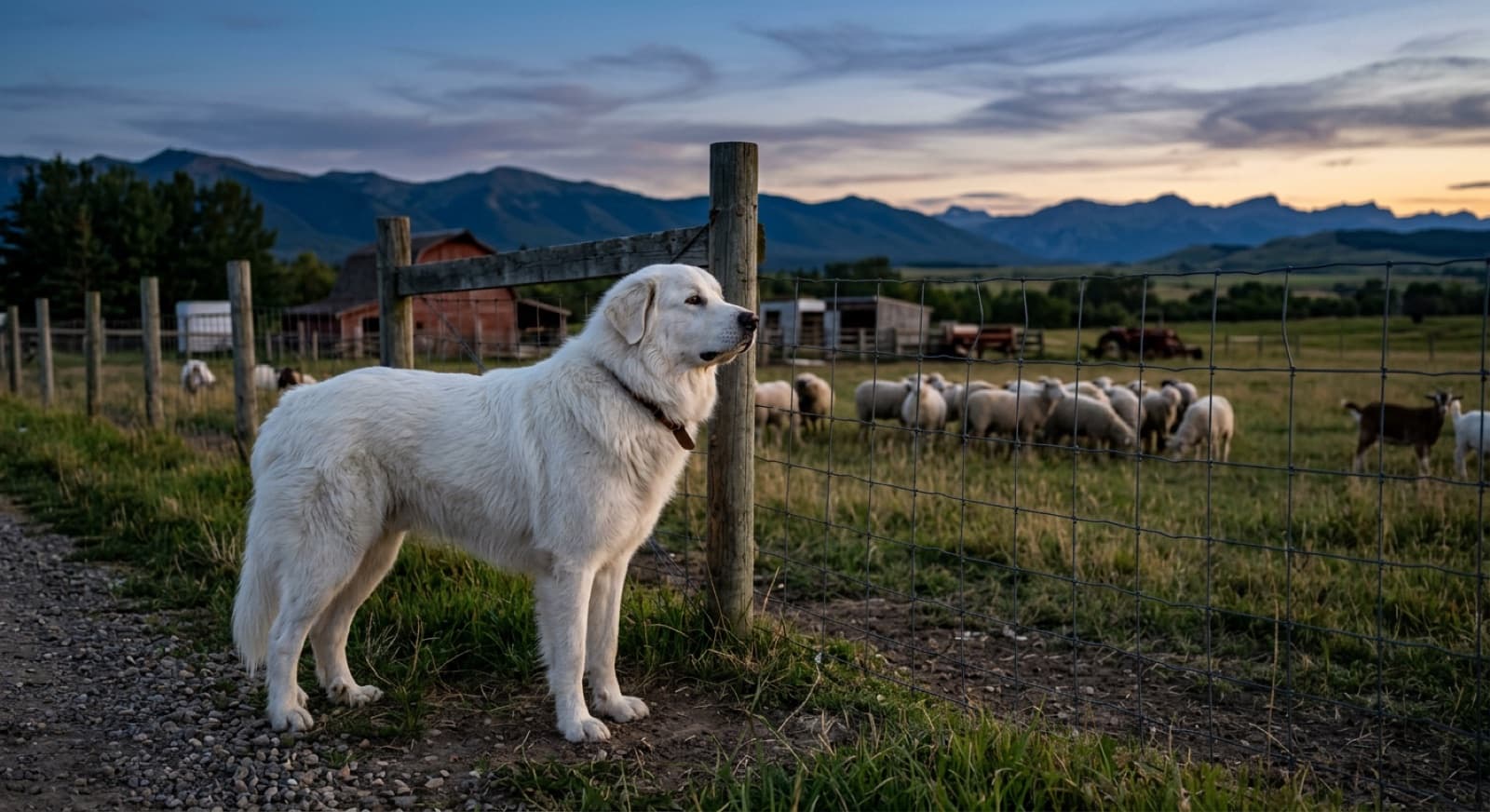
To live happily with a Great Pyrenees, you have to understand what it is: a livestock-guardian dog, bred over centuries to watch over flocks independently, barking to warn off predators and patrolling a wide territory. Every distinctive behaviour, the barking, the roaming, the stubbornness, the protectiveness, traces back to that job. Understand the guardian, and the breed makes sense.
Barking and roaming are the two make-or-break traits
The barking (especially at night) and the roaming/escape instinct are the two guardian traits most likely to cause problems in a city or suburb. Bring the dog in at night and manage barking triggers, and provide secure fencing with no off-leash freedom in unfenced areas. If total quiet or off-leash reliability is what you need, this is not the breed.
Managing the guardian traits
Barking is intrinsic, manage rather than eliminate it: indoors at night, address triggers, provide companionship and engagement, and never leave the dog outside to bark. Roaming demands a sturdy, tall, dig-proofed fence checked regularly, reliable gates, and leashed walks; assume the instinct is present from day one and keep the microchip and ID current.
Independence means patient, positive training focused on essentials (manners, polite walking, handling, and above all socialisation), never force, and realistic expectations, no precision obedience. Protectiveness is a feature to shape through thorough, positive socialisation so the guarding stays appropriate. A well-socialised Pyr is a calm, discerning, gentle guardian. See our Pyrenees adoption guide for the ownership picture, and the Canadian Kennel Club for breed background.
Ready for a guardian breed?
If you have the right home and understand the guardian traits, a Pyr is a magnificent companion. Browse available Great Pyrenees and Pyr mixes from Ottawa and Ontario rescues, refreshed regularly.
See Available Great Pyrenees →Frequently Asked Questions
Why do Great Pyrenees bark so much, and can I stop it?
Great Pyrenees bark because they were bred to, for centuries their job was to guard flocks by patrolling and barking to warn off predators, often through the night, and that barking is a deeply ingrained instinct, not a training flaw, so it cannot be trained away entirely, only managed. A Pyr will bark at sounds, movement, unfamiliar people or animals, and things you cannot perceive, and they are notably vocal at night when their guarding instinct peaks. You can reduce and manage it, but you must accept that some barking is intrinsic to the breed. Management strategies include: keeping the dog indoors at night (a Pyr left outside will bark at everything all night, which is untenable near neighbours), addressing specific triggers, providing enough companionship and mental engagement (a bored or isolated Pyr barks more), never leaving the dog alone outside for long periods, and working with a positive-reinforcement trainer on interrupting and redirecting excessive barking. In a rural or acreage setting the barking is far more manageable; in a close-neighbour Ottawa neighbourhood it is a genuine consideration that can lead to complaints, so an urban Pyr owner must actively manage it and set realistic expectations. If total quiet is what you need, this is not the breed, but with management, a Pyr’s barking can be kept to a livable level.
Are Great Pyrenees escape artists?
Yes, Great Pyrenees have a strong roaming and territorial instinct and are known to wander and escape, which is why secure containment is essential for the breed. Historically, a Pyr’s guardian role involved patrolling a large territory, and that wide-ranging instinct persists: a Pyr that gets loose may roam a considerable distance, patrolling what it considers its expanded domain, and they are large, strong dogs capable of pushing through, jumping, or digging under inadequate fencing. This makes them a real flight risk in unfenced situations, and, combined with an independent temperament and imperfect recall, means a Great Pyrenees should never be trusted off-leash in an unfenced area, they may simply wander off, ignoring calls. Secure containment means a sturdy, tall-enough fence (checked for gaps and dig spots, as a determined Pyr will test it), reliable gates, and vigilance about doors and openings, and off-leash freedom should be limited to securely fenced areas. On walks, keep the dog leashed. This roaming instinct is one reason the breed suits a house with a properly fenced yard rather than apartment living or off-leash lifestyles. For an adopted Pyr, assume the roaming instinct is present and set up secure containment from day one, and keep the microchip and ID current in case the dog ever does get loose.
Are Great Pyrenees hard to train?
Great Pyrenees are intelligent but independent and stubborn, so they are more challenging to train than a biddable breed, and understanding why helps set realistic expectations. Livestock-guardian dogs were bred to work alone, making their own decisions to protect the flock without waiting for human direction, so a Pyr does not have the eager-to-please, take-direction wiring of a retriever or shepherd; instead it evaluates whether a request makes sense to it and often decides for itself. This means training relies on patience, consistency, positive reinforcement, and a relationship of mutual respect, not repetition or force (a Pyr that feels pushed simply digs in), and even a well-trained Pyr will retain an independent streak and imperfect reliability, especially recall. Focus training on the essentials, basic manners, walking politely (important for a giant dog), accepting handling and grooming, and, above all, thorough socialisation so the guardian instinct stays appropriate rather than tipping into inappropriate suspicion. Keep sessions short, positive, and rewarding, start early, and consider a trainer experienced with independent or guardian breeds. Do not expect precision obedience or off-leash reliability; expect a dignified, thinking dog that cooperates because the relationship is good. This is not a beginner’s training project, but a patient owner is rewarded with a calm, well-mannered giant.
Are Great Pyrenees protective, and is that a problem?
Yes, Great Pyrenees are naturally protective, that is the essence of the breed, and whether it is a benefit or a problem depends almost entirely on socialisation and management. A Pyr forms a strong bond with its family and territory and instinctively watches over them, which makes the breed a wonderful, gentle guardian of home and family (often extending protective, patient care to the family’s children and pets). But an unsocialised or poorly managed Pyr’s protectiveness can tip into inappropriate wariness or reactivity toward visitors, other dogs, or strangers, which is why thorough, positive socialisation from an early age (or, for a rescue, careful ongoing socialisation) is essential to raise a Pyr whose default toward the unfamiliar is calm discernment rather than suspicion. Practically, this means positive exposure to many people, dogs, and situations, teaching the dog that guests are welcome, and managing introductions and interactions thoughtfully, especially given the dog’s size. A well-socialised Pyr is a mellow, confident guardian that is friendly and tolerant with proper introductions while remaining watchful, exactly the balanced temperament the breed is meant to have. The protectiveness is a feature, not a bug, but it must be shaped. For an adopted Pyr, ask the rescue about the dog’s socialisation and behaviour with strangers, and continue socialisation thoughtfully in your home.
Can a Great Pyrenees be happy in a suburban Ottawa home?
Yes, a Great Pyrenees can be happy and well-adjusted in a suburban Ottawa home, but only if the home genuinely suits the breed and the owner manages its guardian traits, and it is worth being honest about the fit. The best setting for a Pyr is a house with a securely fenced yard and reasonable space, where the dog has room, a proper fence for its roaming instinct, and an owner who understands and manages the barking. In that context, a mature Pyr is often a calm, mellow, dignified housemate, they are not high-energy dogs indoors and have moderate exercise needs, so the challenge is temperament management (barking, roaming, independence, protectiveness) rather than exercise. Where the fit breaks down is dense-urban or apartment living: the barking becomes a neighbour problem, the space is inadequate, and the roaming instinct is frustrated, so an apartment is generally a poor fit. The climate, happily, is ideal, this mountain breed loves Ottawa’s cold and snow and often prefers to be outside in winter (with shelter and supervision), while summer heat needs sensible management for such a heavily coated dog. So a suburban Ottawa home with a fenced yard, tolerance for shedding and some barking, and an owner committed to socialisation and secure containment can be a wonderful home for a Great Pyrenees. The breed asks for the right setting, but rewards it with a magnificent, gentle presence.
Related Guides
New dog? Start with these care guides
Everything a new adopter needs to set up a safe, happy home.