The short answer
As a giant breed, plan for hip and elbow dysplasia and joint issues (more consequential in a heavy dog), patellar luxation, and the serious risk of bloat (GDV), a life-threatening emergency every Pyr owner must recognise (consider a preventive gastropexy). Also watch for heart and eye conditions, hypothyroidism, and elevated cancer risk with age. Crucially, Pyrs can be sensitive to anesthesia and certain drugs, so ensure your vet knows the breed. They live 10 to 12 years (good for a giant). Routine Ottawa care runs $1,100 to $1,900 a year plus HST, with big emergencies possible. Keep the dog lean and insure early. Make all health decisions with your vet.
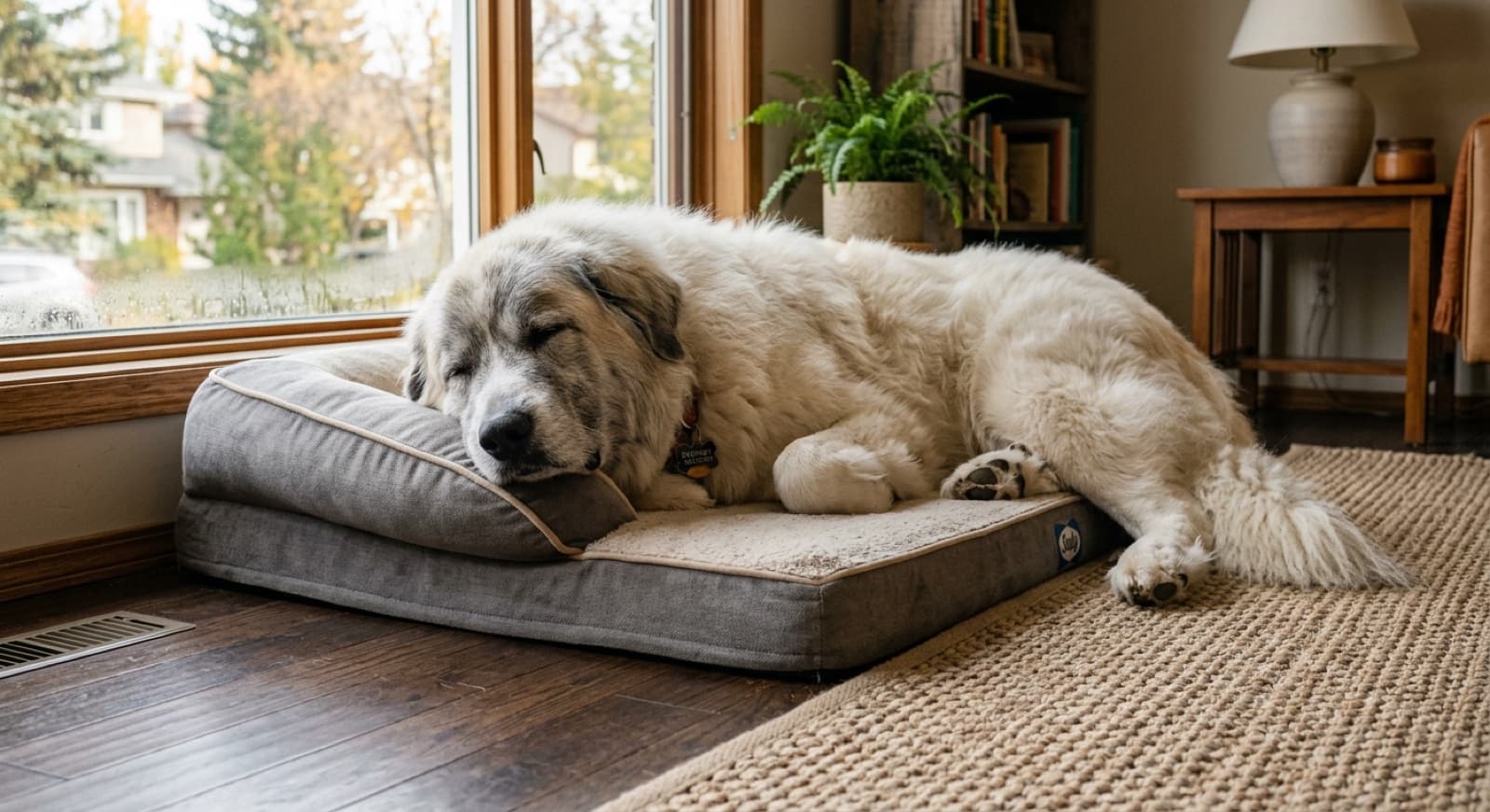
Great Pyrenees health is, in large part, giant-breed health: the joints, the risk of bloat, the shorter lifespan, and the higher costs that come with a very large dog, plus a couple of breed-specific notes like anesthesia sensitivity. Understanding these lets an Ottawa owner plan and protect the dog. This is a planning list; every point should be discussed with your own veterinarian, who should always be told the breed.
Bloat (GDV) is a race against the clock
A distended abdomen, unproductive retching, restlessness, drooling, and collapse point to bloat, a life-threatening emergency in deep-chested giant breeds that can kill within hours and needs immediate surgery. Get to an emergency vet at once, this is never wait-and-see. Ottawa has 24-hour care including the Alta Vista Animal Hospital. Ask your vet about a preventive gastropexy, and save the emergency number now.
Joints, bloat, and giant-breed considerations
Joints. Hip and elbow dysplasia and patellar luxation are the main orthopedic concerns, and they matter more in a heavy dog. Keep the Pyr lean, manage growth carefully in puppyhood (appropriate giant-breed diet, no over-feeding or over-exercising), and value breeders who screen. Severe cases may need major surgery.
Bloat. The deep chest puts the breed at real GDV risk; feed smaller meals, avoid heavy exercise around meals, and discuss a preventive gastropexy with your vet. Know the signs (above).
Other. Heart and eye conditions, hypothyroidism, and elevated cancer risk (including bone cancer) with age all occur, and giant breeds have shorter lifespans. Critically, ensure any vet knows the breed’s anesthesia and drug sensitivities. For routine-care savings, see our Ottawa low-cost vet guide, and the Canadian Kennel Club for breed background.
Meet a healthy Pyrenees in Ottawa
Rescue Pyrs come with a vet workup and honest health and temperament notes. Browse available Great Pyrenees and Pyr mixes from Ottawa and Ontario rescues.
See Available Great Pyrenees →Frequently Asked Questions
What health problems are Great Pyrenees prone to?
As a giant breed, the Great Pyrenees carries the health considerations common to very large dogs, plus a few of its own. The main orthopedic concerns are hip and elbow dysplasia (malformed joints leading to arthritis, more consequential in a heavy dog), patellar luxation, and, because of their size and growth, other joint and bone issues. Bloat (gastric dilatation-volvulus, GDV) is a serious, life-threatening emergency that deep-chested giant breeds like the Pyrenees are at real risk for. They can also be prone to certain heart conditions, eye conditions (including entropion and cataracts), hypothyroidism, a neurological/spinal condition, luxating patella, and, as with many giant breeds, an elevated risk of certain cancers (including bone cancer, osteosarcoma) with age. A breed-specific note: Great Pyrenees can be sensitive to anesthesia and certain drugs, so always ensure any vet is aware of the breed. Giant breeds also have shorter lifespans than smaller dogs. Most of these are managed through good breeding (health-tested parents), keeping the dog lean, appropriate growth in puppyhood, bloat awareness, and attentive veterinary care. Always make health decisions for your individual dog with your veterinarian, and ensure your vet knows the breed’s drug sensitivities.
What is bloat, and why is it a risk for Great Pyrenees?
Bloat, medically gastric dilatation-volvulus (GDV), is a sudden, life-threatening emergency in which the stomach fills with gas and can twist on itself, cutting off blood supply, and it is one of the most important things for any giant, deep-chested breed owner, including Great Pyrenees owners, to understand, because it can kill a dog within hours and requires immediate emergency surgery. The signs every Pyr owner must know include a distended or swollen abdomen, unproductive retching (trying to vomit but nothing coming up), restlessness and obvious distress, drooling, pacing, and collapse, and if you see these, it is a race to an emergency vet, not a wait-and-see situation. Because the Great Pyrenees is a large, deep-chested breed, the risk is real. Risk-reduction strategies discussed with your vet include feeding smaller meals rather than one large one, avoiding heavy exercise right before and after eating, using measures to slow fast eaters, and, importantly, considering a preventive gastropexy (a surgery that tacks the stomach in place to prevent the twist), which is often done at the same time as spay/neuter and is worth discussing for a giant breed. Knowing the signs and having an emergency plan (and the number of a 24-hour Ottawa vet) is essential for any Great Pyrenees owner, this is the one condition where minutes matter.
Do Great Pyrenees have hip and joint problems?
Yes, hip and elbow dysplasia and other joint issues are among the most important health considerations for the breed, as with most giant dogs, because the sheer size and weight make joint problems more consequential. Hip and elbow dysplasia are inherited malformations that lead to arthritis, with signs including stiffness, difficulty rising, reluctance to climb or jump, a swaying or altered gait, and lameness, and in a dog this large, advanced arthritis significantly affects quality of life and mobility. Patellar luxation (slipping kneecaps) also occurs. Management ranges from weight control, joint supplements, physiotherapy, and anti-inflammatory medication for milder cases to surgery for severe ones, though surgery on a giant breed is a bigger undertaking. Prevention starts with breeders who screen hips and elbows (OFA or equivalent), and the biggest levers an owner controls are keeping the dog lean (excess weight dramatically worsens joint disease in a giant breed), managing growth appropriately in puppyhood (giant-breed puppies should not be overfed or over-exercised while their joints develop, and need an appropriate large/giant-breed diet), and providing sensible, non-jarring exercise. For an adopted Pyrenees, weight management and joint support are among the most valuable things you can do for long-term comfort and mobility in a breed where the joints carry so much.
How much does Great Pyrenees health care cost in Ottawa?
A Great Pyrenees is a giant breed, so nearly every cost scales up. Routine annual care, a wellness exam, vaccines, parasite prevention (dosed for a large dog), and dental attention, runs roughly $1,100 to $1,900 a year in Ottawa, plus Ontario’s 13 per cent HST, and giant-breed medication doses and food add real ongoing cost. The budget wildcards are significant: emergency bloat surgery (GDV) can run several thousand dollars, and a preventive gastropexy is a worthwhile but real upfront cost; hip or elbow surgery on a giant breed is a major expense; and cancer treatment (giant breeds have elevated cancer risk with age) can be very costly. Anesthesia and any surgery cost more for a dog this size, and the breed’s drug sensitivities mean careful (sometimes specialist) veterinary handling. Because giant breeds combine higher baseline costs with the potential for expensive emergencies, budgeting realistically, and considering pet insurance, matters a great deal for this breed. Keeping the dog lean is the single most cost-effective health measure, protecting the joints and reducing many risks. See our Ottawa low-cost vet guide for routine-care savings, and always ensure your vet is aware of the breed for anesthesia and drug considerations.
Is pet insurance worth it for a Great Pyrenees?
Often yes, and arguably more so than for many breeds, because the Great Pyrenees combines giant-breed baseline costs with the potential for genuinely expensive emergencies and conditions, bloat surgery, giant-breed orthopedic surgery, and cancer care can each run into the thousands, and insurance taken out while the dog is young and healthy locks in coverage before anything becomes a pre-existing exclusion. This matters especially for the hips and any early joint changes: if dysplasia is already documented, no insurer will cover the eventual care, and joint disease is common in the breed. The unpredictable big-ticket items (bloat, cancer, orthopedic surgery) are exactly what insurance is designed for. Premiums for a young giant breed are typically higher than for a small dog (reflecting the size and risk), often $60 to $110 a month in Ottawa, but the potential payouts are correspondingly large. Weigh it against your savings buffer: giant-breed emergencies are among the most expensive in veterinary medicine, so if you could not comfortably absorb a several-thousand-dollar surgery, insurance is sensible. For an adopted adult Pyrenees, ask the rescue about any known joint or health issues before insuring, since those may already be excluded. Either way, enrolling early, ideally in puppyhood or right after adoption, is the key.
How long do Great Pyrenees live?
Great Pyrenees typically live around 10 to 12 years, which is actually good for a giant breed (giant dogs generally have shorter lifespans than smaller ones, so a Pyr’s decade-plus is respectable). A well-cared-for Pyrenees, kept lean with attentive joint care, appropriate giant-breed nutrition, bloat awareness, and good veterinary care, has the best chance of reaching the upper end. Longevity depends on the usual levers plus giant-breed specifics: keep the dog lean throughout life (excess weight is especially hard on a giant frame), manage growth carefully in puppyhood, stay vigilant about bloat (and consider a preventive gastropexy), protect the joints, and stay alert to signs of cancer or heart disease as the dog ages. Ensure your vet is always aware of the breed’s anesthesia and drug sensitivities. For Ottawa owners, that lifespan means around a decade of a magnificent, gentle, devoted guardian, years spent very happily in the Ottawa cold this mountain breed was built for. A Pyrenees adopted as an adult still has good years ahead, and because giant-breed health is so influenced by weight and care, an attentive owner genuinely affects both length and quality of life. With good care, most Great Pyrenees enjoy a full, dignified life for their size.
Related Guides
New dog? Start with these care guides
Everything a new adopter needs to set up a safe, happy home.