The short answer
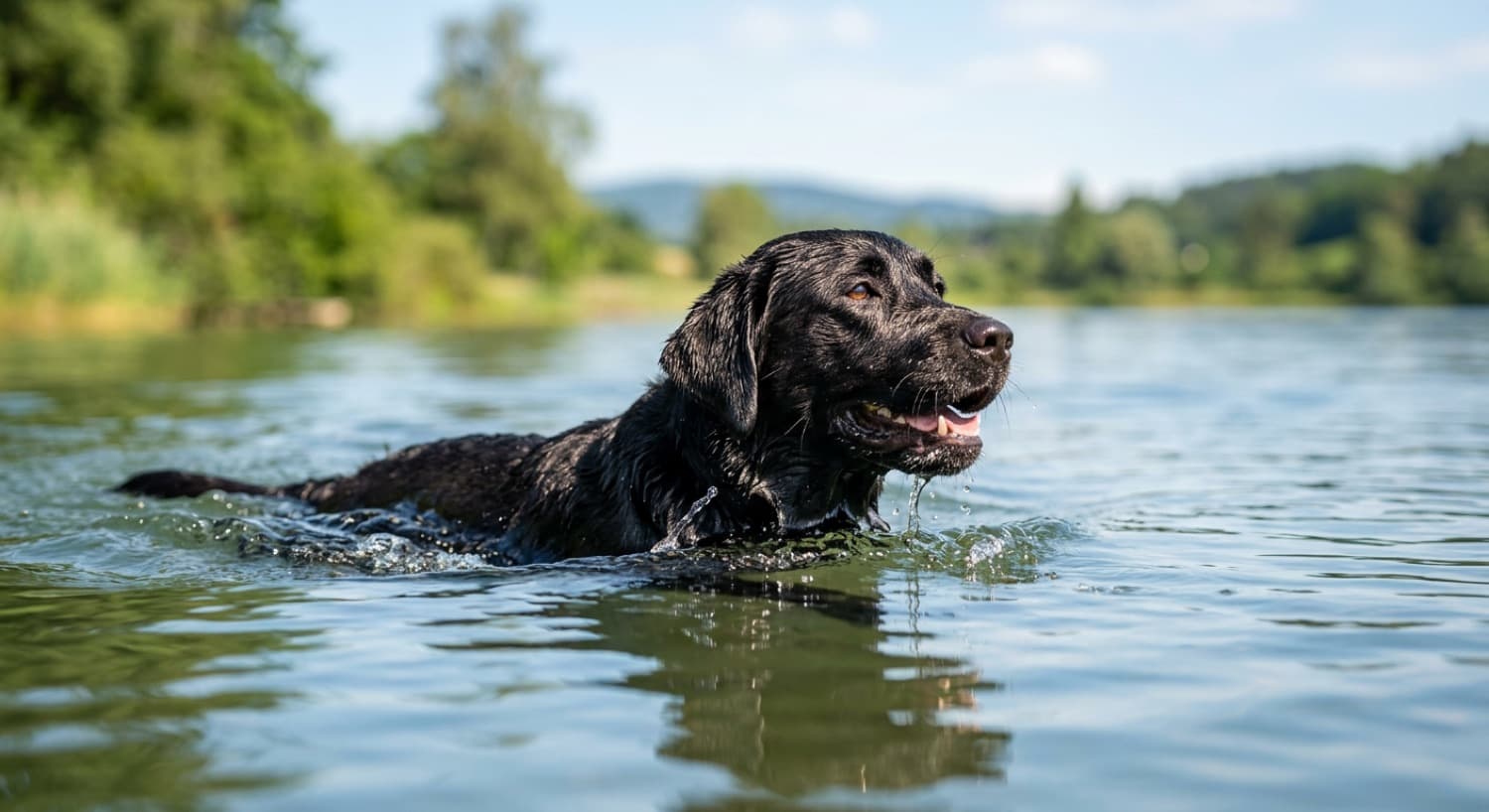
Labs love to swim, and it is great low-impact exercise, done safely. Ottawa’s waterways carry four main hazards: currents (avoid fast water and areas near dams/weirs like Hog’s Back), cold water (Ottawa water stays cold; dogs tire faster), thin winter ice (keep dogs leashed near any frozen water, never go on ice, never attempt an ice rescue yourself), and blue-green algae (a summer bloom that can be fatal, keep dogs out of scummy/discoloured water). Introduce swimming gradually, on a long line, never forced, and consider a canine life jacket. Dry the ears after every swim (Labs get ear infections). Choose calm, shallow, algae-free spots.
Two emergencies: ice and algae
Thin ice: if a dog falls through, do not go onto the ice yourself (people drown attempting this), call 911. Algae: if your dog swam in or drank suspect water and shows vomiting, drooling, weakness, tremors, seizures, or collapse, go to an emergency vet immediately, blue-green algae toxicity progresses within hours. Ottawa has 24-hour care, including the Alta Vista Animal Hospital. Save the number now.
The four Ottawa water hazards
- Currents. The Ottawa and Rideau rivers, and areas near Hog’s Back, dams, and weirs, can have strong, deceptive currents that sweep even a strong swimmer downstream. Avoid fast-moving water and anywhere near dams.
- Cold water. Ottawa water stays cold well into spring and chills early in fall; cold immersion tires and cramps a dog faster than expected. Keep cold-water swims short.
- Thin ice. In winter and the shoulder seasons, partially-frozen rivers and ponds are a serious, sometimes fatal hazard. Keep dogs leashed near frozen water and never let them onto ice.
- Blue-green algae. Summer blooms can be toxic and fast-acting. Keep dogs out of scummy, discoloured, or advisory-flagged water, and rinse the coat after any river or pond swim.
Knowing these lets you pick safe spots and times. The breed’s underlying love of water, and the joint-friendly exercise it provides, is covered alongside the obesity and joint issues in our Labrador health guide.
Safe swimming, and post-swim care
Introduce a rescue Lab to water gradually and never force it: start in calm, shallow water with a gentle sloped entry, on a long line, and let the dog build confidence with toys and praise. A canine life jacket is a wise safeguard early on, in any current, in cold water, or when you do not yet know the dog’s ability, and it is essential for boating. Once you know your Lab is a confident swimmer, expand to safe open-water spots within the hazard rules above.
After every swim, dry the ears (Labs are prone to ear infections, and trapped water is the trigger) and check for redness or odour, and rinse and dry the coat to remove debris, bacteria, or algae residue and prevent chilling in cool weather. This simple routine prevents most swimming-related ear problems. Settling a newly adopted Lab is covered in our first-week rescue dog guide, and swimming spots are noted in our off-leash parks guide.
Find your Labrador in Ottawa
A water-loving Lab is a joy for an active Ottawa household. Browse available Labs and Lab mixes from Ottawa and NCR rescues, with foster notes on temperament and energy.
See Available Labradors →Frequently Asked Questions
Do Labradors need to swim, and is it good for them?
Labs do not strictly need to swim, but most love it, and it is one of the best forms of exercise for the breed when done safely. Bred to retrieve waterfowl, Labradors are natural, strong swimmers with a water-resistant coat and webbed feet, and swimming provides excellent low-impact exercise that burns energy while sparing the joints, which is especially valuable for a breed prone to hip and elbow issues and to obesity. For an older or arthritic Lab, swimming can be a gentler way to stay active than running. So swimming is genuinely good for most Labs, both physically and mentally. The key is doing it safely, because the same enthusiasm that makes Labs love water can lead them into hazards (currents, cold, ice, algae) that they will happily ignore, which is what this guide is about. A tired, well-exercised Lab is a calmer, healthier dog, and safe swimming is a great way to get there in the Ottawa area.
What are the water hazards for dogs in the Ottawa area?
Ottawa’s waterways are beautiful and tempting for a water-loving dog, but they carry real hazards worth knowing. Currents: the Ottawa and Rideau rivers, and features like Hog’s Back and areas near dams and weirs, can have strong, deceptive currents that can sweep even a strong-swimming dog downstream, so avoid fast-moving water and areas near dams. Cold water: Ottawa water stays cold well into spring and gets cold early in fall, and cold-water immersion can cause a dog to tire or cramp faster than expected. Thin ice: in winter and the shoulder seasons, partially-frozen rivers and ponds are a serious, sometimes fatal hazard (see below). Blue-green algae: warm summer months can bring toxic algae blooms that are dangerous, even deadly, if a dog swims in or drinks affected water. Debris and drop-offs, and heavy boat traffic on some stretches, add further risk. Knowing these hazards lets you pick safe swimming spots and times.
How dangerous is thin ice for a dog in an Ottawa winter?
Extremely, and it is one of the most serious cold-season dangers for a water-loving dog in the Ottawa area. In winter and the shoulder seasons, rivers, ponds, and stormwater features may be frozen over unevenly, with thin, weak ice near open water, currents, inflows, and edges, and a Lab that dashes onto the ice or spots open water to swim in can fall through into frigid water, where hypothermia and the inability to climb back out onto slippery ice can be quickly fatal. Just as dangerously, owners who try to rescue a dog from the ice frequently fall through themselves, and people have died attempting it. The rule is simple and firm: keep dogs leashed near any frozen or partially-frozen water in winter, never let a dog onto ice, and never go onto ice yourself to attempt a rescue, call for help instead. Prevention, keeping the dog away from frozen water entirely, is the only reliable protection, because once a dog is through the ice the situation is dire for both dog and owner.
What is blue-green algae and why is it dangerous for dogs?
Blue-green algae (cyanobacteria) can bloom in warm, nutrient-rich water during the summer months, and some blooms produce toxins that are extremely dangerous, potentially fatal, to dogs that swim in or drink affected water, sometimes within hours. Dogs are especially at risk because they may drink the water and then ingest more while licking the algae off their coat. Blooms can look like green, blue-green, or turquoise scum, paint-like streaks, or pea-soup coloured water, often near shorelines, but not all harmful blooms are obvious. Because you cannot reliably tell a toxic bloom by sight, the safe approach is to keep your dog out of any water that looks scummy, discoloured, or has an algae warning, and to heed public health advisories, which are sometimes posted for local water bodies in summer. If your dog swims in or drinks from water you later suspect had algae, or shows vomiting, diarrhea, drooling, weakness, seizures, or collapse after being in water, treat it as an emergency and get to a vet immediately, algae toxicity progresses fast.
How do I introduce a rescue Lab to swimming safely?
Go gradually and never force it, even a Lab. While most Labs love water, a rescue dog may have had no experience, or a bad one, so let the dog choose the pace. Start in calm, shallow, safe water with a gentle, gradual entry (a beach-like slope rather than a drop-off), on a long line for control, and let the dog wade and explore at its own comfort level, using toys, praise, and your own presence to build confidence. Never throw a dog into water or push it in, which can create a lasting fear. Watch for genuine enjoyment versus stress, and keep early sessions short. A canine life jacket is a wise safeguard, especially early on, in any current, in cold water, or for a dog whose swimming ability you do not yet know, and it is essential for boating. Once you know your Lab is a confident, strong swimmer, you can expand to safe open-water spots, but always within the hazard rules above. Settling a new rescue generally is covered in our first-week guide.
Do I need to care for my Lab’s ears and coat after swimming?
Yes, and it genuinely matters for the breed. Labs are prone to ear infections, and their floppy ears combined with a love of water make swimming a common trigger, because water trapped in the ear canal creates a warm, moist environment where infections thrive. After every swim, gently dry the ears (and use a vet-approved ear-drying or cleaning solution as your vet advises), and check for redness, odour, head-shaking, or scratching, which signal a developing infection to have checked. Rinse the coat with clean water after swimming in a river or pond to remove any debris, bacteria, or algae residue, especially important given the algae risk, and dry the dog well, particularly in cool weather when a wet coat can chill the dog. This simple post-swim routine, dry the ears, rinse and dry the coat, prevents most swimming-related ear problems and keeps your Lab comfortable, letting the dog enjoy the water it loves without the recurrent ear infections that otherwise plague the breed.
Where can dogs swim safely near Ottawa?
The safest swimming is in calm, clean, shallow water without strong currents, away from dams and boat traffic, and free of algae warnings, and the Ottawa area has some good options, including certain off-leash areas with water access. Bruce Pit, a popular NCC off-leash dog park, has a pond that dogs use for swimming and is a well-known local spot, and some riverside off-leash areas along the Ottawa and Rideau rivers offer gentler access points, though river swimming always demands attention to current and cold (see our off-leash parks guide for locations and rules). Wherever you go, choose calm shallow entries over deep or fast water, avoid areas near Hog’s Back, dams, and weirs, heed any posted algae or water-quality advisories in summer, keep dogs away from any frozen water in winter, and always supervise. Following the hazard rules in this guide, currents, cold, ice, and algae, lets a water-loving Lab enjoy safe swimming through the warmer Ottawa seasons.
Related Guides
New dog? Start with these care guides
Everything a new adopter needs to set up a safe, happy home.