The short answer
Poodles are healthy and long-lived, but not problem-free. Across sizes, plan for eye disease (PRA), hip dysplasia, and epilepsy. Standards add Addison’s disease and bloat (a deep-chest emergency). Miniatures and Toys add luxating patella and dental disease. Doodles inherit Poodle-side risks plus the other parent breed’s, so “hybrid vigour” is a myth. Lifespan is a strong 12 to 16 years by size. Routine Ottawa care runs $800 to $1,500 a year plus HST, before grooming. Buy insurance while your dog is young, before Addison’s or an eye condition becomes a pre-existing exclusion.
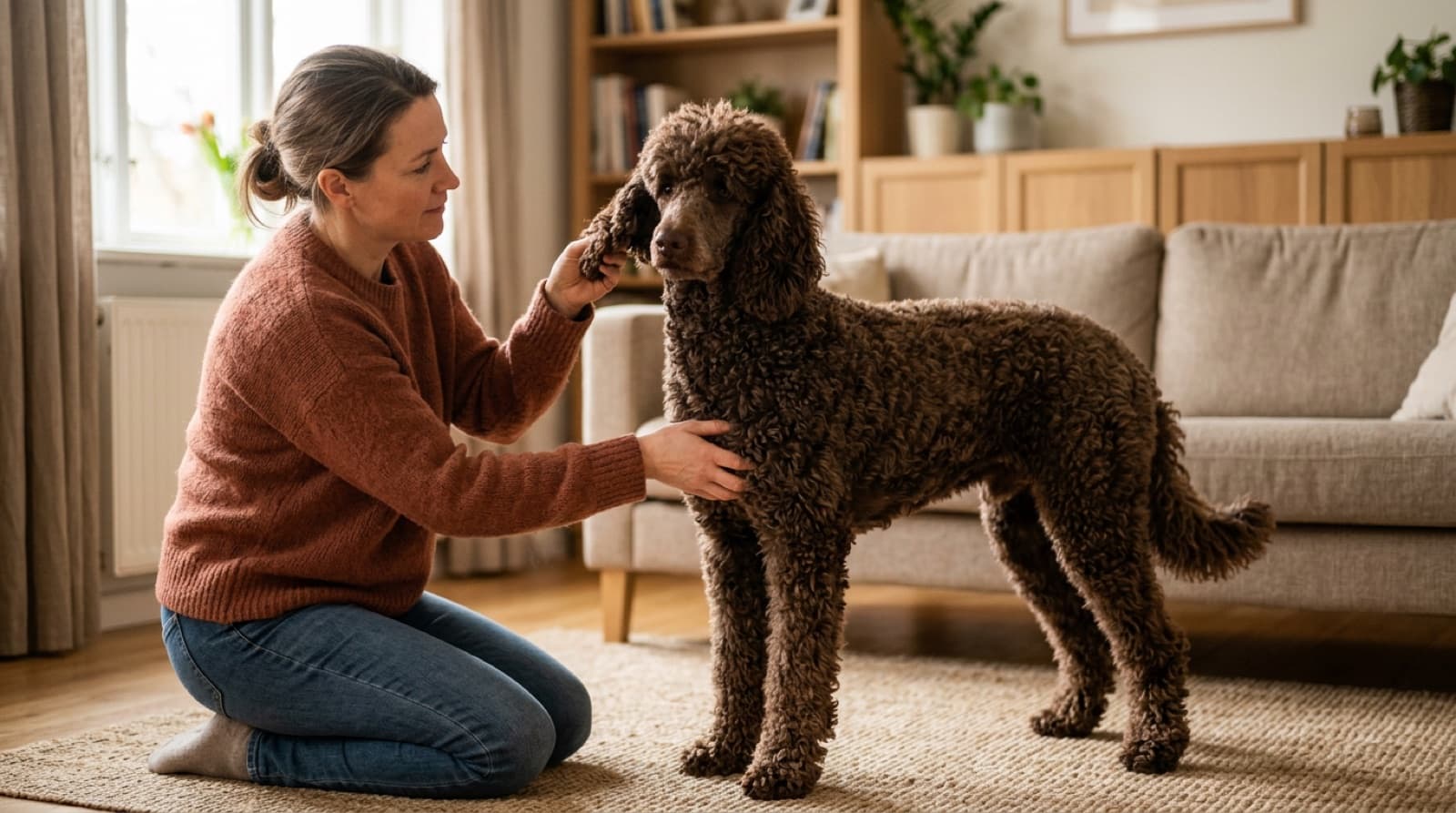
Poodles have a well-deserved reputation as healthy, intelligent, long-lived dogs. But “healthy breed” does not mean “no concerns,” and the doodle boom added a layer of confusion by marketing crosses as automatically healthier. This guide separates the real inherited risks, which vary by size, from the myths, so an Ottawa owner knows what to watch for and where the budget goes.
Emergencies that need care now
In a Standard Poodle, a distended belly with unproductive retching and restlessness is possible bloat, a dog can die within hours, so go to an emergency vet immediately. A sudden collapse in a dog with vague recurring illness may be an Addisonian crisis. Sudden eye pain, redness, or cloudiness may be acute glaucoma. Ottawa has 24-hour care, including the Alta Vista Animal Hospital. Save the number now.
Size changes the risk profile
Standard Poodles (and doodles with Standard lines) carry the most serious breed-specific risks: Addison’s disease, the “great pretender” adrenal condition that is easy to miss and dangerous in crisis but very manageable once diagnosed; and bloat, the deep-chest emergency worth preventing with smaller meals and, for some owners, a preventive gastropexy at spay or neuter.
Miniature and Toy Poodles trade those for the small-breed issues: luxating patella (slipping kneecaps), dental disease in crowded small mouths, Legg-Calvé-Perthes hip disease, and fragile legs prone to fracture from jumping. They chill faster in Ottawa winters, too. The upside is an even longer lifespan, often 14 to 16 years.
All sizes share eye disease, especially progressive retinal atrophy (PRA), plus cataracts and glaucoma, and some risk of hip dysplasia and epilepsy. Responsible Poodle breeders screen for these, which is exactly the testing volume doodle breeders skip.
The hybrid-vigour myth
Doodle marketing leans hard on “hybrid vigour,” the idea that crossing two breeds makes a healthier dog. It does not work that way. A doodle can inherit the health problems of both parent breeds, and because most doodles come from breeders who do not health-test to either standard, they often carry more risk, not less. A Goldendoodle can get the Poodle’s PRA and the Golden’s cancer predisposition. A Bernedoodle can inherit the Bernese Mountain Dog’s severe cancer and joint risks.
Careful crossbreeding with fully tested parents can reduce some recessive conditions, but the volume doodle market rarely does that. Treat “hybrid vigour” as a sales pitch, not a health guarantee. For routine-care savings, see our Ottawa low-cost vet guide.
Meet a Poodle or Doodle in Ottawa
Rescue Poodles and Doodles come with a vet workup and honest health notes, so you know what you are adopting. Browse available dogs from Ottawa and NCR rescues.
See Available Poodles & Doodles →Frequently Asked Questions
What health problems are Poodles prone to?
Poodles are generally healthy, long-lived dogs, but the breed carries several known concerns that vary by size. Across all sizes, watch for eye disease, especially progressive retinal atrophy (PRA), which causes gradual blindness, plus cataracts and glaucoma; hip dysplasia, more common in Standards; and epilepsy. Standard Poodles specifically are prone to Addison’s disease (an adrenal hormone deficiency), bloat/gastric torsion (a life-threatening emergency in deep-chested dogs), and sebaceous adenitis (a skin condition). Miniature and Toy Poodles add luxating patella (slipping kneecaps), dental disease, and Legg-Calvé-Perthes hip disease. Doodles can inherit any of the Poodle-side conditions plus whatever the other parent breed carries, so a Goldendoodle also faces Golden Retriever cancer and joint risks.
Is "hybrid vigour" real in doodles?
Not in the way doodle marketing implies. The claim is that crossing two breeds automatically produces a healthier dog. In reality, a doodle can inherit the health problems of both parent breeds, not neither, and because most doodles come from breeders who do not health-test to either breed’s standards, they often carry more risk, not less. A Goldendoodle can get both the Poodle’s PRA and the Golden’s cancer predisposition. A Bernedoodle can inherit the Bernese Mountain Dog’s severe cancer and joint risks. Crossbreeding can reduce the expression of some recessive conditions when done carefully with tested parents, but the volume doodle market rarely does that. Treat "hybrid vigour" as a sales pitch, not a health guarantee, and ask any breeder for proof of testing on both parents.
What is Addison’s disease in Poodles?
Addison’s disease (hypoadrenocorticism) is an underproduction of essential adrenal hormones, and Standard Poodles are one of the breeds most predisposed to it. It is nicknamed "the great pretender" because its early signs, lethargy, poor appetite, vomiting, weakness, are vague and come and go, so it is easily missed until an "Addisonian crisis," a sudden collapse that is a life-threatening emergency. The good news is that once diagnosed, usually via blood tests, Addison’s is very manageable with lifelong hormone replacement (injections or pills), and treated dogs live normal lives. If you own a Standard Poodle or a doodle with Standard lines and see unexplained recurring lethargy or gut upset, ask your vet specifically about Addison’s rather than assuming a passing bug.
Are Standard Poodles at risk of bloat?
Yes. Standard Poodles are deep-chested dogs, and deep-chested breeds are at elevated risk of gastric dilatation-volvulus (GDV, or bloat), where the stomach fills with gas and can twist, cutting off blood supply. It is a true emergency, a dog can die within hours, and signs include a distended belly, unproductive retching, restlessness, drooling, and collapse. If you see these, get to an emergency vet immediately; do not wait. Reduce risk by feeding two or three smaller meals rather than one large one, avoiding heavy exercise right after eating, and using a slow-feeder bowl if your dog gulps. Some owners of at-risk deep-chested dogs elect a preventive gastropexy (a surgical tacking of the stomach), often done at the same time as spay or neuter, and worth discussing with your vet.
What eye problems do Poodles and Doodles have?
Eye disease is one of the most important inherited concerns in the Poodle line. Progressive retinal atrophy (PRA) is a gradual degeneration of the retina that leads to blindness, and it is present in Poodles and passes to doodles; dogs adapt remarkably well to blindness, but it is not reversible. Cataracts (clouding of the lens) and glaucoma (painful pressure build-up, a same-day emergency when acute) also occur. Responsible Poodle breeders screen breeding stock through eye certification and DNA testing for PRA, which is exactly the testing volume doodle breeders often skip. For an adopted Poodle or Doodle, an annual vet eye check catches problems early, and any sudden change, cloudiness, redness, pain, or bumping into things, warrants prompt attention.
How much does Poodle or Doodle health care cost in Ottawa?
Routine annual care, a wellness exam, vaccines, parasite prevention, and dental attention, runs roughly $800 to $1,500 a year in Ottawa depending on size, plus Ontario’s 13 per cent HST, and that is before the $700 to $1,300 a year these breeds cost in grooming. The budget wildcards are the inherited conditions: Addison’s means lifelong medication and monitoring, bloat surgery can run several thousand dollars, and eye or knee surgery is costly. A Standard Poodle’s larger size also raises anaesthesia and medication costs versus a Toy. This combination of predictable grooming plus potential for expensive inherited disease is exactly why pet insurance, taken out while the dog is young, tends to pay off for these breeds. See our Ottawa low-cost vet guide for routine-care savings.
Is pet insurance worth it for a Poodle or Doodle?
Often yes, and more clearly so than for many breeds, because Poodles and doodles combine a long lifespan with several potentially expensive inherited conditions, Addison’s, bloat, eye disease, and knee problems among them. Insurance taken out while your dog is young and healthy, before any condition is documented, locks in coverage before exclusions apply. Once Addison’s or an eye condition is on the record, it becomes a pre-existing condition no insurer will cover, so waiting until you need it defeats the purpose. Premiums vary with size, commonly $40 to $75 a month for a young Poodle or Doodle in Ottawa. Compare a couple of providers, read the exclusions carefully, and decide early. Note that insurance covers illness and injury, not routine grooming, which stays your ongoing cost.
Do Miniature and Toy Poodles have different health issues?
Yes, size changes the risk profile. Miniature and Toy Poodles are less prone to the Standard’s Addison’s and bloat, but they add the small-breed conditions: luxating patella (kneecaps that slip out of place, sometimes needing surgery), dental disease (crowded small mouths need diligent brushing and cleanings), Legg-Calvé-Perthes disease (a hip joint problem in small breeds), tracheal collapse, and fragile bones prone to fracture from jumps. They share the breed’s eye disease and epilepsy risks. Toy Poodles also chill faster in Ottawa winters given their size. If you adopt a Miniature or Toy, prioritise dental care, protect the knees and legs from high jumps, and keep the dog lean. The trade-off for the small-breed issues is a very long lifespan, often 14 to 16 years.
How long do Poodles live?
Poodles are among the longer-lived breeds. Toy and Miniature Poodles often reach 14 to 16 years, and Standard Poodles typically live 12 to 14, a good lifespan for a larger dog. Doodles vary with their mix and size, but many enjoy a similarly long life. Longevity depends on the usual levers: keeping the dog lean, staying current on dental care (especially for the small varieties), routine parasite prevention, and annual vet checks that catch conditions like Addison’s, thyroid disease, and eye problems early. For Ottawa owners, that long lifespan means budgeting for senior care in the later years and for the ongoing grooming that never stops. A Poodle or Doodle adopted as an adult still has many good years ahead.
Related Guides
New dog? Start with these care guides
Everything a new adopter needs to set up a safe, happy home.