The short answer
A Vizsla needs hours of exercise AND near-constant company, and the two are linked. Plan for 1 to 2+ hours of vigorous daily exercise plus mental work (training, scent games, dog sports), an under-exercised Vizsla becomes hyperactive and anxious, not calm. The breed’s intense velcro bonding makes it highly prone to separation anxiety, so it is not suited to being home alone all day. A tired, fulfilled dog copes better alone, so exercise is the foundation, but you also need gradual alone-time training, calm departures, enrichment, and often a dog walker or daycare. For severe anxiety, get a positive-reinforcement trainer or vet behaviourist. In winter, bundle up for shorter runs and lean hard on indoor mental work.
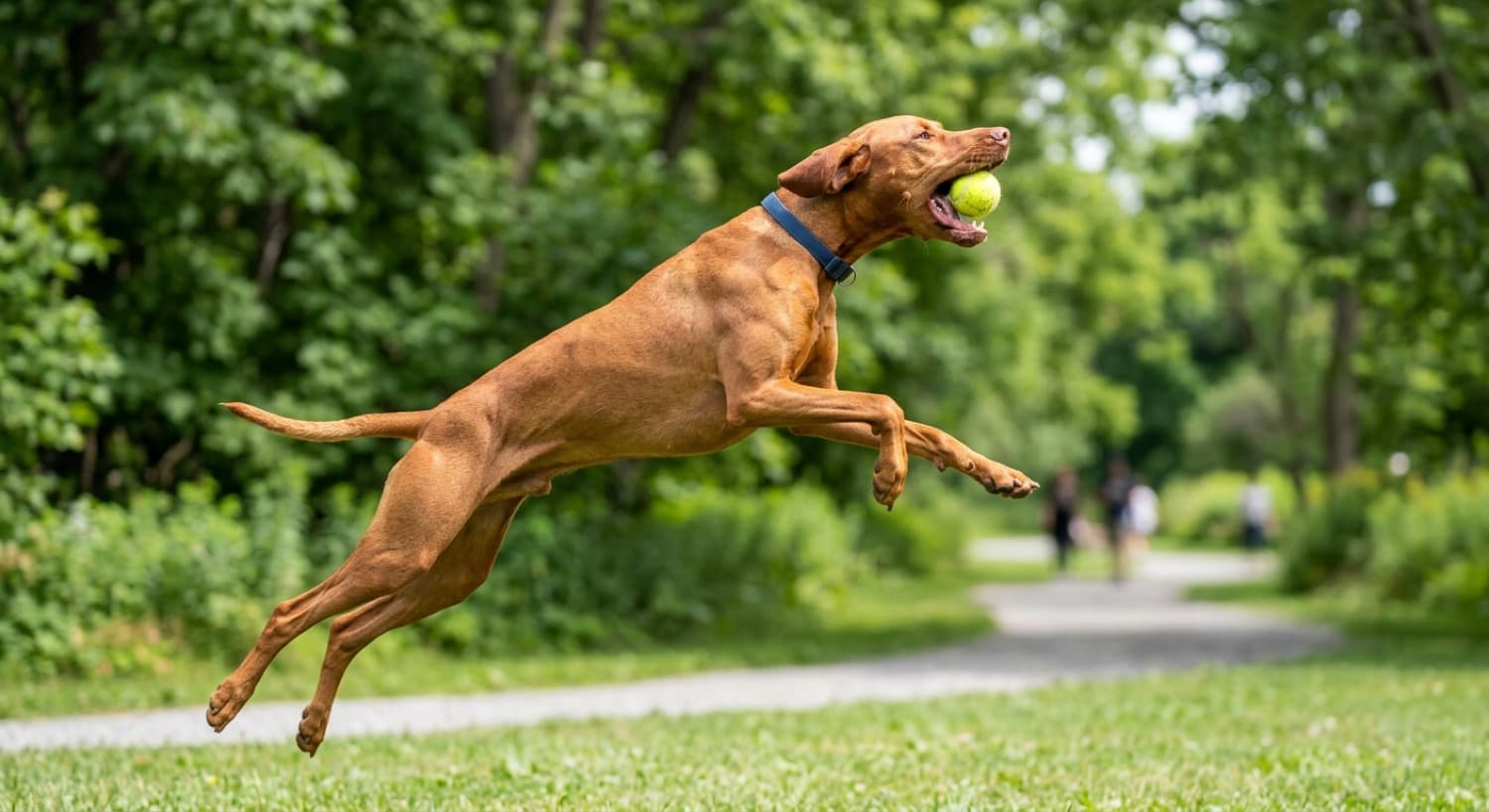
Two demands, one linked problem
The Vizsla was bred as a close-working Hungarian hunting dog, and the Canadian Kennel Club describes the breed as an energetic, affectionate hunting companion. That heritage produced two defining traits that shape everything about ownership: a need for hours of vigorous daily exercise, and an intense bond with its people that makes it a “velcro dog” prone to separation anxiety.
Crucially, these are connected. A well-exercised, mentally-satisfied Vizsla copes far better with alone time; an under-exercised one, with pent-up energy and a bored mind, spirals into panic and destruction. So the two demands reinforce each other, fail on exercise and the separation anxiety worsens, which is why you must plan for both together. Meeting the exercise need is the foundation; managing the alone time is the second half. The broader picture of the breed’s demands is in our Vizsla adoption guide.
Meeting the exercise need, and managing the alone time
Exercise. Aim for one to two hours-plus of vigorous daily activity, running (in safe or fenced areas), hiking, fetch, swimming, and dog sports (agility, field work, dock diving), plus mental work through training, puzzles, and scent games. Genuinely tire both body and mind; a challenging training session can tire a Vizsla as much as a run.
Alone time. First, exercise before any absence, a tired dog settles better. Then build tolerance gradually: practise short absences and extend them slowly, keep departures and arrivals calm and undramatic, and pair leaving with a long-lasting chew or food puzzle so being alone predicts good things. Break up long days with a dog walker or daycare (which also burns energy and provides social time). For a working household, a Vizsla can succeed only with real companionship planning, not eight-to-ten-hour solo days.
When it is severe. Genuine separation anxiety is real suffering, not misbehaviour, so never punish it. For severe cases, work with a positive-reinforcement trainer or veterinary behaviourist, and know that vet-prescribed anti-anxiety medication alongside behaviour work is appropriate in some cases. Settling a newly adopted Vizsla is covered in our first-week rescue dog guide.
Find your Vizsla in Ottawa
If hours of exercise and lots of togetherness suit your life, a rescue Vizsla is a devoted, brilliant partner. Browse available Vizslas and mixes from Ottawa and NCR rescues, with foster notes on energy and separation tolerance.
See Available Vizslas →Exercise through an Ottawa winter
Winter is the hardest season for the breed, because a Vizsla needs substantial exercise but has almost no cold tolerance. On tolerable days, get the dog out for real exercise in a warm coat and, if needed, booties, a Vizsla still needs to run even in the cold. On the coldest, most extreme days, keep outings short and lean hard on indoor mental work: training, puzzle feeders, scent games, hide-and-seek, and trick-training to burn the energy a run would normally handle, plus indoor dog-sport or daycare facilities many Ottawa owners use through winter.
The rule never changes: a Vizsla’s needs do not shrink in winter, so if the cold cuts your outdoor time, make up the difference indoors, or the pent-up energy will feed destructiveness and anxiety by February. Keep the dog warm and companioned, and remember the thin coat and cold sensitivity covered in our Vizsla health guide.
Frequently Asked Questions
How much exercise does a Vizsla really need?
A lot, more than most breeds, and it must include both physical and mental work. A Vizsla needs a minimum of one to two hours of vigorous daily exercise, and often more for a young or high-drive dog, plus significant mental stimulation, because this is a tireless Hungarian hunting breed built to run and work all day. Physical exercise means real activity, running, off-leash play in safe areas, hiking, fetch, and dog sports, not just a gentle stroll, and it should genuinely tire the dog. On top of that, the breed’s clever mind needs engagement through training, puzzle toys, scent work, and jobs. An under-exercised Vizsla does not become a calm couch dog; it becomes hyperactive, anxious, and destructive, and the pent-up energy feeds the separation anxiety the breed is prone to. Meeting the exercise need is the foundation of a happy, settled Vizsla, and it is a genuine daily commitment that owners must be realistic about before adopting.
Why are Vizslas so prone to separation anxiety?
Because the breed was developed to work in close partnership with a single hunter and bonds with extraordinary intensity to its people, the "velcro Vizsla" nickname is literal, and that deep bonding has a serious downside: Vizslas genuinely struggle to be apart from their humans and are among the breeds most prone to separation anxiety. Left alone, especially for long stretches or without adequate exercise, a Vizsla can become intensely distressed, showing destructive behaviour, howling and barking, house-soiling, pacing, drooling, and self-harm from panic. This is not misbehaviour or spite; it is genuine anxiety and suffering. The velcro nature that makes a Vizsla such a devoted, attuned companion is the same trait that makes it unsuited to a household where it will be home alone all day. Understanding that the bonding and the anxiety are two sides of the same coin is essential: you cannot have the extraordinary devotion without also planning carefully for the dog’s need for companionship.
How are exercise and separation anxiety linked in a Vizsla?
They are deeply connected, which is why this guide treats them together. A well-exercised, mentally-satisfied Vizsla is far better able to cope with alone time than an under-exercised one, because pent-up physical and mental energy compounds anxiety, a Vizsla left alone with unspent energy and a bored mind is a recipe for panic and destruction, while a Vizsla that has had a good run and mental workout before being left is calmer and more able to settle. So the first line of defence against separation anxiety is meeting the exercise and enrichment needs fully: a tired, fulfilled dog is a more relaxed dog. This does not eliminate the breed’s bonding-driven anxiety on its own, dedicated alone-time training and management (below) are still needed, but exercise is the foundation. The practical takeaway is that the two defining demands of a Vizsla, hours of exercise and companionship, reinforce each other: fail on the exercise and the separation anxiety worsens, so you must plan for both together.
Can a Vizsla be left alone while I work?
Not for long full days without a real plan, and this is the single biggest lifestyle question to answer before adopting the breed. Vizslas are genuinely not suited to being home alone eight to ten hours a day, every day, with nothing, doing so is likely to produce a distressed, destructive, unhappy dog and an unhappy owner. That said, many working people successfully own Vizslas by building in companionship and management: a home-based or hybrid work schedule, a partner or family member with staggered hours so the dog is rarely alone long, a midday dog walker, regular doggy daycare (which also burns energy and provides social time), and gradual alone-time training to build the dog’s tolerance. A Vizsla that gets plenty of exercise, has its alone time broken up, and has been trained to cope with short absences can manage a working household, but it takes genuine commitment and planning. If you cannot provide that, and the dog would simply be alone all day, a Vizsla is the wrong breed, and being honest about this is the kindest thing for the dog.
How do I help a Vizsla cope with being alone?
Combine exercise, gradual training, and management, and get professional help for severe cases. Start with the foundation: ensure the dog is well exercised and mentally worked before any alone period, a tired Vizsla settles far better. Then build alone-time tolerance gradually: practise short absences and slowly extend them, keep departures and arrivals calm and undramatic (no emotional goodbyes), and pair your leaving with something positive like a long-lasting chew or a food puzzle so being alone predicts good things. Provide safe enrichment for when you are out, and consider whether a crate (introduced positively, never as punishment) helps the dog feel secure or makes it worse, it varies by dog. Break up long days with a dog walker or daycare. For genuine, severe separation anxiety, work with a positive-reinforcement trainer or a veterinary behaviourist, and know that in some cases anti-anxiety medication prescribed by a vet, alongside behaviour work, is appropriate and helpful. Never punish anxiety-driven behaviour, it worsens the underlying fear.
What are the best exercise and enrichment activities for a Vizsla?
Variety, intensity, and a job. For physical exercise, Vizslas thrive on running (a securely fenced area or a safe running partner), long hikes, fetch, swimming in the warmer months, and dog sports, the breed excels at agility, field work, dock diving, and more, which provide exactly the intense physical-and-mental combination it craves. For mental enrichment, use training sessions (Vizslas are smart and eager), puzzle feeders, scent work and nosework, and hide-and-seek games. Because a Vizsla is a hunting breed, activities that engage the nose and the drive to work are especially satisfying. Rotate activities to keep them novel, and aim to genuinely tire both body and mind, a challenging training session or scent game can tire a Vizsla as much as a run. In an Ottawa winter, the thin coat limits long cold outings, so bundle the dog up for shorter runs on tolerable days and lean heavily on indoor mental work, training, puzzles, and games, to burn energy when it is too cold outside. A Vizsla with a full physical and mental life is a calmer, happier, less anxious dog.
How do I exercise a Vizsla through an Ottawa winter?
It takes planning, because the breed needs substantial exercise but has almost no cold tolerance. On tolerable winter days, get the dog out for real exercise, bundled in a warm coat and, if needed, booties, since a Vizsla still needs to run and work even in the cold, but keep the coldest, most extreme days shorter and rely more on indoor activity. The key winter strategy is mental work: on days too cold for long outdoor exercise, lean hard on indoor training sessions, puzzle feeders, scent games, hide-and-seek, and trick-training to burn the energy a run would normally handle, plus consider indoor dog-sport or daycare facilities that many Ottawa owners use through winter. The goal is to prevent the pent-up energy that, in a Vizsla, feeds destructiveness and separation anxiety. Do not simply reduce exercise for the season and hope the dog copes, a Vizsla’s needs do not shrink in winter, so if the cold cuts your outdoor time, make up the difference indoors. And keep the dog warm and companioned, a cold, bored, lonely Vizsla in February is a very unhappy dog.
Related Guides
New dog? Start with these care guides
Everything a new adopter needs to set up a safe, happy home.