The short answer
Vizslas are a fairly healthy, athletic breed, but plan for a few specifics. Epilepsy (the breed is predisposed, often appearing young) and an elevated cancer risk (lymphoma, mast cell, hemangiosarcoma) are the most significant. Also watch for hip dysplasia (lower rates than most large breeds), hypothyroidism, eye conditions, ear infections, and allergies. The very thin single coat means real cold sensitivity, so a winter coat is essential in Ottawa. Vizslas live a long 12 to 14 years. Routine Ottawa care runs $900 to $1,600 a year plus HST. Check regularly for lumps, keep the dog fit, and insure early for the epilepsy and cancer wildcards. Make all health decisions with your vet.
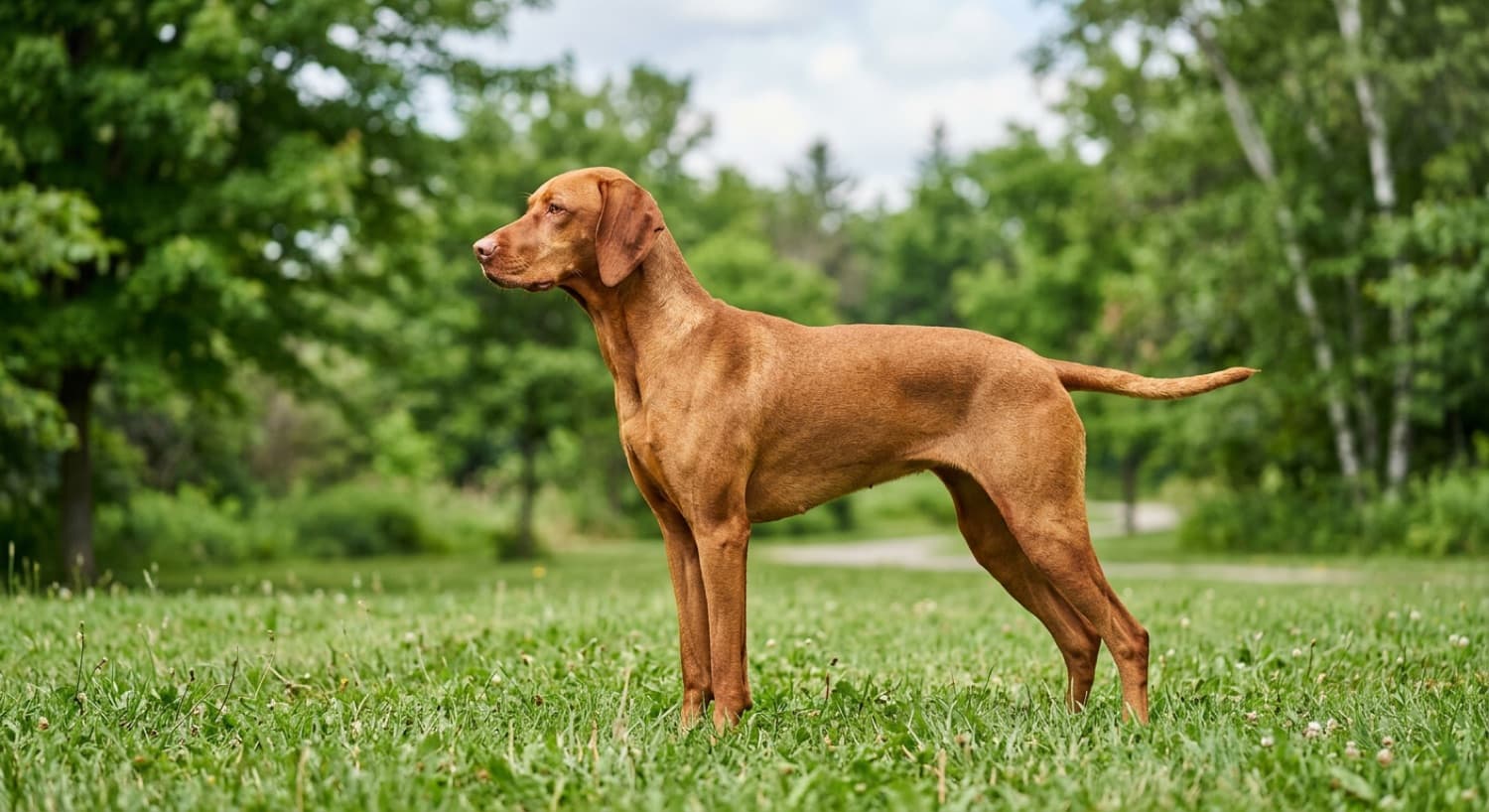
Vizslas are one of the more genuinely healthy sporting breeds, without the extreme conformation problems of some dogs, but they carry a specific set of concerns worth planning for. This is a planning list, so an Ottawa owner knows what to watch for and where the budget goes, and every point should be discussed with your own veterinarian.
Signs that need prompt care
A seizure lasting over five minutes or clustering is an emergency. Also act promptly (soon, not necessarily an emergency) on any new lump, swelling, unexplained weight loss, lethargy, or persistent lameness, given the breed’s cancer risk, early detection matters. Sudden eye pain, redness, or cloudiness needs same-day care. Ottawa has 24-hour care, including the Alta Vista Animal Hospital. Save the number now.
Epilepsy and cancer: the two to watch
Epilepsy. Vizslas are predisposed to idiopathic epilepsy, usually first seen between six months and five years. Most affected dogs live full, active lives on daily medication once the pattern is established with your vet. If you adopt a Vizsla with a seizure history, get the medication records from the rescue.
Cancer. The breed carries an elevated risk of certain cancers (lymphoma, mast cell tumours, hemangiosarcoma), often in middle to older age. You cannot change the predisposition, but you can catch problems early: keep the dog lean, check it over regularly for lumps during grooming and petting, maintain routine vet checks, and act promptly on any lump, swelling, weight loss, or lameness. Early detection genuinely improves outcomes for many cancers.
Hips, thyroid, eyes, ears, and the cold
Hips. Hip dysplasia occurs but at lower rates than most large breeds. Keep the dog fit and lean, and screen through breeders who test.
Thyroid. Hypothyroidism is common in middle age, easy to test for and cheap to treat with a daily pill. Suspect it if a Vizsla gains weight, slows down, or develops coat problems, though do not mistake normal cold sensitivity for illness.
Eyes and ears. Cataracts, PRA, and entropion occur; an annual eye check helps. The floppy ears are infection-prone, so check, clean, and dry them regularly.
Cold. The very thin single coat with little fat means acute cold sensitivity, a winter coat is essential in Ottawa (see the adoption guide). For routine-care savings, see our Ottawa low-cost vet guide.
Meet a healthy Vizsla in Ottawa
Rescue Vizslas come with a vet workup and honest health notes, so you know what you are adopting. Browse available Vizslas and mixes from Ottawa and NCR rescues.
See Available Vizslas →Frequently Asked Questions
Are Vizslas a healthy breed?
Relatively, yes, Vizslas are generally considered a fairly healthy, athletic breed without the extreme conformation problems of some breeds, and many live long, active lives. That said, "fairly healthy" is not "problem-free," and the breed carries several concerns worth knowing. The notable ones are hip dysplasia (present but at lower rates than many large breeds), epilepsy (the breed is predisposed to idiopathic epilepsy), hypothyroidism, eye conditions, ear infections (those floppy ears), allergies and skin issues, and an elevated risk of certain cancers, some lines and studies point to higher rates of cancers such as lymphoma, mast cell tumours, and hemangiosarcoma. On top of the medical conditions, the very thin, single coat with almost no fat makes the breed genuinely cold-sensitive, a practical Ottawa consideration. Most concerns are manageable, and the highest-value things an Ottawa owner can do are keep the dog fit and lean, stay on top of ears and thyroid, and use a good vet. Always make health decisions for your individual dog with your veterinarian.
Do Vizslas get epilepsy?
Yes, Vizslas are among the breeds predisposed to idiopathic epilepsy (seizures with no identifiable underlying cause), which typically first appears between about six months and five years of age, and it is one of the breed’s more significant inherited concerns. A seizure is frightening to witness but is usually not itself an emergency unless it lasts more than about five minutes or the dog has repeated seizures back-to-back, which does warrant emergency veterinary care. If your Vizsla has a seizure, keep it safe from stairs and furniture, time it, note what happened, and consult your vet. Many epileptic dogs live full, active lives on daily anti-seizure medication once the pattern is established and the right treatment is found with your vet. If you adopt a Vizsla with a known seizure history, get the medication and dosing records from the rescue, and budget for lifelong medication and periodic monitoring. Epilepsy is manageable, but it is a lifelong condition to be aware of in the breed.
What cancers are Vizslas prone to?
Vizslas, like a number of breeds, carry an elevated risk of certain cancers, and some studies and breed-health surveys point to higher-than-average rates of cancers such as lymphoma, mast cell tumours, and hemangiosarcoma, often appearing in middle-aged to older dogs. This is a genuine consideration, though it does not mean every Vizsla will develop cancer, many live long, healthy lives. You cannot prevent the genetic predisposition, but you can support the best outcome: keep the dog at a healthy weight, feed a good diet, maintain regular veterinary checkups so anything unusual is caught early, and act promptly on any lumps, swellings, unexplained weight loss, lethargy, or lameness, especially in an older Vizsla. Learn to check your dog over regularly during grooming or petting so you notice new lumps early. If you notice anything concerning, have it examined promptly, early detection genuinely improves outcomes for many cancers. Discuss the breed’s cancer risk and any monitoring with your vet.
Do Vizslas have thyroid or eye problems?
Both occur in the breed. Hypothyroidism, an underactive thyroid gland, is one of the more common hormonal conditions in Vizslas, usually appearing in middle age, with signs that develop slowly: weight gain despite no change in feeding, lethargy, a dull or thinning coat, skin problems, and cold intolerance (which can be confused with the breed’s natural cold sensitivity in an Ottawa winter). It is diagnosed with a simple blood test and treated with an inexpensive daily thyroid pill for life. On the eyes, Vizslas can develop conditions including cataracts, progressive retinal atrophy, and entropion (eyelids rolling inward), so an annual vet eye check catches problems early, and any redness, cloudiness, or vision change warrants attention. The breed’s floppy ears are also prone to infection, so check and clean them regularly and keep them dry. None of these is usually severe, but all are worth monitoring as part of routine care for the breed.
How much does Vizsla health care cost in Ottawa?
Because Vizslas are medium-sized and fairly healthy, routine care is moderate: a wellness exam, vaccines, parasite prevention, and dental attention run roughly $900 to $1,600 a year in Ottawa, plus Ontario’s 13 per cent HST. The budget wildcards are the inherited and age-related conditions: epilepsy means lifelong (inexpensive) medication and monitoring, hip issues can be costly if severe, and cancer treatment (should it arise) can run into many thousands. Thyroid and ear management are inexpensive but ongoing. On top of the medical costs, budget for a good winter coat given the thin single coat, and, importantly, for the exercise-and-companionship needs of the breed (daycare, dog walkers, or activities), which for a Vizsla often exceed the medical costs and are essential to prevent separation anxiety. Overall a fairly affordable breed medically, with cancer as the main wildcard, and pet insurance taken out while the dog is young helps with the cancer and epilepsy risks. See our Ottawa low-cost vet guide for routine-care savings.
Is pet insurance worth it for a Vizsla?
It can be, mainly for the epilepsy and cancer wildcards. Vizslas are generally healthy and affordable for routine care, so the case is less overwhelming than for a giant or highly health-prone breed, but the breed carries real risks, epilepsy (lifelong management), an elevated cancer risk that can mean expensive treatment, and the ordinary injuries an intensely active, athletic dog is prone to. Insurance taken out while your Vizsla is young and healthy locks in coverage before any condition becomes a pre-existing exclusion, which matters especially for epilepsy (which can appear in young adulthood) and for cancer risk that rises with age. Premiums for a young Vizsla commonly run $45 to $75 a month in Ottawa. Weigh it against your savings buffer, and if you do a lot of high-impact sport or hiking, injury coverage is worth considering. If you insure, do it early, and confirm the breed’s known conditions are covered from the start.
How long do Vizslas live?
Vizslas typically live around 12 to 14 years, a good lifespan for a medium sporting breed, and an active, well-cared-for Vizsla with good genetics often reaches the upper end, while cancer or serious epilepsy can shorten a life. Longevity depends on the usual levers: keeping the dog fit and lean (rarely a challenge for such an active breed), staying current on thyroid, ear, and eye care, checking regularly for lumps given the cancer risk, and annual (later twice-yearly) vet visits that catch conditions early. For Ottawa owners, that lifespan means a decade or more of an affectionate, high-energy companion, and a long-term commitment to the exercise and companionship the breed needs, which does not diminish much with age until the senior years. A Vizsla adopted as an adult still has many active years ahead, and the breed’s general healthiness means those years are often lower-drama medically than for many breeds, with cancer as the main risk to watch in later life.
Related Guides
New dog? Start with these care guides
Everything a new adopter needs to set up a safe, happy home.