The short answer
Low-shedding means high grooming, not low maintenance. A Yorkie's fine, silky, single coat (hair-like, no undercoat) tangles fast. Most owners keep a practical “puppy cut” (brush a few times a week, professional groom every 6 to 8 weeks, $50 to $90 a session); a long coat needs daily brushing. Brush down to the skin, especially behind the ears, under the harness, and on the belly, and keep the face and sanitary areas trimmed (a topknot keeps hair out of the eyes on a long coat). The single coat gives little warmth, so Ottawa winters demand a sweater. Yorkies are low-shedding but not hypoallergenic. A matted coat has to be shaved, so consistent brushing (or a short cut) is the whole game.
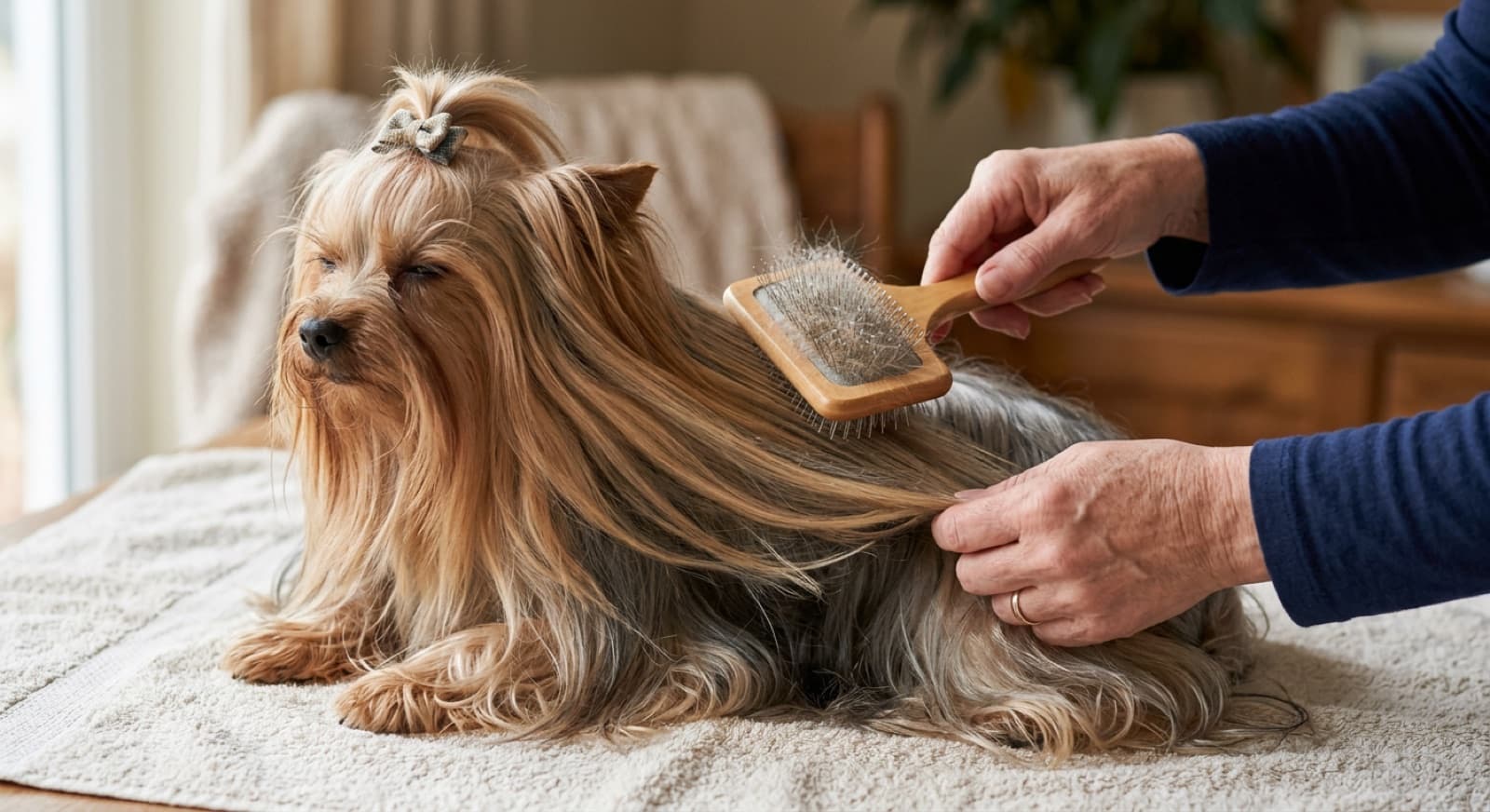
The Yorkie's glossy coat is the breed's signature and its biggest practical commitment. Low-shedding sounds low-effort, but it is the opposite: the loose hair stays in the coat and must be brushed out, and the fine, silky texture mats readily. Underestimating this is a common reason Yorkies reach rescue with painful, matted coats. Add the single coat's poor insulation, and coat care becomes a year-round Ottawa consideration. Here is how to stay on top of it.
Brushing beats matting, and the puppy cut makes it easy
A Yorkie coat mats because low-shedding, silky hair stays caught in the coat and tangles with the growing hair, tightening into mats, worst in the friction zones behind the ears, under the harness, in the armpits and groin, and on the belly. The fix is frequent, thorough brushing that reaches the skin: line-brush in sections, lifting the coat and working from the skin outward, then run a metal comb through, if it snags, there is a mat the brush missed. A pin or slicker brush, a metal comb, and a detangling spray cover home care.
The single best decision most pet owners make is the puppy cut, a short, even trim that dramatically cuts matting and daily brushing while still looking adorable. It turns an intensive grooming job into a manageable one: brush a few times a week, professional groom every six to eight weeks. For a newly adopted rescue who may not be used to handling, introduce brushing gently with treats, as covered alongside settling in our first-week guide.
The single coat, the face, and Ottawa winters
The Yorkie’s single, hair-like coat is what makes it low-shedding, and the Canadian Kennel Club describes that glossy, fine, silky coat as a defining breed feature. But it also means poor natural insulation, so an Ottawa winter demands a sweater or coat for this tiny dog, especially in a short cut, plus booties for salt and ice.
Keep the face and eye area tidy: trim the hair around the eyes short (or use a topknot on a long coat) so it does not irritate the eyes, and wipe the face regularly to remove food and tear staining. In winter, snow and salt mat a longer coat and chill a damp one, so wipe down and dry after walks, keep brushing frequent, and consider a shorter easy-care trim. The grooming ties directly into the breed’s dental and overall care in our Yorkie health guide.
Ready for the coat?
If regular brushing, a puppy cut, and a wardrobe of sweaters sound manageable, a rescue Yorkie is a spirited, affectionate companion. Browse available Yorkies and mixes from Ottawa and NCR rescues, with foster notes on coat and temperament.
See Available Yorkies →Frequently Asked Questions
How often does a Yorkie need grooming?
It depends on the coat length you choose, but a Yorkie is always a grooming commitment. If you keep the traditional long, floor-length coat, expect to brush thoroughly every day (the fine, silky hair tangles fast) plus professional grooming every four to six weeks. Most pet owners instead keep their Yorkie in a short "puppy cut" or "Schnauzer-style" trim, which is far more practical: it still needs brushing a few times a week and professional grooming every six to eight weeks (roughly $50 to $90 a session in Ottawa), but it dramatically reduces the tangling and daily work. Either way, the Yorkie’s coat is a genuine ongoing commitment, low-shedding but high-effort, for the dog’s entire life. Budget the grooming honestly before adopting, because underestimating it is one of the reasons the breed lands in rescue with a badly matted coat.
What kind of coat does a Yorkie have, and does it shed?
The Yorkie has an unusual coat for a dog: a single coat (no insulating undercoat) of fine, silky hair that grows continuously, more like human hair than typical dog fur, which is why it can grow to floor length in a show coat. Because it is a single, hair-like coat, Yorkies are low-shedding, one reason they are often suggested for people with mild allergies, though no dog is truly hypoallergenic and dander can still trigger reactions. The trade-offs of this coat are two: it tangles and mats readily without regular brushing (the loose hairs stay in the coat rather than falling out), and the lack of an undercoat means the breed has poor natural insulation against cold, which matters a lot in an Ottawa winter. So "low-shedding" does not mean low-maintenance, the silky coat is tidy around the house but demands frequent brushing and offers little warmth.
Should I keep my Yorkie in a puppy cut?
For most pet owners, yes, a short trim is the practical choice. The long, flowing show coat is beautiful but demanding, requiring daily brushing and careful maintenance to prevent matting and keep it clean, which is realistic mainly for show dogs. A "puppy cut" (a short, even trim all over) or a "Schnauzer" or "teddy bear" style dramatically reduces the brushing and matting, keeps the dog cleaner (less coat to drag through dirt and collect debris), and is far easier to live with, while still looking adorable. It also makes winter management simpler, though a shorter coat means the dog needs a sweater in the cold even more. You will still need brushing a few times a week and professional grooming every six to eight weeks, but a puppy cut turns an intensive daily commitment into a very manageable one. For a first-time Yorkie owner in Ottawa, it is almost always the sensible choice.
Why does a Yorkie coat mat, and how do I prevent it?
The Yorkie’s fine, silky, single coat tangles readily because the hair is soft and continuous, and low-shedding means loose hairs stay caught in the coat and knot with the growing hair, forming mats that tighten over time. Friction areas mat first, behind and around the ears, under the collar or harness, in the armpits and groin, on the belly, and around the rear, and the facial hair collects food, eye discharge, and debris. Moisture accelerates it, so a damp Ottawa winter coat mats faster. The only real prevention is frequent, thorough brushing right down to the skin (a quick surface brush misses the mats forming underneath) plus regular professional grooming, and keeping the coat in a shorter cut makes it much easier. Use a detangling spray and work gently in sections. Once a coat is matted to the skin, it usually has to be shaved off, which is uncomfortable for the dog, so consistent brushing (or a short trim) is the whole game.
What tools do I need to groom a Yorkie at home?
A focused kit keeps a Yorkie coat between professional grooms. A pin brush or slicker brush works through the coat, a metal greyhound comb checks you have reached the skin (if the comb snags, there is a mat the brush missed) and handles the fine facial and ear hair, a detangling spray eases brushing, and blunt-tipped scissors let you carefully trim around the eyes, paws, and sanitary areas. If your Yorkie has a long coat, a topknot (a small elastic gathering the hair above the eyes) keeps hair out of the eyes. Line-brush in sections, lifting the coat and brushing from the skin outward, rather than skimming the surface, and pay special attention to the mat-prone friction zones. For a rescue dog who may not be used to handling, introduce the routine gently with treats so grooming becomes tolerable rather than a fight. You do not need clippers if a professional does the trims, your main home job is preventing mats and keeping the face and sanitary areas tidy.
How do I manage a Yorkie coat in an Ottawa winter?
Winter is the season where the Yorkie’s coat and tiny size matter most, because the single coat provides little insulation. Whether your dog is in a long or short cut, a warm, well-fitted sweater or coat is genuinely necessary for cold-weather walks (even more so in a puppy cut), and booties protect the paws from salt and ice while keeping snow from balling in the foot hair. If your Yorkie is in a longer coat, snow and ice collect and mat in the belly and leg hair, and road salt dries and irritates the skin and coat, so rinse or wipe the legs, belly, and paws after walks and dry the coat thoroughly, because a damp coat mats fastest and chills a tiny dog. Keep brushing frequent through the cold months. Many Ottawa owners keep a shorter, easy-care winter trim plus a good wardrobe of sweaters. As always, the eye area and topknot need attention year-round, and keep cold-day outings short for this tiny, single-coated breed.
Are Yorkies hypoallergenic?
Yorkies are low-shedding and often suggested for people with mild dog allergies, but, as with all breeds, no dog is truly hypoallergenic. Their single, hair-like coat sheds very little (which is why it mats rather than covering your furniture), and many people with mild allergies tolerate the breed better than a heavy shedder, but reactions vary from person to person, and dander, not just hair, triggers allergies, so a Yorkie can still provoke a sensitive person. If allergies are your reason for choosing the breed, spend real time with the specific dog before committing rather than assuming "hypoallergenic" guarantees no reaction. The low-shedding coat is genuinely tidier around the house than a shedding breed, but remember it trades that tidiness for high grooming maintenance and poor cold insulation, the loose hair stays in the coat and must be brushed out, and the single coat means the dog needs sweaters in an Ottawa winter. Low-shedding is not low-effort, and it is not the same as allergy-proof.
Related Guides
New dog? Start with these care guides
Everything a new adopter needs to set up a safe, happy home.