The short answer
Dental disease is the number-one Yorkie health issue, crowded tiny mouths need brushing and regular cleanings for life. Also plan for luxating patella (slipping kneecaps), tracheal collapse (walk on a harness, not a collar), portosystemic liver shunt (a congenital condition the breed is prone to), hypoglycemia in very tiny/young dogs, and eye conditions. The single coat and tiny body mean real cold sensitivity, a genuine Ottawa concern. Yorkies are long-lived, 12 to 16 years, and cheap for routine care ($700 to $1,300 a year plus HST). Prioritise the teeth, use a harness, keep the dog lean and warm, and avoid the “teacup” trap.
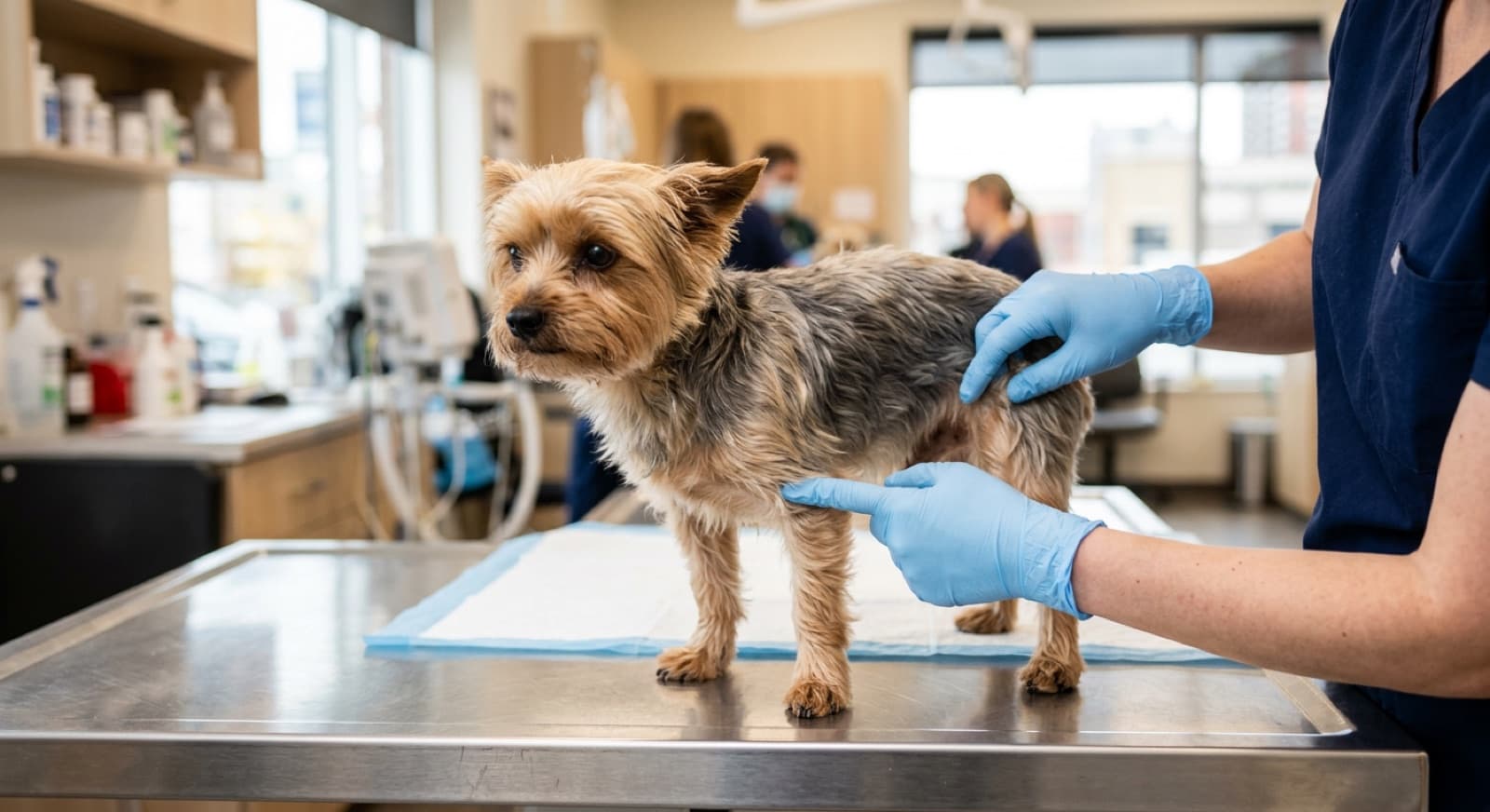
Yorkies are hardy, long-lived little dogs, especially normal-sized, well-bred ones, but their tiny toy-breed frame carries a specific set of health concerns worth knowing. This is a planning list, so an Ottawa owner knows what to watch for and where the budget goes, and every point should be discussed with your own veterinarian.
Emergencies to know
A hypoglycemic crisis (weakness, trembling, glazed eyes, collapse, or seizures) in a puppy or very tiny Yorkie is an emergency, rub corn syrup or honey on the gums en route, but do not force liquid down the throat of a groggy dog. Also urgent: severe breathing distress, neurological signs (disorientation, seizures, especially after meals, a possible liver-shunt sign), or injury from a fall or being stepped on. Ottawa has 24-hour care, including the Alta Vista Animal Hospital. Save the number now.
Teeth and trachea: the two daily habits
Dental care is the number-one job. A full set of teeth in one of the tiniest jaws of any breed crowds and overlaps, driving tartar and gum disease fast, and neglected teeth cause pain, tooth loss, and infections that can affect overall health over a Yorkie’s long life. Brush daily (or at least several times a week), provide dental chews, and schedule professional cleanings, often yearly for this breed. This one habit saves more pain and money than anything else.
Use a harness, not a collar. Yorkies are prone to tracheal collapse (a windpipe weakness that causes a honking cough), and a neck collar puts direct pressure on the vulnerable trachea. Walk on a well-fitted harness and keep the collar for ID tags only, a simple change that protects the airway for life. Keeping the dog lean helps too.
Knees, liver shunt, eyes, and cold
Knees. Luxating patella (slipping kneecaps) is common in the breed. Keep the dog lean, avoid high jumps, and have your vet grade the knees if you see regular skipping on a back leg.
Liver shunt. A congenital blood-vessel abnormality the breed is prone to, often showing in young dogs as poor growth, neurological signs (worse after meals), or digestive upset. Diagnosed by blood tests and imaging; treatment ranges from diet and medication to surgery. Another reason to avoid poorly-bred and “teacup” dogs.
Eyes. Various conditions occur; watch for redness, cloudiness, or vision changes and have them checked.
Cold. A single coat and tiny body mean real cold sensitivity, a genuine Ottawa concern needing sweaters, coats, and short winter outings (see the winter notes in our Yorkie adoption guide). For routine-care savings, see our Ottawa low-cost vet guide.
Meet a healthy Yorkie in Ottawa
Rescue Yorkies come with a vet workup and honest health notes, so you know what you are adopting. Browse available Yorkies and Yorkie mixes from Ottawa and NCR rescues.
See Available Yorkies →Frequently Asked Questions
What health problems are Yorkshire Terriers prone to?
As a toy breed, the Yorkie’s most characteristic issues come with tiny size. Dental disease is the most common and important, their small mouths crowd the teeth badly, so tartar, gum disease, and tooth loss are very common without diligent care. They are also prone to luxating patella (slipping kneecaps), tracheal collapse (a windpipe weakness that causes a honking cough, worsened by neck-collar pressure), portosystemic (liver) shunt (a congenital blood-vessel abnormality bypassing the liver), hypoglycemia (low blood sugar, especially in puppies and very tiny dogs), Legg-Calvé-Perthes hip disease, eye conditions, and, given the single coat and tiny body, real cold sensitivity. Most are manageable, and the highest-value things an Ottawa owner can do are prioritise dental care, walk on a harness (never a collar) to protect the trachea, keep the dog lean, and manage the cold. Always make health decisions for your individual dog with your veterinarian.
Why do Yorkies have such bad teeth?
Because a full set of dog teeth is crammed into one of the tiniest jaws of any breed, which crowds and overlaps them, trapping plaque and food and accelerating tartar and gum disease far faster than in a larger dog, and toy breeds like the Yorkie also tend to retain baby teeth and develop misalignments. Dental disease is genuinely one of the top health issues in the breed, and left unmanaged it causes pain, tooth loss, and infections that can spread and affect the heart and other organs. Prevention is essential and ongoing: brush the teeth daily, or at least several times a week, with dog toothpaste, provide appropriate small dental chews, and have your vet assess the teeth at every checkup and perform professional cleanings under anaesthesia as needed, often every year or so for this breed. Starting a gentle brushing routine early, especially with a rescue dog, saves a great deal of pain, tooth loss, and money over a Yorkie’s long life.
What is tracheal collapse, and why does a harness matter for a Yorkie?
Tracheal collapse is a weakening of the cartilage rings that hold the windpipe open, causing it to flatten, and it is common in toy breeds including Yorkies. It produces a characteristic honking, goose-like cough, especially with excitement, exertion, or pressure on the neck, and ranges from a mild occasional cough to a chronic problem needing medication. One simple, important prevention step is to walk your Yorkie on a well-fitted harness rather than a neck collar, because a collar puts direct pressure on the already-vulnerable windpipe every time the dog pulls or is leashed, which can aggravate or contribute to the problem. Keeping the dog lean also helps, as excess weight worsens airway issues. Attach the leash to a harness and keep the collar for ID tags only. If your Yorkie develops a persistent honking cough, especially when excited or pulling, have your vet check the trachea, this is one of the clearest reasons every small-breed owner should use a harness.
What is a liver shunt in Yorkies?
A portosystemic shunt (liver shunt) is a congenital abnormality in which a blood vessel bypasses the liver, so blood is not properly filtered of toxins, and Yorkies are one of the breeds most predisposed to it. It is usually present from birth and often shows up in young dogs. Signs can include stunted growth or being the small runt, poor weight gain, neurological signs (disorientation, circling, seizures, or unusual behaviour, often worse after meals), digestive upset, and excessive drinking and urination. It is diagnosed through blood tests and imaging, and treatment ranges from medical management (special diet and medication) to surgery to close the shunt, which can be curative in suitable cases but is costly and specialised. This is one reason to be cautious about "teacup" and poorly-bred Yorkies, which have higher rates, and to adopt from sources that disclose health history. If a young Yorkie shows poor growth or neurological signs, especially after eating, ask your vet specifically about a liver shunt.
How much does Yorkie health care cost in Ottawa?
Yorkies are among the most affordable breeds for routine care because they are so small, medication and anaesthesia are dosed by weight, food is minimal, and annual wellness care runs roughly $700 to $1,300 a year in Ottawa plus Ontario’s 13 per cent HST, plus regular professional grooming. The predictable recurring cost that sets the breed apart is dental care: regular professional cleanings, and eventually some extractions, are almost a given over a Yorkie’s long life, and they add up. The budget wildcards are the breed-specific conditions: knee surgery for a bad patella, tracheal-collapse management, a liver-shunt diagnosis and treatment (potentially expensive and specialised), and eye or other issues. Overall an affordable breed to feed and medicate, but the long lifespan means many years of dental and senior care, and pet insurance taken out while the dog is young helps with the unpredictable knee, trachea, and liver costs. See our Ottawa low-cost vet guide for routine-care savings.
Is pet insurance worth it for a Yorkie?
It can be, mainly to cover the breed’s unpredictable structural and congenital risks. Routine Yorkie care is cheap, so the case is less overwhelming than for a giant or high-risk breed, but the breed carries real wildcards, a liver shunt (potentially expensive to treat), knee surgery for a bad patella, tracheal-collapse management, and eye or dental complications, that can each be costly. Insurance taken out while your Yorkie is young and healthy locks in coverage before any condition becomes a pre-existing exclusion, which matters for the congenital and structural issues that can appear early. Note that most insurance does not cover routine dental cleanings, the breed’s biggest predictable cost, so read the terms carefully. Premiums for a young Yorkie commonly run $40 to $65 a month in Ottawa. For many owners, a combination of a savings buffer for grooming and dental plus insurance for the illness-and-injury costs is a sensible approach. Decide early if you insure.
How long do Yorkies live?
Yorkshire Terriers are a long-lived breed, typically 12 to 16 years, with many reaching the mid-teens, one of the joys of the breed. A well-cared-for Yorkie, kept lean with good dental care and attentive management of the knees, trachea, and any other issues, has the best chance of a long life. Longevity depends on the usual levers: diligent dental care above all, walking on a harness to protect the trachea, keeping the dog lean, protecting the fragile small body from injury and cold, and annual (later twice-yearly) vet checks that catch conditions early. For Ottawa owners, that long lifespan means a lengthy, rewarding companionship and budgeting for the ongoing grooming, dental, and senior care across well over a decade. A Yorkie adopted as an adult still has many good years ahead, and a normal-sized, well-bred Yorkie (not a "teacup") is generally a hardy little dog despite the toy-breed considerations.
Related Guides
New dog? Start with these care guides
Everything a new adopter needs to set up a safe, happy home.