
Get notified when a Bullmastiff is listed
We will email you the moment a Bullmastiff becomes available in Ontario, from a rescue or an owner rehoming.
Adopting a Bullmastiff in Ontario
Bullmastiffs and Mastiff crosses are uncommon in Ontario rescue. The Toronto Humane Society, the Ottawa Humane Society, and Ontario SPCA branches see them occasionally — usually 2 to 5 year old adult surrenders from owners who underestimated the breed's size, drool, slobber, or the short lifespan. A reputable rescue will provide written foster observations on temperament with strangers and visitors, dog-dog tolerance, handling for grooming and vet care, and any documented bite or growl history before approving an application.
The Ontario Dog Owners' Liability Act (DOLA, S.O. 2005, Chapter 5) bans Pit Bulls and dogs with “an appearance and physical characteristics substantially similar” to a Pit Bull. Bullmastiffs are not named in the statute, but the molosser head shape can prompt visual confusion at intake. Ask the rescue specifically about lineage documentation (microchip records, prior vet history, breeder paperwork) and whether the rescue believes the dog is at any practical DOLA risk. Verify in writing before signing.
Landlords, insurance, and the GTA reality
Bullmastiffs are commonly restricted by Toronto and Ottawa landlords, condo boards, and home insurance providers — not by city bylaw, but by private policy. Many GTA condo boards explicitly exclude molosser-type breeds from pet policies. Home insurance premiums often run $1,200 to $2,500+ annually because of the bully-breed classification, and some carriers decline the breed outright. Get a written insurance quote and landlord or condo board written approval before you sign the adoption contract.
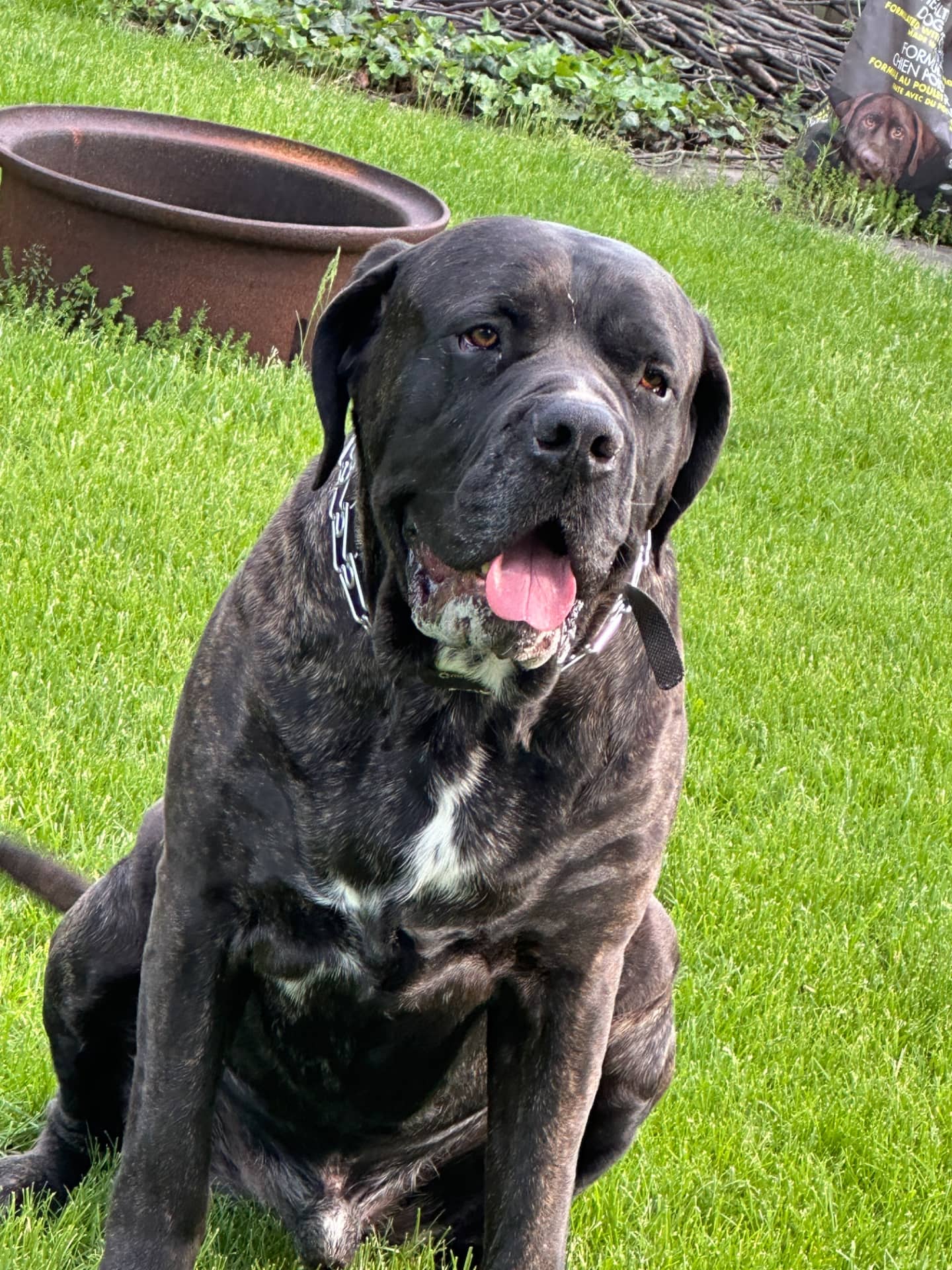
Bullmastiffs are calm, family-bonded guardians. They are not high-energy — 30 to 45 minutes of moderate daily exercise is enough. They drool constantly (every Mastiff household has slobber towels in every room), they snore, and they take up a lot of space at 100 to 130 lbs. They are gentle with family but reserved with strangers, and proper socialisation matters throughout the dog's life.
Lifetime health and Toronto humid summers
The breed is predisposed to hip and elbow dysplasia (annual radiographs from age 5 are reasonable), gastric dilatation-volvulus (bloat, a true emergency, $4,000 to $7,000 at GTA emergency practices, gastropexy at the spay or neuter visit is worth discussing), lymphoma and osteosarcoma (cancer is a leading cause of death in the breed), entropion and ectropion and cherry eye (eyelid surgery $1,500 to $2,500 at GTA specialty practices), and a mild brachycephalic component that compounds heat sensitivity. The Ontario Veterinary College in Guelph and VCA Canada specialty branches handle the oncology, orthopaedic, and cardiology workups. Median lifespan is 7 to 9 years and lifetime cost commonly runs $40,000 to $60,000+ at GTA prices.
Toronto humid summers above 28°C with humidex are a real heat risk — the muzzle is mildly elongated but breathing under load is still less efficient than a Lab or a Shepherd. Limit midday exercise in July and August, provide continuous air conditioning indoors, and dawn or sunset exercise only on humid days. Winter at minus 15 is manageable with a coat for the short single coat.
Looking more broadly? Browse every adoptable dog across the province on Dog Adoption Ontario.
The rescues that most often list Bullmastiffs across the province are Toronto Humane Society, Ottawa Humane Society, and Ontario SPCA (Ottawa Area). For breed-specific background, the Canadian Kennel Club is a useful reference.
Bullmastiff Adoption FAQ — Ontario
Tap a question to expand
How many Bullmastiffs are available for adoption in Ontario?▼
Where can I adopt a Bullmastiff near me in Ontario?▼
Are Bullmastiffs restricted in Ontario?▼
How long do Bullmastiffs live?▼
Are Bullmastiffs good first-time owner dogs?▼
How much does it cost to adopt a Bullmastiff in Ontario?▼
Can I get a Bullmastiff free to a good home in Ontario?▼
Are these Bullmastiffs for sale in Ontario?▼
Where can I buy a Bullmastiff in Ontario, and should I?▼
Are there free Bullmastiffs in Ontario, or bullmastiffs under $500?▼
Are there Bullmastiff puppies in Ontario, or only adults?▼
Where can I find a Bullmastiff near me in Ontario?▼
Popular dog breeds in Ontario
Bullmastiff adoption by city in Ontario
Each city page lists only the bullmastiffs available from rescues serving that city, with local adoption details.
Need to rehome a Bullmastiff?
If you can no longer keep your Bullmastiff, you can list them for free on LocalPetFinder. Your dog stays in your home until you find the right family, you screen who applies, and there is no surrender fee. Not sure yet? Our guide to surrendering a dog in Canada walks through every option first.
List your dog for free →