The short answer
Rehome your cat on LocalPetFinder, free
List your cat at no cost. They stay home until the right family is found, you screen adopters through a verified contact form, and you choose who adopts. Reviewed within 24 to 48 hours.
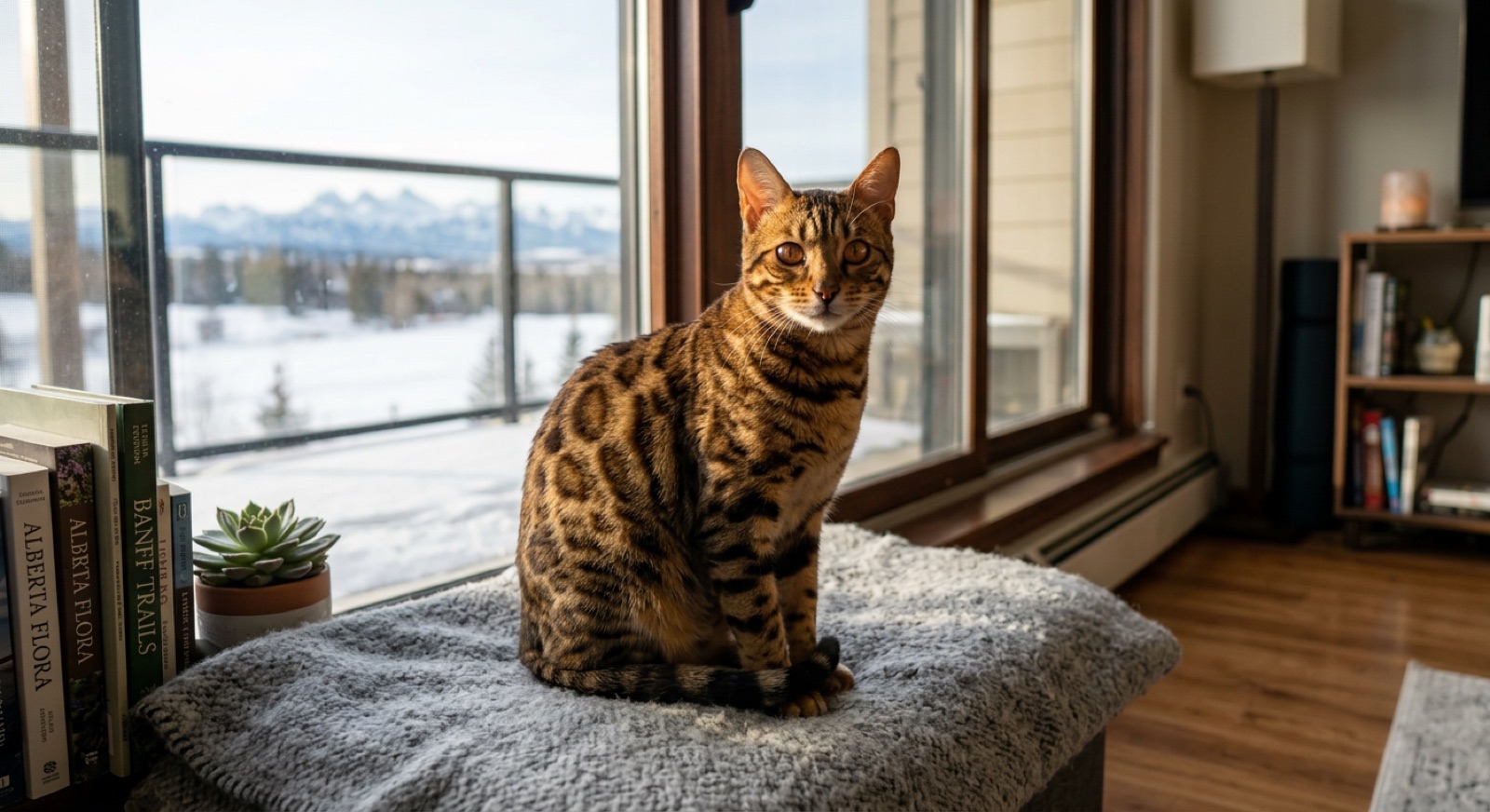
Why Bengals end up needing a new home
TICA calls the Bengal "a high-energy breed" that is constantly climbing, exploring, and demanding stimulating play. That sentence is the entire surrender story. The recurring patterns:
- The energy mismatch. The defining one. A Bengal needs interactive play multiple times a day, climbing territory, and genuine mental work (puzzle feeders, training, a cat wheel). Without it, the energy goes somewhere: shredded furniture, emptied shelves, opened cupboards, and a cat that patrols the house at night looking for a job.
- Spraying and marking. The most common breaking point. Bored, stressed, or under-stimulated Bengals mark, and once it starts, an unprepared household is usually done. It is behaviour, not spite, and in a properly enriched home it very often stops.
- The yowling. Bengals are loud, persistent, and vocal by design. In an apartment with thin walls, the volume alone forces decisions.
- Multi-pet friction. A high-drive Bengal can relentlessly harass a mellow resident cat. Households pick the cat that was there first.
- The cost of doing it right. Catios, wheels, climbing systems, and the time cost of daily structured play add up, and the breed's known heart screening needs add vet money on top (more under disclosure).
Read that list again and notice: every item is the breed doing exactly what it was built to do, in a home that was sold the coat and not the cat. The fix is not a better cat. It is the right home, and your honest listing is how it gets found.
Honesty is the placement strategy, not the obstacle
The instinct with a cat that sprays or destroys things is to soften the listing so someone will take it. For a Bengal, that instinct is exactly backwards.
The adopters who succeed with this breed are Bengal people: experienced cat owners who know what they are signing up for and often specifically seek out the breed's intensity. Those adopters read a listing that says "sprays when under-stimulated, needs two hours of structured play a day, opens cupboards, yells" and get interested, because it tells them the seller understands the cat. A sanitized listing attracts another coat-buyer, and the cat is back in rehoming within months, now with two failed homes on its record.
So write it all down: what the cat destroys and when, where and when it sprays, what enrichment has helped, what a good day looks like, and what the cat is like when its needs are met (usually: affectionate, hilarious, dog-like, fetch-playing). Then screen for applicants who respond to the hard parts with plans rather than optimism. Ask what their last cat was like, what their enrichment setup is, and how many hours the house is empty. A catio, a cat wheel, or a previous Bengal in the application is worth more than any promise.
Indoor-only with supervised outdoor access is the standard for this breed: Bengals are valuable, prone to roaming, and exactly the cat that gets stolen. An applicant planning free outdoor access is the wrong home.
Paperwork, generations, and the F-word
One thing is unique to Bengal rehoming in Canada: the breed is a domestic-wildcat hybrid, and the law cares about how many generations removed from the wild ancestor a cat is.
In Alberta, the provincial rules on wildlife as pets are explicit: Bengals registered with TICA as F4 generation or later are simply domestic cats, while earlier generations (F1 to F3) are not legal to keep as pets. Other provinces and some municipalities have their own rules, so if you are outside Alberta, check your local ones before listing. In practice this is rarely a problem: the overwhelming majority of pet Bengals in Canada are F4 or later, and if you bought from a breeder, your cat almost certainly is.
What it means for you is simple: find your paperwork. If you have TICA registration, include it with the cat; it answers the generation question for the adopter and any landlord instantly. If you have no paperwork and no reason to believe the cat is early-generation, say "no papers, sold to us as a Bengal" and let the adopter take it from there. Do not invent a generation number you cannot back up.
What you must disclose
Bengal disclosure is longer than most breeds because the behaviour is the placement.
- The behaviour, completely. Spraying (where, when, how often), destruction, night activity, yowling, door-darting, and what management has actually helped. This is covered above, but it bears repeating: for this breed, the honest version places the cat and the polished version bounces it.
- Heart history. Bengals are over-represented for hypertrophic cardiomyopathy (HCM) in the veterinary cardiology literature, and there is no Bengal-specific DNA test, so screening is done by echocardiogram. Share any murmur, any screening results, and the full vet records, and let the new home's vet plan from there.
- How the cat is with other animals. Bengals that harass other cats need to be placed as only cats or with an equally confident, playful companion, and pretending otherwise ruins two households.
- Litter habits versus marking. Be precise about the difference: a cat that uses the box but sprays walls when stressed is a different management problem than a box-avoidance issue, and experienced adopters know it.
- Registration status. TICA papers if you have them, honesty if you do not.
Bengal rescues and where to ask
Here is the honest picture: there is no Bengal-specific rescue based in Canada we can currently verify as active and taking owner surrenders. The best-known Bengal rescue organizations are US-based and focused on their own regions. In Canada, the practical paths are all-breed cat rescues and humane societies in your province (tell them it is a Bengal; many have waiting adopters for exactly this breed) and a direct vetted listing with the honest behavioural write-up described above. Bengal-experienced adopters exist in every province and actively search for the breed, so a truthful listing finds them.
Should you charge a rehoming fee?
Charge a real rehoming fee. Bengals are one of the most expensive cat breeds in Canada from a breeder, and the leopard coat makes them instantly recognizable, so a free or cheap Bengal listing attracts resellers and, worse, backyard breeders looking for cheap breeding stock. A fee of a couple of hundred dollars for a healthy adult is normal (this is a directional range, not a fixed rule), paired with a vet reference and proof the cat is spayed or neutered before handover; an intact Bengal is precisely what the wrong applicants are shopping for. Donate the fee to a cat rescue afterward if you would rather not keep it.
How LocalPetFinder rehoming works
- Submit a free listing at /rehome/submit. Photos, age, breed, spay or neuter status, compatibility, an honest behavioural profile, your reason for rehoming, and a fee. The form takes about 5 minutes and your cat never leaves your home.
- We review it for completeness and basic safety, usually within 24 to 48 hours, then it goes live.
- Your Bengal appears alongside rescue cats on the Bengal listings and the main adoption pages, marked “Owner Rehoming.” Your email stays private.
- You screen and choose. Vetted adopters reach you through a verified contact form. You decide who to respond to, who to meet, and who gets the cat.
Ready to rehome your Bengal responsibly?
List your Bengal on LocalPetFinder for free. Your listing appears next to rescue cats, you control the screening, and we never share your email publicly.
Start Your Free Listing →Anti-scam rules (read every line)
- Never list as “free to good home.” A fair fee is the single best filter against flippers and bad-faith adopters.
- Insist on a meet-and-greet, ideally at the adopter's home. Anyone who refuses a home check is hiding their living situation.
- Be suspicious of anyone offering more than your fee, or pushing for a fast, no-questions handover.
- Get a written agreement and a vet reference, transfer the microchip registration, and prefer e-transfer over cash for a paper trail.