The short answer
Rehome your cat on LocalPetFinder, free
List your cat at no cost. They stay home until the right family is found, you screen adopters through a verified contact form, and you choose who adopts. Reviewed within 24 to 48 hours.
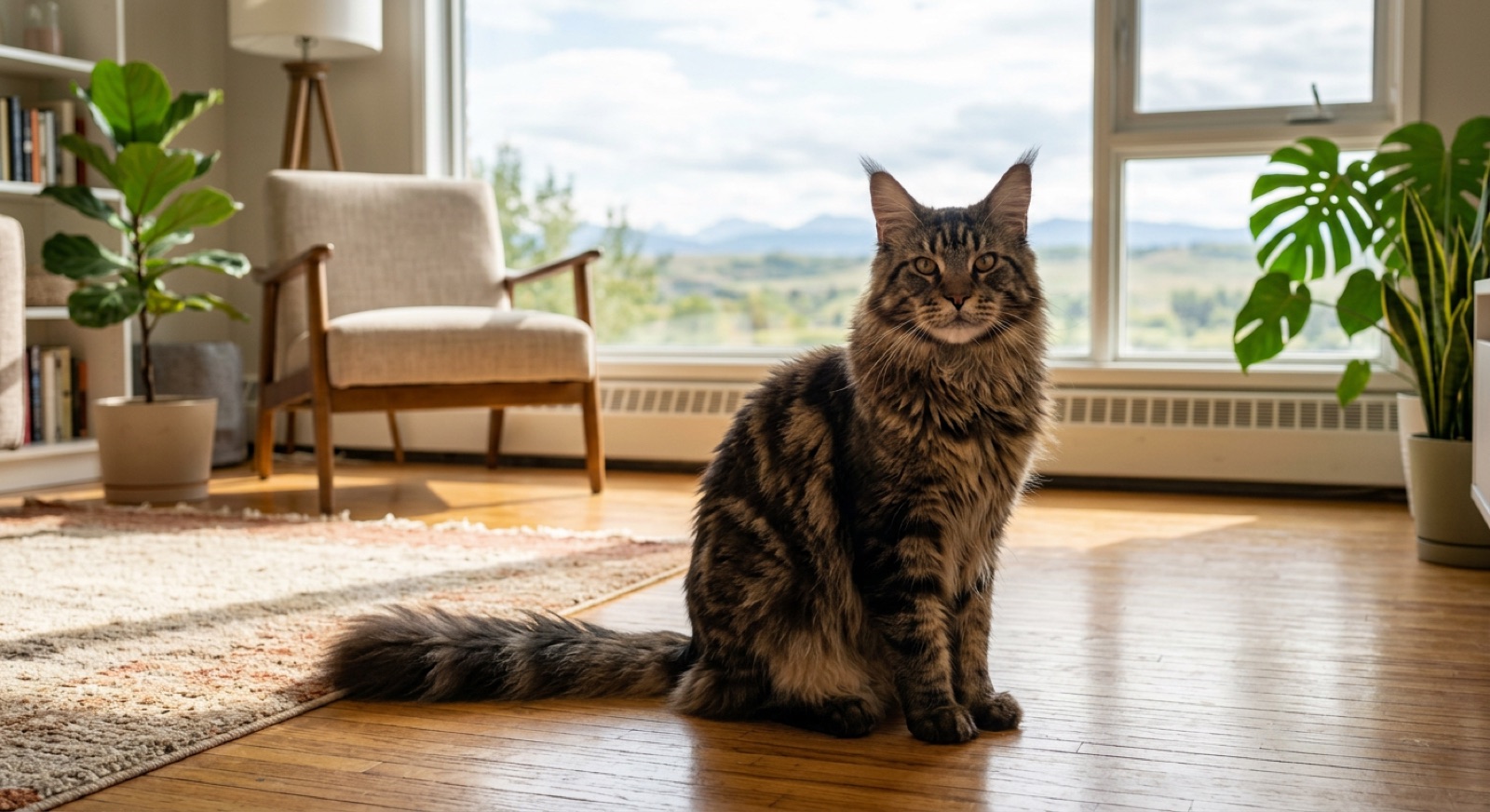
Why Maine Coons end up needing a new home
TICA describes the breed plainly: "Despite their size, the Maine Coon cat is sweet-tempered, gentle and friendly." Temperament is almost never why these cats get rehomed. The recurring reasons owners reach the decision:
- Allergies. The most common one. A big cat with a long, heavy coat sheds a lot of allergen around a home, and a new partner, a new baby, or a slowly worsening reaction forces the decision. If that is your situation, our guide to rehoming because of allergies covers it without judgement.
- The grooming workload. That gorgeous coat mats without regular brushing, and a matted Maine Coon is an uncomfortable cat that resents the dematting sessions. Households discover the workload after the kitten fluff turns into an adult double coat.
- Size-scaled costs. Everything costs more with a cat that can weigh as much as a small dog: food, dental cleanings, medications dosed by weight, and boarding. The Cat Fanciers' Association calls it the largest of all pedigreed cats, and the budget notices.
- Housing changes. Moves into no-pets or one-small-pet rentals catch large-breed cat owners the same way they catch dog owners.
- Space and multi-pet friction. A big, social, busy cat in a small apartment with a resident cat that wants none of it wears a household down.
None of this means your cat is a problem. It means circumstances changed around a genuinely good cat, and a careful rehoming fixes exactly that.
The screening priorities unique to Maine Coons
A healthy Maine Coon draws applicants within days, so the work is refusal, not recruitment. Three checks matter most.
1. Screen out the flippers, hard. Maine Coons are one of the most expensive cat breeds in Canada from a breeder, which makes a cheap or free adult a resale opportunity. The tells are the same as for any valuable animal: pressure to collect the cat immediately, vagueness about the household, refusal to do a video call or a home meeting, no vet to name. Charge a real fee, require a vet reference, and slow the process down. Genuine adopters accept screening; flippers evaporate.
2. A real grooming plan. Ask directly how they will keep the coat maintained. The right answer involves a brush and a routine, not a shrug. An adopter who has owned a longhaired cat before usually volunteers this unprompted, and that experience is worth more than enthusiasm.
3. Room in the budget for a big cat. Ask how the household would handle a significant vet bill. Maine Coons are not a fragile breed, but their known heart risk (more on that under disclosure) and their sheer size mean the right home is one that would screen and treat rather than surrender again.
How long it realistically takes
Fast. Maine Coons and Maine-Coon-type longhairs are among the most requested cats in Canadian rescue, and a healthy adult with honest photos and a fair fee typically places in two to five weeks, with interest often starting the first day. Seniors take longer but have a devoted following among quiet households that specifically want a calm, affectionate big cat. A cat with a diagnosed heart condition takes the longest and needs a financially ready home, so put the medical picture in the listing and let it do the filtering. Whatever the pace, do not hand a Maine Coon to a same-day applicant; speed is the reseller's signature. If the search stalls, our guide on what to do if you can't find an adopter covers the options that are still safer than a shelter surrender.
What you must disclose
Maine Coon disclosure is mostly medical, and one item matters more than all the others combined.
- Heart history, completely. Hypertrophic cardiomyopathy (HCM), a thickening of the heart muscle, is the breed's best-known health risk, and a DNA test for one Maine Coon HCM mutation exists, so some cats come with genetic or echocardiogram results. You are not expected to diagnose anything. Your job is to hand over everything you have: any murmur a vet has mentioned, any screening results, any breeder paperwork, and the full vet records. A new home that knows can screen with their vet; a home that does not know finds out the hard way.
- Coat and matting history. How the cat tolerates brushing, any recurring mat zones, and whether a groomer has ever been needed. If the coat got away from you, have the mats dealt with before listing and say so honestly; groomers have seen far worse.
- Weight. State it plainly. Big breed plus extra weight loads the joints, and the new home should know what the vet considers this cat's healthy weight.
- Litter and behaviour basics. Litter habits, how the cat is with children, dogs, and other cats, and anything the next household should plan around. Maine Coons are famously good family cats, so honest positives here are selling points, not filler.
Maine Coon rescues and where to ask
Here is the honest picture: there is currently no Maine-Coon-specific rescue in Canada we can verify as active and taking owner surrenders. So few reach rescue that demand absorbs them almost instantly, which is also why no dedicated organization has needed to form. The practical paths are all-breed cat rescues and humane societies in your province, which take Maine Coons readily because they place fast, and a direct vetted listing, which for this breed usually works quickly.
Should you charge a rehoming fee?
Charge a real rehoming fee, and treat it as a safety measure rather than a courtesy. Maine Coons are expensive from a breeder and instantly recognizable, which makes a free or cheap listing a magnet for people who resell cats within the week. A fee of a couple of hundred dollars for a healthy adult is normal in Canada (this is a directional range, not a fixed rule), paired with a vet reference and a meeting at your home or theirs, never a parking lot. You can donate the fee to a cat rescue afterward if you would rather not keep it.
How LocalPetFinder rehoming works
- Submit a free listing at /rehome/submit. Photos, age, breed, spay or neuter status, compatibility, an honest behavioural profile, your reason for rehoming, and a fee. The form takes about 5 minutes and your cat never leaves your home.
- We review it for completeness and basic safety, usually within 24 to 48 hours, then it goes live.
- Your Maine Coon appears alongside rescue cats on the Maine Coon listings and the main adoption pages, marked “Owner Rehoming.” Your email stays private.
- You screen and choose. Vetted adopters reach you through a verified contact form. You decide who to respond to, who to meet, and who gets the cat.
Ready to rehome your Maine Coon responsibly?
List your Maine Coon on LocalPetFinder for free. Your listing appears next to rescue cats, you control the screening, and we never share your email publicly.
Start Your Free Listing →Anti-scam rules (read every line)
- Never list as “free to good home.” A fair fee is the single best filter against flippers and bad-faith adopters.
- Insist on a meet-and-greet, ideally at the adopter's home. Anyone who refuses a home check is hiding their living situation.
- Be suspicious of anyone offering more than your fee, or pushing for a fast, no-questions handover.
- Get a written agreement and a vet reference, transfer the microchip registration, and prefer e-transfer over cash for a paper trail.