The short answer
Rehome your cat on LocalPetFinder, free
List your cat at no cost. They stay home until the right family is found, you screen adopters through a verified contact form, and you choose who adopts. Reviewed within 24 to 48 hours.
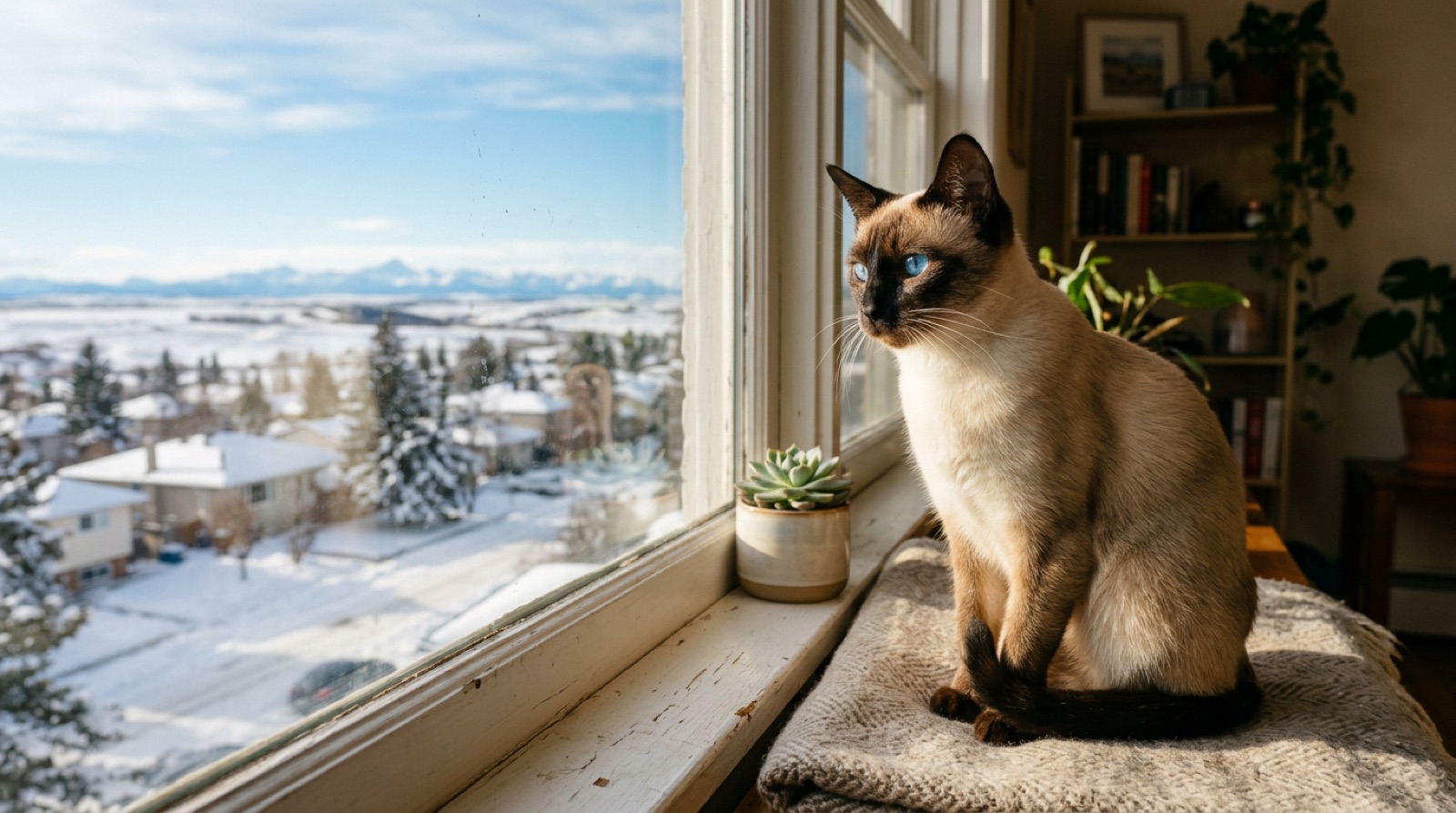
Why Siamese end up needing a new home
The Cat Fanciers' Association sums the breed up as "vocal, affectionate, active; can be insistent," and calls them experts at making their desires known. Every recurring surrender reason is in that sentence:
- The voice. The defining one. A Siamese talks, loudly and constantly, and treats a closed door as a negotiation. People who wanted a quiet lap cat discover they got a roommate with opinions, and in apartments the volume generates complaints.
- An older owner's circumstances. Siamese are long-lived (many reach their late teens) and popular with seniors, so a steady share of rehomings arrive when an owner falls ill, moves into care, or dies, often with the cat still having years ahead of it.
- A new baby. A Siamese bonds intensely with one or two people and does not share gracefully. When a baby arrives and the cat's person disappears into parenthood, the yowling and attention-seeking escalate at the worst possible time. If that is your situation, our guide to rehoming after a new baby covers it without judgement.
- Separation stress. This breed does poorly in long-empty houses, and the neighbours will describe the sound. A household that shifted to full office days sometimes concludes the cat deserves better company.
- Jealousy in multi-pet homes. A Siamese that decides the resident cat is competition for its person can make the point relentlessly.
None of this means your cat is a problem. It means an intense, devoted breed met circumstances that changed, and a careful rehoming into a talk-tolerant home fixes exactly that.
The screening priorities unique to Siamese
Siamese screening is mostly about matching intensity to appetite for it.
1. Sell the voice honestly, then screen for people who want it. Put the talking in the listing in plain words: how loud, how often, what the cat yells about. The right adopter, and there are many, reads that with a grin. Ask applicants directly whether they have lived with a vocal cat before. Someone who fell in love with a Siamese in their past is the classic right answer; someone who says "how bad can it be?" is the classic wrong one.
2. A home with people in it. Ask how many hours the house is empty on a normal day. Siamese are companion cats to an extreme degree, and the safest placements are homes where someone is around much of the day, or where an equally social second cat keeps the conversation going. Retired households are often the best homes this breed can get.
3. One quiet correction: Siamese are not hypoallergenic. Some applicants arrive believing they are, because the breed gets marketed that way. No cat is. Individual cats vary more than breed labels do, so if an applicant is choosing your cat because of allergies, have them spend real time with the cat before committing rather than betting the placement on a label. It protects your cat from an allergy-return three weeks in.
Bonded pairs: rehome them together
This rule exists for many cats, but Siamese earn it more than most. The breed's intensity does not switch off when its person leaves; it transfers, and in multi-Siamese homes it usually transfers to the other cat. Two cats that groom each other, sleep tangled together, and search the house when separated are a bonded pair.
Splitting a bonded pair to speed up two separate placements produces two grieving, yowling, stress-sick cats and, very often, two failed placements. Rehome them together, say so in the listing title, and accept that a pair takes somewhat longer to place. The adopters who take bonded pairs are among the best cat homes there are, and a talkative Siamese duo is genuinely easier to live with than a single lonely one, because they entertain each other. If one cat of a former pair has already passed away, say that too; it explains behaviour the adopter may see and reads as the honesty it is.
If the search takes longer than your deadline allows, do not split the pair as a shortcut. Contact rescues (below), widen the channels, and read our guide on what to do if you can't find an adopter.
What you must disclose
Siamese disclosure is behavioural first, medical second, and all of it is normal for the breed.
- The voice, accurately. Volume, frequency, and triggers. This is the item that decides whether the placement sticks, so resist every urge to soften it.
- Attachment behaviour. Whose cat it is, how it handles that person leaving, and what an empty-house day sounds like. The right home plans for it.
- Bonded-pair status. Covered above; it belongs in the listing title, not the fine print.
- Vet records, complete. Siamese as a breed carry known predispositions (dental disease is common, and vets also watch the breed for asthma-like airway disease and certain kidney and heart conditions). You are not expected to explain any of it; hand over the full records, name your vet, and disclose anything already flagged, any daily medication, and the last dental. The new home's vet takes it from there.
- Behaviour with other cats, dogs, and children. What you have actually observed, including jealousy. A Siamese that needs to be the only cat is easy to place as long as the listing says so.
Siamese rescues and where to ask
Siamese owners have something almost no other cat breed in Canada has: a real, long-running, breed-focused rescue. Intake always depends on foster space, so contact them early, be honest about the situation, and list on LocalPetFinder in parallel rather than waiting on a single door. Beyond the breed rescue, all-breed cat rescues and humane societies across Canada take Siamese readily because they place well. A verified Canadian option:
Should you charge a rehoming fee?
Charge a modest rehoming fee. For a healthy adult Siamese a fee in the low hundreds is normal in Canada (this is a directional range, not a fixed rule). Siamese are recognizable and popular enough to attract reseller interest, so the fee plus a vet reference is your first filter, and it helps the new owner feel invested. For a bonded pair, one reasonable combined fee places better than two separate ones. You can donate the fee to a cat rescue afterward if you would rather not keep it; the Siamese rescue community would put it to work.
How LocalPetFinder rehoming works
- Submit a free listing at /rehome/submit. Photos, age, breed, spay or neuter status, compatibility, an honest behavioural profile, your reason for rehoming, and a fee. The form takes about 5 minutes and your cat never leaves your home.
- We review it for completeness and basic safety, usually within 24 to 48 hours, then it goes live.
- Your Siamese appears alongside rescue cats on the Siamese listings and the main adoption pages, marked “Owner Rehoming.” Your email stays private.
- You screen and choose. Vetted adopters reach you through a verified contact form. You decide who to respond to, who to meet, and who gets the cat.
Ready to rehome your Siamese responsibly?
List your Siamese on LocalPetFinder for free. Your listing appears next to rescue cats, you control the screening, and we never share your email publicly.
Start Your Free Listing →Anti-scam rules (read every line)
- Never list as “free to good home.” A fair fee is the single best filter against flippers and bad-faith adopters.
- Insist on a meet-and-greet, ideally at the adopter's home. Anyone who refuses a home check is hiding their living situation.
- Be suspicious of anyone offering more than your fee, or pushing for a fast, no-questions handover.
- Get a written agreement and a vet reference, transfer the microchip registration, and prefer e-transfer over cash for a paper trail.