The short answer
Rehome your cat on LocalPetFinder, free
List your cat at no cost. They stay home until the right family is found, you screen adopters through a verified contact form, and you choose who adopts. Reviewed within 24 to 48 hours.
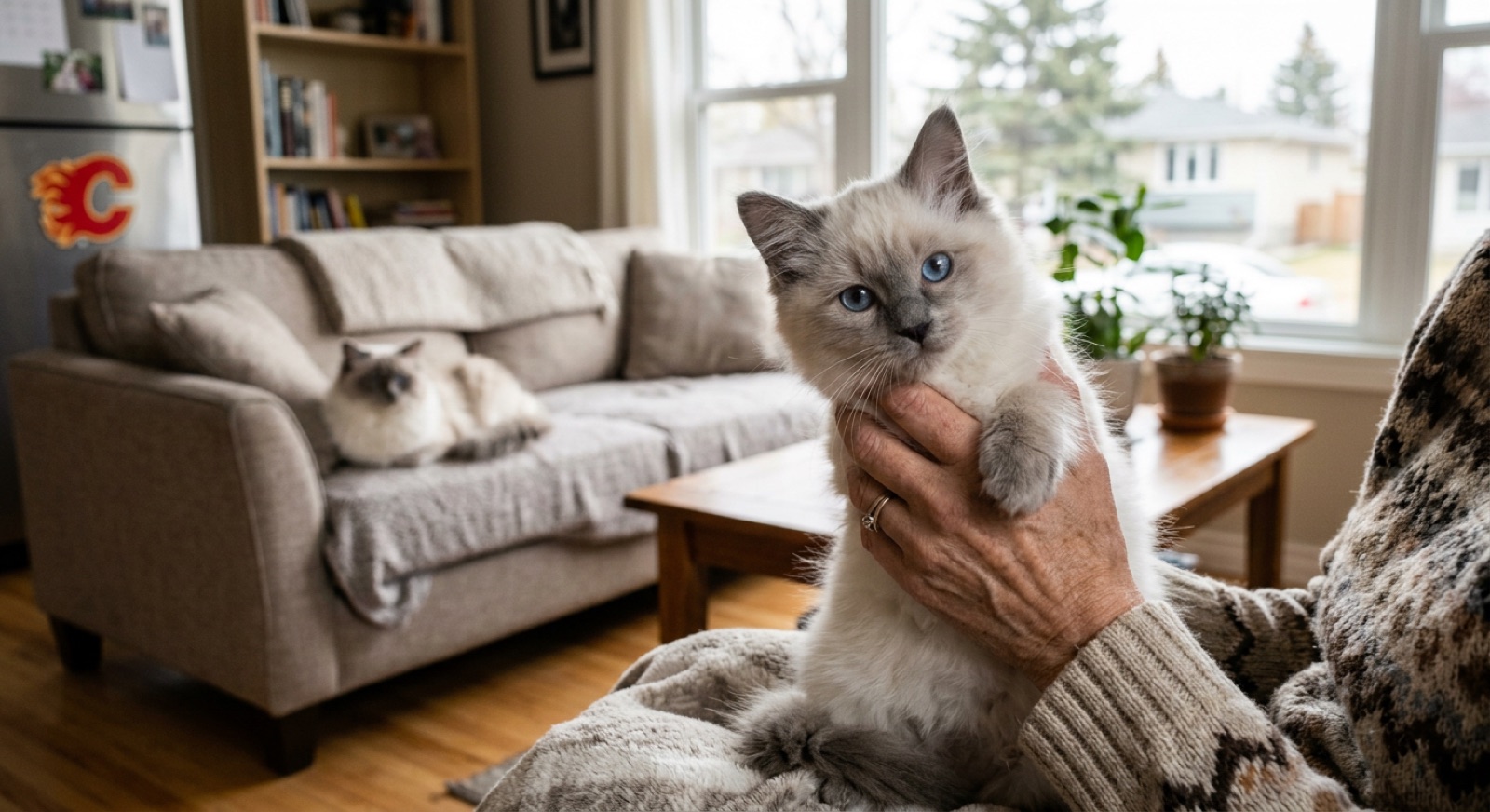
Why Ragdolls end up needing a new home
TICA describes the Ragdoll as "a loving, quiet cat with a very laidback disposition," a cat that goes limp in your arms like a stuffed doll. That temperament explains both why people adore them and why they get rehomed. The recurring reasons:
- The owner's health, not the cat's. The biggest one. Ragdolls are a favourite of seniors and quiet households, and when illness, a move into care, or a death in the family arrives, the cat needs a new home through nobody's fault. If this is your situation, or you are handling it for a parent, our guide to rehoming because of owner illness walks through it, including how family members can manage a rehoming on someone else's behalf.
- Allergies. A semi-longhaired cat that wants to be on your lap, your pillow, and your chest is a hard cat to live with once a reaction develops.
- Housing changes. Moves into no-pets rentals catch Ragdoll owners like everyone else.
- The velcro factor. Ragdolls follow their person from room to room and do poorly in long-empty houses. A household that shifted to long office days sometimes concludes, correctly, that the cat deserves more company than it is getting.
- Grooming and cost creep. The coat is lower-maintenance than a Persian's but still mats without brushing, and a large breed carries large-breed vet bills.
Notice what is missing: behaviour problems. Ragdolls almost never get surrendered for being difficult, which makes yours one of the easiest honest listings you will ever write.
The one non-negotiable: an indoor-only home
Every breed guide on this site has a screening priority. The Ragdoll's is absolute in a way most are not.
Ragdolls were bred for trust. The famous flop is a cat that does not brace, does not flee, and assumes every human and every situation is friendly. Outdoors, that temperament is a death sentence: a Ragdoll will walk up to strangers, does not defend itself against other animals, and has no traffic sense. It is also a strikingly beautiful, obviously expensive cat, which makes it the single most theft-prone profile a cat can have.
Ask every applicant directly: will this cat ever go outside unsupervised? The only acceptable answer is no. Secure catios and harness walks are fine; an open back door is not. An adopter who pushes back on this, however kind, is the wrong home for the breed. Put "indoor-only home required" in the listing itself so it filters before you ever have the conversation.
Beyond that, screening is straightforward: a household that is home a reasonable amount (this is a companion breed, not a decoration), gentle children rather than grabby toddlers, and a budget that can absorb big-cat vet bills. Ragdolls get along with respectful dogs unusually well, so a calm resident dog is not a disqualifier.
How long it realistically takes
Fast. A calm, affectionate, lap-seeking cat is the single most requested profile in Canadian cat rehoming, and a healthy adult Ragdoll with honest photos and a fair fee typically places in two to five weeks, often with interest the first day. Seniors take longer but benefit from the same quiet-household demand that serves the breed so well; plenty of retired adopters specifically want an older, calmer cat, and an owner-illness or estate rehoming story draws warm, serious applicants rather than scaring them off. A cat with a diagnosed heart or kidney condition needs a financially ready home and takes the longest, so lead with the medical picture and let the listing filter. Whatever the timeline, take the extra week to verify the indoor-only commitment rather than accepting the fastest applicant.
What you must disclose
Ragdoll disclosure is short, mostly medical, and none of it stops a placement when it is honest.
- Heart history. Hypertrophic cardiomyopathy (HCM), a thickening of the heart muscle, is documented in the breed, and a DNA test for a known Ragdoll mutation exists, so some cats come with genetic results or echocardiogram history. Share whatever you have: murmurs, screenings, breeder paperwork, the full vet records. You are not diagnosing; you are handing the new home's vet the file.
- Urinary and kidney history. Ragdolls are prone to bladder stones and urinary trouble. Any episodes, prescription diets, or vet advice belong in the listing.
- Coat routine. How often the cat is brushed, any mat zones, and how it tolerates grooming. Ragdoll coats are forgiving but not maintenance-free.
- The companionship need, honestly. If your Ragdoll follows people room to room and yells at closed doors, say so. To the right adopter that is the entire appeal.
- Litter habits and how the cat is with dogs, cats, and children. For most Ragdolls this section is a list of selling points. Write it anyway; specifics beat adjectives.
Ragdoll rescues and where to ask
Here is the honest picture: there is no Ragdoll-specific rescue in Canada we can currently verify as active and taking owner surrenders. Very few Ragdolls reach rescue, and the ones that do are absorbed instantly by demand. The practical paths are all-breed cat rescues and humane societies in your province, which take Ragdolls readily, and a direct vetted listing, which for this breed usually moves quickly. If your cat came from a breeder, check your purchase contract first: many reputable Canadian breeders include a take-back or rehoming-assistance clause, and a phone call there may solve the whole problem.
Should you charge a rehoming fee?
Charge a real rehoming fee. Ragdolls cost serious money from a breeder and look like it, which makes a free or cheap listing a magnet for resellers. A fee of a couple of hundred dollars for a healthy adult is normal in Canada (this is a directional range, not a fixed rule), paired with a vet reference and a home meeting. If you are handling an estate or owner-illness rehoming and the fee feels wrong, donate it to a cat rescue in the original owner's name; adopters find that touching rather than off-putting, and the screening value of the fee stays intact.
How LocalPetFinder rehoming works
- Submit a free listing at /rehome/submit. Photos, age, breed, spay or neuter status, compatibility, an honest behavioural profile, your reason for rehoming, and a fee. The form takes about 5 minutes and your cat never leaves your home.
- We review it for completeness and basic safety, usually within 24 to 48 hours, then it goes live.
- Your Ragdoll appears alongside rescue cats on the Ragdoll listings and the main adoption pages, marked “Owner Rehoming.” Your email stays private.
- You screen and choose. Vetted adopters reach you through a verified contact form. You decide who to respond to, who to meet, and who gets the cat.
Ready to rehome your Ragdoll responsibly?
List your Ragdoll on LocalPetFinder for free. Your listing appears next to rescue cats, you control the screening, and we never share your email publicly.
Start Your Free Listing →Anti-scam rules (read every line)
- Never list as “free to good home.” A fair fee is the single best filter against flippers and bad-faith adopters.
- Insist on a meet-and-greet, ideally at the adopter's home. Anyone who refuses a home check is hiding their living situation.
- Be suspicious of anyone offering more than your fee, or pushing for a fast, no-questions handover.
- Get a written agreement and a vet reference, transfer the microchip registration, and prefer e-transfer over cash for a paper trail.