The short answer
Book a vet visit first. Urinary tract infections, bladder crystals, kidney disease, and arthritis are common medical causes of missed boxes, and no amount of litter-shopping fixes them. A male cat straining with little or no urine is an emergency: in Regina, call the 24 HR Animal Care Centre at (306) 761-1449, any hour. Once medical causes are ruled out, work the setup checklist: one box per cat plus one, boxes 1.5x your cat's length, quiet placement, unscented clumping litter, and daily scooping. For behaviour support, the Regina Humane Society (306-543-6363) and Regina Cat Rescue foster network are the local backstops.
Heads up: This article is informational and is not veterinary advice. Litter box changes are a symptom, and only a veterinarian can rule out the medical causes behind them. Always consult your Regina vet before treating a litter box problem as behavioural, and treat any straining, crying, or bloody urine as urgent. Contact details are current as of July 2026; confirm hours and services before travelling to a clinic.
Litter box problems are the number one behaviour reason cats get surrendered, and most of them are fixable. That is the part that stings for anyone who volunteers in rescue. A cat pees on the bathmat, the family tries a new litter, the peeing continues, and three weeks later the cat is in an intake queue. The actual cause was a bladder infection, or a box tucked beside a banging furnace, or two cats sharing one box in a house that needed three. If a litter box problem has you thinking about rehoming, read our rehoming guide for Regina last, not first. Try this checklist first.
The order of operations matters more than any single fix. Vet first, always. The American Veterinary Medical Association's pet-owner resources are blunt about house soiling: medical causes must be excluded before anything gets labelled a behaviour problem. Cats hide pain expertly. A missed box is frequently the first visible sign of a urinary or joint issue that has been building for months.
Regina adds its own wrinkle: the winter. From November through March, with stretches at -30°C, every Regina cat is a fully indoor cat. Our indoor vs outdoor guide covers why that is the right call here year-round, but the litter box consequence is real. Indoor months mean more box traffic, more multi-cat friction, and more boredom stress. The checklist below accounts for it.
Step 1: Rule Out Medical Causes (Not Optional)
Every reliable troubleshooting path starts at the vet clinic. A urinalysis and a physical exam are inexpensive relative to months of failed litter experiments, and they either catch a treatable condition early or clear the way for behavioural work with a clean conscience. Here are the medical causes your Regina vet will be thinking about:
| Medical Cause | What It Looks Like at Home |
|---|---|
| Urinary tract infection | Frequent small puddles, straining, crying in the box, licking after urinating, sometimes blood-tinged urine. |
| Bladder crystals or stones | Similar to a UTI. In male cats, crystals can block the urethra entirely, which is rapidly fatal without treatment. |
| Feline idiopathic cystitis | Bladder inflammation without infection, strongly linked to stress. Waxes and wanes; flares often follow household changes. |
| Kidney disease or diabetes | More drinking, more urine volume, bigger clumps, and boxes that foul faster than the cleaning schedule can keep up with. |
| Arthritis | Common in seniors. High box walls, basement stairs, and slippery floors all become painful obstacles. The cat pees beside the box it could not comfortably climb into. |
| Digestive issues | Stool outside the box, with urine habits unchanged, points toward constipation, diarrhoea, or pain during defecation rather than a box protest. |
Emergency: male cat straining with no urine
A male cat making repeated trips to the box, straining, crying, and producing little or nothing may have a urethral blockage. This kills cats within a day or two. It is not a wait-until-Monday problem. Regina has Saskatchewan's only privately owned 24-hour veterinary hospital: the 24 HR Animal Care Centre at 1846 Victoria Avenue East, open 24/7/365. Call (306) 761-1449 on your way in; a call before arrival is appreciated.
Step 2: The Setup Checklist
Vet cleared the cat? Good. Now audit the boxes like a picky tenant inspecting an apartment, because that is roughly how your cat sees them. Work the list top to bottom; the cheapest fixes are at the top.
Box count
Number of cats + 1One cat needs two boxes. Two cats need three. This is the most-skipped rule and the cheapest fix on this list. In a multi-floor Regina home, put at least one box per floor so an arthritic or nervous cat never has to commit to a stairwell trip to pee.
Box size
About 1.5x the length of your catMost store-bought boxes are too small for adult cats. Your cat should be able to turn fully around and dig without touching the sides. A cheap under-bed storage tote with a low entry cut into one side outsizes almost every box sold in a pet aisle.
Placement
Quiet, open sightlines, easy exitNot beside the furnace, the washer, or the back-door boot traffic. A cat mid-squat is vulnerable and knows it. Basements next to a Regina furnace that kicks on hard at -30°C are a classic hidden cause: the bang scares the cat once and the box is ruined for weeks.
Litter type
Unscented, fine-textured clumpingMost cats prefer soft, sand-like, unscented litter. Heavily perfumed litter is marketed at your nose, not your cat's. If you change brands, transition gradually by mixing old into new over a week or two.
Litter depth
Around 5 to 7 cmEnough to dig and cover. Too shallow and the cat is scraping plastic; too deep and some cats refuse the unstable footing, especially older cats with sore joints.
Cleaning cadence
Scoop daily, full change regularlyScoop every box once a day minimum. Dump all litter, wash the box with mild unscented soap, and refill on a regular schedule. Skip ammonia-based cleaners: to a cat, ammonia smells like urine and reads as an invitation.
Change one variable at a time and give each change one to two weeks. Changing box, litter, and location all in one weekend tells you nothing about which fix worked, and a triple change is itself stressful for the cat.
Multi-Cat Homes: The Politics of the Box
Box guarding is quiet and easy to miss. A confident cat does not need to fight; lounging in the hallway that leads to the litter room is enough. The nervous cat holds it, then pees behind the couch. If accidents belong to your shyer cat, watch the approach routes to each box, not just the boxes.
Locations count, not boxes. Three boxes in one basement corner are one resource with three basins. Spread boxes across floors and rooms so no single cat can control access to all of them at once. Every box needs an exit route that does not pass a potential ambush point like a blind corner or a closed-in alcove.
The plus-one rule exists for exactly this. Cats plus one is a minimum in multi-cat homes, not a nice-to-have. It is also the reason bonded pairs from Regina rescues settle faster in homes that set up three boxes on day one instead of negotiating over two.
New-cat introductions need their own box from hour one. If you have just adopted, keep the newcomer in a separate room with a private box for the first days. Our first-week guide for Regina rescue cats walks the full decompression setup, and litter habits are one of the biggest beneficiaries of doing it slowly.
Stress Triggers, Including the Regina Winter
Stress-driven accidents are real, and they are diagnosable by timeline. Ask what changed in the two weeks before the first accident. The usual suspects: a move, a new pet, a new baby, a renovation, a schedule change, or a bereavement (cats grieve housemates, human and feline). Feline idiopathic cystitis, the stress-linked bladder inflammation from the medical table above, sits right at this intersection, which is another reason the vet visit comes first.
November to March is the pressure season. Regina winters hit -30°C or colder in January and February, so every sensible Regina cat is fully indoors for roughly five months. Indoor life is the safe choice here, but it concentrates everything: more box use, more scooping load, more cat-to-cat friction, and fewer outlets for energy.
Add outlets before you add rules. A window perch over a bird feeder, two short play sessions a day with a wand toy, food puzzles, and a tall scratching post drain the restlessness that otherwise leaks into territorial behaviour. A bored, under-stimulated cat in week fourteen of a prairie winter is a cat looking for a project, and sometimes the project is your duvet.
Watch the January box math. A box schedule that held up fine in July fails quietly in January because usage rises while nothing else changes. If accidents cluster in deep winter, scoop twice daily and add a box before assuming a behaviour problem.
Keep changes boring. During a stressful stretch (a move, a reno, a new pet), do not also change litter brands or box locations. Stability in the litter setup is one of the few things you fully control while the rest of the house is chaos.
Clean-Up, and Spraying vs Peeing
Enzyme cleaner or it is not clean. Regular household cleaners mask urine odour from humans while leaving the scent markers a cat reads perfectly. An enzymatic pet cleaner breaks the compounds down. Saturate the spot, let it dwell per the label, and repeat on older stains. Never clean urine with ammonia-based products; ammonia is a urine component, so you are effectively refreshing the mark.
Block re-offending spots while retraining. A sheet of tinfoil, an upside-down carpet runner, or simply a closed door buys the new box setup time to win. Feed the cat near a former accident spot once it is enzyme-cleaned; cats resist eliminating where they eat.
Spraying is a different problem. Small urine amounts on vertical surfaces from a standing cat with a quivering tail is marking, not toileting. Hormones drive most of it. Intact cats spray far more, and sterilisation dramatically reduces it; our Regina cat spay and neuter guide covers costs and the Regina Humane Society subsidized program. Persistent spraying in a fixed cat usually traces to territorial stress, including outdoor cats visible through windows, and deserves its own vet conversation.
Where Regina Owners Can Get Help
Your own vet is the first call for the medical rule-out and for any recurrence. Bring notes: when accidents happen, where, urine or stool, and what changed in the household beforehand. Specific observations shorten the diagnostic path.
The Regina Humane Society (306-543-6363) is the city's largest animal welfare organisation and a practical resource for behaviour questions from the public. If you adopted your cat there, call before the problem becomes a surrender decision; shelters would always rather troubleshoot than re-intake.
Regina Cat Rescue (info@reginacatrescue.com) has run a volunteer foster network for decades, and foster homes are where litter habits get rebuilt cat by cat. Their people have walked scared, unsocialised, and formerly outdoor cats back to reliable box use many times over. If your cat came through their network, they know the cat's history and want the placement to work.
And if you are still deciding on a cat, the Regina rescue network places cats whose litter habits are already known from foster care, which is one of the quiet advantages of adopting over other routes.
Browse adoptable Regina cats
Rescue cats come with known litter habits from foster care, plus spay/neuter, vaccines, and a microchip already done. Listings updated regularly.
See Available Regina Cats →Frequently Asked Questions
Why is my cat suddenly peeing outside the litter box?
A sudden change in a previously reliable cat means a vet visit first, not a training plan. Urinary tract infections, bladder crystals, kidney disease, diabetes, and arthritis all show up as missed boxes, and they are common in adult and senior cats. Book with your Regina vet and bring a fresh urine sample if the clinic asks for one. Only after medical causes are ruled out should you start working the behavioural checklist: box count, size, placement, litter type, and cleaning cadence.
How do I know if the problem is medical or behavioural?
You cannot reliably tell from the couch, which is exactly why the vet visit comes first. That said, some patterns lean medical: straining, crying in the box, blood-tinged urine, frequent small puddles, or peeing on cool smooth surfaces like the bathtub. Patterns that lean behavioural include urine on vertical surfaces (spraying), accidents that started right after a move or a new pet, or a cat that uses the box for one function but not the other. A urinalysis is inexpensive relative to months of guessing, and it settles the question.
My male cat is straining in the litter box. Is that an emergency?
Yes. Treat it as one. A male cat straining and producing little or no urine may have a urethral blockage, which kills within a day or two without treatment. Do not wait for morning. Regina has a true 24-hour option: the 24 HR Animal Care Centre at 1846 Victoria Avenue East, open around the clock. Call (306) 761-1449 on your way; a phone call before arrival is appreciated. If you are ever unsure whether straining is constipation or a urinary blockage, let the emergency vet make that call, not the internet.
How many litter boxes do I need?
The standard rule is one box per cat plus one extra. One cat, two boxes. Three cats, four boxes. Spread them through the home rather than lining them up in one room; three boxes side by side count as one location to a cat. In a two-storey Regina house with a basement, one box per level is the practical version of the rule, and it matters even more for senior cats who avoid stairs in the stiff winter months.
What kind of litter do most cats prefer?
Unscented, fine-grained clumping litter wins most preference tests. It feels closest to soft soil under the paws and carries no perfume. Scented litters, crystal litters, and pellet litters get rejected by picky cats often enough that a litter switch is one of the first things to reverse when problems start. If you adopted recently, ask the rescue what litter the cat used in foster care and start with that exact type before experimenting.
How often should I clean the litter box?
Scoop at least once a day, every box. Do a full litter dump and box wash on a regular schedule, using mild unscented soap. A box that smells fine to you at nose height smells very different to a cat standing in it. Daily scooping is also your early-warning system: you will notice smaller clumps, more frequent clumps, blood, or no clumps at all days before you would otherwise, and those observations are exactly what your vet wants to hear about.
Where should I put the litter box?
Somewhere quiet with open sightlines and an easy exit, away from food and water bowls. Avoid spots beside the furnace, the washing machine, or a busy doorway. Cats want to see the room while they go and hate being cornered. In Regina homes the furnace-room basement box is the most common placement mistake we hear about: the furnace roars to life on a -30°C night, the cat bolts mid-squat, and the box is now a place where scary things happen.
Why do litter box problems get worse in a Regina winter?
Because everyone is inside more, cat and human alike. From November to March, Regina cats are fully indoor animals, and any cat that previously burned energy or did some toileting outdoors now runs everything through the boxes. More use means faster-fouling litter, more competition in multi-cat homes, and more boredom-driven stress. The fix is boring but effective: add a box, scoop more often, and add play sessions and window perches so the long indoor stretch drains less of your cat's patience.
What is the difference between spraying and peeing outside the box?
Position and volume. Spraying is a standing cat backing up to a vertical surface (wall, couch arm, door frame) and depositing a small amount of urine with a quivering tail. Peeing outside the box is a squatting cat leaving a normal-volume puddle on a horizontal surface. Spraying is marking behaviour, strongly driven by hormones and territorial stress; unfixed cats do it far more. Our Regina spay and neuter guide covers how sterilisation changes the odds. Squat-peeing points toward medical causes or box setup instead.
Should I punish my cat for missing the box?
No. Punishment makes every version of this problem worse. A cat cannot connect your anger to a puddle from an hour ago; it only learns that you are unpredictable and that eliminating near you is dangerous, which drives sneakier accidents behind furniture. Rubbing a cat's nose in urine is an old myth that damages trust and fixes nothing. Clean the spot with an enzyme cleaner, work the medical and setup checklists, and keep your reactions neutral. Cats repeat what works, not what they were scolded about.
Who can I call in Regina for litter box help?
Start with your own vet for the medical rule-out. For behaviour support, the Regina Humane Society is the biggest local resource: reginahumanesociety.ca or 306-543-6363. Regina Cat Rescue, a long-running volunteer foster network, is also worth contacting at reginacatrescue.com or info@reginacatrescue.com, because their foster homes troubleshoot litter habits with every cat they place. If you adopted your cat from either organisation, say so when you call; they would much rather coach you through a rough patch than see the cat come back.
Do covered litter boxes cause problems?
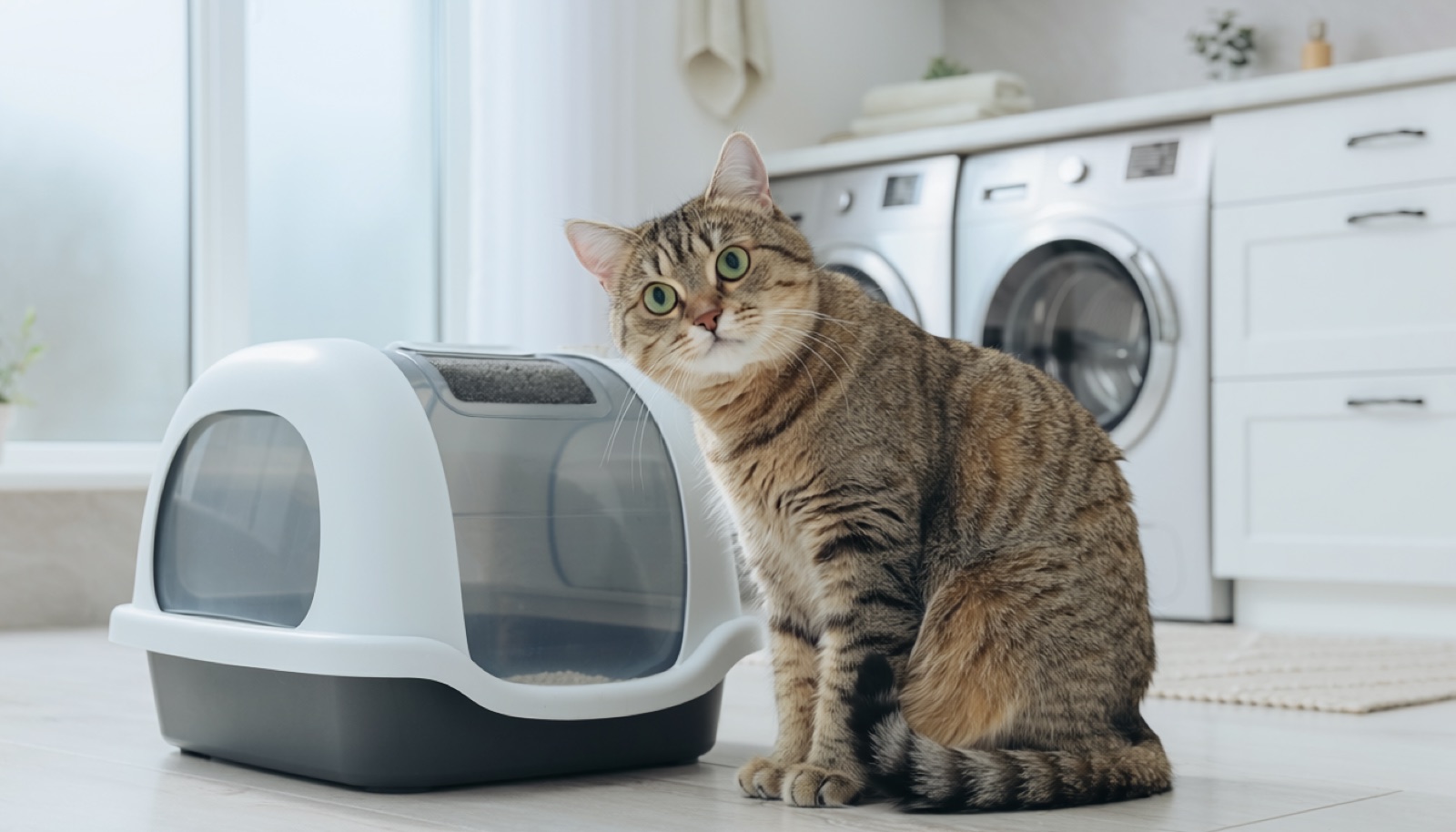
For some cats, yes. A hood traps odour inside the box, which bothers the cat far more than the open box would have bothered your hallway. Hoods also block sightlines and create a single ambush-prone entrance, which matters a lot in multi-cat homes. Plenty of cats use covered boxes without complaint, but if you are troubleshooting accidents, taking the lid off is a free experiment. Try it for two weeks before spending money on anything else.
Related Regina Guides
Most Litter Box Problems Are Fixable
Vet first, then the checklist. And if you are adding a cat, Regina rescues place cats with litter habits already known from foster care.
Browse Available Regina Cats →New cat? Start with these care guides
Everything a new adopter needs to set up a safe, happy home.