The short answer
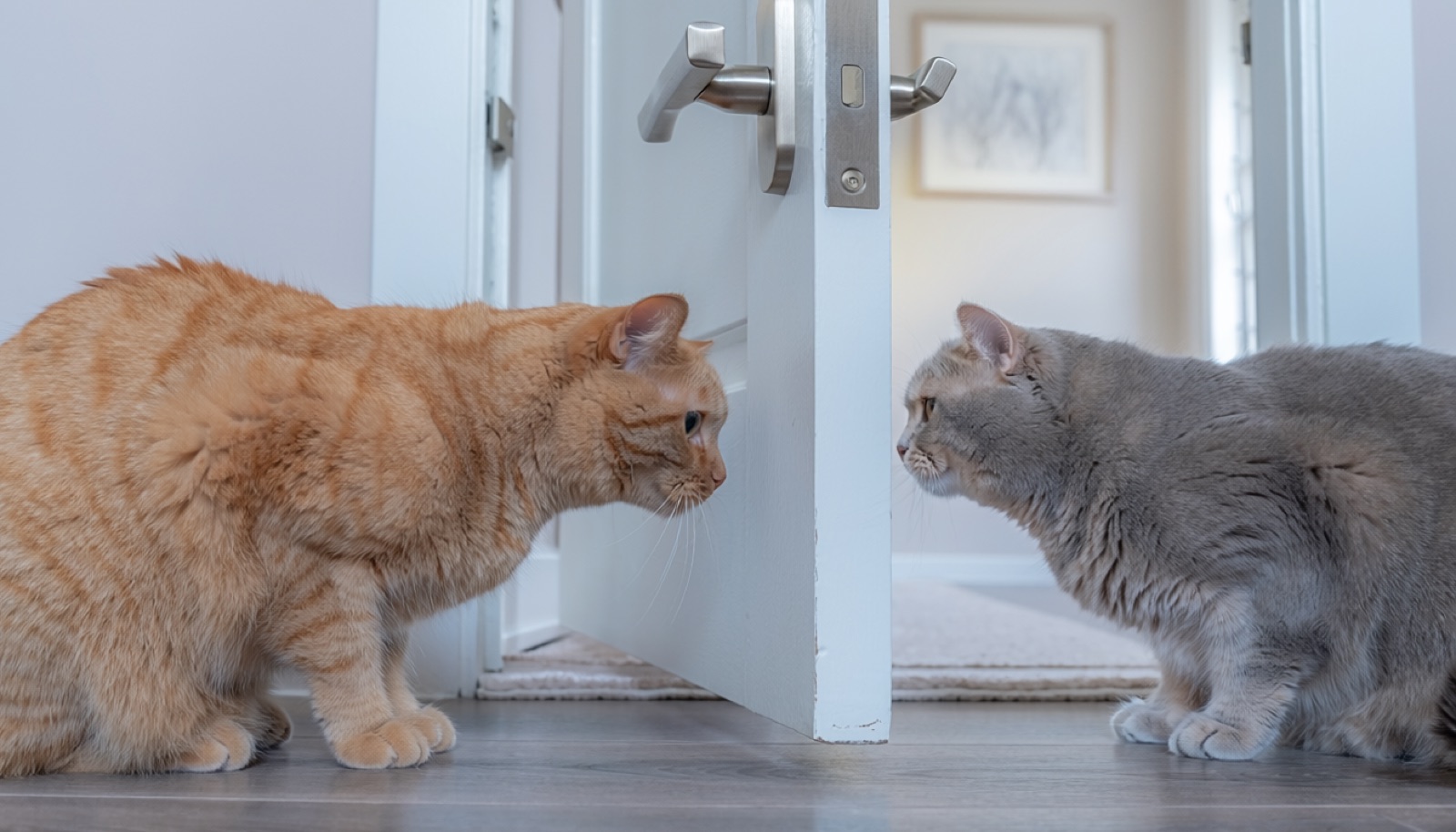
Set your new cat up in one closed safe room for roughly the first week. Then move through the stages in order: scent swapping (trade bedding and rubbed cloths), door feeding (meals on both sides of the closed door), short visual sessions through a baby gate or cracked door, and finally supervised shared time. Two to four weeks is normal; go at the slower cat's pace. If it stalls, the Regina Humane Society (306-543-6363) and Regina Cat Rescue both offer post-adoption behaviour advice.
Heads up: This article is informational and is not veterinary or behaviour-consult advice. Sudden aggression, hiding, or litter box changes can have medical causes; a cat who stops eating for more than a day needs a vet, not a training plan. Contact details are current as of July 2026; confirm with the organisation before relying on them.
The introduction is the part most Regina adopters underestimate. The paperwork is signed, the carrier is in the living room, and the temptation is to open the door and let everyone “say hi.” Resist it. Cats are territorial by design, and your resident pets did not agree to a roommate. A structured, staged introduction is how you turn a stranger into a housemate, and it costs you nothing but patience. Every cat adopted through the Regina Humane Society or Regina Cat Rescue arrives spayed or neutered, vaccinated, and microchipped, so the hormonal worst-case is already off the table. The social part is yours.
One scope note before we start. This guide covers the introduction: cat meets resident cat, or cat meets dog. The general settling-in side (decompression, hiding, appetite, the first vet visit) is its own topic, and our first week with your rescue cat guide owns it. If your new cat is your only pet, read that one instead; you can skip everything below except the safe room.
Haven't adopted yet? Browse adoptable Regina cats or compare the local organisations in our Regina cat rescue roundup. Regina Cat Rescue cats come from foster homes, which means the rescue can usually tell you how the cat behaved around other cats and dogs before you commit. Ask. It is the single most useful question in the whole process.
Stage 1: The Safe Room (Week One)
Pick one closed room before the cat comes home. A spare bedroom or office is ideal; a large bathroom works in a pinch. This room is the new cat's entire world for roughly the first week, and the door stays closed.
What goes in: litter box in one corner, food and water in the opposite corner (cats dislike eating beside their toilet), a hiding spot such as a covered bed or the carrier with the door removed, a scratcher, and a couple of toys. A worn t-shirt with your smell on it helps too.
What the room does for the new cat: a small, ownable territory to decompress in. A whole house is overwhelming on day one; one room is claimable by the weekend. Hiding under the bed for the first days is normal, and the fix is time, not coaxing. The first-week guide covers what normal settling looks like day by day.
What the room does for your resident pets: it lets them discover the newcomer by smell and sound only, on their own schedule, with zero risk of a bad first encounter. Your resident cat sniffing intensely at the door gap, or sitting outside it, is the introduction already working.
How long: five to ten days for most cats. You are watching for the new cat to eat normally, use the box reliably, and greet you at the door. A cat still flattened under the bed on day seven simply needs more time. There is no prize for finishing early.
Stage 2: Scent Swapping and Door Feeding
Cats read the world through their noses first. Before anyone sees anyone, make each animal boring and familiar by smell. Run both of these in parallel, starting a few days into the safe-room week.
Scent swapping, step by step: rub a clean sock or cloth on the new cat's cheeks and chin, where the friendly facial pheromones live, and leave it in your resident cat's favourite area. Do the same in reverse. Fresh cloths daily. Trade bedding between rooms every couple of days. Once the new cat is settled, add room swapping: let the resident cat explore the safe room while the new cat gets a supervised hour roaming the house. Each cat maps the other's territory with nobody present, which is exactly how cats prefer to meet.
Door feeding, step by step: feed both cats at the same time on opposite sides of the closed safe-room door. Start with bowls a metre or two back from the door. Every day or two, move both bowls a little closer. Eating is calm and rewarding, so each cat learns that the smell and shuffle of the other predicts dinner, not danger.
Reading the results: sniff-and-ignore is the goal. Hissing at the swapped cloth, refusing to eat near the door, or hard staring at the door gap all mean you hold at the current distance longer. No drama at swapped scents plus relaxed eating with bowls near the door means you are ready for stage 3.
Stage 3: Seeing Each Other (Baby Gate or Cracked Door)
Now the cats can see each other with a barrier still in place. A baby gate in the safe-room doorway (add a second stacked gate for jumpers, or drape a blanket over the top half to control how much they see) works best. A door propped open a few centimetres with a wedge is the low-budget version.
Keep sessions short and good. Five to ten minutes at first, always paired with something pleasant: meals on either side of the gate, treats, or a wand toy for each cat. You want every glimpse of the other cat to predict good things. End the session while everyone is still calm, not after it sours.
What good looks like: glancing at each other then returning to food or play, relaxed tails, loose bodies, slow blinks. Mild curiosity is perfect. Even a brief hiss followed by disengaging is acceptable early on.
What a step back looks like: fixated staring, growling that builds, swatting through the gate, puffed tails, or either cat refusing food. Close the door, return to door feeding for a few days, then retry with more distance. This back-and-forth is normal. Expect several days to a couple of weeks at this stage.
Stage 4: Sharing Space (Days to Weeks, at the Slower Cat's Pace)
| Step | What Happens | Move On When |
|---|---|---|
| First shared sessions | Gate open, 10 to 15 minutes, you present and attentive. Feed or play with both cats at a distance. A towel over your arm and a flat piece of cardboard nearby let you interrupt a scuffle without using your hands. | Several sessions with no chasing, no cornering, both cats eating or playing. |
| Longer supervised time | Sessions stretch to an hour or more. Cats share rooms but each keeps an escape route and its own resources. New cat still sleeps in the safe room at night. | Cats can pass each other, share a windowsill or couch ends, and disengage after minor grumbles. |
| Unsupervised trial | Short absences first (a grocery run), building up. Leave doors open so nobody can be trapped. Litter boxes and feeding stations stay separated permanently. | You return to a calm house repeatedly. Fur on the floor or a hiding cat means go back a step. |
| Full cohabitation | Safe room door stays open; the room stays available as a retreat for weeks. Keep one litter box per cat plus one, in different locations. | Both cats move freely, eat, and sleep in the open. Friendship is optional; peaceful coexistence is the win. |
The steps are fixed; the calendar is not. Two confident adults might compress this into ten days. A shy senior meeting a bold kitten might take two months. The slower cat decides, every time.
The Cat-to-Dog Variant
The stages are identical; the safety rules are stricter. Safe room, scent swapping, and door feeding run exactly as above. The difference is that a dog can hurt a cat in seconds, so the dog stays under physical control (leash, or behind the gate) until it has earned trust over weeks.
Work the dog first. Before visual sessions, your dog should reliably sit, stay, and look at you for treats around distractions. During gate sessions, reward the dog heavily for calm behaviour and for looking away from the cat. Calm interest is fine. Stiff body, whining, fixating, or lunging means end the session and add distance next time.
Give the cat the vertical map. Cat trees, shelves, and counters the dog cannot reach let the cat observe the dog from safety and control the pace. A baby gate the cat can slip through (or a gate with a small cat door) creates permanent dog-free rooms, and the litter box lives in one of them so the cat is never ambushed mid-business.
Never test it by accident. No unsupervised shared time until you have seen weeks of consistent calm, and many households sensibly keep dog and cat separated whenever nobody is home, permanently. If your dog has a strong prey drive or has chased cats before, get a trainer involved rather than hoping. The rescue you adopted from can tell you whether the cat has dog experience; Regina Cat Rescue's foster homes often know exactly how a cat handles dogs.
The Mistakes That Cause Most Failed Introductions
- The day-one free-for-all. Opening the carrier in the living room with the resident cat watching. One bad first meeting can set the relationship back months. The safe room exists to prevent exactly this.
- Forcing contact. Holding the cats near each other, carrying one to “meet” the other, or pushing them together to “get it over with.” A cat held against its will near a stranger learns that the stranger predicts being trapped. Let them choose every approach.
- Rushing on a good day. One calm gate session does not mean skip to unsupervised cohabitation. Each stage needs repetition before it is real.
- Ignoring the resource math. One litter box, one food bowl, and one prime windowsill for two cats guarantees competition. One box per cat plus one, separate feeding stations, and duplicated resting spots remove most reasons to fight.
- Punishing hissing or growling. Yelling or spraying water teaches the cat that the other cat's presence brings punishment, which is the opposite of the association you are building. Interrupt calmly, add distance, and move back a stage.
- Giving up at week two. The awkward middle (some hissing, some avoidance, no fights) is not failure; it is the normal midpoint. Most pairs that get patient, structured time land somewhere between polite roommates and nap buddies.
When to Step Back vs. When to Get Help
Step back a stage (handle it yourself)
- ✓Hissing or growling that starts up at a new stage
- ✓One cat refusing food during sessions
- ✓Staring contests or swats through the gate
- ✓A previously fine cat starting to avoid a room
- ✓Any regression after a household change (guests, renos, a new schedule)
Call for help
- ⚠Actual fights with injuries, or fur regularly on the floor
- ⚠A cat who stops eating for more than a day (vet first)
- ⚠Litter box avoidance that persists past a few days
- ⚠One cat living in permanent fear (hiding all day, week after week)
- ⚠A full restart of the process that still produces aggression
For the “call for help” column, start with the organisation you adopted from. The Regina Humane Society (306-543-6363) offers behaviour resources and post-adoption support to its adopters. Regina Cat Rescue (info@reginacatrescue.com) is foster-based, so the person who fostered your cat can often tell you what has worked for that specific animal before. Neither organisation wants a struggling adoption to fail silently; asking early is a sign you are doing it right.
The Regina Winter Bring-Home
Adopting at -30°C changes the trip home, not the plan
Plenty of Regina adoptions happen in January and February, when the city sits at -30°C or colder. A cat in a plastic carrier has almost no protection from that. For the drive:
- Warm the car fully before the cat gets in, and park close to the shelter or foster home door
- Line the carrier with a thick blanket and drape a second one over the outside, leaving a gap for airflow
- Make the pickup the only stop; no errands with a cat cooling in a parked car
- Carry the carrier from both sides against your body rather than swinging by the handle across an icy lot
Once home, winter is quietly an advantage: the “should the new cat go outside” question answers itself, and fully indoor territory from day one is exactly what a good introduction needs anyway. Our indoor vs outdoor guide makes the year-round case for keeping it that way.
Browse adoptable Regina cats
Every Regina rescue cat arrives spayed/neutered, vaccinated, and microchipped, and foster-based rescues can tell you how a cat behaves around other cats and dogs before you commit.
See Available Regina Cats →Frequently Asked Questions
How long does it take to introduce a new cat to a resident cat?
Plan for two to four weeks as a normal range, and let the slower cat set the pace. Confident, cat-experienced cats occasionally get there in a week. Shy cats, seniors, and cats with no history around other cats often need six weeks or more. The timeline is not the goal; the behaviour is. You move to the next stage when both cats are relaxed at the current one, and you drop back a stage the moment you see stiff bodies, growling, or ambushing. A slow introduction that takes a month beats a rushed one that creates a grudge lasting years.
What is a safe room and how long does my new cat need it?
A safe room is one closed room (a bedroom, office, or large bathroom) where your new cat lives for roughly the first week. It holds the litter box, food and water stations set apart from each other, a hiding spot, a scratcher, and a few toys. The closed door does two jobs at once: it gives the new cat a small, ownable territory to decompress in, and it keeps the resident pets from staging their own introduction. Most cats need five to ten days; a confident cat may be pacing at the door sooner, and a timid one may need longer. Our first-week guide for rescue cats covers the settling side in full.
How do I do scent swapping?
Swap smells before the cats ever see each other. Rub a clean sock or cloth on the new cat's cheeks and chin, then leave it in the resident cat's space, and do the same in reverse. Repeat daily with fresh cloths. You can also trade bedding, or let the resident cat sniff around the safe room while the new cat spends a supervised hour exploring the rest of the house. You want each cat to reach the point of sniffing the other's scent and then ignoring it. Hissing at a sock is useful information: it means you are not ready for a visual meeting yet, and you found that out without a fight.
What is door feeding and why does it work?
Door feeding means feeding both cats on opposite sides of the closed safe-room door at the same time, starting a metre or two back and gradually moving the bowls closer over several days. Eating is a relaxed, rewarding activity, so each cat starts pairing the other's smell and sounds with something good instead of something threatening. If either cat stops eating or stares at the door instead of the bowl, move the bowls back to the last distance where both ate calmly and hold there for a day or two. When both cats eat happily with bowls near the door, you are ready for short visual sessions.
Can I just let the cats meet and work it out themselves?
No, and this is the single most common mistake we see Regina adopters make. A day-one free-for-all forces two strangers to negotiate territory with no escape routes and no positive history. Best case, you get a week of hiding and hissing that a safe room would have prevented. Worst case, you get a genuine fight, an injury, and two cats who now firmly believe the other is dangerous. First impressions between cats are sticky. It is far easier to build a good one slowly than to repair a bad one, which takes months of starting the whole process over from zero.
How do I introduce my new cat to my dog?
Same structure, one extra rule: the dog is always under physical control until proven trustworthy. Run the safe room and scent-swap stages exactly as you would cat-to-cat. For visual sessions, keep the dog on leash and reward calm behaviour (sit, look at you, ignore the cat) while the cat has a clear escape route and high ground like a cat tree. A dog that goes stiff, whines, and locks eyes on the cat is not ready; end the session and go back a stage. Never leave them alone together until you have seen weeks of calm, and give the cat dog-free zones (baby gates the cat can slip through work well) permanently.
What are the signs the introduction is moving too fast?
Watch the body language, not the calendar. Warning signs: flattened ears, a puffed or thrashing tail, stiff crouched posture, hard staring, growling that escalates rather than fades, guarding the litter box or food, one cat ambushing the other, or either cat refusing food during sessions. Litter box avoidance and hiding that gets worse instead of better also count. Any of these means drop back to the previous stage where both cats were relaxed and rebuild from there. Progress in a cat introduction is not linear; going backwards for a few days is part of the process, not a failure.
Is hissing normal during a cat introduction?
Some hissing is normal, especially in the first days of scent swapping and early visual sessions. A hiss is communication, not combat: it says “too close, too fast.” What matters is the trend. Hissing that gets shorter and less frequent over days is a good sign. Hissing that escalates into growling, yowling, swatting through the gate, or flattened-ear staring means the current stage is too much; move back a step. Zero hissing ever is a nice bonus, not a requirement. Plenty of cats who hissed for two weeks end up sharing a windowsill by month two.
Who can help in Regina if the introduction stalls or turns into fighting?
Start with the organisation you adopted from. The Regina Humane Society (306-543-6363, reginahumanesociety.ca) offers behaviour resources and post-adoption advice for its adopters. Regina Cat Rescue (reginacatrescue.com, info@reginacatrescue.com) is entirely foster-based, which means every one of their cats lived in a real home before adoption; the foster who knew your cat is a genuinely useful source of advice on what worked. For introductions involving fear aggression, injuries, or a cat who has stopped eating, loop in your vet as well, since pain and illness can masquerade as behaviour problems.
I am bringing my cat home in a Regina winter. Anything special?
Yes. Regina hits -30°C or colder in January and February, and a short-haired cat in a plastic carrier has almost no cold protection. Warm the car before loading the cat, line the carrier with a thick blanket and drape another over it (leave airflow), and make the carrier trip the last errand of the day, not one stop of five. Once home, the winter actually helps: there is no debate about letting the cat outside, so the safe room and fully indoor territory are the natural default from day one. Our indoor vs outdoor guide for Regina covers why indoor is the right call year-round here.
Does spay/neuter status change how introductions go?
It helps a lot. Intact cats bring hormones into the negotiation: more territorial marking, more roaming drive, and more conflict, especially between two males. Every cat adopted through the Regina Humane Society or Regina Cat Rescue arrives already spayed or neutered as part of the adoption fee, so if both your cats came through the rescue pipeline this is handled. If your resident cat is still intact, talk to your vet about scheduling surgery; our Regina cat spay/neuter guide covers costs and the subsidized program.
What if my resident cat never accepts the new cat?
True permanent incompatibility is rarer than a bad introduction, so before concluding it is hopeless, restart the process completely: back to the safe room, back to scent swapping, and move at half the previous speed. Add resources so nothing is worth fighting over (one litter box per cat plus one, separate feeding stations, multiple water bowls, vertical space in different rooms). If weeks of a genuine restart still produce fights or a cat living in fear, call the rescue you adopted from before making any decision; returns and rehoming through the original rescue are always the right path over online ads. Our Regina rehoming guide explains the safe options.
Related Regina Guides
Ready for a Second Cat? Or a First?
Regina rescue cats come vetted, fixed, and often with a foster's notes on how they handle other pets. The introduction plan above does the rest.
Browse Available Regina Cats →New cat? Start with these care guides
Everything a new adopter needs to set up a safe, happy home.