The short answer
Give the cat one quiet room, a litter box, food, water and a place to hide, then let it decompress. Expect hiding and little eating for the first three days, real settling over three weeks, and full bonding by three months. Switch food and litter slowly over a week. Book a first vet visit in Swift Current early. And learn the warning signs now, especially a male cat straining to urinate, which is a same-hour emergency. Patience does almost all the work, and your 14-day trial gives you room to let it happen.
The week you bring a rescue cat home is the week that shapes the relationship, and the single biggest thing that helps is doing less, not more. A cat arriving in a new house has just lost everything familiar, and its instinct is to hide until it decides the place is safe.
Your job is to make that decision easy. A calm, enclosed space and a predictable routine tell the cat, faster than any amount of coaxing, that nothing here is going to hurt it.
Everything below is built around that idea. The safe room, the slow transitions, the 3-3-3 timeline: all of it is about letting the cat set the pace while you quietly prove the house is safe.
The 3-3-3 timeline
| Phase | What to expect |
|---|---|
| First 3 days | Decompression. Expect hiding, little eating, a wary cat. Keep it in one quiet room, low light and low noise. Do not force contact. |
| First 3 weeks | Settling. The cat learns your routine, starts exploring, and its real personality begins to show. Slowly widen its access to the house. |
| First 3 months | Bonding. The cat fully relaxes, trusts you, and behaves like itself. This is the cat you actually adopted. |
A guide, not a stopwatch. Confident adults move faster, shy or previously stray cats take longer. The Cornell Feline Health Center has more on helping a new cat adjust.
Setting up the safe room
- ✓A litter box in one corner, away from food and water
- ✓Food and water on the opposite side of the room
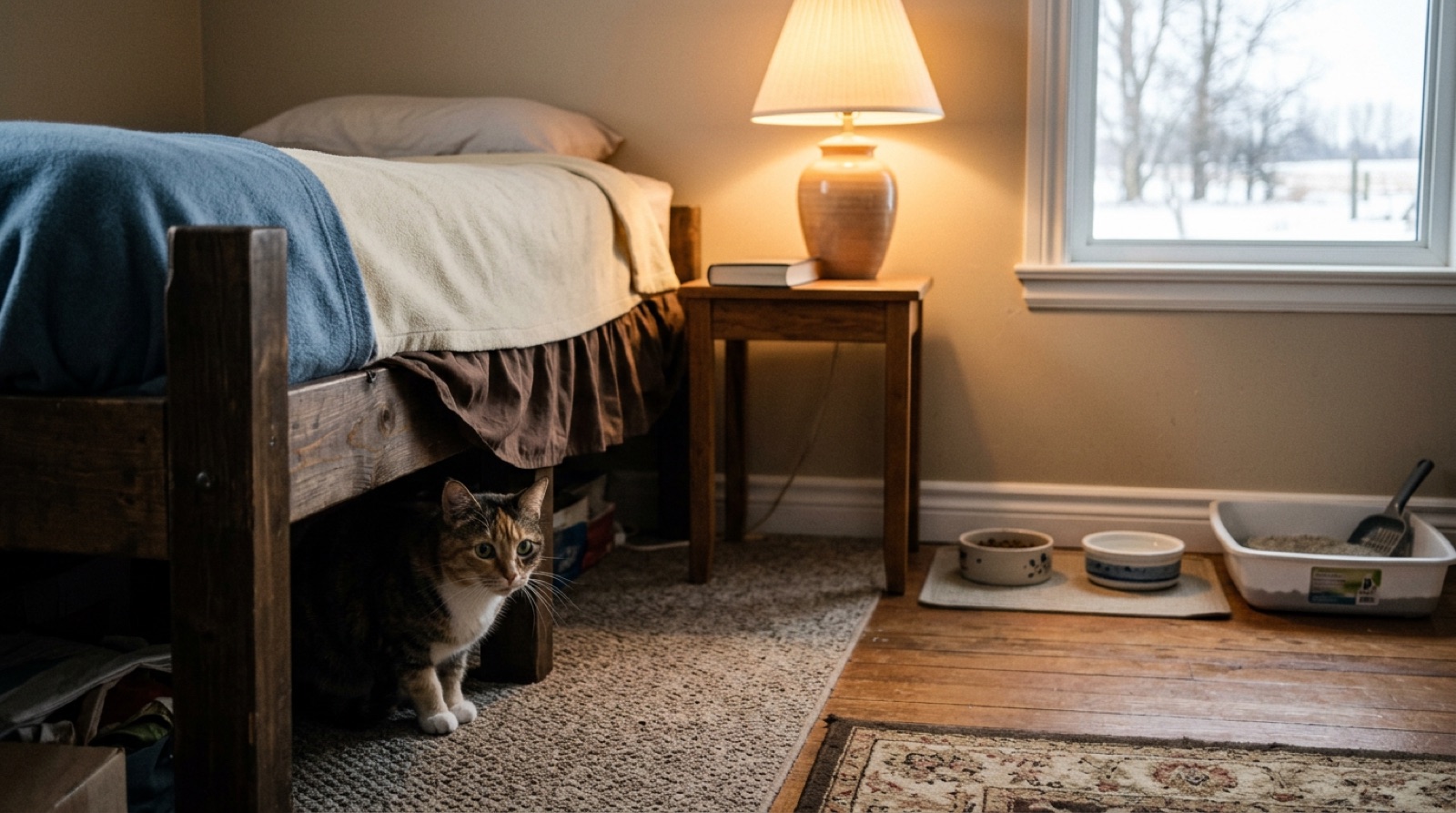
- ✓A hiding spot: a box on its side, or space under a bed
- ✓A scratching post and a couple of quiet toys
- ✓Something that smells like the shelter, if they will send a blanket
- ✓A door you can keep closed against kids, dogs and household bustle
A spare bedroom or a quiet bathroom works. The point is a small, controllable space where the cat can hide and still reach food, water and a litter box without crossing the whole house. Once the cat is eating, using the box and moving around confidently, you can start opening the door and letting it explore the rest of the home a bit at a time.
Go slow on food and litter
Ask SPCA Swift Current what food and litter the cat was using and start with the same. Then change one thing at a time, over about a week, mixing a little more of the new food into the old each day. A sudden switch is a classic cause of an upset stomach, and the last thing a stressed new cat needs is diarrhea on top of everything else.
Keep the litter box familiar and in the same spot for the first couple of weeks. If you want a different litter or a different box eventually, introduce it once the cat is settled, not while everything else is still new. Cats key off consistency, and the litter box is not the place to experiment during week one.
Finding a Swift Current vet
Register with a Swift Current clinic in the first week or two. The Associate Pet Hospital and other local clinics can review your cat's shelter records, set up parasite prevention, and give you a healthy-cat baseline to compare against as the cat ages.
Do it before you have an emergency, not during one. Knowing which clinic you use, and its after-hours arrangement, turns a 2am scare into a phone call instead of a scramble. Swift Current clinics run an on-call line, and the nearest 24-hour hospitals are in Saskatoon and Regina, each roughly two and a half hours away, so your after-hours plan matters more here than in a big city.
For the licensing and cost side of settling a new cat, see our Swift Current cat costs guide.
These symptoms mean go now, not tomorrow
A male cat straining in the litter box without producing urine is a possible urinary blockage, a life-threatening emergency measured in hours. Do not wait it out. Other same-hour signs: repeated vomiting or diarrhea, refusing all food for more than a day, laboured breathing, collapse or extreme lethargy, or a swollen, painful belly.
Because Swift Current is far from an overnight hospital, sort out your after-hours plan before you need it. Know your clinic's on-call line and the drive to Saskatoon or Regina. Never give a cat human medication, since several common painkillers are toxic to cats. When in doubt, phone the clinic. A quick call is always cheaper than a delay.
Still choosing your cat?
A settled adult from SPCA Swift Current often skips the hardest part of the first week. Browse who is available in the Swift Current area. Listings refreshed regularly.
See Available Swift Current Cats →Frequently Asked Questions
What should I do the first day I bring a rescue cat home in Swift Current?
Set up one quiet room before the cat arrives, put the carrier down inside it, open the door, and then leave the cat alone to come out on its own time. Do not tip it out, chase it, or invite people over to meet it. A new cat needs to decompress, and the single most helpful thing you can do on day one is give it a calm, enclosed space and low expectations. Sit in the room quietly if you like, but let the cat set the pace. Most cats hide at first, and that is completely normal. If you adopted from SPCA Swift Current, remember your 14-day trial is running, so give the cat real time.
What is the 3-3-3 rule for a new cat?
It is a rough timeline for settling in. The first three days are decompression, when the cat is scared, hides, and may barely eat. The first three weeks are settling, when it learns your routine, starts exploring, and shows more personality. The first three months are bonding, when it fully relaxes and behaves like the cat it really is. The rule matters because it sets honest expectations. The shut-down cat hiding under your bed in week one is not the cat you will have in month three, so do not judge the match too early, even inside the trial period.
My new cat is hiding and will not come out. Is that normal?
Yes, hiding is the single most common first-week behaviour and it is not a bad sign. A frightened cat feels safest tucked away, and pushing it to socialise before it is ready sets you back. Leave food, water and a litter box in the room, keep things quiet, and let the cat emerge on its schedule, often at night at first when the house is still. What is not normal is a cat that does not eat at all for more than a day or two, or shows signs of illness. Hiding while still eating and using the box is a cat that is coping, not a cat in trouble.
How do I switch my cat's food and litter without causing problems?
Slowly, over about a week. Ask SPCA Swift Current what food and litter the cat was using, buy the same to start, and then transition gradually by mixing a little more of the new in each day. A sudden food change is a classic cause of stomach upset and diarrhea, and a sudden litter change can send a cat looking for somewhere else to go. Keep the litter box type and location consistent for the first couple of weeks while everything else is new. Change one thing at a time, and give it time to take.
When should I take a new rescue cat to the vet in Swift Current?
Book a first checkup within the first week or two, even though the shelter already fully vetted the cat, because it establishes a relationship with a Swift Current clinic before you ever have an emergency, which matters in a city this far from an overnight hospital. Clinics like the Associate Pet Hospital can register your cat, review its shelter records, and set up parasite prevention and a vaccine schedule. The other reason to go early is baseline: a healthy-cat exam now gives your vet something to compare against later, which matters most as the cat ages. Bring whatever paperwork the shelter gave you.
What symptoms mean I should go to the vet right away?
Call or go the same hour for any of these: a male cat straining in the litter box without producing urine, which is a possible urinary blockage and a genuine emergency measured in hours; repeated vomiting or diarrhea; refusing all food for more than a day; laboured breathing; extreme lethargy or collapse; or a swollen, painful belly. Swift Current clinics run an after-hours on-call line, and the nearest 24-hour hospitals are in Saskatoon and Regina, each about two and a half hours away. Know your after-hours plan before you need it, not during the crisis, because here that plan may involve a long drive.
How do I introduce a new cat to my existing cat or dog?
Slowly, through the closed door of the safe room first. Let them smell each other under the door and swap scents by rubbing a cloth on one and leaving it near the other before they ever meet face to face. When you do introduce them, keep it short, supervised, and back off at the first sign of real tension. Rushing introductions is the most common way a promising match turns into a standoff. With cats especially, patience over days or weeks beats a forced meeting. Your 14-day trial is designed for exactly this, so use it, and phone the shelter for advice if it is not going well.
How long until my rescue cat feels like my cat?
Usually a few weeks to a few months, following the 3-3-3 timeline. Some cats bond in days, especially confident adults, while shy or previously stray cats take longer. The pattern that helps most is boring and reliable: feed on a schedule, keep the environment calm, play gently every day, and let the cat come to you. Trust builds through predictability more than through effort. One day the cat that hid under your bed will be sleeping on it, and that shift is the whole point of adopting a rescue rather than buying a kitten sight unseen.
Related Swift Current Guides
One search, every Swift Current cat
Adoptable cats and kittens from the Swift Current area, in a single list.
Browse Available Swift Current Cats →New cat? Start with these care guides
Everything a new adopter needs to set up a safe, happy home.