The short answer
Beagles appear in Regina rescue periodically, so set up alerts. Best rescues: the Regina Humane Society on Parliament Avenue, Bright Eyes Dog Rescue, SOS Prairie Rescue, and the Moose Jaw Humane Society. Adoption fee: about $200 to $600 (Regina Humane Society dog fees run lower, roughly $100 to $225) versus $800 to $2,000 from a breeder, plus the mandatory $25 Regina dog licence. Pocket and teacup Beagles are not a real breed, just marketing for undersized dogs. Beagle crosses are common: Puggle, Beagador, Bagle Hound, Boggle. Most surrenders are adults given up over vocalness, wandering, recall difficulty, and food obsession, all normal scent-hound traits. Beagles are generally healthy and long-lived (12 to 15 years), with weight management the biggest ongoing job. For most households, an adult Beagle past the wild puppy phase is the right pick, provided you have a secure fence.
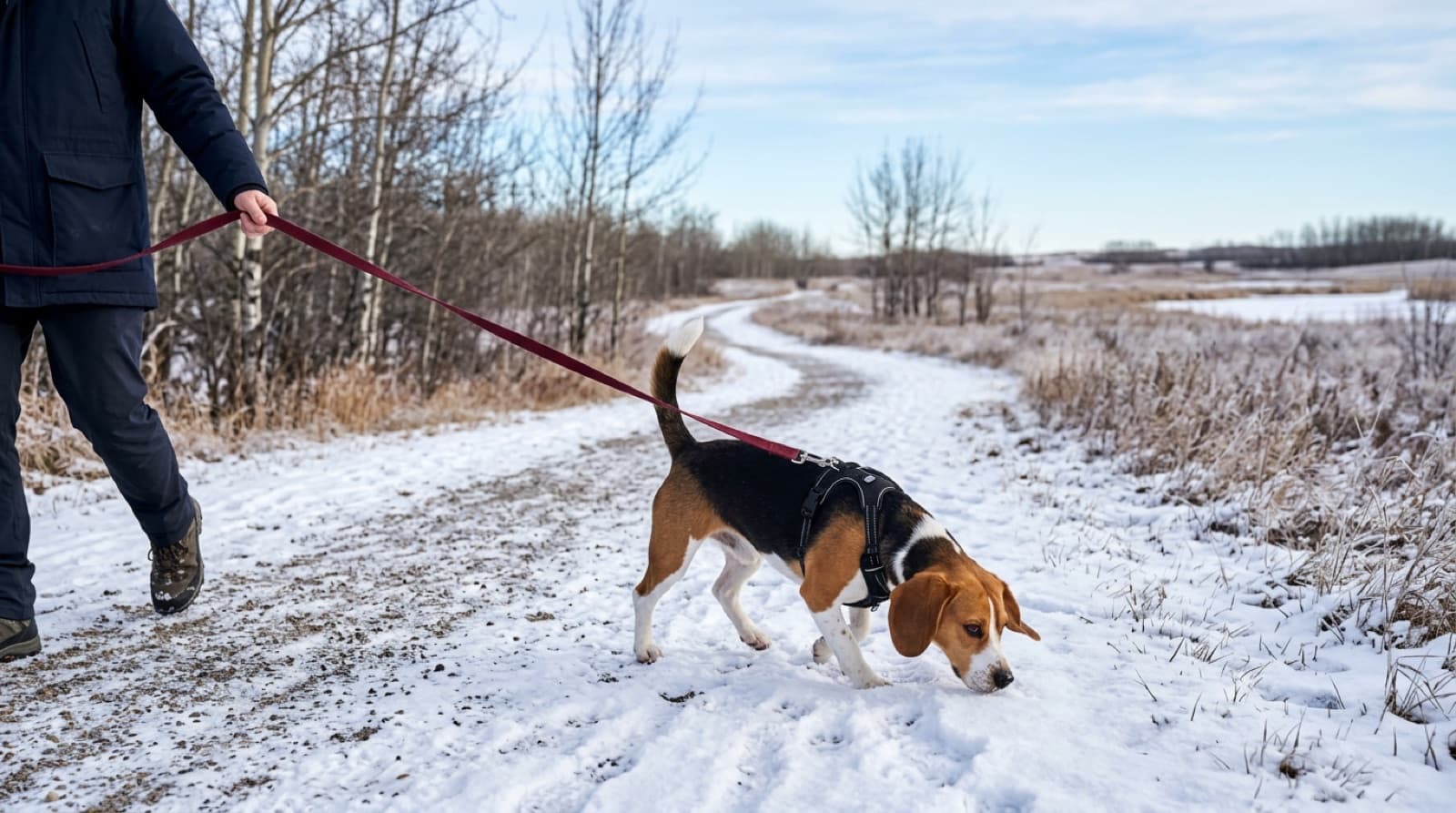
Where can I adopt a Beagle in Regina?
Purebred Beagles show up periodically, and Beagle crosses more often. Best places to check: the Regina Humane Society on Parliament Avenue, Bright Eyes Dog Rescue, SOS Prairie Rescue, and the Moose Jaw Humane Society a short drive west. Browse all currently available Beagles and Beagle crosses on LocalPetFinder's Beagle breed page. Listings update regularly. Because Beagles are a periodic arrival here, set up email alerts so you hear the moment one is listed.
For the full Regina rescue landscape and how each organisation works, see our best dog rescues in Regina guide. Browsing every adoptable dog at once is easy on the main Regina dog adoption listings.
Is there a Beagle-specific rescue in Saskatchewan?
There is no large registered Beagle-only rescue based in Saskatchewan. Breed-specific hound rescue in Western Canada runs through volunteer networks and transport, and reach into Saskatchewan is thin. We mention this honestly because adopters search for a breed-specific Beagle rescue and then send money to whatever name comes up first. Before applying or paying any breed-specific rescue, run this checklist:
(1) Canada Revenue Agency charitable registry
(2) A physical address or named foster network
(3) Public-facing vet references
(4) Recent adoptable dog listings
You rarely need a breed-specific group anyway. The Regina Humane Society, Bright Eyes Dog Rescue, and SOS Prairie Rescue take in Beagles and Beagle crosses through the year, usually with a full vet workup and a foster temperament assessment.
How much does it cost to adopt a Beagle in Regina?
Regina Beagle rescue adoption fees range roughly $200 to $600, with the Regina Humane Society lower at around $100 to $225 depending on age. Fees include spay or neuter, vaccinations, microchip, deworming, and a basic vet workup. Senior Beagles are often reduced. Add the mandatory $25 Regina dog licence. Buying from a breeder: $800 to $2,000 or more. Annual care: roughly $1,500 to $2,800 per year, less than a large breed, and Saskatchewan adds about 11 percent tax to vet services and pet food. Beagles are generally healthy and long-lived, so the main ongoing job is weight management, since this is one of the most food-obsessed and obesity-prone breeds. Pet insurance for a young healthy Beagle is commonly $30 to $60 per month and still worth enrolling early.
| Source | Beagle Fee Range | What's Included |
|---|---|---|
| Regina Humane Society | $100 to $225 | Spay or neuter, vaccines, microchip, vet check |
| Foster-based rescue (Bright Eyes, SOS Prairie) | $200 to $600 | Spay or neuter, vaccines, microchip, foster temperament plus medical history |
| Senior Beagle (8+ years) | Often reduced | Same as above, at a lower fee |
| Regina dog licence | $25 | Mandatory city licence, one-time on adoption |
| Standard breeder puppy | $800 to $2,000 or more | Initial vaccines only |
| Field or show line | $1,500 or more | CKC papers, health-tested parents (verify) |
For the full first-year budget with the Saskatchewan tax picture, see our Regina adoption costs guide.
Are there free Beagles for adoption in Regina?
Almost never legitimately. Free Beagle listings on Kijiji, Facebook Marketplace, or local buy-and-sell groups are typically:
(1) Backyard breeders using free framing as bait-and-switch (the real price reveals after you express interest)
(2) Owners trying to offload a vocal or wandering Beagle without rescue screening
(3) Outright scams demanding shipping or vet-release fees for a dog that does not exist
Real Beagle adoption is never free. Even the lowest Regina Humane Society fee covers spay or neuter, vaccines, microchip, and a vet exam at well below cost. Beagles are also sometimes used in research, and legitimate laboratory-release Beagles come only through established rescue programs, never as free classified listings, so a free lab Beagle online is a red flag. Owner-rehoming with a small fee and full disclosure can be legitimate. Verify vet records, ask about the dog's history and any noise or escaping issues, and meet the dog at its current home first.
The pocket and teacup Beagle myth
There is no recognised pocket or teacup Beagle breed. The standard has two normal size varieties, under 13 inches and 13 to 15 inches at the shoulder. Breeders marketing pocket, teacup, or miniature Beagles are usually selling undersized dogs, runts, or the products of breeding two very small dogs, often at a premium and sometimes with the fragility and health problems that come from deliberately breeding for tiny size.
A genuinely small Beagle from the under-13-inch variety is perfectly fine, but the pocket label is marketing, not a real category. The Canadian Kennel Club recognises only the two standard size varieties, so any listing leading with pocket or teacup rather than health testing and sound breeding is a red flag rather than a selling point. A standard rescue Beagle is the real thing, healthier, and a fraction of the price.
Beagle crosses you will see in Regina rescue
Beagle crosses are common in Regina rescue, and each blends the Beagle nose and merry temperament with the other breed, so read each rescue's temperament notes carefully.
- Puggle (Beagle plus Pug): small and affectionate, but can inherit the Pug's shortened muzzle and some breathing and heat sensitivity, so watch exercise in heat.
- Beagador or Labbe (Beagle plus Labrador): medium, friendly, food-motivated, and energetic, often an easier trainer than a purebred Beagle.
- Bagle Hound (Beagle plus Basset): low-slung, very scent-driven, and prone to back and ear issues from the Basset side.
- Boggle (Beagle plus Boxer): larger and more energetic, needing more exercise.
Browse adoptable Beagles in Regina
Live inventory from Regina rescues, including purebred Beagles, Puggle and Beagador crosses, and senior dogs at reduced fees. Refreshed regularly, so set up alerts.
See Available Beagles →Why Beagles end up in prairie rescue
Beagle surrenders are almost always about breed traits owners did not expect, not bad dogs:
Vocalness. Beagles bay and howl, drawing noise complaints, especially in apartments and close neighbourhoods.
Wandering and escaping. A Beagle follows its nose over any fence or out any open door and can range for kilometres.
Recall and training difficulty. A scent hound tunes out commands when it catches an interesting smell.
Food obsession. Counter-surfing, garbage raiding, and obesity are constant management jobs.
Most Saskatchewan Beagle surrenders are lovely dogs whose owners were not ready for a vocal, nose-driven, escape-prone scent hound. The fix is management and channelling the nose, covered in our Beagle training and recall guide.
Frequently Asked Questions
Where can I adopt a Beagle near me in Regina?
Beagles and Beagle crosses show up in Regina rescue periodically, and crosses appear more often than purebreds. Best places to check: the Regina Humane Society on Parliament Avenue, Bright Eyes Dog Rescue, SOS Prairie Rescue, and the Moose Jaw Humane Society a short drive west. Browse currently available Regina Beagles and Beagle crosses on LocalPetFinder's Beagle breed page, which updates regularly. Because Beagles are not an everyday rescue arrival here, set up email alerts with the rescues so you hear the moment one is listed. Most surrendered Regina Beagles are 1 to 6 year old adults given up over the breed's vocalness, wandering, and training challenges, not because anything is wrong with the dog.
Is there a Beagle-specific rescue in Saskatchewan?
There is no large registered Beagle-only rescue based in Saskatchewan. Breed-specific hound rescue in Western Canada tends to run through volunteer networks and transport, and reach into Saskatchewan is thin. You rarely need one, because Beagles and Beagle crosses turn up in the general rescues: the Regina Humane Society, Bright Eyes Dog Rescue, and SOS Prairie Rescue all take them in through the year, usually with a full vet workup and a foster temperament assessment. If you do find a breed-specific Beagle rescue claiming Saskatchewan placements, verify it before applying or paying: check the Canada Revenue Agency charitable registry, a physical address or named foster network, public vet references, and recent adoptable dog listings. The same checklist applies to any out-of-province group.
How much does it cost to adopt a Beagle in Regina?
Regina Beagle rescue adoption fees run roughly $200 to $600, below the $800 to $2,000 a breeder charges for a puppy. Regina Humane Society dog fees sit lower, around $100 to $225 depending on age, and Bright Eyes Dog Rescue runs closer to $200 to $600. Those fees cover spay or neuter, vaccinations, microchip, deworming, and a basic vet workup, and senior Beagles are often reduced. Add the mandatory $25 Regina dog licence. Annual care for a Beagle in Regina runs roughly $1,500 to $2,800 per year, less than a large breed since food and medication scale with size, and Saskatchewan adds about 11 percent tax to vet services and pet food. Beagles are a generally healthy, long-lived breed, so the main ongoing costs are routine care plus weight management, because this is one of the most food-obsessed and obesity-prone breeds. Pet insurance for a young healthy Beagle is commonly $30 to $60 per month and is still worth enrolling early.
Are there free Beagles for adoption in Regina?
Almost never legitimately. Free Beagle listings on Kijiji, Facebook Marketplace, or local buy-and-sell groups are usually backyard breeders using free framing as bait-and-switch, owners trying to offload a vocal or wandering Beagle without rescue screening, or outright scams demanding shipping or vet-release fees for a dog that does not exist. Real Beagle adoption is never free. Even the lowest Regina Humane Society fee covers spay or neuter, vaccines, microchip, and a vet exam at well below cost. Beagles are also a breed sometimes used in research, and legitimate laboratory-release Beagles come exclusively through established rescue programs, never as free classified listings, so a free lab Beagle online is a red flag. Owner-rehoming with a small fee and full disclosure can be legitimate. Verify vet records, ask about the dog's history and any noise or escaping issues, and meet the dog at its current home first.
Should I look at Beagle puppies for sale in Regina instead of adoption?
Adoption is the better path for most Regina households. Buying through a breeder makes sense only if you specifically need a puppy with verifiable parent health testing, perhaps for hunting or field work. For a family companion, adoption gives you a known adult temperament, a full medical workup, a $200 to $600 fee instead of $800 to $2,000, and you take a Beagle out of rescue. If you do buy, only choose CKC-registered breeders who health-test the parents, including eye and, where relevant, MLS testing, allow home visits and meeting both parents, take dogs back at any age, and never sell through classifieds or market pocket Beagles. Most Beagle puppy listings in Saskatchewan are backyard or accidental litters, which raises the odds of health and temperament problems. An adult rescue Beagle also lets you meet the individual dog past the demanding puppy phase, which for a nose-driven, vocal breed is a real advantage.
Are pocket Beagles or teacup Beagles real?
No, and pocket Beagle listings are a warning sign. There is no recognised pocket or teacup Beagle breed. The Beagle standard has two size varieties, under 13 inches and 13 to 15 inches at the shoulder, and both are normal Beagles, just at different points on the size range. Breeders marketing pocket, teacup, or miniature Beagles are usually selling undersized dogs, runts, or the products of breeding two very small dogs together, often at a premium and sometimes with the health problems that come from deliberately breeding for tiny size. A genuinely small Beagle from the under-13-inch variety is fine, but the pocket label is marketing, not a real category, and the deliberate breeding for extreme small size can bring fragility and health issues. If a listing leads with pocket or teacup rather than health testing, treat it as a red flag rather than a selling point.
What are Beagle crosses like: Puggle, Beagador, Bagle Hound?
Beagle crosses are common in Regina rescue and each blends the Beagle nose and merry temperament with the other breed. A Puggle (Beagle plus Pug) is small, affectionate, and popular, but can inherit the Pug's shortened muzzle and some breathing and heat sensitivity, so watch exercise in heat. A Beagador or Labbe (Beagle plus Labrador) is medium, friendly, food-motivated, and energetic, often an easier trainer than a purebred Beagle. A Bagle Hound (Beagle plus Basset) is low-slung, very scent-driven, and prone to back and ear issues from the Basset side. A Boggle (Beagle plus Boxer) is more energetic and needs more exercise. All Beagle crosses tend to keep the strong nose, the food drive, and often the vocalness, so read each rescue's temperament notes, because the other half changes size, energy, and health substantially.
Why do Beagles end up in Regina and Saskatchewan rescues?
Beagle surrenders are almost always about breed traits that owners did not expect, not about bad dogs. Vocalness leads the list: Beagles bay and howl, which draws noise complaints, especially in apartments and close neighbourhoods. Wandering and escaping is next, because a Beagle follows its nose over any fence or out any open door and can range for kilometres, so lost-dog situations are common. Difficulty with recall and training frustrates owners who did not realize a scent hound tunes out commands when it catches an interesting smell. Add food obsession and counter-surfing, destructive behaviour when bored or left alone, and underestimated energy, and you have the classic Beagle surrender profile. Regina winters compound the exercise problem for a dog that needs real activity. Most Saskatchewan Beagle surrenders are lovely dogs whose owners were not ready for a vocal, nose-driven, escape-prone scent hound.
Are Beagles good for first-time dog owners in Regina?
They can be a good first dog, with realistic expectations. Beagles are friendly, merry, sturdy, good with children, and small enough to be manageable, which makes them appealing family dogs, and they are generally healthy and long-lived. The honest caveats are the scent-hound traits: they are vocal, they are escape artists driven by their nose, they can be stubborn to train, and they are relentlessly food-motivated. For a first-time Regina owner, the keys are a securely fenced yard, commitment to leash walks and long-line exercise rather than off-leash freedom, patient reward-based training, and strict portion control to prevent obesity. An adult rescue Beagle past the wild puppy phase is often the easiest entry point. If you can accept the noise and the nose and provide secure containment, a Beagle is a delightful, affectionate first dog. If you need a quiet, off-leash-reliable dog, this is not the breed.
Should I adopt a senior Beagle?
Absolutely consider it. Beagles are a long-lived breed, commonly reaching 12 to 15 years, so a senior Beagle of 8 or 9 often has many good years ahead, more than a senior of a large breed. Senior Beagles appear in Regina rescues because owners passed away, downsized, or could no longer keep up, and these dogs are usually mellower than the demanding younger years, house-trained, and still merry and affectionate, with the vocal and wandering tendencies often somewhat calmer. Their smaller size and settled exercise needs suit a prairie winter and a quieter household well. The main things to plan for are weight management, which matters enormously for this obesity-prone breed as it ages, dental care, and routine senior vet checks. Adoption fees are usually reduced. For a household wanting an affectionate, easygoing companion with years of life left, a senior Beagle is one of the most rewarding and underrated adoptions there is.
Do Beagles handle Regina winters?
Reasonably well with some help. Beagles have a short, dense double coat that gives moderate cold tolerance, better than a truly short-coated breed but not built for deep cold, so most handle prairie winter walks fine with sensible care and enjoy snuffling through snow. On the coldest days a coat helps, booties protect against salt and ice, and outings should be shorter when it is -35 with windchill, watching for shivering and lifted paws. The bigger winter challenge is exercise, because a Beagle needs real daily activity and a nose-driven dog gets restless and can become destructive or more vocal when under-exercised. Indoor scent games, hiding treats and kibble around the house, puzzle feeders, and short training sessions burn energy and engage the nose without frostbite risk. On milder days, a securely fenced yard lets a Beagle snuffle safely. With a coat and indoor enrichment, a Beagle does fine through a Regina winter.
Related Guides
New dog? Start with these care guides
Everything a new adopter needs to set up a safe, happy home.