The short answer
Plan on keeping a Beagle on lead or in a securely fenced area outdoors. Their nose overrides recall when a good scent appears. Train with food in short sessions, practise recall on a long line in gradually harder places, and give the nose a job with scent games. Beagles are not stubborn so much as differently motivated: make coming back worth more than the smell.
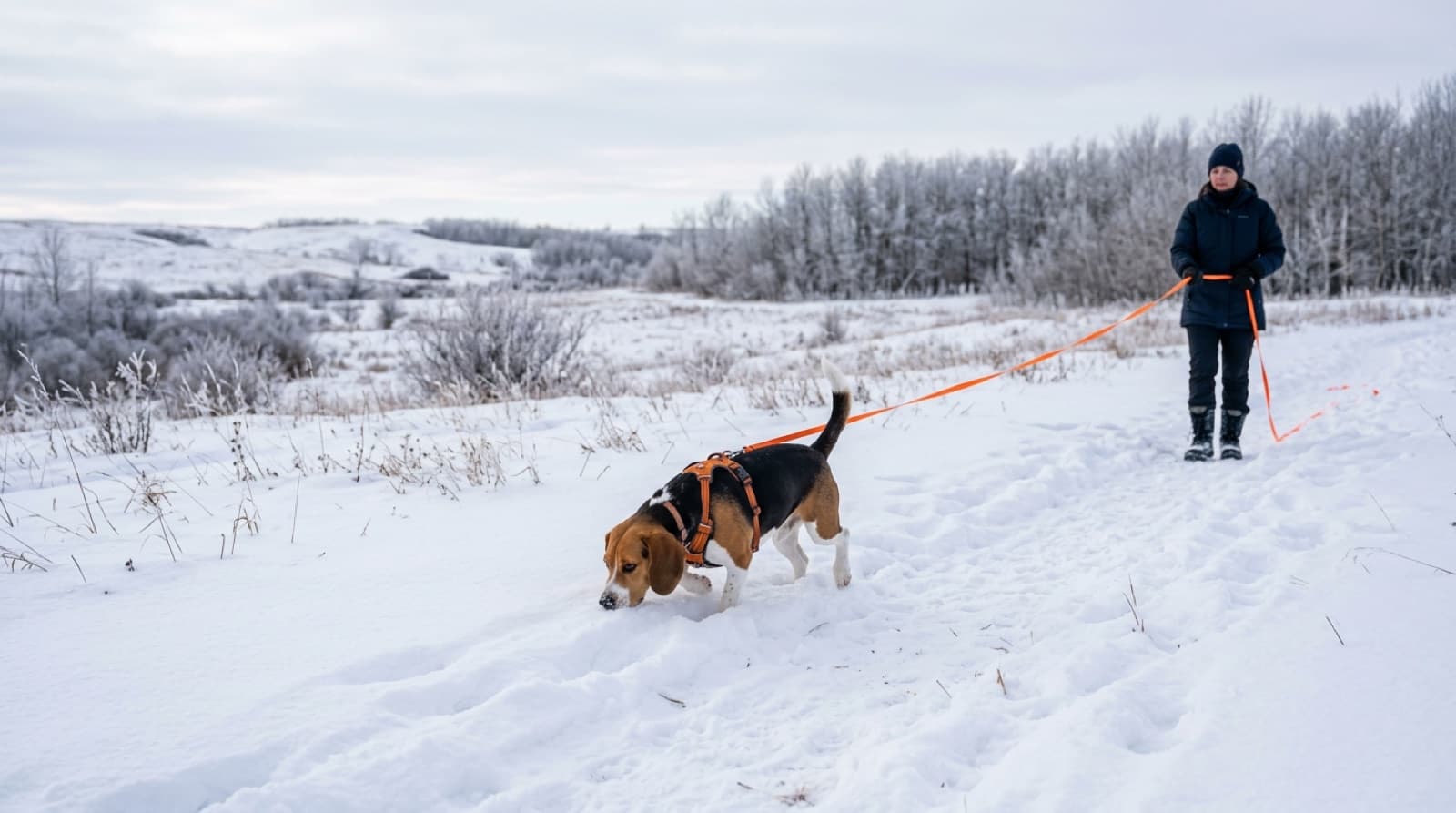
Bred to follow a scent
The Canadian Kennel Club calls the Beagle a gentle family pet that is especially good with children, notes that pack-working means most get on well with other dogs, and says plainly that as true scent hounds, Beagles will inevitably follow their noses if an inviting odour leads them away. It advises secure enclosures or leashed exercise.
That is the whole training picture. A Beagle that ignores you in the park is not being defiant. It is doing exactly what generations of breeding asked it to do.
Building recall on a long line
Start indoors, where nothing competes with you. Say a happy cue once, reward with something excellent the moment the dog reaches you, and practise often. Then move to the yard, then to a quiet field on a long line (5 to 10 metres), then to busier places.
- Use your best food for recall only. Kibble rarely beats a rabbit trail.
- Never call a Beagle to something unpleasant, such as the end of a fun walk or a bath. Go and get the dog instead.
- Call when you are likely to win, before the nose locks on, not after.
- Practise "check-ins": reward every time your dog looks back at you on its own.
- Accept that recall will stay unreliable around fresh wildlife scent, and plan around it.
Browse adoptable Beagles
Ask the rescue how the dog does on lead, when left alone and around food, and whether it bays.
See Available Beagles →Training a food-motivated hound
Most Beagles will do almost anything for food, which makes reward-based training easy. The American Veterinary Society of Animal Behavior recommends reward-based methods for all dogs and advises against aversive tools. Keep sessions short, use part of the daily food as rewards, and watch the waistline, because Beagles put on weight easily.
Counter-surfing and bin raiding are management problems first. Keep food out of reach and teach a solid "leave it".
Howling and baying
Beagles bay, a distinctive howl used on the hunt. It often shows up when the dog is bored, lonely or has picked up an exciting scent. Daily exercise, scent games and building up alone-time gradually do more than trying to stop the sound. Reward quiet, and avoid accidentally rewarding baying with attention.
Give the nose a job
The CKC notes the breed’s stamina and says daily outdoor exercise is a must. Sniffing tires a Beagle out faster than walking alone. Let the dog sniff on walks, hide treats around the house, scatter-feed in the yard, and consider scent-work classes, which channel the breed’s natural talent into something you control.
Frequently asked questions
Can a Beagle ever be off lead?
Only in securely fenced areas for most Beagles. The Canadian Kennel Club notes they will follow an inviting scent away, and recall rarely beats a fresh trail.
Are Beagles stubborn?
They are independent and scent-driven rather than stubborn. Food rewards, short sessions and calling before the nose locks on make training far easier.
How do I stop my Beagle howling?
Address the cause: boredom, loneliness or excitement. Daily exercise, scent games and gradual alone-time training reduce baying more than corrections.
Are Beagles good with kids and other dogs?
Generally yes. The CKC describes them as especially good with children and, as pack hounds, usually sociable with other dogs.
How much exercise does a Beagle need?
Daily outdoor exercise is a must, ideally with plenty of sniffing time, plus scent games at home.
What is the best way to train a Beagle?
Reward-based training with food, in short sessions. Avoid aversive tools; veterinary behaviour experts advise against them.
Sources
- Canadian Kennel Club: Beagle: gentle with children; good with other dogs; follows its nose; daily outdoor exercise
- American Veterinary Society of Animal Behavior: Position Statement on Humane Dog Training: reward-based training recommended
General information, not a substitute for a qualified trainer or behaviour professional. For sudden behaviour change, start with your veterinarian.
Related guides
New dog? Start with these care guides
Everything a new adopter needs to set up a safe, happy home.