The short answer
Boxers are devoted, goofy, high-energy family dogs that stay puppyish until around age three. They need 60 to 90 minutes of real daily exercise, not just a walk, and they thrive on force-free, reward-based training while shutting down under harsh methods. The top complaint is jumping, fixed by rewarding four-on-the-floor and teaching a default sit. Boxers are great with kids but bouncy, so supervise toddlers, and they are prone to separation issues, so they do poorly left alone all day. The prairie catch: a short-coated, brachycephalic Boxer is heat-limited in summer and cold-sensitive in winter, so plan indoor energy-burning for the extremes. Adopt an adult past age three and you skip the wildest phase.
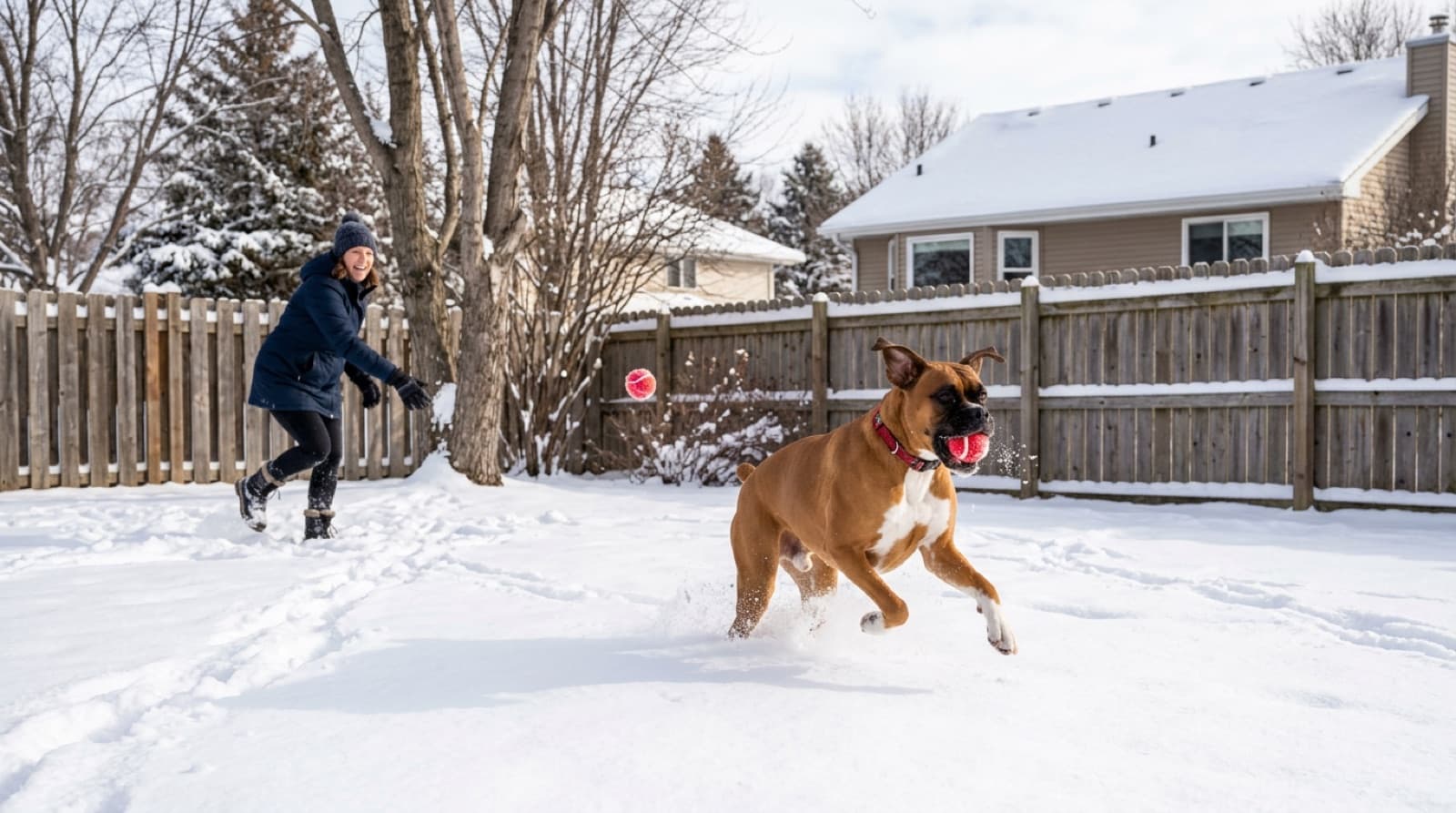
The perpetual puppy: Boxer temperament
Boxers are affectionate, playful, loyal, and famously clownish, one of the most people-oriented breeds there is. They bond hard, are generally excellent with children, and stay goofy and puppyish well into adulthood. The flip side is intensity: high energy, exuberance, and slow maturity to around age three.
That long adolescence is the breed's defining trait for an owner, and it fits the playful, high-spirited temperament the Canadian Kennel Club describes for the Boxer. The bouncy, mouthy, into-everything phase just lasts longer than most breeds, and it needs a real daily outlet or it turns into jumping and destruction. Boxers are also sensitive dogs that thrive on company and struggle when isolated. A well-socialized Boxer is friendly rather than aggressive, watchful at most. In short, a devoted, entertaining, high-energy family dog, not a low-key couch companion. Knowing that going in is the difference between a great match and a surrender, which is exactly the pattern in our Boxer adoption guide.
Exercise: how much, and the weather catch
Plan on 60 to 90 minutes of real exercise a day for an adult Boxer, more for a young one, and make it more than a slow leash walk. Boxers need to run, play, and use their brains: fetch, tug, flirt-pole games, securely-fenced off-leash time, and training sessions all count. A Boxer that gets only a gentle stroll spends the leftover energy on your furniture.
The Regina catch is weather, in both directions. A brachycephalic Boxer must not be pushed hard in summer heat, so exercise in the cooler morning and evening. In winter, the short coat and short muzzle mean genuine cold-sensitivity, so outdoor time shrinks in deep cold. That makes indoor energy-burning essential on the most extreme days, which is covered in the winter section below. On milder days, the Regina off-leash parks give a Boxer room to properly run. Meeting the exercise need is the single biggest factor in whether a Boxer is a joy or a problem.
Training a Boxer: force-free, and start early
Boxers are smart and eager to please but not push-button easy, because the energy, exuberance, and long puppyhood get in the way. They respond beautifully to force-free, reward-based training and shut down or worsen under harsh, heavy-handed methods. Start early, keep sessions short and upbeat, and be consistent.
Focus first on the behaviours that make or break daily life: a reliable sit to replace jumping, loose-leash walking, a solid recall, and calm door greetings. Group classes help enormously, for the training and the socialization both. In Regina, look for a trainer who uses force-free, reward-based methods, and avoid anyone selling dominance or correction-based approaches for this sensitive breed. A Boxer that gets structured, positive training through its first two years becomes a wonderful adult dog. Support the coat and body with the health basics in our Boxer health issues guide.
Stopping the jumping
Jumping is the number-one Boxer complaint, and it is pure enthusiasm, not dominance, so you redirect the excitement rather than punish it. The core method is to make four-on-the-floor the thing that earns attention: turn away and withhold all attention when the Boxer jumps, and reward the instant its feet are down, ideally by teaching a solid sit as the default greeting.
The catch is consistency. Everyone in the household and every visitor has to follow the same rule, because a Boxer petted for jumping even one time in ten keeps trying. Manage the setup while you train: leash the dog for greetings, give it a job like go-to-mat when the door opens, and burn energy before high-excitement moments, since a tired Boxer jumps less. This takes weeks of consistency, and it is far easier started before the dog is a full-grown 65 pounds. A force-free trainer can speed it up.
Browse adoptable Boxers in Regina
An adult rescue Boxer, past the wildest adolescence, lets you see the temperament you are actually getting. Fawn, brindle, and white Boxers plus Boxer crosses. Refreshed regularly.
See Available Boxers →Exercising a Boxer through a prairie winter
This is the real Regina challenge, because a high-energy dog that is also cold-sensitive cannot just spend an hour outside at -35. Gear first: a warm, well-fitted coat for walks below about -10, and booties for salted sidewalks and deep cold. Keep outings shorter and more frequent on the coldest days, and watch for shivering, lifted paws, and reluctance.
Then move the energy indoors: hallway fetch, stair games, tug, flirt-pole play in a basement, scent games hiding treats around the house, and short training sessions all burn real energy without frostbite risk. A frozen stuffed food toy or a snuffle mat buys calm time. On milder winter days, a securely fenced yard or an off-leash area lets a Boxer run properly. The goal is simple: do not let winter leave a Boxer under-exercised, because a bored, pent-up Boxer indoors is exactly the dog that chews the couch. Our Regina winter dog care guide has the full cold-weather routine.
Frequently Asked Questions
What is a Boxer's temperament like?
Boxers are affectionate, playful, loyal, and famously clownish, one of the most people-oriented breeds there is. They bond hard to their families, are generally excellent with children, and stay puppyish and goofy well into adulthood, which is a big part of their charm. The flip side is intensity: Boxers are high-energy, exuberant, and slow to mature, staying a bouncy perpetual puppy until around age three, and that energy needs a real daily outlet or it turns into jumping, mouthing, and destruction. Boxers are also sensitive dogs that thrive on being with their people and do poorly when isolated or left alone all day. They can be watchful and a little protective, but a well-socialized Boxer is friendly rather than aggressive. In short: a devoted, entertaining, high-energy family dog that needs exercise, training, and companionship, not a low-key couch dog.
How much exercise does a Boxer need?
Plan on 60 to 90 minutes of real exercise a day for an adult Boxer, more for a young one, and it has to be more than a slow leash walk. Boxers need to run, play, and use their bodies and brains: fetch, tug, flirt-pole games, off-leash time in a securely fenced area like the Cathy Lauritsen Off-Leash Dog Park, and training sessions all count. A Boxer that gets only a gentle stroll will have energy left over and will spend it on your furniture, your walls, or your patience. The catch in Regina is weather. A brachycephalic Boxer must not be pushed hard in summer heat, so exercise in the cooler morning and evening, and in winter the short coat and short muzzle mean cold-sensitivity, so outdoor time gets shorter in deep cold. That makes indoor energy-burning, hallway fetch, stair games, tug, and training, essential on the coldest and hottest days. Meeting the exercise need is the single biggest factor in whether a Boxer is a joy or a problem.
Are Boxers easy to train?
Boxers are smart and eager to please, but they are not push-button easy, because their energy, exuberance, and long puppyhood get in the way, and they can be a little stubborn or easily distracted. The good news is they respond beautifully to force-free, reward-based training and genuinely enjoy the mental work. The bad news is that harsh or heavy-handed methods backfire badly with this sensitive breed, damaging trust and often making behaviour worse. Start training early, keep sessions short and upbeat, and be consistent, because a Boxer will happily test an inconsistent rule. Focus first on the behaviours that make or break daily life: a reliable sit to replace jumping, loose-leash walking, a solid recall, and calm greetings. Group classes help enormously, both for the training and for the socialization. A Boxer that gets structured, positive training in its first two years becomes a wonderful adult dog.
How do I stop a Boxer from jumping on people?
Jumping is the number-one Boxer complaint, and it comes from pure enthusiasm, not dominance, so the fix is redirecting the excitement, not punishing it. The core method is to make four-on-the-floor the behaviour that gets attention: turn away and withhold all attention when the Boxer jumps, and reward calmly the instant its feet are down, ideally by teaching a solid sit as the default greeting. Everyone in the household and every visitor has to follow the same rule, because a Boxer that gets petted for jumping even one time in ten will keep trying. Manage the setup while you train: keep the dog on a leash for greetings, give it a job like sit or go-to-mat when the door opens, and burn energy before high-excitement moments since a tired Boxer jumps less. This takes weeks of consistency, not days, but it works, and it is far easier if you start before the dog is a full-grown 65 pounds. A force-free trainer can speed it up.
Are Boxers good with kids and other pets?
Boxers are generally excellent with children, patient, playful, and affectionate, which is a big reason they are such a popular family breed. The main caution is size and exuberance, not temperament: a bouncy young Boxer can accidentally knock over a toddler in play, so supervise interactions with small children and teach the dog gentle greetings. With other dogs, most well-socialized Boxers are friendly, though some, particularly intact males, can be selective or same-sex reactive, so early socialization and reading the individual dog matter. With cats and small pets, it depends on the individual and its prey drive, and a rescue's foster notes are the best guide, so ask specifically whether a Boxer has lived with cats. As with any breed, supervise early introductions, go slowly, and let the dog earn freedom. A socialized Boxer from a good rescue match usually fits a busy family home beautifully.
Do Boxers have separation anxiety?
They are prone to it, because Boxers are intensely people-bonded and were bred to be companions, so being left alone all day is genuinely hard for the breed, and isolation is one of the common threads in Boxer surrenders. A Boxer left alone too long, without enough exercise or mental stimulation, often develops destructive chewing, barking, house-soiling, or real separation anxiety. That does not mean a Boxer cannot be left alone, but it does mean you need a plan: plenty of exercise before you leave, safe chew items and enrichment, gradual practice being alone starting in short stints, and, for a working household, a midday walk, a dog walker, or daycare a few days a week. Crate training done positively can give a Boxer a safe den, but a crate is not a substitute for company and exercise. If you work long hours away from home with no support plan, a Boxer is probably not the right breed, and being honest about that before adopting saves everyone heartache.
Why do Boxers stay puppies for so long?
Boxers are famously slow to mature, staying mentally and physically puppyish until around age three, well past when many breeds settle. This extended adolescence is part of the breed's character and charm, the goofy, bouncy, into-everything phase just lasts longer, but it is also the single biggest reason Boxers get surrendered, because owners expecting an adult dog at eighteen months meet a large, strong, still-wild teenager instead. The practical implication is patience and structure: keep up the exercise and training through the whole adolescence, do not expect calm too early, and know that most of the wildness genuinely does mellow around age three into a devoted, more settled adult. This is also the strongest argument for adopting an adult Boxer rather than a puppy, especially for a first-time owner, since an adult of three-plus years is usually past the hardest phase and you can see the temperament you are actually getting.
How do I exercise a Boxer through a Regina winter?
This is the real prairie challenge with a Boxer, because a high-energy dog that is also cold-sensitive cannot simply spend an hour outside at -35. Start with the right gear: a warm, well-fitted coat for walks below about -10, and booties for salted sidewalks and deep cold. Keep outdoor outings shorter and more frequent on the coldest days, and watch for shivering, lifted paws, and reluctance, which mean it is time to go in. Then move the energy indoors: hallway fetch, stair games, tug, flirt-pole play in a basement, scent games hiding treats around the house, and short training sessions all burn real energy without frostbite risk. A frozen stuffed food toy or a snuffle mat buys calm time. On milder winter days, a securely fenced yard or a Regina off-leash park lets a Boxer run properly. The goal is to make sure the winter does not leave a Boxer under-exercised, because a bored, pent-up Boxer indoors is exactly the dog that chews the couch. Our Regina winter dog care guide has the full cold-weather routine.
Related Guides
New dog? Start with these care guides
Everything a new adopter needs to set up a safe, happy home.