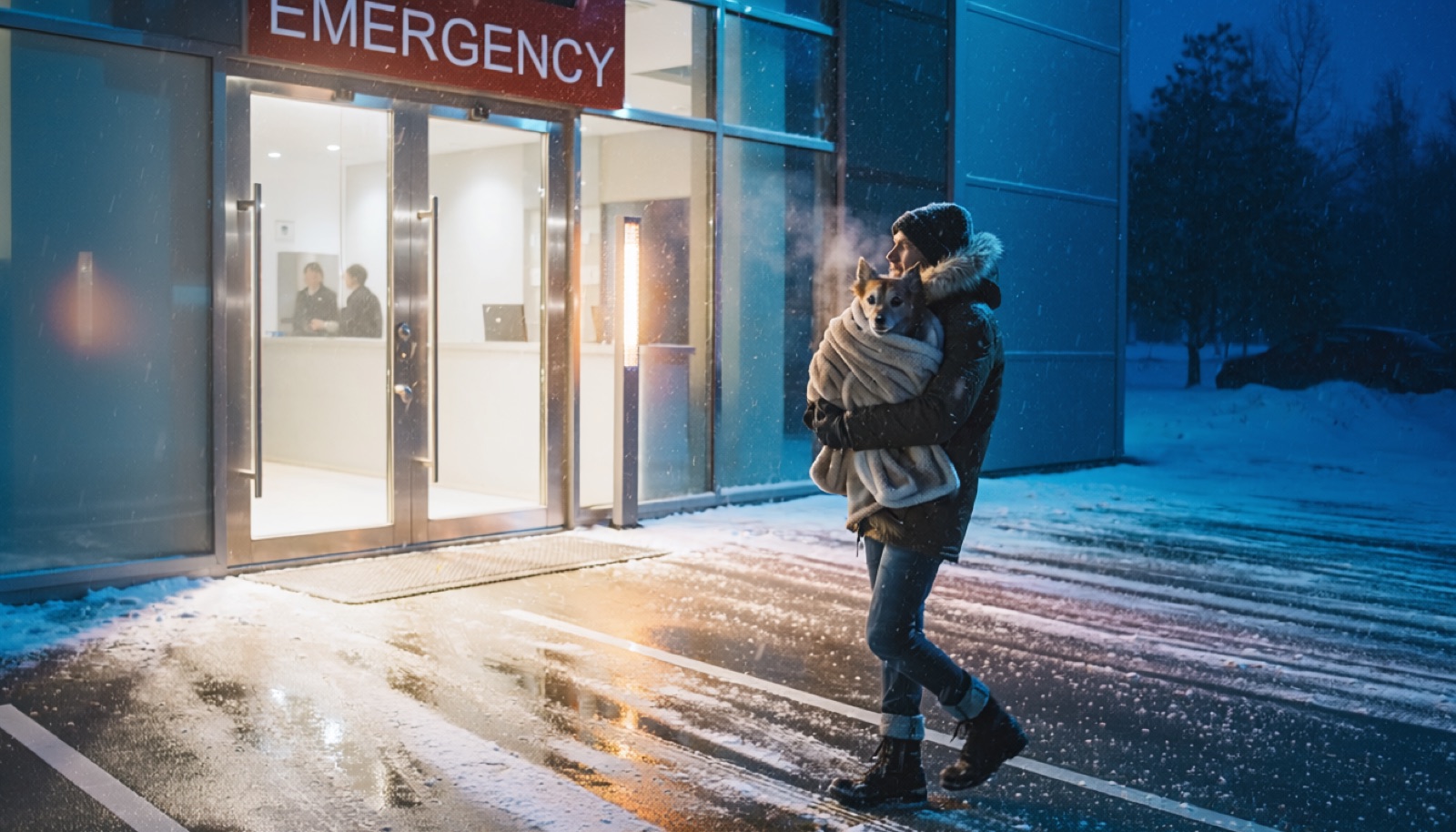
The short answer
At 2 a.m. in Regina, there is one answer: the 24 HR Animal Care Centre, 1846 Victoria Ave East (Vic East Plaza), phone 306-761-1449. It is open 24/7/365 for emergencies and primary care, with no appointment needed. A phone call before you arrive is appreciated so the team can prepare. If your dog shows signs of bloat, poisoning, heatstroke, or has been hit by a car, do not wait for morning. Call and drive.
Heads up: This article is informational and is not veterinary advice. It helps you recognize warning signs and get to professional care fast; it does not tell you how to treat anything at home. When your dog is in trouble, the phone call to a veterinary team beats anything you read online, including this. Details current as of July 2026; confirm with the clinic.
Most prairie cities have a rough version of this story: the dog gets sick at midnight, the regular clinic's voicemail gives a referral number, and the owner drives to another city or waits until morning. Regina is the exception. The 24 HR Animal Care Centre on Victoria Ave East is Saskatchewan's first and only privately owned 24-hour veterinary hospital. Staffed building, lights on, every hour of every night of the year. If you own a dog in this city, put 306-761-1449 in your phone contacts today, before you need it.
The harder problem is knowing when to go. Dogs hide pain well, and the difference between “watch it overnight” and “drive now” is not always obvious at 2 a.m. This guide walks through the true emergencies, what to do in the ten minutes before you leave, what the visit will cost, and the seasonal hazards (antifreeze in winter, hot cars in summer) that fill prairie emergency rooms. If you just adopted, our first week with your rescue dog guide covers finding a regular vet; this one covers the night that plan is not enough.
Is It a True Emergency? Recognize the Signs
These six situations are worth an immediate 2 a.m. drive, full stop. The American Veterinary Medical Association's emergency care guidance lists the same core red flags. This table is about recognition, not treatment. There is nothing here to fix at home.
| Emergency | What You'll See | How Fast |
|---|---|---|
| Bloat / GDV (twisted stomach) | Swollen, hard, or distended belly; repeated retching with nothing coming up; sudden restlessness and pacing; heavy drooling; a dog that cannot get comfortable. Most common in deep-chested breeds. | Go immediately. Minutes matter. |
| Toxin ingestion | You saw (or suspect) the dog eat chocolate, xylitol gum or candy, grapes or raisins, rodenticide, human medication, or cannabis. Vomiting, drooling, tremors, or wobbliness after getting into something. | Call and go. Bring the packaging. |
| Antifreeze (ethylene glycol) | Drunken, wobbly walking; vomiting; drinking and urinating far more than normal. Signs may appear to ease off for a stretch, but that does not mean the danger has passed. Antifreeze tastes sweet and dogs seek it out. | Go immediately, even if the dog seems to improve. |
| Hit by car | Any vehicle strike, even if the dog gets up and walks. Limping, laboured breathing, pale gums, or a dog that seems shaken but "fine". Internal injuries are not visible from the outside. | Go immediately. Always. |
| Collapse or seizure | Sudden loss of consciousness, inability to stand, a seizure lasting more than a couple of minutes, repeated seizures, or extreme weakness that comes on fast. | Go immediately. |
| Heatstroke | Heavy relentless panting, thick drool, bright red gums, vomiting, stumbling, or collapse after time in a hot car, a hot yard, or a hard run on a 30°C prairie day. | Go immediately. Call en route. |
Also on the go-now list: trouble breathing, uncontrolled bleeding, an inability to urinate (especially male dogs), eye injuries, and a first-time seizure. When in doubt, phone 306-761-1449 and describe what you see. Triage over the phone is what the overnight team does.
Where to Go: 24 HR Animal Care Centre
24 HR Animal Care Centre
Address: 1846 Victoria Ave East, Regina SK S4N 7K3 (Vic East Plaza)
Phone: 306-761-1449
Hours: 24 hours a day, 7 days a week, 365 days a year
Services: Emergency care and primary care, around the clock
This is Saskatchewan's first and only privately owned 24-hour veterinary hospital, and it changes the math for Regina dog owners. There is no life-threatening-only overnight restriction published, no answering service routing you somewhere else, no highway drive to another city. One building, always staffed.
The centre asks one thing of you: a phone call prior to arrival is appreciated. It is not a gate, and nobody gets turned away for skipping it. But the call means the team knows a bloat case or a hit-by-car is inbound and can have the room ready. Make the call from the passenger seat while someone else drives, or before you pull out of the garage.
What to Do Before You Leave the House
1. Call 306-761-1449. Say what happened, what you are seeing, and when you will arrive. The person answering handles these calls every night and may give you specific instructions for the drive.
2. Do not treat at home unless told to. No inducing vomiting, no human medications, no “a little something for the pain.” Acetaminophen and ibuprofen are toxic to dogs. Well-meaning home treatment is a regular source of second emergencies.
3. Secure the dog for transport. An injured or frightened dog may bite people they love. Use a leash, keep handling gentle and minimal, and support an injured dog on a firm surface (a board, a folded blanket held taut) if they cannot walk. A crate is ideal for small dogs.
4. Grab the evidence, not the filing cabinet. If poison is suspected, take the packaging, the plant, or a photo of whatever they got into. Medication list if it is on the fridge. Skip anything that takes more than a minute to find.
5. Drive like you want to arrive. A speeding ticket or a collision on Victoria Ave helps nobody. The phone call has already bought you the prepared team; the extra two minutes of safe driving costs less than it feels like it does at 2 a.m.
What an Emergency Visit Costs
The honest range is wide: several hundred to several thousand dollars. An after-hours exam with basic stabilization sits at the low end. Add bloodwork, x-rays, or ultrasound and the bill climbs. Emergency surgery and overnight hospitalization (bloat is the textbook case) sit at the top of the range.
You will get an estimate before major treatment. Emergency clinics present a written estimate and get your sign-off before surgery or admission. Ask questions. Ask what the must-do items are versus the nice-to-haves. Veterinary teams have this conversation every night and would rather have it openly than watch you nod through sticker shock.
Deposits are normal. If your dog is admitted, expect to pay a portion up front. Bring a credit card.
Money stress is part of the emergency. There is no way around that on a prairie income. The two tools that soften it are pet insurance bought before problems start and a dedicated emergency fund. Our low-cost vet care in Regina guide covers managing everyday vet costs so the emergency fund stays intact for actual emergencies.
Prairie-Specific Risks: What Sends Regina Dogs to the ER
Winter (and there is a lot of it)
- ●Antifreeze. Winterizing season means ethylene glycol drips on driveways and garage floors. It tastes sweet and a few licks can be lethal. Clean spills immediately and check where you park.
- ●Hypothermia and frostbite. Regina hits -30°C or colder in January and February. Shivering that stops, lethargy, and pale ear tips or paws after time outside are all reasons to call. Short-coated and small dogs are most at risk.
- ●Ice salt. Road salt burns paws and causes vomiting when licked off in quantity. Rinse paws after winter walks. Our winter dog care guide covers the full cold-weather playbook.
Summer (short, hot, and dangerous)
- ●Hot cars. Regina sees multiple 30°C-plus days a year, and a parked car turns deadly in minutes, cracked windows or not. “I was only in the store for ten minutes” is the sentence emergency vets hear most in July.
- ●Exercise heatstroke. A hard fetch session or a long midday run on a hot prairie afternoon can overheat a dog fast, especially flat-faced breeds and thick-coated northern dogs. Walk at dawn and dusk in July.
- ●Know the signs. Heavy relentless panting, thick drool, bright red gums, vomiting, stumbling. Shade and small sips of water while you call ahead and drive.
How the 24-Hour Centre Fits With Your Regular Vet
Daytime clinics and the 24-hour centre are two halves of one system. Regina's regular full-service clinics, Careport Animal Hospital and Lakewood Animal Hospital among them, direct their after-hours callers to the 24 HR Animal Care Centre. Call your own clinic at midnight and the recording will point you to Victoria Ave East. Skipping straight to 306-761-1449 saves a step.
The 24-hour centre also does primary care. Unusual for an emergency facility: it operates as a full hospital around the clock, not an overnight-only ER. Some owners use it as their regular clinic precisely because the hours fit shift work.
Close the loop after an emergency. If your regular vet is elsewhere, ask the centre to forward records so follow-up care, suture removal, and medication rechecks happen with the clinic that knows your dog's history. Adopted recently? Every Regina Humane Society adoption includes a post-adoption vet exam, and that first visit is the right moment to ask the clinic what their after-hours protocol is, so you are never learning it during the emergency.
Pet Insurance and the 2 a.m. Bill
Emergency medicine is exactly what pet insurance exists for. Routine care you can budget; a twisted stomach at 2 a.m. you cannot. Most Canadian accident-and-illness policies cover emergency exams, diagnostics, surgery, and hospitalization, which turns an unplannable several-thousand-dollar night into a deductible plus a monthly premium.
Two honest caveats. First, pre-existing conditions are excluded, so insurance only works if you enrol while your dog is healthy. The week you adopt is the right week to decide. Second, premiums rise with age and vary by breed, so read the coverage limits rather than shopping on price alone.
If insurance is not your style, the alternative is a dedicated emergency fund with a real number in it, built before you need it. Either answer works. The worst answer is deciding at the clinic counter, at 2 a.m., with a sick dog in your arms.
Browse adoptable Regina dogs
Every Regina rescue dog arrives vet-checked, vaccinated, and microchipped, with a known health history. That paperwork is worth a lot on the night something goes wrong.
See Available Regina Dogs →Frequently Asked Questions
Is there a 24-hour emergency vet in Regina?
Yes. The 24 HR Animal Care Centre at 1846 Victoria Ave East is open 24 hours a day, 365 days a year, for both primary care and emergencies. It is Saskatchewan's first and only privately owned 24-hour veterinary hospital, which makes Regina unusual among prairie cities: there is a staffed building with the lights on at 2 a.m. every night of the year. Phone 306-761-1449. A phone call before you arrive is appreciated, so the team can prepare for your dog.
Do I need an appointment at the 24 HR Animal Care Centre?
No appointment is needed for an emergency. The centre operates around the clock and takes urgent cases as they come. That said, a phone call before arrival is appreciated. Thirty seconds on the phone (306-761-1449) lets the team pull supplies, prep a table, and meet you at the door if the situation is critical. Call from the car while someone else drives if you can.
How much does an emergency vet visit cost in Regina?
Expect several hundred to several thousand dollars depending on what is wrong. The after-hours exam and initial stabilization sit at the lower end. Bloodwork, x-rays, and overnight monitoring add up from there, and emergency surgery (bloat is the classic example) lands at the top of the range. Clinics provide a written estimate before major treatment and usually ask for a deposit if your dog is admitted. Ask for the estimate; it is a normal request, not a rude one.
What counts as a true dog emergency?
Anything on this list means go now: a swollen belly with unproductive retching, suspected poison or antifreeze, a vehicle strike, collapse, seizures, heatstroke signs, trouble breathing, uncontrolled bleeding, or an inability to urinate. When you are genuinely unsure, phone the 24 HR Animal Care Centre at 306-761-1449 and describe what you are seeing. The person on the phone triages these calls every night and will tell you whether to come in or watch and wait.
My dog ate chocolate. Do I go in?
Call first, then follow instructions. Toxicity depends on the type of chocolate, the amount, and your dog's weight, and the vet team can work through that math with you on the phone. Dark chocolate and baking chocolate are far more dangerous than milk chocolate. Do not induce vomiting or give anything at home unless a veterinary professional tells you to. Bring the wrapper or packaging with you if you go in.
What is bloat and why is it so urgent?
Bloat (gastric dilatation-volvulus, or GDV) is a condition where the stomach fills with gas and can twist on itself, cutting off blood flow. It is one of the fastest-killing emergencies in dogs, and it is treatable when caught early. The signs to burn into memory: a hard swollen belly, repeated retching that produces nothing, drooling, pacing, and obvious distress. Deep-chested breeds like Great Danes, German Shepherds, and standard Poodles carry higher risk. There is no home fix. Drive.
What are the signs of antifreeze poisoning in dogs?
Early signs look like drunkenness: wobbly walking, stumbling, vomiting, and drinking or urinating far more than usual. The cruel part is that the outward signs can settle down for a while, and owners assume the dog has recovered. Internally the damage continues toward the kidneys. If you suspect any antifreeze exposure at all (a puddle under a vehicle, a spill in the garage, sweet-smelling liquid on the paws) go to the 24 HR Animal Care Centre immediately, even if your dog seems fine.
Can I wait until morning and see my regular vet instead?
For the true emergencies in this guide, no. Bloat, antifreeze, vehicle strikes, collapse, and heatstroke get worse by the hour, and some get worse by the minute. For grey-zone situations (a limp, one episode of vomiting, a torn nail) a phone call to 306-761-1449 is the honest middle path: describe it, and let the triage team tell you whether it can safely wait for your regular clinic to open. Making that call costs nothing and takes the guesswork off your shoulders at 2 a.m.
What should I bring to the emergency vet?
Your dog on a secure leash, any packaging from whatever they ate, a list of medications they take, and your dog's vaccination or medical records if you can grab them in under a minute. Do not delay leaving to hunt for paperwork; the clinic can treat without it. A phone charger and a credit card are worth having, since emergency visits involve waiting and a deposit is often requested on admission.
Does pet insurance cover emergency vet visits in Regina?
Most Canadian pet insurance plans cover accident and illness emergencies, which is exactly the several-hundred-to-several-thousand-dollar territory an ER visit lives in. The catch is that pre-existing conditions are excluded, so coverage only helps if the policy was in place before the problem started. The alternative is a dedicated emergency fund you never touch for anything else. Either approach works; having neither is how a 2 a.m. emergency turns into an impossible financial decision.
What do Careport and Lakewood do after hours?
Regina's regular full-service clinics, including Careport Animal Hospital and Lakewood Animal Hospital, direct after-hours callers to the 24 HR Animal Care Centre. That is the standard arrangement in this city: daytime clinics handle wellness care, vaccines, and scheduled surgery, and the 24-hour centre catches everything that happens outside business hours. After an emergency visit, ask for the records to be sent to your regular clinic so follow-up care picks up where the ER left off.
Is heatstroke really an emergency on the prairies?
Yes, and it kills dogs in Regina every summer. The city sees multiple 30°C-plus days a year, and a parked car turns lethal in minutes even with windows cracked. Heavy relentless panting, thick drool, bright red gums, vomiting, and stumbling are the signs. Move the dog to shade or air conditioning, offer small amounts of water, and head to the 24 HR Animal Care Centre while calling ahead. Do not wait to see whether the dog perks up on their own.
Related Regina Guides
Save the Number. Then Meet Your Dog.
306-761-1449 goes in your contacts today. The dog comes from a Regina rescue, vet-checked and ready.
Browse Available Regina Dogs →New dog? Start with these care guides
Everything a new adopter needs to set up a safe, happy home.