The short answer
Labs are the most obesity-prone breed, and a Saskatoon winter is the trap. From late November to March, -30 to -40 windchill cuts walks short while the food bowl and treat jar stay full, and the most food-driven breed (thanks to the POMC hunger gene) packs on weight fast. That weight loads joints already vulnerable to hip and elbow dysplasia, brings arthritis on earlier, and shortens lifespan. The fixes: feed to body condition, not the bag, measure every meal, count treats, do not feed more in the cold, and replace outdoor walks with indoor games, food puzzles, and training. Keeping a Lab lean is the closest thing to a free extra year of good life, and it is entirely in your control. Diet changes go through your vet.
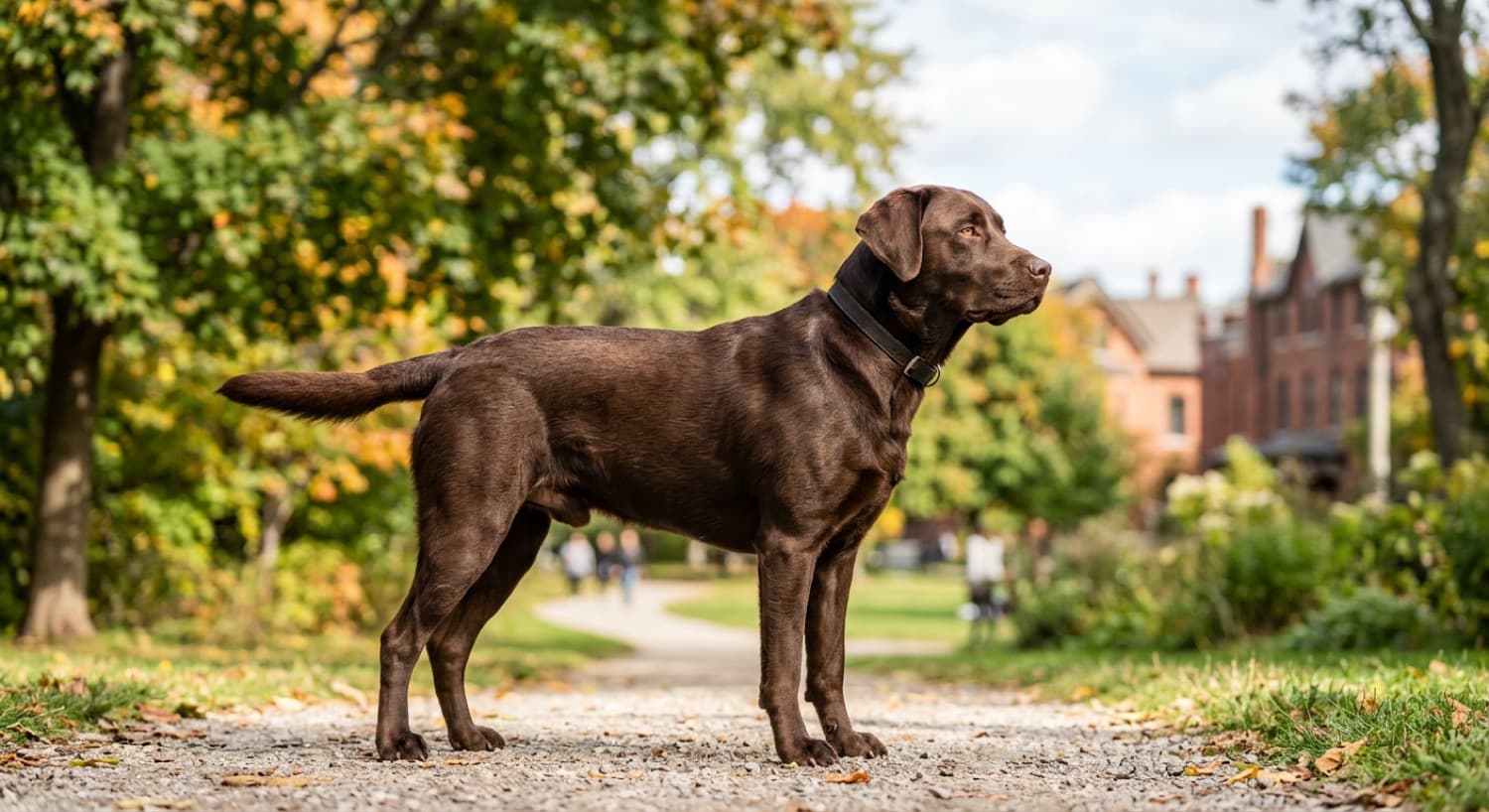
This guide is informational and is not veterinary advice. Diet plans, weight-loss programs, and medical concerns belong with a licensed veterinarian who has examined your dog.
Why the Labrador is the most obesity-prone breed
It is partly hardwired. A gene variant called POMC is common in Labradors and is linked to increased hunger and food motivation, so many Labs are genuinely hungrier than other breeds and never seem full.
Add the breed's famous food drive, which makes them easy to over-treat and easy to free-feed, and you have the most obesity-prone breed in the dog world. This is not an owner failing so much as a breed reality you have to plan around.
Weight is not cosmetic. The American Veterinary Medical Association links excess weight to arthritis, reduced lifespan, and other disease. For a breed that already carries above-average hip and elbow problems, every extra pound compounds the risk. The full medical picture is in our Labrador health issues guide.
The prairie-winter weight trap
Winter cuts the exercise while the appetite stays the same. That gap between calories in and calories out is exactly how a Saskatoon Lab gains its off-season weight.
From late November into March, Saskatoon regularly sits at -30 to -40 windchill. Nobody is doing a 90-minute river walk at -38, and on the coldest days walks get short or skipped. A Lab is reasonably cold-hardy, but a housed pet on shorter walks is burning less than in summer, not more.
Meanwhile the food bowl and treat jar do not shrink. The weight goes on, and it loads joints that are already vulnerable in the breed. Two rules break the trap:
- Do not feed more in winter to “keep the dog warm.” That is a working-sled-dog myth, not a housed-pet reality.
- Replace the lost outdoor exercise with indoor work, so the calorie gap never opens.
For the cold limits, frostbite signs, and paw-and-salt routine on the days you do walk, see our Saskatoon winter dog care guide.
How to tell if your Lab is overweight
Use body condition, not just the scale. A healthy weight depends on the individual dog, so learn to read the body.
On a lean Lab you should be able to:
- Feel the ribs easily with light pressure (not press to find them)
- See a visible waist looking down from above
- See a belly tuck-up from the side
If the ribs are buried, the waist is gone, or the back looks broad and flat from above, the dog is carrying too much. Ask your vet to assign a body condition score at the next visit (most use a 9-point scale, with 4 to 5 ideal) and to set a target weight, then weigh the dog periodically to track it. The creep is gradual, which is why an outside number from your vet helps you catch it.
Feeding and portions
Feed by measurement and to body condition, not by eye or by the generous number on the bag.
The feeding guide on a kibble bag is a starting range, often generous. The right amount depends on your dog's age, activity, spay/neuter status, and metabolism, so adjust up or down to hold the target body condition score and let your vet confirm the target.
Rules that keep a food-driven Lab honest:
- Measure every meal with a proper cup or a kitchen scale. Scooping drifts high fast.
- Count treats as part of the daily total. They add up quickly with this breed.
- Cut back on the days the dog gets less exercise, especially through winter.
- Use low-calorie treats, or a portion of the daily kibble, for training rewards.
A neutered adult pet Lab usually needs meaningfully less than an intact working dog. When in doubt, ask your vet for a specific daily amount for your dog. Saskatchewan adds about 11 percent tax to pet food, so a right-sized bag is a small budget win too.
Indoor winter exercise that actually burns energy
The goal is to burn energy and engage the brain without a long outdoor walk. Stack a few of these across the day and you replace most of a skipped walk.
- Hallway or stairwell fetch, which adds sprint bursts a leashed walk never does
- Tug and a flirt pole in a basement or garage, a real workout for a strong dog
- Scent games, hiding kibble or a toy around the house for the dog to find
- Food-puzzle feeders and snuffle mats, turning a meal into 20 minutes of work
- Short training sessions, because mental work tires a Lab well and they love to learn
On the milder winter days, take the short brisk walk you can get, with paw balm on and a salt rinse after. In the warm months, bank real fitness on the Meewasin Trail and at off-leash parks like Sutherland Beach, where a Lab can swim (near-ideal joint-friendly exercise). See our off-leash parks guide for each park's access and rules.
What extra weight costs a Lab
A lot, and it compounds. The Lab already carries above-average hip and elbow dysplasia, and every extra pound loads those joints and brings arthritis on earlier and worse.
Overweight Labs move less, lose muscle, and gain more weight, a downward spiral. Beyond joints, excess weight is linked to a shorter lifespan and higher disease risk. There is a dollar cost too: joint disease means vet visits, medication, physiotherapy, and sometimes surgery at the Western College of Veterinary Medicine, with about 11 percent Saskatchewan tax on top.
Keeping a Lab lean is cheaper than treating an overweight one, and it is the closest thing to a free extra year or two of good life. The AKC Labrador profile flags the breed's food drive and the need to watch weight directly. If you take one thing from the whole Labrador cluster: keep the dog lean, and you have solved most of the problem before it starts.
Browse adoptable Labs in Saskatoon
A foster home can tell you a rescue Lab's current weight, condition, and food drive before you commit, which makes a lean-from-day-one plan far easier. Start with the dogs available right now.
See Available Labs →Frequently Asked Questions
Why are Labradors so prone to being overweight?
Two reasons stack up. First, genetics: a gene variant called POMC is common in Labradors and is linked to increased hunger and food motivation, so many Labs are genuinely hungrier than other breeds and never seem full. Second, they are one of the most food-driven breeds, which makes them easy to over-treat and easy to free-feed into a problem. That combination makes the Labrador the most obesity-prone breed in the dog world. It matters because weight is not cosmetic. Excess weight worsens the hip and elbow disease the breed already carries, raises the risk of arthritis and other disease, and is linked to a shorter lifespan. Keeping a Lab lean is the single highest-impact thing an owner can do for the dog's long-term health, and it is entirely within your control.
How does a Saskatoon winter make Lab weight worse?
It cuts the exercise while the appetite stays the same. From late November into March, Saskatoon regularly sits at -30 to -40 windchill, and on those days walks get short or skipped entirely. A Lab is reasonably cold-hardy with a coat, but nobody is doing a 90-minute river walk at -38, and the dog is not burning what it usually burns. Meanwhile the food bowl and the treat jar do not shrink. That gap between calories in and calories out is exactly how the most obesity-prone breed gains its winter weight, and that weight then loads joints that are already vulnerable in the breed. The fix is not to feed more in winter to keep the dog warm (a common myth for a housed pet). It is to hold portions honest and replace outdoor exercise with indoor work.
How do I tell if my Labrador is overweight?
Use body condition, not just the scale, because a healthy weight depends on the individual dog. On a lean Lab you should be able to feel the ribs easily with light pressure, see a visible waist when you look down from above, and see a tuck-up in the belly from the side. If you have to press to find ribs, if the waist is gone, or if the back looks broad and flat from above, the dog is carrying too much. Ask your vet to assign a body condition score (most use a 9-point scale, with 4 to 5 being ideal) at the next visit and to set a target weight. Then weigh the dog periodically to track it. Many owners genuinely cannot see the creep because it is gradual, which is why an outside number from your vet helps.
How much should I feed a Labrador?
Less than you think, and by measurement, not by eye. The feeding-guide range on a kibble bag is a starting point, often generous, and it is a range, not a prescription. The right amount depends on the individual dog's age, activity, spay/neuter status, and metabolism, so the honest answer is to feed to body condition: adjust the amount up or down to keep the dog at its target score, and let your vet confirm the target. Practical rules that help: measure every meal with a proper cup or a kitchen scale rather than scooping, count treats as part of the daily total (they add up fast with a food-driven Lab), and cut back on the days the dog gets less exercise. A neutered adult Lab kept as a pet usually needs meaningfully less than an intact working dog. When in doubt, ask your vet for a specific daily amount for your dog.
What are good indoor exercises for a Lab in winter?
The goal is to burn energy and engage the brain without a long outdoor walk. Good options: hallway or stairwell fetch, tug (a real workout for a strong dog), a flirt pole in a basement or garage, scent games where you hide kibble or a toy around the house, and food-puzzle feeders and snuffle mats that turn a meal into 20 minutes of work. Short training sessions are underrated, because mental work tires a Lab surprisingly well, and a Lab loves to learn. Stacking a few of these across the day replaces a lot of a skipped walk. On the milder winter days, take the short brisk walk you can get, with paw balm on and a salt rinse after. The point is to keep the calorie gap from opening in the first place, not to make it up with more food.
Should I feed my Lab more in the cold to keep it warm?
No, not a housed pet. This myth comes from working sled dogs and outdoor kennel dogs that burn enormous calories in the cold, which is not your situation. A Lab that lives inside, sleeps on the couch, and goes out for shorter winter walks is burning less than in summer, not more. Feeding extra in winter is one of the most common ways Saskatoon Labs pack on their off-season weight. If your dog genuinely spends long stretches working or playing hard outdoors in the cold, its needs go up and you feed to body condition. For the average pet Lab, winter is the season to watch portions more closely, not less. If you are unsure what your particular dog needs, your vet can help you set it.
What does extra weight cost a Labrador in health terms?
A lot, and it compounds. The Labrador already carries above-average rates of hip and elbow dysplasia, and every extra pound loads those joints, bringing arthritis on earlier and making it worse. Overweight Labs move less, lose muscle, and gain more weight, which is a downward spiral. Beyond joints, excess weight is linked to a shorter lifespan and raises the risk of other disease, per the American Veterinary Medical Association. There is also a real dollar cost: joint disease means vet visits, medication, physiotherapy, and sometimes surgery, and Saskatchewan taxes vet services at about 11 percent on top. Keeping a Lab lean is cheaper than treating an overweight one, and it is the closest thing to a free extra year or two of good life. This is why weight is the theme running through every Lab health conversation.
My rescue Lab came to me overweight. How do I slim it down safely?
Slowly, and with your vet, never with a crash diet. Rapid weight loss is unsafe for dogs, so the goal is a gradual, steady loss over months. Start by getting a target weight and a body condition score from your vet, who can also rule out a medical cause like hypothyroidism before you change anything. Then measure food precisely, cut treats to low-calorie options (a piece of the daily kibble counts, and vegetables like green beans or carrot work for many dogs), and build activity back up gradually, especially if the dog is stiff or unfit. Your vet may recommend a specific weight-management food that keeps the dog feeling full on fewer calories. Re-weigh every few weeks and adjust. Do not add hard exercise all at once to an overweight, out-of-shape Lab, because the joints need the weight to come off first.
Do senior Labs need different weight management?
Yes, and it usually means feeding less as activity drops. An older Lab moves less, loses some muscle, and burns fewer calories, so the portion that kept it lean at four can make it heavy at ten. At the same time, a lean senior is critical, because extra weight on arthritic joints is the difference between a comfortable old dog and a painful one. Keep portions honest, keep up gentle regular exercise to hold muscle on the joints, and let your vet guide any switch to a senior or weight-management diet and any joint supplements. Watch for weight gain that outpaces the diet, because in an older Lab that can signal a medical issue like an underactive thyroid, which is worth a vet check. The winter watch-your-portions rule applies double to a less-active senior.
Where can I exercise a Lab in Saskatoon in the warmer months?
The warm-season options are excellent, and a water-loving high-energy breed makes full use of them. The Meewasin Trail along the South Saskatchewan River gives kilometres of walking and running through the city. Off-leash parks like Sutherland Beach (with river access a Lab will happily swim), Hyde Park, and Avalon let the dog run flat out, which burns far more than a leashed walk. Swimming is close to ideal exercise for a Lab, because it is high-effort and easy on the joints, which matters for a breed prone to dysplasia. Bank the fitness in the good months, but do not let winter undo it. The whole point of a weight plan is that the dog stays lean year-round, not just from May to September. Our off-leash parks guide covers each park's access and rules.
Is weight really the most important Lab health issue?
For most pet Labs, yes. The breed's two biggest lifetime health burdens, joint disease and reduced lifespan, are both made worse by weight, and weight is the one major factor entirely under the owner's control. You cannot change a Lab's genes for hip dysplasia, but you can keep the dog lean enough that the hips it has stay comfortable for years longer. A lean Lab is a lower-vet-cost Lab, a more mobile Lab, and a longer-lived Lab. None of the fancy interventions matter as much as the boring daily discipline of measured portions, counted treats, and consistent exercise. If you take one thing from the whole Labrador cluster, take this: keep the dog lean, and you have solved most of the problem before it starts.
Labrador Health Issues
Hips and elbows, EIC, ear infections, and how weight worsens each.
Labrador Adoption Saskatoon
Where to find them, costs, the silver Lab myth, and Lab crosses.
Winter Dog Care Saskatoon
Cold limits, frostbite signs, paw and salt care for the days you do walk.
Adoptable Labs
All currently available Labs and Lab crosses in Saskatoon.
New dog? Start with these care guides
Everything a new adopter needs to set up a safe, happy home.