The short answer
FIV+ cats kept strictly indoors typically live near-normal lifespans, close to FIV-negative cats with similar care, according to the Cornell Feline Health Center. They can safely live with other cats in calm households, because FIV transmits primarily through deep bite wounds rather than casual contact. The virus is species-specific to cats: humans and dogs cannot catch it. Edmonton rescues like Edmonton Humane Society, Zoe's Animal Rescue, and AARCS Edmonton fosters all test cats and disclose FIV+ status, often with reduced adoption fees. They are some of the most overlooked but rewarding adoptions in the city.
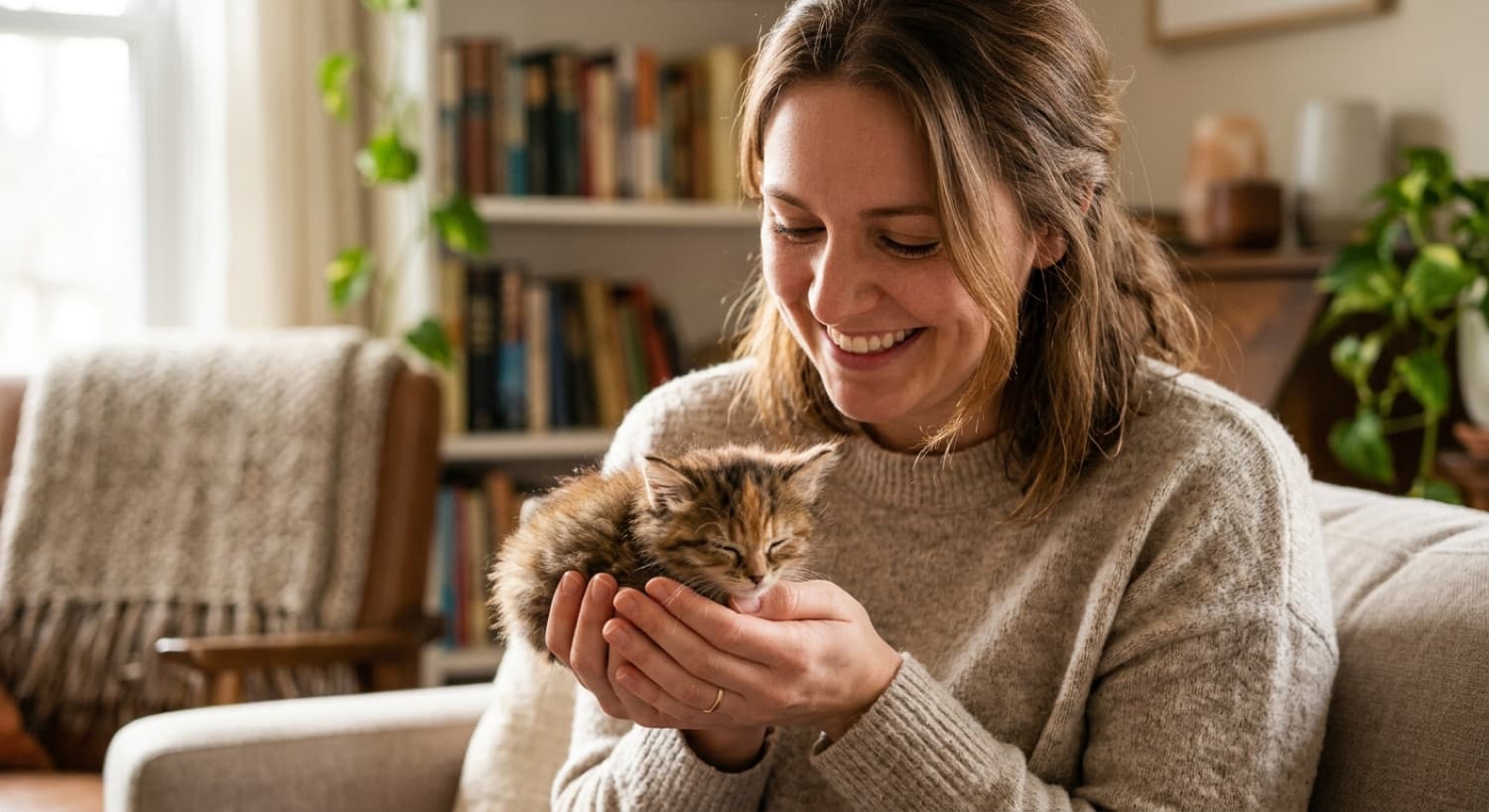
What is FIV?
Feline Immunodeficiency Virus (FIV) is a slow-acting virus that gradually weakens a cat's immune defence. The virus is species-specific. FIV cannot infect humans, dogs, or any non-cat species, as the American Veterinary Medical Association confirms. Older literature called FIV cat AIDS because it is structurally similar to HIV, but the comparison overstates the prognosis. Most FIV+ cats live near-normal indoor lives with routine veterinary care.
FIV myths vs facts
| Myth | Fact |
|---|---|
| FIV+ cats have short lives | Indoor FIV+ cats with routine care commonly live 12 to 15 years (near-normal range). |
| FIV transmits like FeLV (casual contact) | FIV transmits primarily through deep bite wounds during fights. Sharing food, water, litter, and grooming is low risk. |
| FIV+ cats cannot live with other cats | Calm, neutered FIV+ cats live safely with FIV-negative cats in stable households (AAFP and Cornell consensus). |
| Humans can catch FIV | No. FIV is species-specific to cats. Humans, dogs, and other animals cannot be infected. |
| FIV+ cats need to be euthanised | Outdated 1990s recommendation. Current Cornell and AAFP guidance is indoor-only management with normal life expectancy. |
| There is an effective FIV vaccine | The FIV vaccine was discontinued in North America in 2017. Variable efficacy + interfered with diagnostic testing. |
How FIV transmits (and how it does not)
FIV transmits almost exclusively through deep bite wounds during fights. The virus lives in saliva but does not survive long outside the body. The American Association of Feline Practitioners notes that the virus does NOT transmit through:
- Sharing food and water bowls
- Mutual grooming or play
- Sharing litter boxes
- Sneezing or breathing the same air
- Casual contact of any kind
This is why a calm, neutered FIV+ cat can safely live with FIV-negative cats. The risk is fights with serious bites, which are rare in well-socialised indoor multi-cat households where every cat is spayed or neutered. Aggressive intact toms outdoors are the typical FIV transmitters, not the cats in your living room. For introduction protocols specific to bringing a new cat home to an existing cat, see our cat-to-cat introduction guide.
What care does an FIV+ cat actually need?
The exact plan should come from your Edmonton vet, who knows your cat's history and test results. The categories below are typical.
- Indoor only. Non-negotiable. Outdoor life raises the cat's own infection risk and risks transmission through fights. Edmonton already mandates this for any cat thanks to winters and coyotes. See indoor vs outdoor cats in Edmonton.
- Routine vet visits. Most FIV+ cats benefit from a slightly more frequent schedule than FIV-negative cats. Your vet sets the cadence.
- Good nutrition. A complete, life-stage-appropriate diet supports the immune system. Specific brands and prescription diets are a vet conversation.
- Vaccination plan. Talk to your Edmonton vet about which protective vaccines (FVRCP, rabies) are appropriate. Do not pick a protocol from the internet.
- Dental care. FIV+ cats appear more prone to dental disease and gingivitis. Annual dental exams matter.
- Watch for changes. Any new wound, respiratory issue, weight change, or unusual lethargy is a faster vet call than for a healthy cat. For overnight crises, see our Edmonton cat emergency vet guide.
- Food-safety questions. Anything that raises pathogen exposure (raw diets, untreated outdoor water) warrants a vet conversation specifically for an immune-compromised cat.
Day-to-day costs are typically only modestly higher than a healthy cat. Lower adoption fees often offset the small bump. For the broader cost picture see our Edmonton cat adoption costs guide.
FIV+ cat lifespan reality check
A directional summary, drawing on Cornell's overview and AAFP guidelines:
- FIV-negative indoor cats in Edmonton: commonly live 12 to 18 years.
- FIV+ indoor cats with consistent veterinary care: often reach a similar age range, though some show health issues earlier.
- FIV+ outdoor cats: tend to live shorter lives, because outdoor exposure shortens almost any cat's lifespan in Edmonton winters and reduces the early-warning window on infections.
The lifespan gap exists but is smaller than older guidance suggested. For care tailored to older cats, including FIV+ seniors, see our senior cat care guide.
Where to find FIV+ cats in Edmonton
- Edmonton Humane Society: tests every cat for FIV and FeLV and lists FIV+ status on every profile. Often runs reduced adoption fees on positive cats because they wait longer for homes.
- Zoe's Animal Rescue: foster-based rescue with detailed health disclosure. FIV+ cats appear regularly through the Caretaker Cat Program.
- SCARS: northern Alberta intake; tests for FIV and FeLV and discloses status on listings.
- AARCS Edmonton fosters: Alberta-wide rescue that tests every cat for FIV and FeLV and openly discloses status on profiles.
On localpetfinder.ca, FIV+ cats carry an FIV+ badge on the card. Use the Living Style filter and select FIV+ to see only positive cats currently available across all Edmonton rescues.
Find an FIV+ cat in Edmonton
Live cat listings from Edmonton Humane Society, Zoe's Animal Rescue, SCARS, and AARCS Edmonton fosters. Filter by Living Style and select FIV+ to see only positive cats.
Browse Edmonton Cats →Frequently Asked Questions
How long do FIV+ cats live in Edmonton?
According to the Cornell Feline Health Center, many FIV+ cats kept strictly indoors live a near-normal lifespan with good preventive care. The virus weakens immune defence over time, but it does not directly cause early death the way older literature suggested. In Edmonton, where indoor-only is already the default because of winters and river-valley coyotes, FIV+ cats commonly reach 12 to 15 years. Your Edmonton vet can help build a monitoring plan once you bring a positive cat home.
Can FIV+ cats live with other cats?
In most cases yes. FIV transmits primarily through deep bite wounds during fights, not casual contact. Cornell and the American Association of Feline Practitioners note that calm, neutered FIV+ cats can live peacefully with FIV-negative cats in stable households. Edmonton rescues now routinely place FIV+ cats in mixed homes when all cats are spayed or neutered and the introductions go well. The condo and apartment prevalence in Edmonton makes this especially relevant: smaller-footprint multi-cat households work fine for FIV+ cats when there is no fighting.
Is FIV the same as FeLV?
No. They are different viruses with different transmission routes and different prognoses. FeLV (feline leukemia) transmits through casual contact such as shared bowls and grooming, and has a worse outlook. FIV requires deep bite wounds to transmit and most FIV+ cats live near-normal indoor lives. Ask your Edmonton vet which test was used and what the result means for your specific cat.
Are FIV+ cats more expensive to care for in Edmonton?
Often only modestly. Many positive cats need slightly more frequent vet visits and dental monitoring. Edmonton rescues such as Edmonton Humane Society and AARCS Edmonton often place FIV+ cats on reduced fee or Name Your Fee programs because they wait longer for homes, which can offset the small bump in annual veterinary costs. Your Edmonton vet will set the specific monitoring cadence for your cat.
Can humans catch FIV?
No. FIV is species-specific to cats. The American Veterinary Medical Association and AAFP both confirm that the virus cannot infect humans, dogs, or any non-cat species. The structural similarity to HIV is a biological coincidence, not a transmission risk. Children, immunocompromised humans, and dogs share an Edmonton home with an FIV+ cat safely.
Should I vaccinate my FIV-negative cat against FIV?
Probably not. The FIV vaccine was discontinued in North America in 2017 and is no longer manufactured. The reasons are several: efficacy was variable across virus subtypes, the vaccine caused FIV-positive results on standard antibody tests (making future testing unreliable), and the consensus among feline specialists shifted toward indoor-only management as the more effective protection. For Edmonton FIV+ cats living with FIV-negative housemates, the modern protocol is indoor-only management plus harmonious household dynamics, not vaccination.
What care does an FIV+ cat actually need?
The exact plan should come from your Edmonton vet. Typical categories: indoor only (non-negotiable in Edmonton anyway), routine vet visits (slightly more frequent than FIV-negative cats), good nutrition (complete, life-stage-appropriate diet supporting immune function), vaccination plan (vet-directed, not internet-directed), dental care (FIV+ cats are more prone to gingivitis and dental disease), and proactive monitoring for changes (new wound, respiratory issue, weight change, or unusual lethargy is a faster vet call than for a healthy cat).
What older FIV guidance got wrong?
For decades some vets recommended euthanising FIV+ cats or strictly isolating them. Long-term observational studies through the 2000s and 2010s revised that picture. Current Cornell and AAFP guidance reflects the updated view: lifespan gaps are much smaller than once believed, cohabitation between one FIV+ cat and FIV-negative housemates generally shows low household transmission when no fighting occurs, and many adopters describe their FIV+ cats as indistinguishable from FIV-negative cats in personality and energy. The strict-isolation recommendations of the 1990s are no longer the standard of care.
Is the FIV+ cat going to spread the virus to my FIV-negative cat?
In a stable indoor household where all cats are spayed or neutered and there is no fighting, the risk is very low. The transmission route is deep bite wounds, which happen primarily during territorial fights between intact toms outdoors. The risk profile for indoor neutered cats sharing food, water, litter, and grooming is dramatically different. Several long-term cohabitation studies have reported very low household transmission rates. The American Association of Feline Practitioners considers mixed-FIV households appropriate when introduced properly. Edmonton rescues use this framework when placing FIV+ cats.
Where can I find FIV+ cats in Edmonton?
Edmonton Humane Society tests every cat for FIV and lists FIV+ status on each profile, often with reduced adoption fees. Zoe's Animal Rescue, SCARS (Second Chance Animal Rescue Society), and AARCS Edmonton fosters all take in FIV+ cats and disclose status on every listing. AARCS specifically tests every cat for FIV and FeLV before adoption. On LocalPetFinder, filter by Living Style and select FIV+ to see all positive cats currently available across all Edmonton rescues.
Who is a good fit to adopt an FIV+ cat in Edmonton?
Strong fit: adopters committed to indoor-only homes (almost every Edmonton rescue requires this anyway, plus winters and coyotes make it the right call); adopters who can absorb a modest bump in annual vet costs; single-cat households, or multi-cat homes where introductions can be done slowly and every cat is spayed or neutered; adopters drawn to special-needs cats who often bond hard with their humans. Poor fit: households with reactive intact cats, adopters planning outdoor access, and adopters who cannot commit to a vet schedule.
Bottom line on Edmonton FIV+ adoption?
FIV+ cats kept strictly indoors live near-normal lifespans, close to FIV-negative cats with similar care, according to the Cornell Feline Health Center. They can safely live with other cats in calm households because FIV transmits primarily through deep bite wounds rather than casual contact. Edmonton rescues like Edmonton Humane Society place FIV+ cats with full disclosure and reduced fees because they wait longer for homes. They are some of the most overlooked but rewarding adoptions in the city. Indoor-only is non-negotiable (which is the Edmonton default anyway). Adopt one and you are getting a healthy cat with a label that overstates its consequence.
Adoptable Cats in Edmonton
Live listings. Filter by Living Style → FIV+ to see only positive cats.
Senior Cat Care: Health, Diet, Vet & Quality of Life
Senior cat care: common conditions (kidney, hyperthyroid, arthritis), vet schedules, diet, and quality-of-life decisions. Vet-directed.
Indoor vs Outdoor in Edmonton
Why indoor-only is essential, especially for immunocompromised cats.
Edmonton Cat Emergency Vet
When to call after-hours and what it costs in Edmonton.
New cat? Start with these care guides
Everything a new adopter needs to set up a safe, happy home.