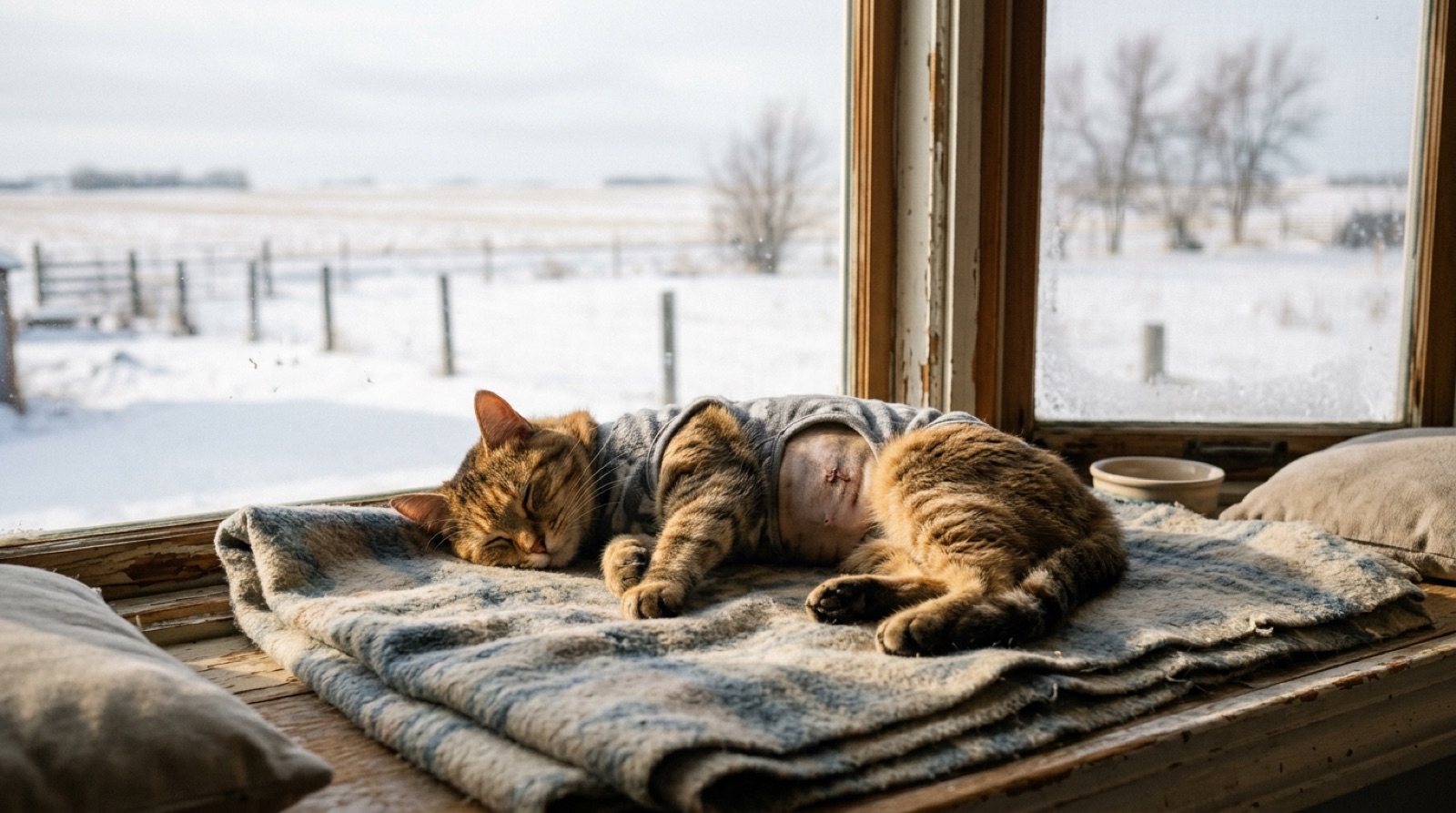
The short answer
Adopted cats in Red Deer come home already spayed or neutered, so most adopters can stop reading here. If you own an unaltered cat, apply to the PALS subsidy through the Central Alberta Humane Society. It covers surgery, FVRCP and rabies vaccines, deworming and a microchip for income-qualifying central Alberta households. Approval can take three to six months, so apply before the cat comes into season.
Central Alberta has a cat maths problem. Farms and acreages across the region run unaltered cat populations that reproduce faster than any rescue can place the results.
Every spring the same thing happens. Litters appear, well-meaning people take a few, the rest keep breeding, and by autumn the shelters are full of perfectly nice cats nobody has room for. It is not cruelty that causes it. It is arithmetic, and a single unaltered female sitting in a shed is enough to start it.
Which is why Red Deer has a subsidised surgery program at all. Most Alberta cities of this size do not.
Adopted Cats Are Already Done
The Central Alberta Humane Society states that its animals are spayed and neutered, vaccinated and health checked before they go home. Whisker Rescue and Saving Grace Animal Society operate the same way. That means the single most expensive piece of routine veterinary work in a cat life has already been done and is folded into the adoption fee.
Compare that with a free kitten from a classified ad, where nothing has been done. Booking the surgery yourself afterwards is where the real cost of a free cat shows up. The maths is covered properly in our Red Deer cat cost guide.
The PALS Subsidy
PALS is the Prevent Another Litter Subsidy, run by the Central Alberta Humane Society. It is a genuine low-cost route rather than a token discount, and the package is more complete than most people expect.
- ✓The spay or neuter surgery itself
- ✓Standard vaccinations including FVRCP for cats
- ✓Rabies vaccination
- ✓Deworming treatment
- ✓An embedded microchip
- ✓Optional FeLV vaccine for cats at additional cost
Who qualifies. You must live in central Alberta, which the shelter defines as Red Deer south to Olds, west to Rocky Mountain House, north to Wetaskiwin and east to Stettler. You provide proof of residence and documentation of income measured against the federal household low yearly income level.
What it costs. There is an administration fee due within 30 days of approval. The shelter does not publish that amount, so ask when you apply rather than assuming.
Apply before you need it. The shelter warns that surgery may not be scheduled for three to six months after approval. A female cat can become pregnant well inside that window. Keep an unaltered female strictly indoors and away from unaltered males while you wait, or the queue will outlast the opportunity.
Going Private: What to Ask
Red Deer clinics set their own surgical fees and none publish a standing price, so phone two or three and compare. The headline number matters less than what sits underneath it.
- →Is pre-surgical bloodwork included, optional, or extra?
- →Does the quote include intravenous fluids during the procedure?
- →Is take-home pain medication included, and for how many days?
- →Is an e-collar or recovery suit provided, or do I buy one?
- →Is a post-operative recheck included in the price?
- →What anaesthetic monitoring does the clinic use?
A lower quote that leaves out take-home pain relief is not the cheaper option. Professional feline guidance, including the practice guidance published by the American Association of Feline Practitioners, treats post-operative pain control as part of the standard of care rather than an upsell. If you want to check a clinic credentials or find a practice in the region, the Canadian Veterinary Medical Association is the national body.
Recovery Week, Honestly
The surgery is the easy part. The two weeks afterwards are where owners cause problems, almost always by trusting how well the cat looks.
Grogginess, wobbliness, and no interest in food. Offer a small meal in the evening and a quiet dark room. Do not let the cat jump onto anything high.
Appetite returns, energy climbs faster than the incision heals. This is when most owners get caught out. Keep the cat confined even though it looks fine.
Check the incision daily. Slight redness is normal. Swelling, discharge, a gap in the wound or a bad smell means phone the clinic.
Most cats are fully back to themselves. Follow whatever the clinic said about the recheck and about removing any cone or suit.
Phone the clinic if the incision swells, gapes, oozes or smells wrong, if the cat has eaten nothing 24 hours after surgery, if it vomits repeatedly, or if it stays hidden and painful well past the first day. Never give a cat human pain medication of any kind. Several common household painkillers are toxic to cats and some are lethal in tiny doses. Only use what the clinic dispensed, at the dose written on the label.
What Changes Afterwards
Hormone-driven behaviour drops sharply. Males spray less, roam less, fight less and are far less likely to disappear across a neighbourhood chasing a female. Females stop the loud, relentless calling that comes with being in season, which owners of unaltered queens will tell you is not a small thing in a small house.
The personality stays. What does change slightly is the calorie requirement, which drops after surgery. Keep feeding the pre-surgery portion and the cat gains weight, then the weight gets blamed on the operation. Adjust the food, weigh the cat occasionally, and the problem does not arise. Keeping the cat indoors afterwards is separately worth doing, and our indoor versus outdoor guide covers the local reasons.
Browse adoptable cats in Red Deer
Every cat on this list is already altered, vaccinated and health checked, which is the single most expensive item in this article already handled. Listings refreshed regularly.
See Available Red Deer Cats →Frequently Asked Questions
Does my adopted cat need spaying or neutering?
Almost certainly not, because it has already been done. The Central Alberta Humane Society states that its animals are spayed and neutered before adoption, and every reputable rescue in the region works the same way. That is one of the largest hidden values in an adoption fee, since you are not paying for the surgery separately afterwards. If you adopt a very young kitten under an early spay agreement, the rescue will tell you clearly and will usually arrange the surgery itself.
What is the PALS program in Red Deer?
PALS stands for Prevent Another Litter Subsidy and it is run by the Central Alberta Humane Society. It provides low-cost spay and neuter surgery to households that meet an income test, and it covers cats as well as dogs. The package includes the surgery, standard vaccinations including FVRCP and rabies, deworming and an embedded microchip. There is an administration fee due within 30 days of approval, and the shelter does not publish that figure, so ask when you apply.
Who qualifies for PALS?
You need to live in central Alberta and you need to document your income. The catchment runs from Red Deer south to Olds, west to Rocky Mountain House, north to Wetaskiwin and east to Stettler, which covers most acreage and small town households in the region. Applicants provide proof of residence plus documentation of income measured against the federal household low yearly income level. The shelter reviews applications rather than approving automatically, so apply with the paperwork ready.
How long is the PALS waiting list?
The shelter is upfront that it may not be able to schedule surgery for three to six months after approval. That is a long time in the life of an unaltered cat, and it is the single biggest reason to apply early rather than after a cat has already started calling. Keep an unaltered female indoors and separated from unaltered males while you wait. A cat can become pregnant well before most owners expect it, and one litter creates the problem all over again.
What does a private clinic charge for cat surgery?
Red Deer clinics set their own prices and none of them publish a standing figure, so the only honest answer is to phone two or three and ask. When you do, ask what the quote includes rather than just the headline number. Pre-surgical bloodwork, intravenous fluids, pain medication to go home with, and an e-collar or recovery suit are sometimes bundled and sometimes billed separately. A cheaper quote that excludes take-home pain relief is not actually cheaper.
What age should a cat be spayed or neutered?
Talk to your vet, because the answer depends on the individual cat. Shelters and rescues commonly alter cats before adoption at a younger age than a private owner might choose, and veterinary professional bodies including the American Association of Feline Practitioners publish guidance that supports this. The practical point for a Red Deer household is that a female cat can get pregnant younger than most people assume, so waiting to think about it is how accidental litters happen.
Is the surgery risky?
It is one of the most routine procedures a small animal clinic performs, and serious complications are uncommon in healthy cats. That said, it is real surgery under general anaesthetic and it deserves respect rather than casualness. Ask your clinic what monitoring it uses during anaesthesia and whether pre-surgical bloodwork is recommended for your cat age and condition. Older cats and cats with existing health problems get more benefit from that bloodwork than a healthy young one does.
What does recovery actually look like?
The hard part is not the pain, it is the boredom. Most cats are groggy the first evening, eating normally by day two, and behaving as though nothing happened by day three. The incision, meanwhile, needs closer to two weeks. That gap is where the trouble lives, because a cat that feels fine will jump onto the fridge and pull a wound open. Keep the cat confined to a small quiet room for the full period the clinic specifies, even when it protests.
When should I phone the vet after surgery?
Phone if the incision is swollen, oozing, gaping or smells wrong, if your cat has not eaten anything at all by 24 hours after surgery, if it is vomiting repeatedly, or if it seems painful, hiding and unwilling to move well past the first day. Do not wait to see whether it settles overnight. Clinics would far rather answer a phone call about a wound that turns out fine than treat an infection three days later.
Does neutering change my cat personality?
It reduces hormone-driven behaviours rather than changing who the cat is. Spraying, roaming, yowling and fighting all drop substantially, particularly in males. What stays is the cat itself, the personality, the playfulness, the preferences. Owners sometimes worry that an altered cat becomes lazy. What actually happens is that the calorie requirement drops slightly, so a cat fed the same amount as before gains weight, and the weight gets blamed on the surgery.
Why does this matter more in central Alberta?
Because the region produces more kittens than it has homes for. Farms and acreages across central Alberta run unaltered cat populations, and those cats reproduce faster than any rescue network can place the results. The organisations in Red Deer see the downstream effect every spring. Altering one cat in that environment does more good than the same surgery would in a city apartment building, which is exactly why a subsidy program like PALS exists here.
What about barn cats and feral colonies?
Altering them is still the right answer, and it is the only approach that reduces the population over time rather than displacing it. Several central Alberta volunteer groups work on feral and community cats, though most operate through social media rather than formal websites, so ask the shelter for a current referral rather than trusting an old listing. Alberta Animal Services also rents cat traps to Red Deer residents dealing with roaming cats, which is worth knowing before you buy one.
Related Red Deer Guides
One search, every Red Deer rescue
Shelter cats and foster cats serving Red Deer and central Alberta, in a single list.
Browse Available Red Deer Cats →New cat? Start with these care guides
Everything a new adopter needs to set up a safe, happy home.
Cat & Dog Spay/Neuter Cost in Canada
Standard and subsidised pricing by province, and how to find a low-cost clinic wherever you are.