The short answer
Akitas are fairly hardy, but two concerns stand out. The breed is notably prone to autoimmune conditions, where the immune system attacks the body's own tissues, and as a large, deep-chested dog it is at real risk of bloat (GDV), a stomach emergency: learn the signs because a bloating dog can go into shock within an hour or two. Also watch for hip dysplasia, thyroid and eye disease, and know that Akitas can be sensitive to certain drugs and anesthetics. This is general information, not veterinary advice: build a plan with your Calgary vet, ideally one who knows the breed, and price pet insurance while your dog is young.
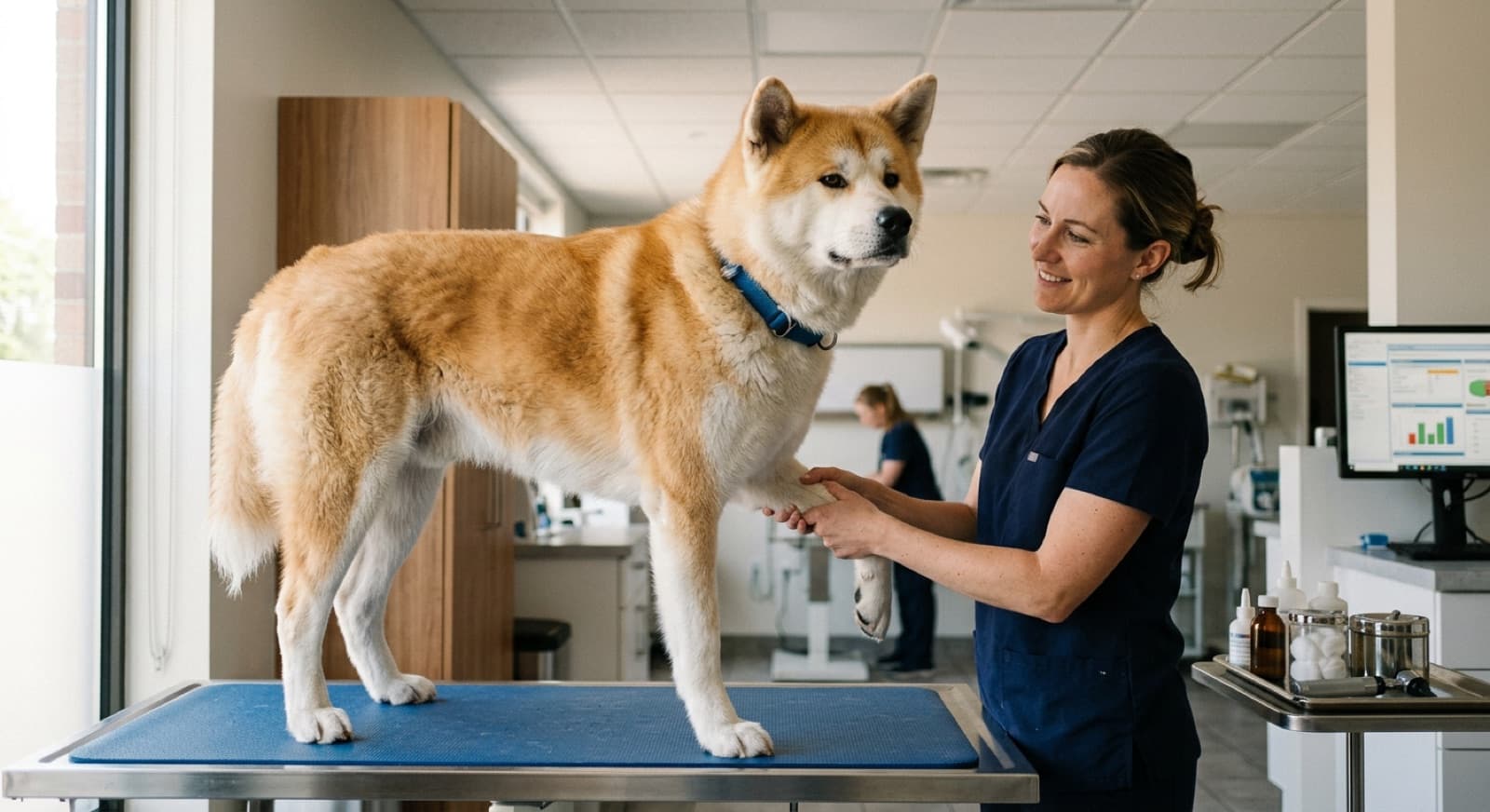
The Akita is a sturdy, cold-hardy breed, and many live long, healthy lives. But it comes with a health profile that is a little different from the average large dog, most notably a tendency toward immune-mediated disease, plus the bloat risk that follows from its deep chest. Knowing these in advance is what lets you catch a problem early rather than late. This guide walks through each with authoritative sources, then covers preventive care in Calgary.
Autoimmune disease: the breed's signature concern
The Akita is recognised as being predisposed to a range of autoimmune, or immune-mediated, conditions, in which the immune system mistakenly attacks the body's own tissues. These can affect the skin and coat, the eyes, and other systems, and include conditions such as sebaceous adenitis and immune-mediated skin and eye disease. The signs vary a great deal, from patchy hair loss or skin changes to eye problems, which is exactly why anything unusual and persistent in an Akita deserves a vet visit rather than a wait.
These conditions are generally managed rather than cured, often over a lifetime, and management belongs firmly with your veterinarian, ideally one experienced with the breed. This is not an area for home treatment or guesswork. The good news is that with early diagnosis and a good vet, many autoimmune conditions can be kept under control and the dog kept comfortable. Adopting an adult Akita through a rescue that has done a vet workup can surface some of these issues before you commit.
Bloat (GDV): the deep-chested emergency
As a large, deep-chested breed, the Akita is among the dogs at real risk of bloat, or gastric dilatation-volvulus (GDV), where the stomach fills with gas and can twist on itself. According to the American Kennel Club, deep-chested dogs face the greatest risk, and without treatment a bloating dog can go into shock in only an hour or two.
Know the warning signs (per the AKC):
- An enlarging or visibly distended abdomen
- Retching, or trying to vomit with little or nothing coming up
- Drooling or salivation
- Restlessness and pacing
- Pain when the belly is touched
If you see these signs, this is a true emergency: go straight to a 24-hour vet, do not wait. Treatment involves deflating the stomach and, often, a gastropexy that tacks the stomach in place to prevent it twisting again. Ask your Calgary vet whether a preventive gastropexy makes sense for your Akita.
Hips, thyroid, eyes, and drug sensitivity
Like most large breeds, Akitas can develop hip dysplasia, and reputable breeders screen hips through the Orthopedic Foundation for Animals (OFA), which also tracks thyroid and eye screening. Hypothyroidism appears in the breed and is easily checked with bloodwork, and eye conditions including progressive retinal atrophy occur, so any change in vision warrants a vet.
One breed-specific note worth carrying: Akitas can be sensitive to certain sedatives, anesthetics, and medications, and some have a blood quirk that can complicate lab interpretation. The practical takeaway is simple. Tell your vet the breed before any planned procedure so they can choose appropriate protocols and read bloodwork with the Akita in mind. As with everything here, this is a flag to raise with professionals, not something to manage yourself.
Preventive care and insurance in Calgary
For most of its ten-to-thirteen-year life, an Akita needs standard large-breed care: routine vet visits, quality food, a lean body, joint-friendly exercise, and prevention, with an extra eye on skin, coat, and eyes given the autoimmune tendency. The American Kennel Club describes a powerful, dignified breed, and keeping one well is very doable with a vet who knows what to watch for.
The costs most likely to add up, bloat surgery, orthopedic care, and chronic autoimmune management, are the case for pet insurance. Price a few Canadian insurers while your dog is young and healthy, before anything becomes pre-existing, and read what each excludes. Know your nearest 24-hour emergency vet in advance, because bloat does not keep business hours. For the temperament side of living with this breed, see our Akita temperament guide, and for the adoption picture, our Akita adoption guide.
Considering an Akita?
Adopting an adult through a rescue that has done a vet workup means much of the health history is already known, a real advantage with a breed that carries autoimmune and bloat risk. See who is available across Calgary rescues.
See Calgary Akitas →Frequently Asked Questions
What health problems are Akitas prone to?↓
Are Akitas prone to autoimmune diseases?↓
Are Akitas at risk of bloat?↓
Are Akitas sensitive to anesthesia?↓
How long do Akitas live?↓
Continue reading
Why so many end up in rescue, and who the breed suits.
Dog aggression, aloofness, and raising a stable Akita.
Live listings across Calgary rescues.
A double-coated northern breed built for the cold.
New dog? Start with these care guides
Everything a new adopter needs to set up a safe, happy home.