The short answer
An Akita is deeply loyal and gentle with its own family, aloof with strangers, and commonly intolerant of other dogs, especially of the same sex. It also has a strong prey drive. Early, lifelong socialisation makes an Akita more stable and easier to handle, but it manages these traits rather than erasing them. Responsible ownership means careful dog introductions, often an only-dog household, avoiding busy Calgary dog parks, and supervising around children and small pets. Understand and respect the temperament and the Akita is a magnificent companion; ignore it and you get the incidents that fill rescues.
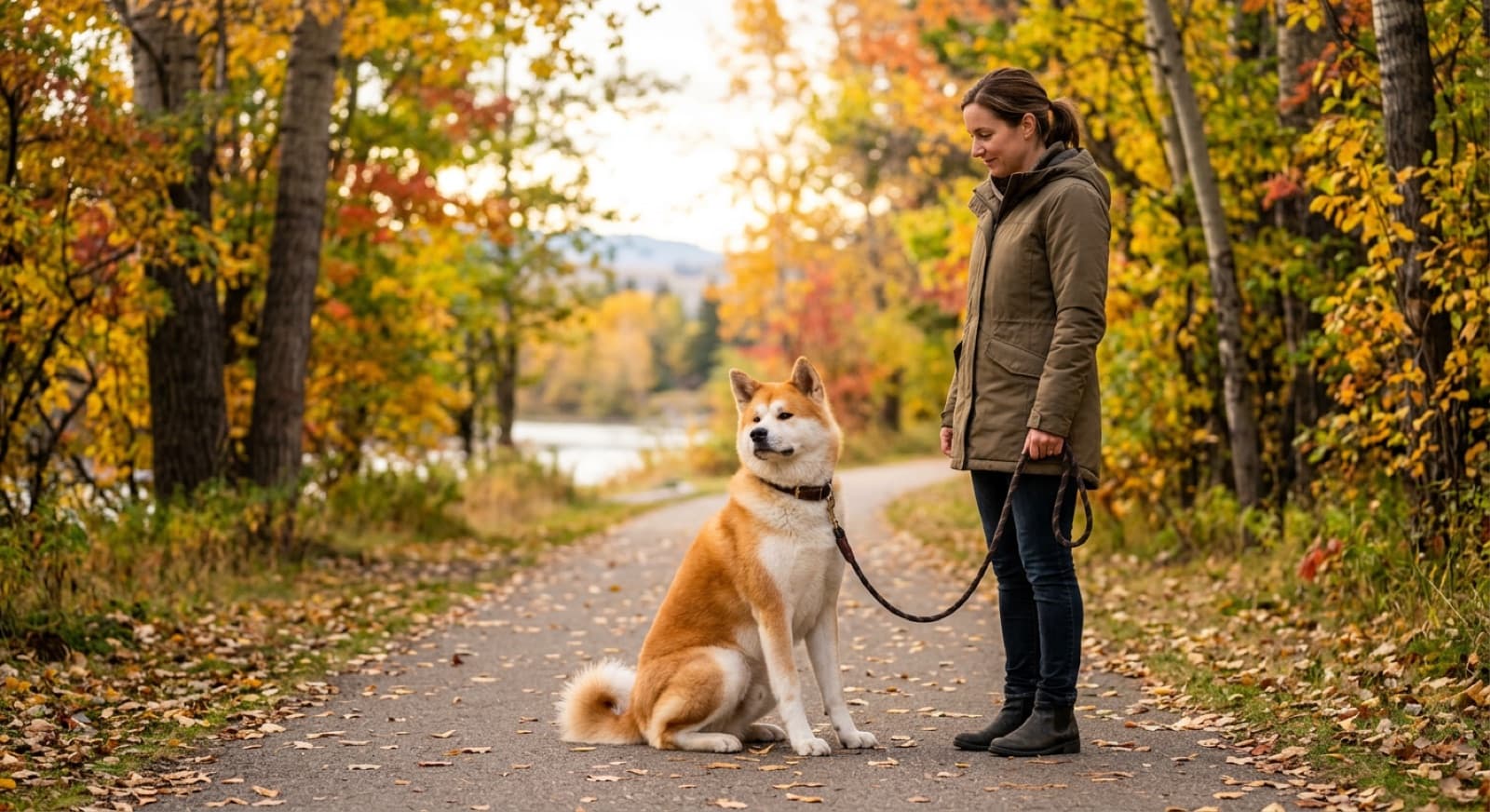
More than almost any other breed, owning an Akita well comes down to understanding what it is. This is not a dog you bend to your wishes through sheer training; it is a dignified, independent guardian whose instincts run deep. The owners who thrive with Akitas are the ones who respect the temperament rather than fight it, socialise thoroughly, and manage the environment with honesty about what the breed can and cannot do. This guide is about exactly that.
Loyal, dignified, and reserved
At home with its family, the Akita is famously devoted, the breed of Hachiko, who waited for his owner for years. The American Kennel Club describes a courageous, loyal family protector, and that loyalty is the core of the breed's appeal. But an Akita is not a social, everybody's-friend kind of dog. It is dignified, independent, and reserved, warm with its people and aloof, even suspicious, with strangers.
That reserve is normal and, managed well, is part of what makes the Akita a natural guardian. It also means the breed does not need or want to greet every person and dog it meets, and forcing those interactions tends to backfire. Understanding that an Akita is content to be quietly watchful rather than outgoing is the first step to reading the dog correctly.
Dog aggression and prey drive: the defining challenge
Here is the trait that defines Akita ownership. The breed commonly shows aggression toward other dogs, and same-sex aggression in particular, so two males or two females are the hardest pairing. It traces to the Akita's guarding and fighting history and is part of the breed, not a training failure. Add a strong prey drive toward small animals, and you have a dog that must be managed thoughtfully around other dogs and pets. This does not mean every Akita is dangerous; it means you assume the tendency is present and set the dog up to succeed rather than testing it.
In practice, that means careful, controlled introductions to any new dog, often keeping the Akita as an only dog or with a carefully chosen opposite-sex companion, and never casually letting it mix off-leash with unknown dogs. Many Akitas coexist beautifully with a housemate they were raised alongside; others simply cannot share a home with another dog. The individual matters, which is why adopting an adult with a known history is such an advantage. Our Akita adoption guide covers how to learn a specific dog's dog-tolerance before you commit.
Socialisation: essential, and not a cure-all
Every Akita benefits from early and ongoing socialisation: calm, positive exposure to people, places, sounds, and controlled situations from puppyhood and throughout life. A well-socialised Akita is more confident, more stable, and far easier to handle, and it is one of the most important investments you can make in the breed. Working with a professional trainer experienced in guardian breeds is well worth it.
What socialisation does not do is turn an Akita into a dog that loves strange dogs. It manages the temperament; it does not replace it. The responsible approach is to socialise thoroughly and still handle the dog as one that may not tolerate unfamiliar dogs, keeping introductions controlled and expectations realistic. An owner who both socialises well and manages honestly gets the best of the breed.
Managing an Akita in Calgary
Calgary is a dog-friendly city with a lot of off-leash space, which is wonderful for many breeds and a real consideration for an Akita. Busy off-leash parks where unknown dogs rush up to greet are close to the hardest possible environment for a dog prone to dog aggression. Most experienced Akita owners skip crowded dog parks entirely, favouring quiet on-leash walks, fenced private spaces, and off-peak hours. Always follow the City of Calgary off-leash rules and keep your dog under genuine control.
A double-coated northern breed, the Akita handles Calgary winters with ease, so cold weather is rarely the limiting factor; the management is social, not seasonal. Choose your routes and times thoughtfully, keep introductions controlled, and you can give an Akita a full, active life in the city without putting it in situations it is not built for. Our Calgary off-leash parks guide can help you find quieter options.
Ready for a loyal, dignified Akita?
Adopting an adult through a Calgary rescue lets you learn a specific dog's temperament and dog-tolerance, which matters more than anything else in this breed. See who is available now.
See Calgary Akitas →Frequently Asked Questions
What is an Akita’s temperament like?↓
Why are Akitas aggressive toward other dogs?↓
Can Akitas be socialised to like other dogs?↓
Are Akitas good with children and cats?↓
Do Akitas do well at dog parks in Calgary?↓
Continue reading
Why so many end up in rescue, and who the breed suits.
Autoimmune conditions, hips, bloat, and preventive care.
Live listings across Calgary rescues.
Finding quieter options for a dog-selective breed.
New dog? Start with these care guides
Everything a new adopter needs to set up a safe, happy home.