The short answer
Malamutes are uncommon in Calgary rescue but they do appear, usually as 1 to 5 year young adults. Best places to check: CHS, AARCS, BARCS, Pawsitive Match, ARF Alberta, Cochrane Humane, Heaven Can Wait, plus the Alaskan Malamute Assistance League. Adoption fee: $500 to $900 vs $2,500 to $5,000 from a breeder with a 12 to 24 month waitlist. Bred by the Mahlemiut Inupiat people for heavy freight haul. AKC-recognised 1935. 75 to 100 lbs, 23 to 25 inches, 10 to 14 year lifespan. Not a Husky: larger, slower, brown eyes only. Excellent in Calgary winter, hard in Calgary summer above 22°C. Sheds dramatically twice yearly. Escape-artist diggers and jumpers. Prey drive on cats and small animals is real.
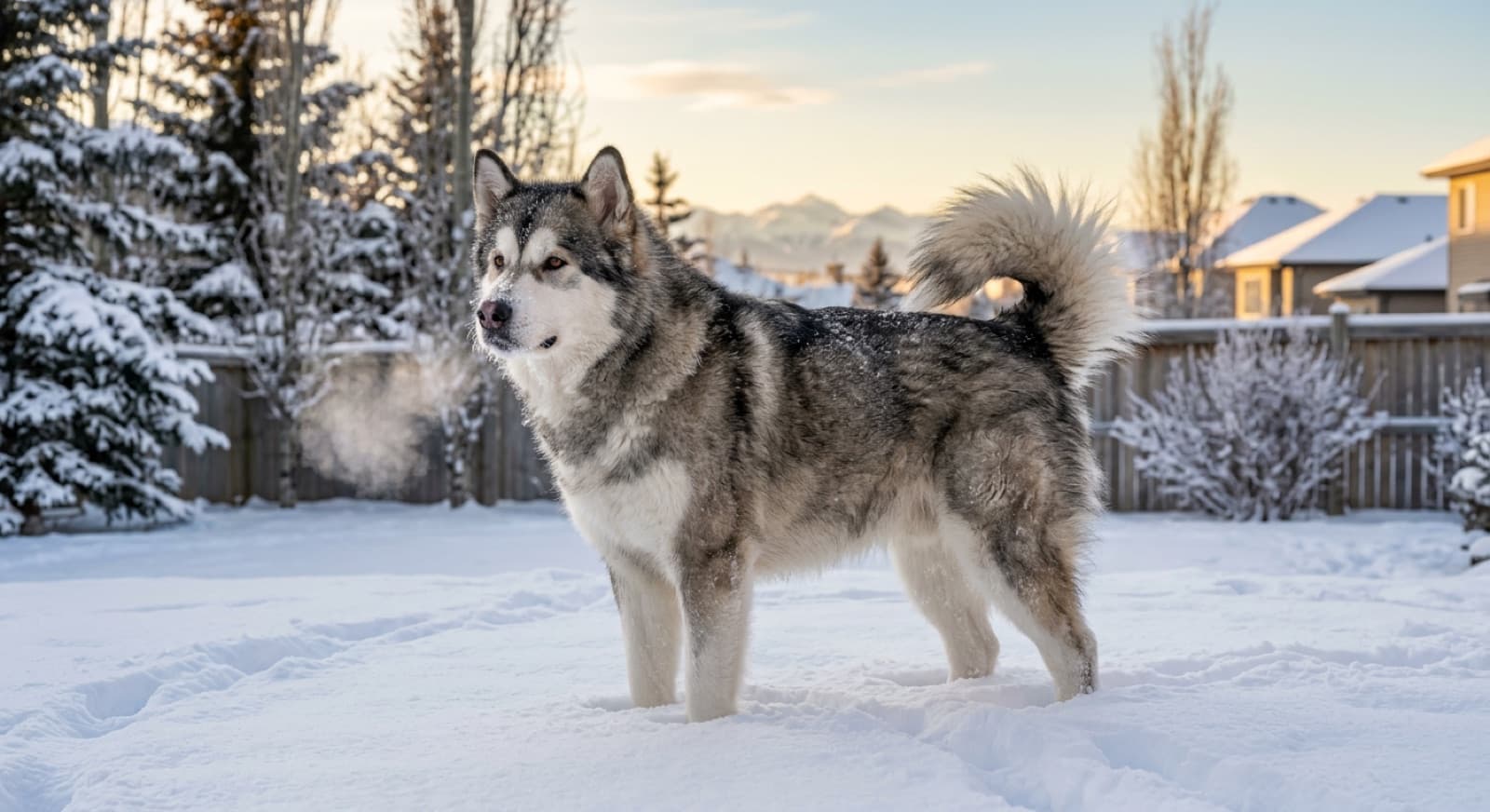
Where can I adopt an Alaskan Malamute in Calgary?
Purebred Malamutes are uncommon in Calgary rescue but they do appear, typically as 1 to 5 year young adults. Best places to check: Calgary Humane Society, AARCS, BARCS, Pawsitive Match, Calgary Animal Rescue, ARF Alberta, Cochrane Humane, and Heaven Can Wait. National breed-specific networks include the Alaskan Malamute Assistance League and the Alaskan Malamute Club of Canada rescue committee. Browse all currently available Calgary Malamutes and Malamute mixes across 15+ Calgary rescues at LocalPetFinder's Malamute breed page. Listings update regularly.
Malamutes turn up across Calgary neighbourhoods including the inner-city core, the suburbs (Tuscany, McKenzie Towne, Cranston, Auburn Bay), and acreages in Rocky View County and Foothills County where the breed's exercise demand is easier to meet. The most common Calgary Malamute surrender reasons are exercise demand underestimated, prey drive incidents (cats, small dogs, rabbits), shedding workload, escape behaviour, summer heat intolerance, and same-sex dog conflicts after a second dog gets added to the household.
How much does it cost to adopt an Alaskan Malamute in Calgary?
Calgary Malamute rescue adoption commonly runs $500 to $900. Calgary Humane Society: $200 to $500. AARCS, BARCS, Pawsitive Match, ARF Alberta: $500 to $900. Calgary Animal Services: $225 plus GST. Senior Malamutes (8 plus years): $300 to $500. Adoption fees include spay/neuter, vaccinations, microchip, deworming, and basic medical workup. Buying from a breeder: $2,500 to $5,000 for standard pet-quality with 12 to 24 month waitlists at reputable breeders, and higher for show or working-stock pedigrees. Annual care: $2,000 to $3,500 per year. Food is the biggest line item, followed by professional de-shedding sessions, fencing investments, summer cooling gear, and insurance ($50 to $90 per month).
| Source | Malamute Fee Range | What's Included |
|---|---|---|
| Calgary Humane Society | $200 to $500 | Spay/neuter, vaccines, microchip, vet check |
| AARCS / BARCS / Pawsitive Match / ARF | $500 to $900 | Spay/neuter, vaccines, microchip, foster temperament plus medical history |
| Calgary Animal Services | $225 plus GST | Spay/neuter, vaccines, microchip, City licence |
| Senior Malamute (8 plus years) | $300 to $500 | Same as above. Reduced fee. |
| Reputable breeder puppy | $2,500 to $5,000 | CKC papers, parent health testing, 12 to 24 mo waitlist |
| Show / working line | $5,000 plus | Pedigree, breeding rights restricted |
On top of the adoption fee, plan for these Calgary-specific ongoing costs. Large-breed food: $90 to $140 per month for a quality kibble brand sized for a 75 to 100 lb dog. Twice-yearly professional de-shedding sessions: $80 to $150 each at a Calgary grooming salon. Secure fencing investment if your yard is not already escape-proof: $2,000 to $6,000 to upgrade to 6 ft solid fencing with dig-proofing. Summer cooling gear (kiddie pool, cooling mat, fans for AC-free rooms): $100 to $300 one time. Pet insurance is worth it for the breed because hip and elbow surgery costs $5,000 to $9,000 per joint if it comes up.
Why do Malamutes get surrendered to Calgary rescues?
Most Calgary Malamute surrenders are 1 to 5 year young adults, surrendered after the adolescence phase reveals the full breed reality. Common reasons:
(1) Exercise demands underestimated. 60 to 90 minutes vigorous daily, year-round
(2) Prey drive incidents. Cat, rabbit, or small dog injuries or kills
(3) Shedding workload. The twice-yearly coat blow surprises new owners
(4) Escape behaviour. Digging out, jumping fences, opening gates
(5) Summer heat issues. Owners realise the dog suffers above 22°C
(6) Same-sex dog conflicts. Often surfaces when a second dog is added
(7) Destructive boredom. Drywall, doors, furniture, fence boards
(8) Aging owners. 75 to 100 lbs becomes hard to manage
Most surrendered Malamutes are well-socialised but have specific needs (active home, secure yard, cold-tolerant household, no small pets) that screen out many adopters. Calgary rescues typically place Malamutes after structured home checks because the breed's failure modes are predictable and a poor fit produces another surrender within 12 months. If you are honest about the lifestyle requirements upfront, the placement usually sticks.
Where do Alaskan Malamutes come from?
Alaskan Malamutes were developed by the Mahlemiut Inupiat people of northwestern Alaska, a coastal Inuit group living in the Norton Sound region. The breed name “Malamute” is an adaptation of “Mahlemiut.” Malamutes were bred for sustained heavy-freight hauling across long distances in extreme cold, not for sled racing speed. A Mahlemiut working team would haul seal carcasses, fish, building supplies, and equipment across snow and ice for days at a time.
The breed nearly went extinct during the Klondike Gold Rush (1896 to 1899) when stampeders bred Malamutes indiscriminately with imported dogs to bulk up freight teams. A few breeders preserved the working-stock lines, and by the 1920s Malamutes were stabilising again. The breed served in World War II as Arctic search-and-rescue dogs, pack dogs, and freight haulers for US military operations in cold regions. The American Kennel Club recognised the breed in 1935, and the Canadian Kennel Club recognises Malamutes in the Working Group. The Alaskan Malamute Club of America maintains the breed standard and the recommended health-testing panel.
The breed is genetically distinct from Siberian Huskies. Siberian Huskies were developed by the Chukchi people of northeastern Siberia for long-distance team racing and travel. The two breeds share Arctic spitz heritage roughly the way wolves and coyotes share canid heritage: same family, different lineages, different jobs. Modern Malamutes and Huskies do interbreed (deliberately or accidentally) and the mixed-breed dogs (often called “Alusky” informally) carry traits from both. Calgary rescues see purebred Malamutes occasionally and Malamute-mix dogs more often.
Is an Alaskan Malamute the same as a Siberian Husky?
No. Different breeds, different jobs, different size, different appearance. Side-by-side comparison:
| Trait | Alaskan Malamute | Siberian Husky |
|---|---|---|
| Bred by | Mahlemiut Inupiat (Alaska) | Chukchi people (Siberia) |
| Bred for | Heavy freight haul, slow and strong | Long-distance racing, fast and lean |
| Adult weight | 75 to 100 lbs | 35 to 60 lbs |
| Height | 23 to 25 inches | 20 to 23.5 inches |
| Bone structure | Heavy, broad chest, broad head | Lighter, leaner, narrower head |
| Eye colour (breed standard) | Brown only | Brown, blue, or one of each |
| Tail | Plume carried over the back | Brush carried in a sickle curve |
| Lifespan | 10 to 14 years | 12 to 15 years |
| Vocalisations | Quieter, woo-woo talking | Howling, screaming, talking |
| Calgary rescue volume | Uncommon | Top-3 most surrendered |
Both breeds are Arctic spitz, both shed dramatically twice yearly, both are friendly with strangers (poor guard dogs), both are escape artists, both have real prey drive on cats and small animals, and both fail with first-time owners at high rates. The differences come down to size, speed, structure, vocalisations, and Calgary rescue volume. The full breakdown including history, temperament nuance, and which breed fits which Calgary household is in our Malamute vs Husky comparison guide.
What is an Alaskan Malamute temperament like?
Malamutes are friendly with strangers, pack-oriented, independent, intelligent, and stubborn. Despite the wolfy appearance and the size, they are poor guard dogs. The Mahlemiut breeding selected for cooperative team workers, not protectors.
Key temperament traits:
- People-friendly. Most Malamutes greet strangers warmly. Not protective.
- Pack-oriented. Many do best with another dog companion of the opposite sex.
- Independent. Bred to make decisions on the trail. Will refuse boring commands.
- Intelligent and stubborn. Will work for high-value treats and real jobs, not for praise.
- Prey-driven. Cats, rabbits, small dogs at meaningful risk.
- Same-sex dog conflicts. Two males or two females often clash by adolescence.
- Vocal but quieter than Huskies. Woo-woo talking, occasional howling, less screaming.
- Affectionate with their pack. Many Malamutes are intensely bonded to their household.
The best-fit Malamute home is active, has a secure yard, includes a household where someone is home much of the day, and either has no small pets or has experience integrating Arctic spitz breeds with cats from puppyhood. Bad-fit homes include apartments, 9-to-5 households with no daycare plan, homes with toddlers (the 90 lb dog can knock down small children unintentionally), homes with existing small pets, and homes whose only outdoor space is an unfenced front yard or a 4 ft chain-link backyard.
Are Alaskan Malamutes good in Calgary winter?
Excellent. This is the breed's selling point in Calgary. Malamutes are one of the rare large breeds genuinely well-suited to Calgary winter. The dense woolly undercoat plus coarse guard hairs handle -30°C comfortably and many Malamutes prefer winter outdoor time over heated indoor time.
Calgary winter activities that suit a Malamute well: long winter walks at -20 to -30°C with no issue, snowshoeing, skijoring, bikejoring, cart-pulling, snow-pack hiking in Kananaskis, weight-pulling training (with proper conditioning), and dryland mushing in fall before snow. Many Calgary Malamute owners report dramatically improved behaviour when they build a weekly winter sledding or skijoring outing into the routine. The dog has a job and uses the energy.
Calgary winter watch-outs:
- Chinook coat-blow surprise. Rapid winter warming above 0°C can trigger a partial mid-winter coat blow, messier than the standard spring and fall cycles.
- Paw care. De-icer salt on Calgary sidewalks irritates paw pads. Boots, paw balm, or paw rinses after walks help.
- Ice-ball formation. Long foot feathering accumulates snowballs. Trim feathering between pads and rinse paws after long walks.
- -40°C with wind chill is the practical lower limit for sustained outdoor work. Below that, even Malamutes get cold.
- Outdoor sleeping. Some Malamutes prefer to sleep outdoors in winter with a wind-blocked shelter. This is normal and the breed handles it.
Are Alaskan Malamutes good in Calgary summer?
Hard. This is the single biggest Calgary fit concern for Malamute adopters. The dense double coat that makes the breed superb in winter becomes a serious overheating risk above 22°C ambient. Calgary summer highs routinely hit 25 to 30°C and heat waves push 32 to 35°C.
Calgary Malamute summer protocol (May through September):
- Walks before 7 AM and after 8 PM only when ambient is below 18°C.
- AC indoors during the day. Mandatory, not optional, for the breed in Calgary summer.
- Zero midday outdoor activity from May through September. No exceptions.
- Water always available, ideally multiple stations indoors and outdoors.
- Cooling mats and cool floor surfaces (basement, tile) accessible all day.
- Never shave the coat. The double coat insulates against heat as well as cold; shaving exposes skin to sunburn and disrupts the cooling air pocket.
- Backyard cooling features. Kiddie pools, shaded dig pits, sprinklers, and shaded covered runs help.
Heat stroke is the failure mode to fear. Watch for excessive panting, drooling, deep red gums, lethargy, vomiting, or collapse. Heat stroke is a veterinary emergency requiring immediate cooling (cool water on paws, belly, and groin; not ice water on the body) and emergency vet care. Calgary 24-hour emergency vet visits for heat stroke spike during July and August, particularly on the day of unexpected heat waves. Plan ahead by checking the next-day forecast and adjusting walk timing.
How much do Alaskan Malamutes shed?
Dramatically. Moderate shedding year-round, then a full undercoat blow twice yearly in a 2 to 4 week cycle. During coat blow, undercoat comes out in handfuls. Daily vacuuming and daily de-shedding sessions are realistic during blow weeks.
Required grooming kit:
- Undercoat rake (the primary tool. Reaches through guard hairs to the undercoat).
- Slicker brush for finishing.
- High-velocity pet dryer (the same tool professional groomers use; blasts loose coat out efficiently). $150 to $300 one-time purchase but saves the carpet during blow weeks.
- Heavy-duty vacuum. Bagless cylinder vacuums with HEPA filtration handle the undercoat better than uprights.
- Lint rollers permanently stationed at every door.
Professional de-shedding sessions: many Calgary Malamute owners book 2 to 3 professional sessions per year, typically $80 to $150 each at a Calgary grooming salon, to manage the worst weeks of coat blow. The groomer uses commercial high-velocity dryers and finishing tools that handle the volume of undercoat in one session rather than spread over 2 to 4 weeks of home grooming.
Never shave the coat. The double coat insulates against heat as well as cold, grows back unevenly after shaving (sometimes patchy or with permanent texture changes), and exposes skin to Calgary's high-altitude UV. The only legitimate reason to shave a Malamute is medical (surgery prep, skin treatment area), and the groomer or vet should be doing it minimally.
What fencing do I need for an Alaskan Malamute in Calgary?
Six-foot solid fencing minimum with dig-proofing. Malamutes escape in two directions: they dig (deep, persistent, with paws built for snow excavation) and they jump (less than Huskies but capable of clearing 4 to 5 ft fences from a standing start). Calgary backyard fencing is often inadequate for the breed.
Recommended Calgary Malamute fence specs:
- 6 ft solid wood or vinyl fence. Visual barrier reduces stimulation. Chain link works structurally but lets the dog see triggers (squirrels, off-leash dogs, joggers).
- Concrete footing or buried wire base. 2 ft of buried galvanised wire mesh extending outward from the fence base defeats digging. Concrete footing also works.
- No climbing aids near the fence line. Garbage bins, deck furniture, wood piles, planter boxes, and air conditioner units all become launching pads.
- Self-latching gate with secondary carabiner backup. Malamutes learn to lift simple latches with their nose or paw.
- No gaps anywhere. Walk the fence line monthly and patch any gaps.
- GPS collar as secondary system. Fi, Tractive, or Whistle for tracking if the dog does get out. Never primary containment.
Many Calgary Malamute surrenders happen after a single escape incident. The dog gets out, has a high-arousal adventure (a chase, a fight with a neighbour cat, a near-miss on Macleod Trail), and the family realises they cannot reliably keep the dog safely contained. The fence upgrade is a meaningful cost ($2,000 to $6,000) but it is the price of keeping the breed.
Browse adoptable Malamutes in Calgary
Live listings from 15+ Calgary rescues. Filter Malamute and Malamute mixes, see senior dogs at reduced fees, and check current inventory before applying. The Arctic breed actually built for Calgary winter. Listings update regularly.
See Available Malamutes →What Malamute mixes show up in Calgary rescues?
Calgary rescues see Malamute mixes more often than purebred Malamutes. The common crosses:
- Malamute x Siberian Husky (“Alusky”). 50 to 80 lbs, Arctic-spitz appearance, often combines Malamute size with Husky markings. Sheds dramatically and inherits both breeds' escape and prey-drive traits.
- Malamute x German Shepherd. 70 to 110 lbs, intelligent and intense, often the most demanding Malamute mix. Trainability is higher than purebred Malamute (Shepherd influence) but exercise and mental work demands are higher too.
- Malamute x Labrador. 60 to 90 lbs, more sociable and trainable than purebred Malamute (Lab influence) but still high energy. The Lab cross is one of the easier Malamute mixes for first-time experienced owners.
- Malamute x Akita. Less common, 80 to 110 lbs, often the most aloof and same-sex-aggressive of the mixes. Experienced Arctic-breed homes only.
- Malamute x mixed working/herding. The grab-bag mixes. Calgary rescues often label these “Malamute mix” based on visual assessment without DNA testing. Actual genetic background often reveals additional breeds.
Foster temperament assessment matters more than the breed label. A Malamute mix raised with cats from puppyhood may tolerate the family cat indoors despite breed-typical prey drive on the same species outdoors. A Malamute mix bred down through three generations of working-stock GSD will be a different dog from one bred down from showy-but-soft Lab lines. Read each rescue's temperament notes carefully and ask the foster home detailed behaviour questions before applying.
Buying a Malamute puppy: breeder verification and free-pet scams
Malamute puppies are expensive ($2,500 to $5,000) with 12 to 24 month waitlists at reputable breeders. “Free Malamute puppy” or “Malamute puppy for sale cheap” on Kijiji, Facebook Marketplace, or Craigslist is almost always a scam, a backyard breeder bait-and-switch, or a mixed-breed dog being marketed as a purebred.
Free or cheap Malamute listings break down as:
- Backyard breeders using free framing as bait. “Free to good home” reveals to $500 plus when you arrive, plus no health testing, plus parents not on the premises.
- Mixed-breed dogs sold as purebred. A Husky or German Shepherd mix sold as “rare Malamute” for $800 to $1,500. Without parentage verification and DNA testing, you have no way to confirm.
- Outright scams. Pay shipping or vet release fees for a dog that does not exist. The seller disappears after the deposit clears.
- Distressed informal rehoming. Sometimes legitimate but requires verification (vet records, original adoption paperwork, in-person meeting at the dog's current home, behavioural transparency).
Reputable Malamute breeder checklist:
- CKC registered and listed on the Alaskan Malamute Club of Canada breeder referral page.
- Health testing on both parents. Hip dysplasia (OFA), elbow dysplasia, eye exam (CAER annually), polyneuropathy (DNA), chondrodysplasia (DNA), day blindness (DNA), thyroid panel.
- Home visits welcome and meeting both parents (at minimum the dam; the sire may be off-site for legitimate reasons).
- Take dogs back at any age. Lifetime breeder commitment to the dog.
- Contracts with spay/neuter clauses for pet-quality puppies.
- No selling through pet stores, Kijiji, or Facebook Marketplace.
- 12 to 24 month waitlist. Reputable Malamute breeders do not have puppies available immediately.
For most Calgary households, adoption is the financially and ethically sound path. The rescue fee is one-fifth to one-tenth of breeder pricing, the dog is already past the worst chewing and house-training phase, the temperament is known (foster home has lived with the dog), and you are giving a home to a breed that ends up in rescue at much higher rates than its breeder-purchase volume should produce.
Frequently Asked Questions
Where can I adopt a Malamute in Calgary?
CHS, AARCS, BARCS, Pawsitive Match, Calgary Animal Rescue, ARF Alberta, Cochrane Humane, Heaven Can Wait, plus the Alaskan Malamute Assistance League. Uncommon as purebreds; Malamute mixes appear more often. Browse current listings at LocalPetFinder's Malamute breed page (updates regularly).
Malamute adoption cost in Calgary?
$500 to $900 from rescues vs $2,500 to $5,000 from reputable breeders with 12 to 24 month waitlists. Annual care $2,000 to $3,500 per year. Insurance $50 to $90 per month for a young healthy Malamute.
Malamute vs Husky?
Different breeds. Malamute: 75 to 100 lbs, heavier-boned, slower freight hauler, brown eyes only, plume tail over back, Mahlemiut Inupiat lineage. Husky: 35 to 60 lbs, leaner, distance racer, blue or brown eyes, sickle tail, Chukchi lineage. Both Arctic spitz, both shed dramatically.
Malamutes in an apartment?
Very difficult. Coat-blow chaos in shared hallways, summer heat issues on upper floors, condo weight limits (50 to 60 lbs) often exclude adults. Experienced owners can make it work with compensation but not recommended for first-time Malamute owners.
Malamutes for first-time owners?
Generally no. Size, independence, stubbornness, prey drive, escape behaviour, and shedding workload create failure modes first-timers struggle to manage. Better first-time large breeds: Lab, Golden Retriever, Bernese Mountain Dog.
Daily exercise requirement?
60 to 90 minutes vigorous year-round, plus mental work. Winter: long walks, skijoring, bikejoring, cart-pulling, snow play. Summer: early morning and late evening only when below 18°C, never midday from May to September.
Malamute in Calgary winter?
Excellent. Built for -30°C work. Chinook coat-blow surprise mid-winter. Watch for salt irritation on paws, ice balls in foot feathering, -40°C wind chill as practical limit.
Malamute in Calgary summer?
Hard. Overheating risk above 22°C. AC mandatory, zero midday outdoor activity May-Sep, never shave the coat, cool surfaces and water always available. Heat stroke is the failure mode to fear.
Shedding reality?
Dramatic. Year-round moderate shedding plus twice-yearly undercoat blow in 2 to 4 week cycles. Undercoat rake, slicker, high-velocity dryer, heavy-duty vacuum required. Many owners book 2 to 3 professional de-sheds per year ($80 to $150 each).
Malamutes and cats?
Generally no. Prey drive is real and breed-typical. Cats, rabbits, small dogs at meaningful risk. Some Malamutes raised with cats from puppyhood tolerate the family cat indoors. Many Calgary rescues will not place into homes with existing small pets.
Fencing requirements?
6 ft solid fence minimum with dig-proofing (concrete footing or buried wire base). No climbing aids near the fence. Self-latching gate with carabiner backup. GPS collar as secondary system, never primary containment.
Why are breeder Malamutes so expensive?
$2,500 to $5,000 standard with 12 to 24 month waitlists. Drivers: small Canadian breed population, health testing on parents ($1,500 to $3,000 per litter), more frequent C-section deliveries, waitlist screening. “Malamute puppy cheap” on Kijiji is usually backyard breeding or a mixed-breed dog.
The full Alaskan Malamute cluster
Adoptable Malamutes in Calgary
All currently available Malamutes and Malamute mixes (Alusky, Malamute Shepherd, Malamute Lab). Listings update regularly.
Alaskan Malamute vs Husky: Key Differences
Freight hauler vs distance runner: size, temperament, exercise, coat and which suits your home.
Alaskan Malamute Health Issues: Joints, Skin
Alaskan Malamute health issues to plan for: hip dysplasia, zinc-responsive skin disease, hypothyroidism, glaucoma, bloat and heat in summer.
Siberian Husky Adoption Calgary
The other Arctic spitz Calgary adopters confuse with Malamutes. Top-3 most surrendered Alberta breed. Honest fees and rescue verification.
New dog? Start with these care guides
Everything a new adopter needs to set up a safe, happy home.