The short answer
A Belgian Malinois needs one to two hours of real physical exercise a day and a similar investment in mental work, every day, all year. A tired body is not enough: a fit working dog only gets fitter, and it is the brain work, training, scent games, and a real job, that actually settles the breed. Under-stimulation is the number one reason Malinois land in rescue. In Calgary that means committing through winter too, leaning on mental work and shorter intense sessions when it is bitter out. If that sounds like a lot, it is, and it is the whole deal with this breed.
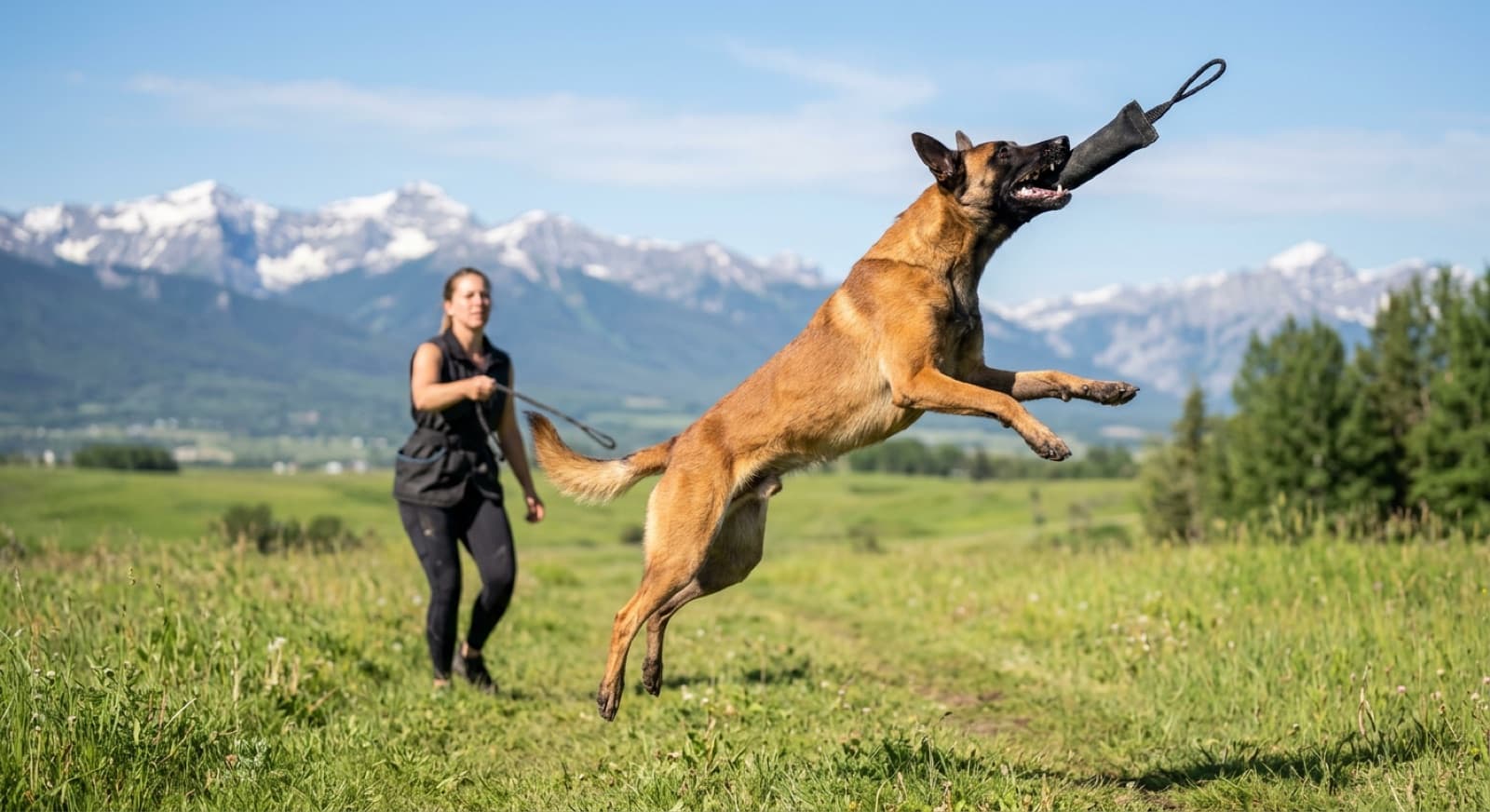
The single biggest mistake new Malinois owners make is thinking of exercise as the answer. They run the dog to exhaustion, and are baffled when it is bouncing off the walls an hour later. The truth is that you cannot out-exercise a Malinois. What you can do is give it a job and work its mind, and a dog with a busy brain is a settled dog. Understanding that distinction is the difference between a Malinois that thrives and one that ends up in rescue.
The physical side: real work, not a walk
Start with a baseline of one to two hours of genuine physical exercise daily, and understand that a leash walk barely counts. A Malinois wants to move at speed: off-leash running in a secure space, fetch and flirt-pole games, hiking, and activities like canicross or running alongside a bike for a conditioned adult. The American Kennel Club describes a dog that needs activity and partnership at its core, and half-measures show up fast as a frustrated dog.
One caution on the physical side: a Malinois with high prey drive is not a candidate for casual off-leash freedom in open Calgary parks until its recall is genuinely proven, and even then some owners never fully trust it. Use fully fenced off-leash areas, or a long line in open spaces, and always follow the City of Calgary off-leash rules. See our guide to Calgary off-leash parks for where to start.
The mental side: the part that actually works
Here is the thing experienced Malinois owners know and new ones learn the hard way: ten minutes of hard thinking tires a Malinois more than an hour of fetch. This is a dog bred to work in close partnership with a person, solving problems and taking direction all day. Give it that and it settles. Deny it and no amount of running fills the gap.
Practical mental work looks like daily training sessions, scent games and nose work, trick training, food puzzles and snuffle mats, and, ideally, a structured dog sport. Calgary has an active dog-sport community across obedience, agility, scent detection, and protection sport, and getting into a class gives your Malinois exactly the kind of job its brain craves, plus the guidance of people who know high-drive dogs. A working breed with a real outlet is a joy; the same dog with nothing to do is a problem.
What under-stimulation looks like, and why it matters
When a Malinois's needs go unmet, the energy redirects into destruction, obsessive pacing or spinning, nipping and herding of people, relentless barking, and reactivity or anxiety. This is the number one reason Malinois are surrendered, usually as overwhelmed young adults. If you take one thing from this guide, take this: meeting the need is not enrichment you add on top for a Malinois. It is the foundation that keeps the dog balanced. A home that cannot commit to it is, honestly, the wrong home for the breed.
Calgary winters, and the growing puppy
A Calgary winter is where a lot of Malinois owners quietly fall behind, and the dog pays for it. On a deep-cold day, lean on mental work: indoor training, scent games hidden around the house, trick sessions, and food puzzles carry the load, and many owners use a treadmill for controlled physical output. A well-conditioned Malinois handles cold better than most dogs, so purposeful outdoor sessions still work; just watch paws on ice and road salt, and take the breaks a chinook offers. The rule is simple: never let the brain work lapse because it is cold. For the seasonal details, see our Calgary winter dog care guide.
One more thing that trips people up: a Malinois puppy should not be run hard. Forced running, repetitive jumping, and long-distance work before the growth plates close can cause lasting joint damage, which is disastrous for a breed whose life depends on sound joints. Work the young dog's brain hard, keep physical impact moderate and on soft ground, and ask your vet when it is safe to ramp up. Our Malinois health guide covers the joint picture in more detail.
Can you give a Malinois the work it needs?
If you have the time, the energy, and a real outlet in mind, an adopted adult Malinois will repay it many times over. Meet the dogs available across Calgary rescues, and set an alert.
See Calgary Belgian Malinois →Frequently Asked Questions
How much exercise does a Belgian Malinois need per day?↓
Is mental stimulation as important as physical exercise for a Malinois?↓
What happens if a Belgian Malinois does not get enough exercise?↓
How do you exercise a Malinois in a Calgary winter?↓
Can you over-exercise a Malinois puppy?↓
Continue reading
Why so many end up in rescue, and who the breed suits.
Hips, eyes, anesthesia sensitivity, and joint care.
Live listings across Calgary rescues.
Fenced areas and open spaces for a high-drive dog.
New dog? Start with these care guides
Everything a new adopter needs to set up a safe, happy home.