The short answer
Belgian Malinois are among the healthier, longer-lived working breeds, often reaching the mid-teens. The concerns worth knowing are hip and elbow dysplasia, eye disease (progressive retinal atrophy and cataracts), occasional epilepsy, and a possible anesthesia sensitivity tied to their lean build. On top of the genetics, an intensely athletic dog picks up sprains and strains, so joint care matters. This is general information, not veterinary advice: build a health and monitoring plan with your Calgary vet, and price pet insurance while your dog is young.
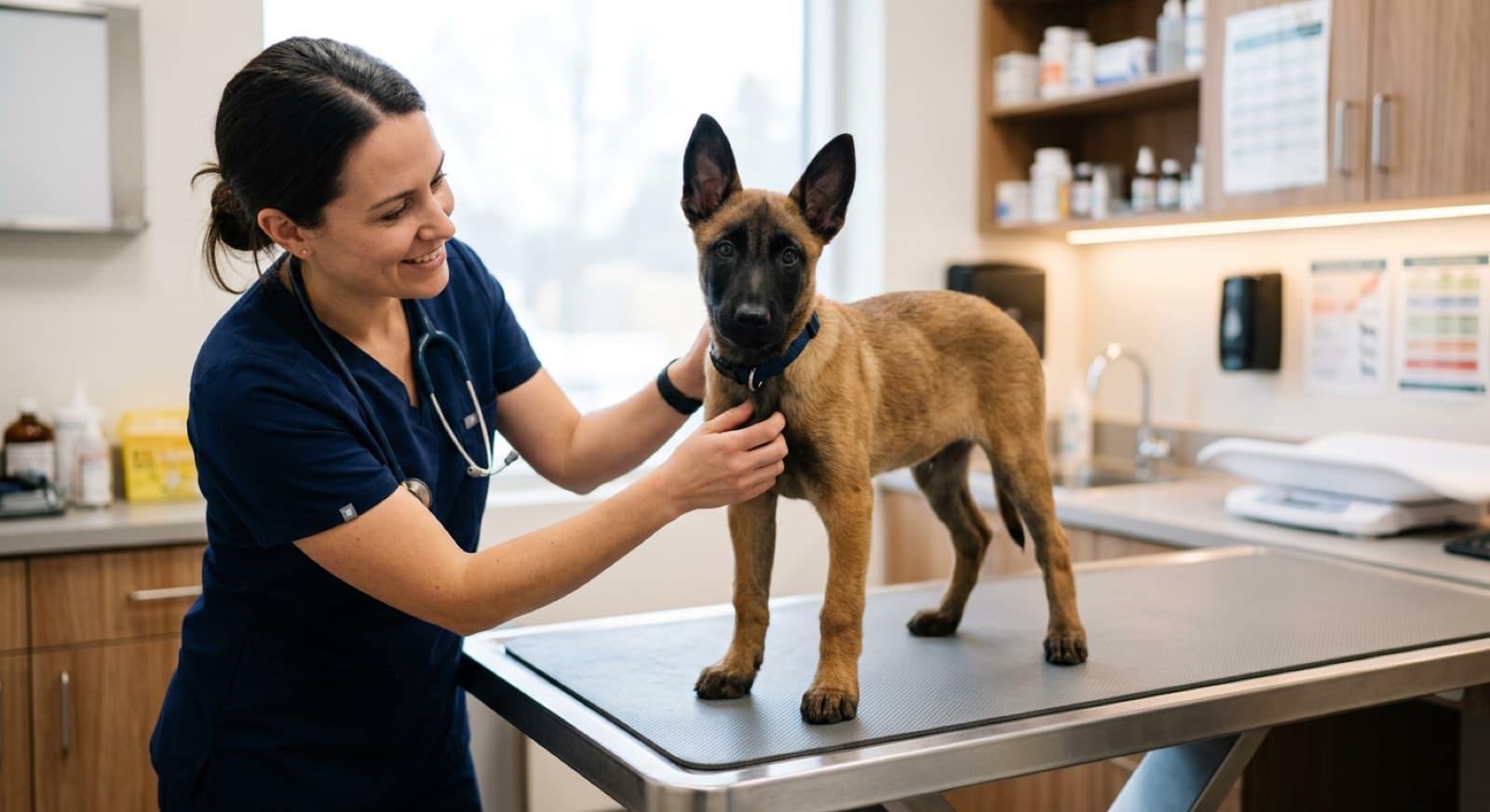
The good news first: the Malinois is a genuinely tough, hardy breed, which is part of why militaries and police services chose it. It is not fragile, and with good care many live well into their teens. But hardy is not the same as bulletproof, and there are a handful of conditions every owner should understand, plus the reality that a dog built to run and jump all day will occasionally hurt itself doing exactly that. This guide walks through each concern with authoritative sources, then covers preventive care in Calgary.
Hips, elbows, and the athletic body
Like most large, active breeds, Malinois can develop hip and elbow dysplasia, joint conditions that lead to instability and, over time, arthritis. For a dog whose entire life is movement, sound joints are everything, which is why reputable breeders screen hips and elbows through the Orthopedic Foundation for Animals (OFA). Good breeding keeps rates lower than in some breeds, but it does not eliminate the risk.
Beyond genetics, the Malinois lifestyle itself is hard on the body. These dogs sprint, leap, and turn at speed, and sprains, strains, and the occasional more serious injury come with the territory, especially if a young dog is allowed to over-jump before its growth plates close. Keep your Malinois lean and well-muscled, build fitness sensibly, and treat any persistent limp or stiffness as a vet visit, not something to walk off.
Eye disease: PRA and cataracts
The inherited eye concern to know is progressive retinal atrophy (PRA). According to Cornell University's College of Veterinary Medicine, PRA is a genetic degeneration of the retinal cells that typically begins in adulthood, usually affecting night vision first and progressing slowly toward blindness. There is no cure, but the reassuring part is that most dogs adapt remarkably well to gradual vision loss and keep a good quality of life, especially in a familiar home.
Cataracts also occur in the breed. Reputable breeders have breeding dogs' eyes examined and registered, and a DNA test exists for some forms of PRA. If your Malinois starts hesitating in dim light, bumping into things, or showing cloudy eyes, see your vet, who may refer you to a veterinary ophthalmologist for testing such as electroretinography. As with everything here, diagnosis and management belong with the professionals, not with home guesswork.
Epilepsy and anesthesia sensitivity
Two things to raise with your vet rather than manage alone. Epilepsy appears in the breed at a low rate; if your dog ever has a seizure, that is a veterinary conversation, not a home remedy. And because Malinois are lean and low in body fat, some can be more sensitive to anesthesia than average, so flag the breed specifically before any spay, neuter, dental, or surgery so your veterinary team can choose appropriate protocols. Neither of these should scare you off the breed; they are simply items to have on your radar.
Preventive care and insurance in Calgary
For a breed this long-lived, prevention pays off for well over a decade. The American Kennel Club describes the Malinois as a versatile, hardworking dog, and keeping one healthy means routine vet care, a lean body, sensible conditioning, and monitoring of eyes and joints as the dog ages. The two things most likely to generate a big vet bill are orthopedic and athletic injuries, so those are the case for pet insurance.
Price a few Canadian insurers while your dog is young and healthy, before anything becomes pre-existing, and read what each excludes. Pair that with a vet you trust and a good relationship with your nearest Calgary emergency clinic, and you have the health side well covered. For what daily life with this breed actually demands, see our guide to Malinois exercise and drive, and for the adoption picture, our Belgian Malinois adoption guide.
Considering a Belgian Malinois?
Adopting an adult through a rescue that has done a vet workup means much of the health history is already known, which is a real advantage with any working breed. See who is available across Calgary rescues.
See Calgary Belgian Malinois →Frequently Asked Questions
Are Belgian Malinois a healthy breed?↓
What eye problems do Belgian Malinois get?↓
Do Belgian Malinois have hip dysplasia?↓
Are Belgian Malinois sensitive to anesthesia?↓
How long do Belgian Malinois live?↓
Continue reading
Why so many end up in rescue, and who the breed suits.
Daily work, mental stimulation, and keeping a working dog sound.
Live listings across Calgary rescues.
Keeping a hard-working dog conditioned through winter.
New dog? Start with these care guides
Everything a new adopter needs to set up a safe, happy home.