The short answer
For the first 3 days, keep your new Cocker Spaniel's world small: one quiet room, a crate or x-pen, the same food the rescue or breeder used, and almost no visitors. For the first 3 weeks, lock in a routine: same potty spots, same meal times, short positive training sessions, gradual alone-time practice, and a daily 30-second ear check. Book the first vet visit within 7 days of pickup (ear health is the headline appointment for a Cocker), enroll pet insurance before that exam, walk on a Y-front or step-in harness, and plan around Calgary's climate from day 1. The 3-3-3 rule is the frame: roughly 3 days of decompression, 3 weeks of routine forming, 3 months for full personality. Most Cockers settle on that arc. Owners of neglect, hoarding, or breeding-kennel survivors should expect 6 to 12 months. And if you feel overwhelmed in week 1, you are not failing. Almost every new Cocker owner does, and it almost always passes.
Before pickup: the Cocker-specific supply checklist
Most of what a Cocker needs is medium-breed standard, with one important add-on: the ear-care kit. Long, heavy, well-feathered ears trap moisture and limit airflow, which is why Cockers carry the highest rate of chronic ear infections of any common breed (a finding the AKC Cocker Spaniel breed page and the American Spaniel Club both call out as the breed's top health-management item). Buy the core kit before pickup so the first 48 hours are about settling, not shopping. Calgary cost ranges below are typical at Pet Valu, Bosley's, Tail Blazers, and large-format pet stores; online options vary.
| Item | Calgary cost | Why it matters for a Cocker |
|---|---|---|
| Y-front or step-in harness (M) | $35 to $70 | Cockers pull early. A harness keeps pressure off the neck while housetraining and leash skills are raw. |
| Wire crate (30 to 36 inch) + divider | $80 to $140 | Safe space, housetraining tool, future vet-recovery setup for a medium breed. |
| Washable crate bed + 2 blankets | $40 to $90 | Soft surface, easy to clean after week-1 accidents. |
| Raised stainless or ceramic bowls | $30 to $60 | Drop-eared dogs keep their ears out of the water and food. Plastic causes chin acne in some dogs. |
| Slow-feeder / puzzle bowl | $15 to $30 | Cockers gulp food, especially food-motivated ones. Slow-feeders reduce regurgitation. |
| Ear-care kit (vet cleaner + cotton pads) | $25 to $55 | The Cocker-specific item. Veterinary ear cleaner, gauze or cotton pads, never cotton swabs inside the canal. Plan a weekly check, twice-weekly cleaning during summer or after baths. |
| Eye wipes | $10 to $25 | Cockers tear-stain under the eyes. Daily wipe keeps the fur dry and prevents skin irritation. |
| Slicker brush + comb + ear scissors | $40 to $90 | Cocker feathering mats fast. Daily quick brush, weekly thorough comb-out around ears, armpits, and groin. |
| 4-foot leash (nylon or biothane) | $20 to $40 | Short leash gives a pulling Cocker clear guidance on Calgary sidewalks. |
| Winter coat + booties (4-pack) | $60 to $120 | Feathered legs ice up fast in Calgary winters; booties stop salt burn. |
| Cooling mat (summer) | $30 to $60 | Long-coated medium breeds overheat fast on Calgary July afternoons. |
| Frozen Kong + training treats | $25 to $50 | Alone-time conditioning, decompression chewing, daily ear-handling rewards. |
| Pet insurance (enrolled day 1) | $55 to $120/mo | Cocker ear and eye issues are common claims; pre-existing exclusions take effect after the first vet visit. |
| Day-1 setup total | $480 to $980 | Plus first-month insurance and the wellness exam. |
Calgary cost ranges are directional; actual prices vary by retailer and season. Costs cited for example only.
Pickup day: what to expect on the drive home
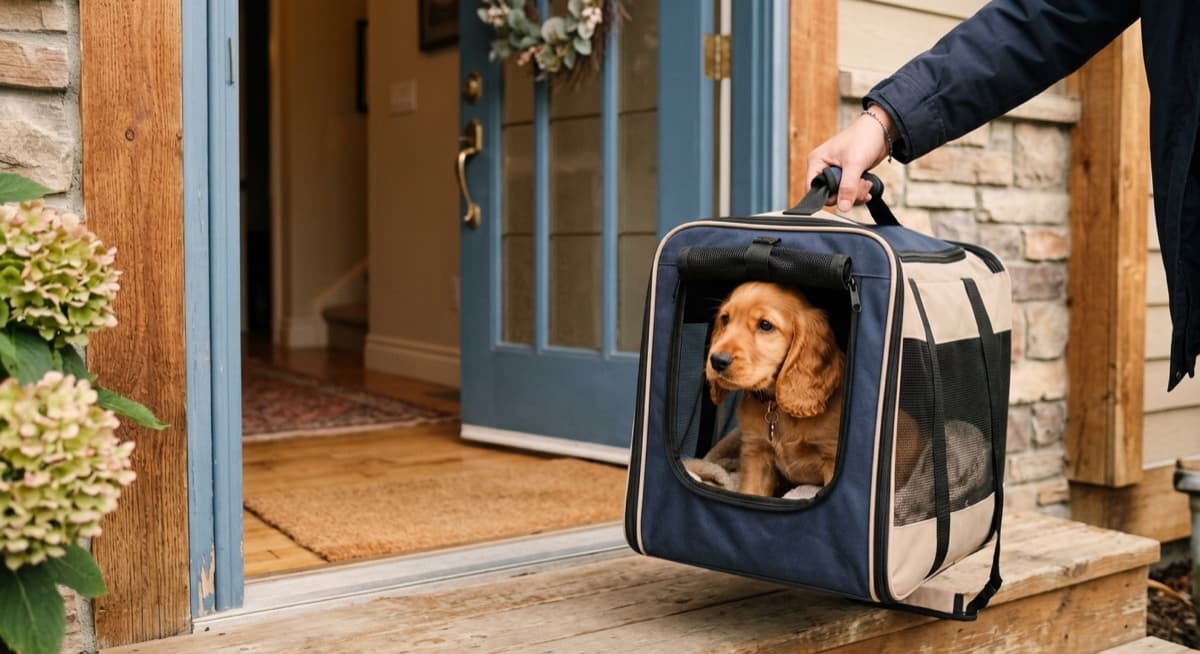
Calgary pickups happen across the city: from Calgary Humane Society in the south, from AARCS intakes, from Pawsitive Match Rescue Foundation fosters, and from breeders in Airdrie, Okotoks, Cochrane, and the rural areas south of the city. For a medium-energy Cocker the car ride matters more than the breed pages suggest. Three details to plan for:
- Secure restraint. A crash-tested medium-dog crate strapped to the back seat, or a seatbelt-clipped harness, is safest. A loose dog in the front seat is dangerous for both of you and not legal under Calgary distracted-driving rules.
- Temperature. In summer, pre-cool the car and never leave a Cocker unattended. In winter, warm the cabin first; a cold car is rough on a dog with wet paws from snow.
- Carsickness is common. Many young Cockers drool, pant, or vomit on the first ride. Skip the meal right before pickup, bring a towel, and keep the ride direct (no errands).
Expect a quiet dog on arrival. Some Cockers shut down completely for the first 24 to 48 hours; others act fine and then crash on day 3 when the adrenaline wears off. Both patterns are normal.
The 3-3-3 rule, applied to a Cocker Spaniel
The 3-3-3 rule is the directional timeline rescues use to describe decompression: 3 days, 3 weeks, 3 months. For Cockers, the pattern usually looks like this:
Hidden, quiet, may not eat
Many newly adopted Cockers go quiet in the first 72 hours. Expect skipped meals, sleeping in the back of the crate, refusing eye contact, or velcro-following one person room to room. Some shake. None of this means the dog dislikes you. Your job is low pressure: same room, same food, same potty spot, no visitors, no grooming session beyond a calm 30-second ear check. Talk softly, drop treats nearby, and let the Cocker set the pace for contact. Adult survivors of neglect or breeding-kennel backgrounds may stay in this phase 1 to 2 weeks.
Trust building, potty training, alone-time conditioning
Personality starts emerging around day 4 to 7. Housetraining for adult rescues usually solidifies in weeks 2 to 4. Separation anxiety tends to peak around week 2 once you return to work, so build alone time slowly (start with 5 to 10 minute departures, then 30 minutes, then a couple of hours). Daily ear-handling practice begins here: one calm flip-and-peek per day with a treat. Keep the schedule boring: same wake-up, same meals, same walks. Boring is what builds trust in a sensitive breed.
The real Cocker emerges
By month 2 to 3, the dog you signed up for usually shows up. A quiet Cocker may turn out goofy and bouncy, a shy one may start asking for play, a survivor may finally wag at the door. Some new behaviours surface as comfort grows (resource guarding around food, leash reactivity at the window, the “Cocker rage” spook some lines carry). Treat the first 3 months as a non-decision window: do not rehome unless safety is at stake.
Setting up the home: spaces, gates, and the safe spot
A Cocker does not need a big setup, but it does need a deliberate one. Six zones worth defining before pickup:
- The safe spot. A crate or x-pen in a low-traffic corner with bed, water, and a Kong. Place it in or near your bedroom for the first week so a velcro Cocker is not isolated overnight.
- Gated areas. Baby gates block off any room you do not want the dog in until housetraining is solid. Cockers are stair-tolerant, but a freshly arrived rescue should not have free-run of the whole house for the first week.
- Potty area. One outdoor spot near the door for fast trips in cold weather, plus an indoor backup (pee pads in a tray or a small artificial-turf patch) for Calgary's coldest weeks. Many Cockers refuse to potty in deep snow or below -20°C without an indoor option, and that is not stubbornness, it is paw cold.
- Feeding station. Quiet corner, raised bowls, slow-feeder, away from foot traffic. A dog that startles while eating learns to guard food, which Cockers are already a higher-risk breed for.
- Grooming station. A non-slip towel on a counter or low table where ear checks, eye wipes, and brushing happen daily. Familiarizing a Cocker with this spot in week 1 saves grooming battles later. Most Cocker behavioural problems trace back to grooming-handling stress, so the bar for “short, calm, paid” is high here.
- A “no-go” couch zone for week 1. Decide before pickup whether the dog is allowed on furniture. Switching mid-week confuses a settling dog. Easiest first-week default: not on the furniture, then re-decide at week 3 with calm intent.
Daily routine in week 1
Predictable schedules speed up settling more than any single training trick. A reasonable Cocker day for the first week:
| Time | Activity |
|---|---|
| 7:00 am | Wake, immediate potty trip, short sniff walk if calm. |
| 7:30 am | Breakfast in quiet feeding spot. Raised slow-feeder bowl. |
| 8:00 am | 30-second ear check, eye wipe, light brush. Pay with a treat. |
| 10:00 am | Potty trip, frozen Kong in the safe spot, 30 to 60 min alone-time practice. |
| 12:00 pm | Lunch (puppies) or potty + sniff break (adults). Short on hot or cold days. |
| 3:00 pm | Potty trip, 5 min positive reinforcement session (name recognition, sit). |
| 5:30 pm | Dinner. Quiet meal, same spot. |
| 7:00 pm | Calm walk on harness, 20 to 35 min depending on weather. |
| 9:30 pm | Last potty trip. Lights down, settle in crate. |
| 2:00 am (puppies only) | One overnight potty trip in the first few weeks for puppies under 6 months. |
Browse adoptable Cocker Spaniels in Calgary
Live listings from 15+ Calgary rescues, updated regularly. Foster reports include known health, temperament, and household compatibility.
See Available Cocker Spaniels →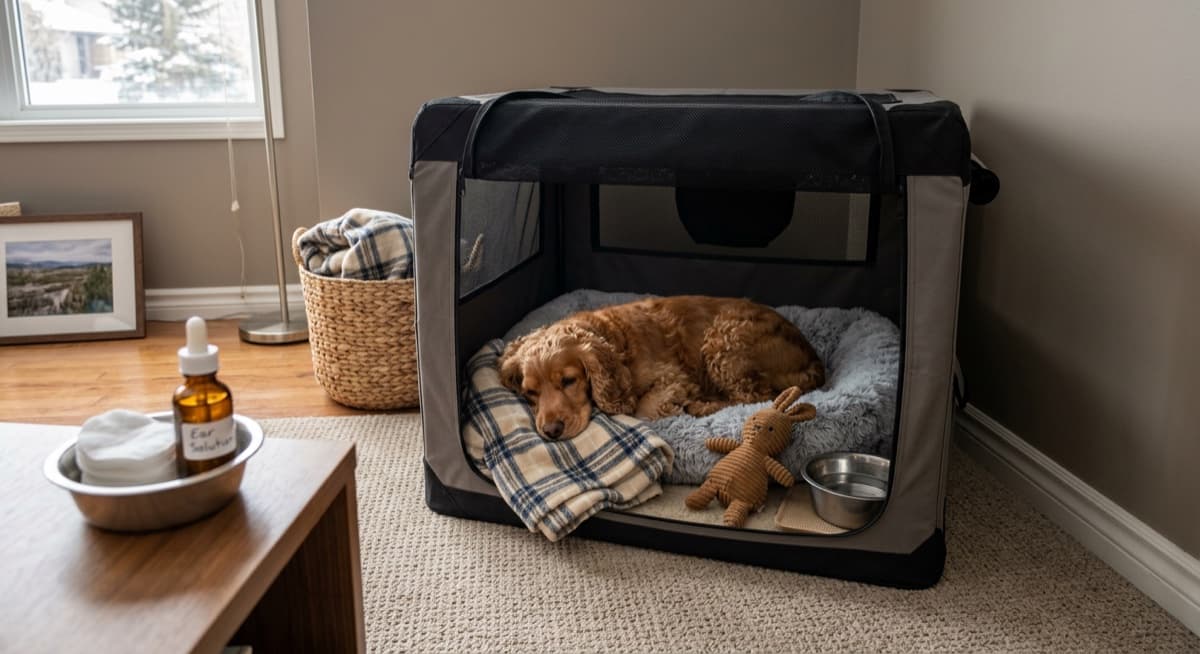
Feeding: gradual transition over 7 to 10 days
Whatever food the rescue or breeder has been using, get a 1 to 2 week supply at pickup. A cold-turkey food switch causes diarrhea, vomiting, and skipped meals on top of an already stressful arrival. Transition gradually over 7 to 10 days per AAHA standard guidance:
- Days 1 to 3: 75% old food, 25% new food.
- Days 4 to 6: 50% old, 50% new.
- Days 7 to 9: 25% old, 75% new.
- Day 10+: 100% new food.
Feed 2 to 3 small meals daily for adults, 3 to 4 for puppies under 6 months. Use a raised slow-feeder bowl: Cockers gulp food, and the raised height keeps the long ears out of the bowl. Keep the meal spot quiet, do not stand over a dog while it eats, and let the dog finish at its own pace.
Calgary allergy note. If the rescue paperwork mentions a suspected chicken sensitivity (common in Cockers, who have one of the higher food-allergy rates among Spaniels), do not switch to a chicken-based food during the first week. Stick with whatever the rescue used, then have an honest food-allergy conversation with your vet at the wellness exam. A diet trial takes 8 to 12 weeks and should be planned, not improvised.
If your Cocker refuses food entirely for more than 24 hours and you also see vomiting, diarrhea, lethargy, or breathing difficulty, call your vet. For puppies under 6 months, any skipped meal is worth a phone call: small to medium-breed puppies can drop into hypoglycemia quickly.
Calgary climate notes: cold paws, salt burn, summer overheating
Cockers are medium-bodied, well-feathered dogs, not built for either Calgary's long cold stretches or the dry July heat. The ASPCA cold-weather guide and the AVMA both note that small and medium dogs lose heat faster than large breeds. Calgary's climate hits both ends:
Summer (May to September):
- Above 22°C, shift walks to before 8 a.m. and after 8 p.m. Hot pavement burns paws fast.
- Above 27°C, skip walks and use indoor play or a cooling mat instead.
- Never leave a Cocker in a parked car. Even 10 minutes in a Calgary July car can be fatal.
- Check the ears after every river swim, hose play, or rain walk. Wet ears in summer are the number-one cause of Cocker ear infections.
Winter (November to March):
- Below -10°C, limit outdoor time to 10 to 15 minutes. Use a fleece or insulated coat.
- Below -20°C, potty trips only. Booties protect paws from salt and ice. Indoor pee pads are a reasonable backup during cold snaps.
- Wipe feathered legs and paws on every return: ice balls form between toes, and roadway salt irritates the skin between pads.
- Chinooks (sudden warm-ups) can swing daytime temperatures 20°C in hours. Recheck conditions before each walk.
- Around Bow River pathways, Nose Hill Park, Fish Creek Park, and Edworthy Park, expect mud, melt, and refreeze. Towel the dog at the door.
Sleeping arrangements: crate, bed, or yours
Most Calgary trainers recommend the crate or x-pen near your bed for the first 1 to 2 weeks. A velcro Cocker separated to another room usually cries through night 1 and reinforces panic. After settling, the choice is yours. A few realities:
- Crate in bedroom. Best default. Quiet, contained, near you. Most adult rescues sleep through within a few nights.
- Dog bed on the floor. Works once housetraining is solid (typically week 4+ for adults). Use a non-slip mat under it.
- Your bed. Many Cockers end up here, and there is no health reason to avoid it for an adult dog. Two caveats: resource guarding around sleeping spots can develop with some Cockers, and bed-sharing while housetraining is still raw slows progress.
- Puppies. Stay crated near you for at least the first 2 to 3 months. Bed-sharing under 6 months can suppress housetraining progress.
The first vet visit: book within 7 days
Book the wellness exam before pickup if you can. The first appointment is short (30 to 45 min) and establishes:
- Baseline weight, body condition score, dental check.
- Thorough ear exam. The headline appointment item for a Cocker. The vet looks for redness, odour, debris, and yeast or bacterial overgrowth, and demonstrates the cleaning technique.
- Eye exam (Cockers are prone to cherry eye, dry eye, and progressive retinal atrophy per the American Spaniel Club health resources).
- Vaccination status review and any missing boosters.
- Microchip and parasite-prevention plan.
- Diet review, including any rescue-flagged food sensitivities.
Calgary wellness exam pricing typically runs $80 to $150 for a first visit (directional; costs vary by clinic). Bring all paperwork from the rescue or breeder. Ask about a baseline blood panel for seniors. Take notes on the vet's recommended deworming, flea/tick, and heartworm schedule. The ASPCA new-pet guide also recommends scheduling a wellness exam within the first week for any newly adopted dog.
Enroll pet insurance before the wellness exam. Anything noted at that appointment can become a pre-existing exclusion for some insurers later. For Cockers, the items that most often become exclusions are chronic ear infections, eye conditions, and food allergies, exactly the things owners most want covered.
The most common first-week mistakes
These are the patterns Calgary rescues see most often in week-1 follow-up calls. None is fatal, but each makes the first month harder than it needs to be.
- Over-handling the ears in week 1. The single most-common Cocker mistake. Owners read about ear care, then flip, peer, swab, and clean the ears 4 times a day. The dog becomes ear-shy for life. Start with one calm, 30-second flip-and-peek per day, paid with a treat. Build slowly. Real cleaning starts once the dog tolerates handling.
- Too many visitors in week 1. A sensitive medium breed still decompressing cannot meet your whole social circle. Hold guests off for 7 to 14 days.
- Flat collar on the walk. Use a Y-front or step-in harness. Cockers pull early, and collar pressure on a pulling dog encourages neck strain.
- Cold-turkey food switch. Causes diarrhea and skipped meals during a phase when you need stable digestion. Transition over 7 to 10 days.
- Forcing the bath on day 1 or 2. A drenched, soaped, blow-dried Cocker on arrival day is a bad first impression of the household. Wait until week 2 minimum.
- Skipping the wellness exam past day 7. Delays the insurance baseline and misses early ear, eye, or dental issues.
- Treating shutdown as “the dog is fine.” A Cocker sleeping all day on day 2 is decompressing, not adjusted. Real personality usually shows after day 4.
- Returning to a full work day in week 1. Build alone time slowly. Separation anxiety is a known Cocker risk, and it peaks around week 2 when work resumes if alone-time training was skipped.
- Walking outside in extreme weather without gear. Below -20°C or above 27°C, a Cocker without climate gear and ear-drying after rain is at real risk.
For the overwhelmed new owner: read this
If you are 4 days in and silently wondering whether you made a mistake, you are not alone. Calgary rescues describe the first 2 to 3 weeks as the hardest stretch for almost every new owner. The Cocker Spaniel image (soft, gentle, sweet) is real, but it does not capture the week-1 reality: night waking, ear care, daily brushing, leash-pulling, velcro contact, and the quiet pressure of being responsible for a living creature that depends on you.
Most behavioural literature now uses the term puppy blues for what new owners feel in the first weeks (the ASPCA notes adjustment difficulty is common for both adopters and dogs). It is documented for adult adoptions too. Common symptoms: grief, regret, panic, intrusive thoughts about returning the dog, exhaustion, irritability, crying. They almost always pass by weeks 3 to 4 as the routine settles.
What helps in week 1:
- Lower the bar. Clean house, finished work, picture-perfect routine: none of it matters in week 1. The bar is: dog is fed, watered, walked, safe.
- Sleep when you can. A sleep-deprived owner cannot make calm decisions. Take naps when the dog naps.
- Talk to the rescue. The foster who placed your Cocker usually has week-1 advice specific to this dog. They have done this before.
- Lean on a friend. Ask someone to bring you food or hold the dog while you shower. Accepting help is not failure.
- Remind yourself the dog is also overwhelmed. Your Cocker is going through the same week. The mutual decompression is the bond forming.
- Keep a 30-day journal. One line per day. You will not believe at day 30 how much has changed.
- Talk to a professional if feelings dread persist past month 1. New-pet adjustment can interact with existing anxiety or depression. Your doctor is a reasonable first call.
The Calgary rescue follow-up data is consistent: almost nobody regrets the dog after month 3. The first month is the hardest part of the entire 12 to 15 year relationship. You are not failing. You are in the hard part.
Frequently asked questions
What do I need to buy before bringing home a Cocker Spaniel?
A Y-front or step-in harness (not a flat collar), wire crate 30 to 36 inches, washable bed and blankets, raised stainless or ceramic bowls, slow-feeder bowl, the same food the rescue or breeder used, a vet ear cleaner and cotton pads, eye wipes, a slicker brush and comb, a short leash, a winter coat and booties, a summer cooling mat, a frozen Kong, and pet insurance enrolled before the first vet visit. Calgary setup total typically runs $480 to $980.
What is the 3-3-3 rule for new dogs?
A directional timeline: roughly 3 days of decompression (quiet, may not eat, may hide), roughly 3 weeks of routine forming (housetraining, alone-time conditioning, daily ear-handling practice), and roughly 3 months for full personality to emerge. Survivor and senior Cockers often take 6 to 12 months.
My new Cocker will not eat — should I worry?
Adults skipping 1 to 2 meals in the first 24 to 48 hours is common from stress. Stay with the rescue food, in a quiet spot. Call your vet if it goes beyond 24 hours or you see vomiting, diarrhea, lethargy, breathing difficulty, or pale gums. Puppies under 6 months should not skip meals: call the rescue or your vet right away if a puppy refuses food.
How long does it take a Cocker to adjust to a new home?
Meaningful settling by weeks 3 to 4 for most. Full personality by month 2 to 3. Sleeping through the night by week 1 to 2. Housetraining for adults usually solidifies by week 4 to 8. Survivors of neglect, breeding kennel, or hoarding backgrounds take 6 to 12 months.
Should I crate train my new Cocker Spaniel?
Most Calgary trainers and rescues recommend introducing a crate from day 1, even if you do not use it long-term. Place it in or near your bedroom for the first week. Use positive associations (Kong, treats) and never use the crate as punishment, since Cockers are emotionally sensitive and will associate the space with fear.
When should the first vet visit happen?
Within 7 days of pickup. The ear exam is the headline item for a Cocker. The visit also sets the baseline for weight, dental, and eye health, and lets you enroll pet insurance before any pre-existing exclusions kick in. Calgary first-visit pricing typically runs $80 to $150.
What are common first-week mistakes with a Cocker Spaniel?
Over-handling the ears (the biggest one), too many visitors, flat collar instead of harness, cold-turkey food switches, forced bathing on day 1, skipping the wellness exam past day 7, mistaking shutdown for adjustment, and going back to a full work day in week 1 without building alone time first.
I am overwhelmed with my new Cocker puppy — is this normal?
Yes, completely. Calgary rescues describe the first 2 to 3 weeks as the hardest stretch for almost every new owner. Symptoms like grief, regret, panic, and exhaustion are documented across new-pet adjustment, both for puppies and adults. They almost always pass by weeks 3 to 4. Lower your standards for clean house, sleep when you can, talk to the rescue or foster, and remind yourself the dog is also overwhelmed. If feelings of dread persist past month 1, talk to your doctor.
More Cocker Spaniel guides
Cocker Spaniel Adoption Calgary →
Where to adopt, real costs, American vs English Cocker, and Cocker mixes from Calgary rescues.
Cocker Spaniel Ear Care →
Weekly check, cleaning technique, infection signs, and when to call your vet.
Cocker Separation Anxiety →
Why velcro Cockers are prone to SA, alone-time conditioning, and when to call a behaviourist.
Adoptable Cocker Spaniels in Calgary →
Current Cockers and Cocker mixes across 15+ Calgary rescues, updated regularly.
New dog? Start with these care guides
Everything a new adopter needs to set up a safe, happy home.