The short answer
Cavapoos are generally healthy and typically live 12 to 15 years, but they inherit specific risks from both parents. The two that matter most come from the Cavalier: mitral valve heart disease and syringomyelia. From the Poodle side, watch for patellar luxation, progressive retinal atrophy, and hip issues, and both sides contribute dental disease and ear infections. None of this should scare you off the breed, but it should shape three habits: ask what the parents were health-tested for, take out pet insurance while the dog is young, and have a Calgary vet monitor the heart, eyes, and teeth at every visit. This guide is educational, not medical advice; your veterinarian is the right source for your specific dog.
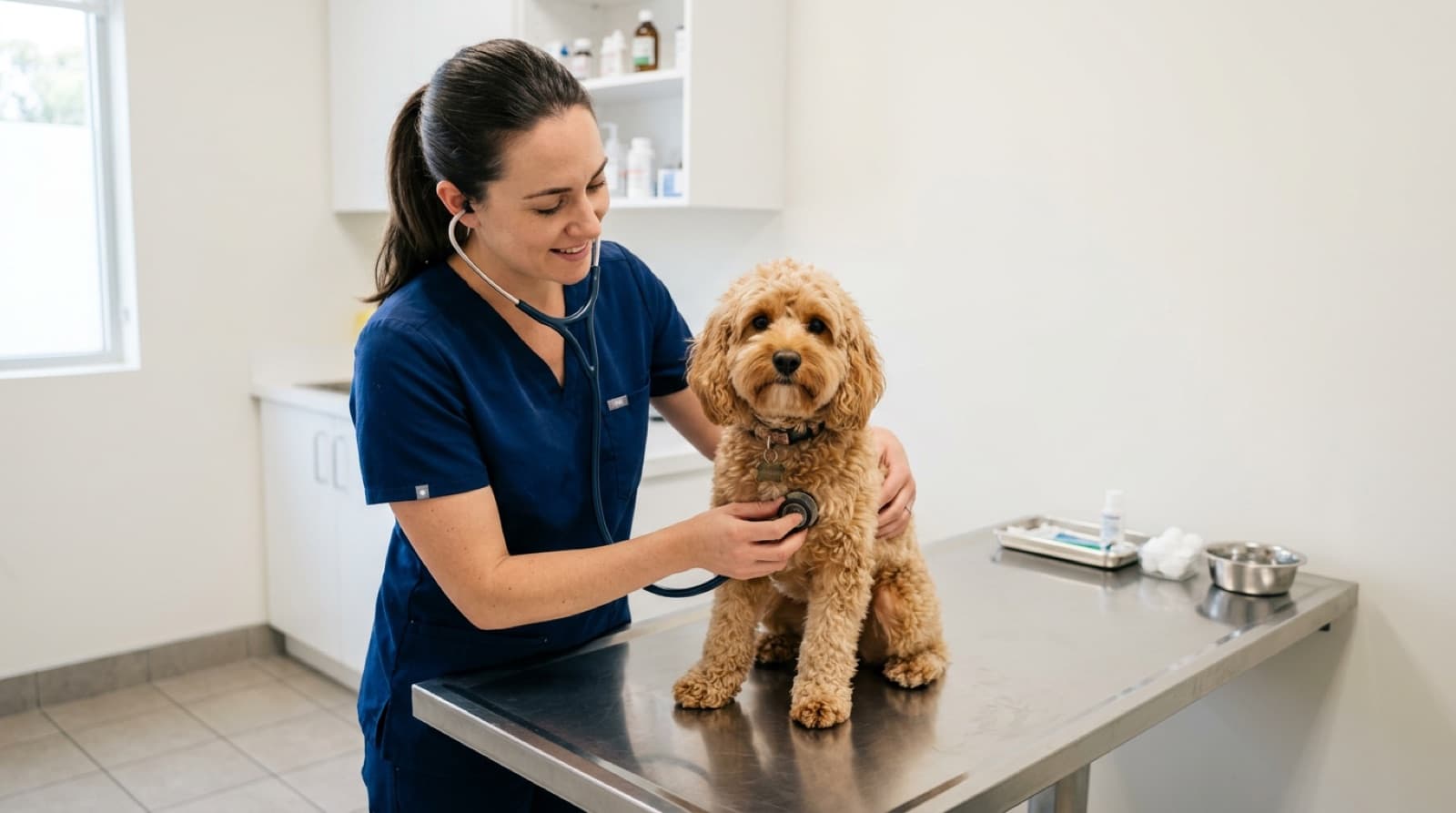
The Cavapoo is a cross between a Cavalier King Charles Spaniel and a Poodle, and its health is best understood as a blend of both. Crossbreeding can lower the odds of any single inherited condition, an effect often called hybrid vigour, but it does not erase the risks that run in the parent breeds. This guide walks through what a Cavapoo can inherit, ranked by how much it matters, and points you to the Calgary veterinary care that handles each. It is written to make you an informed owner, not to replace your veterinarian, who is always the right person to assess your specific dog.
From the Cavalier side: heart and neurological
Mitral valve disease (MVD) is the most important condition to understand. The Cavalier King Charles Spaniel is one of the breeds most affected by it, a progressive degeneration of a heart valve that produces a murmur and, over years, can lead to heart failure. A Cavapoo does not automatically inherit it, but the predisposition is real, which is why a heart check at every vet visit is the habit that matters most in this breed. Many dogs live well for years once a murmur is found, with monitoring and medication managed by your vet and, when needed, a veterinary cardiologist. The Orthopedic Foundation for Animals maintains cardiac testing databases that responsible breeders use to screen parents.
Syringomyelia (SM) is the neurological condition to know. Fluid-filled cavities form in the spinal cord, usually because the skull is too small for the brain, and it can cause pain and sensitivity around the head and neck. A classic sign is an air scratch, the dog scratching toward the neck without making contact. Signs vary widely; anything persistent should be assessed by a vet, who may refer to a neurologist for an MRI. It is not present in every Cavapoo, but the risk comes with the Cavalier heritage, so it is worth recognising early.
From the Poodle side: eyes and joints
Progressive retinal atrophy (PRA) is an inherited eye disease that gradually reduces vision and can end in blindness. It is DNA-testable in the parents, so ask whether that screening was done. Early signs include night-vision trouble, hesitancy in dim light, or bumping into things; a veterinary ophthalmologist confirms and monitors it. Cataracts also appear in the breed.
Patellar luxation, a slipping kneecap, is common in small crosses and ranges from a mild occasional skip in the gait to a case that needs surgery. Hip dysplasia, more associated with the Poodle side, can also occur. For both joints, the most protective thing you can do is keep the dog lean, because extra weight accelerates wear. A hop on a back leg, stiffness after rest, or a change in how the dog moves is worth a vet assessment.
Everyday care that prevents most problems
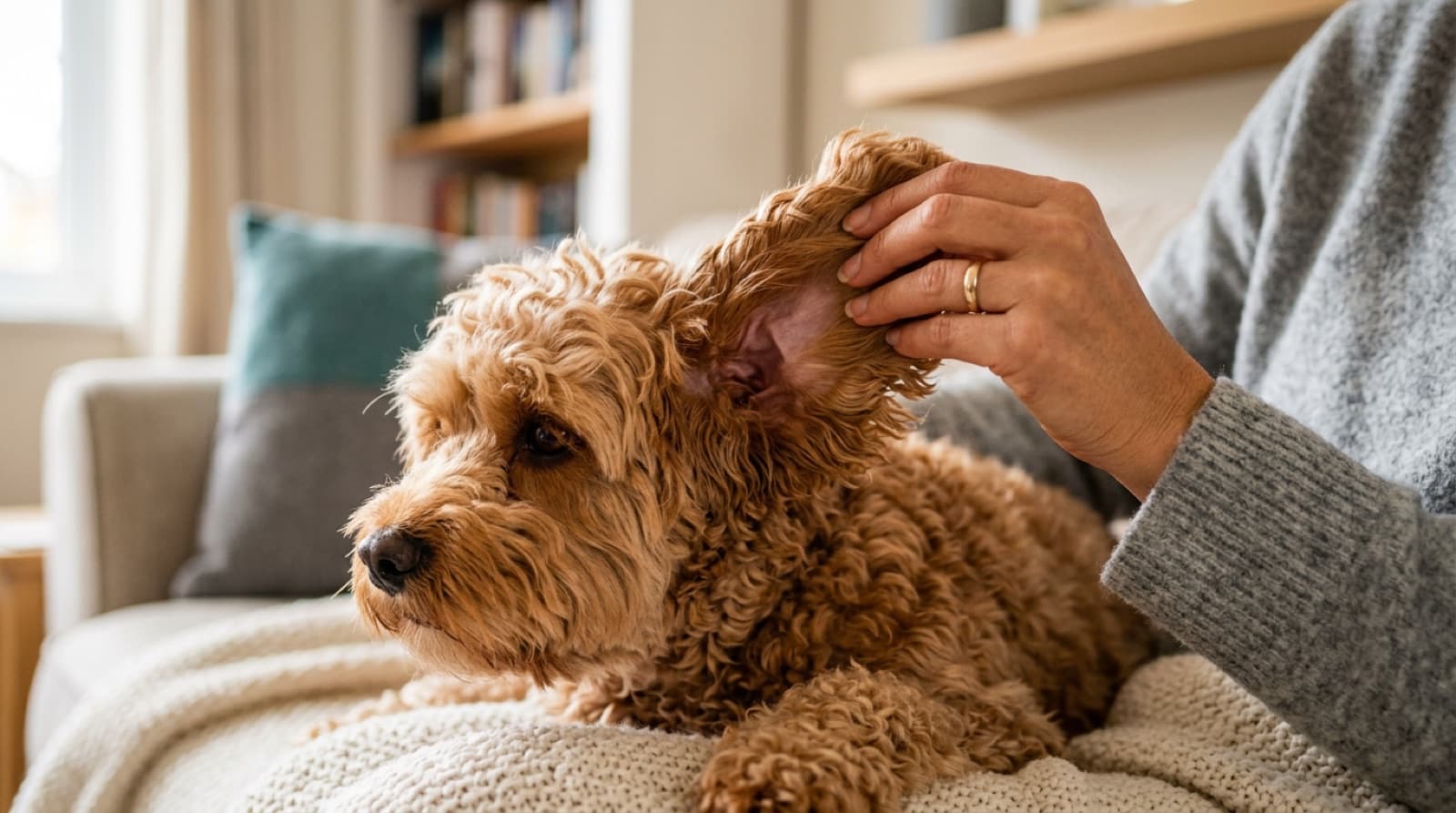
Two of the most common Cavapoo health issues are also the most preventable. Ear infections thrive in the floppy, hairy ears the breed usually inherits, so build an ear routine into your week: check regularly, keep the ear-canal hair managed as part of grooming (see the grooming guide), and dry the ears after baths and wet walks. Dental disease is common in small breeds and matters more here because oral infection can strain the heart and kidneys over time. Brush several times a week, use vet-approved dental products, and budget for professional cleanings when advised.
The through-line for a long, healthy Cavapoo life is unglamorous: keep the dog lean, stay ahead of teeth and ears, and have your vet monitor the heart, eyes, and joints at every visit. For general breed background, both parent breeds are documented by the Canadian Kennel Club.
Calgary specialist care and insurance
A good general-practice vet handles routine care, dental work, and the first look at any concern, then refers you when a case needs a specialist. Calgary has specialty referral hospitals, including Western Veterinary Specialist and Emergency Centre and VCA Canada West Veterinary Specialists, offering cardiology, neurology, ophthalmology, and internal medicine, the exact fields a Cavapoo might need. You do not book these directly; your vet refers you, for example to a cardiologist for a heart murmur or a neurologist for suspected syringomyelia. Knowing the options exist before a diagnosis takes the panic out of the moment.
On insurance: for this breed, price a policy while the dog is young and healthy. Insurers commonly exclude pre-existing conditions, and a heart murmur or eye finding noted at an early visit can count against future coverage, so earlier is better. Compare Canadian providers on annual limits, hereditary-condition coverage, and what they define as pre-existing before you commit.
Looking to adopt or rehome a Cavapoo in Calgary?
Cavapoos are rare in rescue, so set a free alert to hear the moment one is listed, or, if you have one to place, list it free. Ask any rescue or rehoming owner about the health history above before you commit.
See the Cavapoo breed page →Cavapoo health FAQ (Calgary)
What health problems are Cavapoos prone to?▼
A Cavapoo can inherit conditions from either parent. From the Cavalier King Charles Spaniel side the two most important are mitral valve disease (a progressive heart condition the breed is strongly predisposed to) and syringomyelia (a painful neurological condition). From the Poodle side the common concerns are patellar luxation (slipping kneecaps), progressive retinal atrophy (an inherited eye disease), and hip dysplasia. Both parents contribute a risk of dental disease and ear infections. Crossbreeding can reduce the odds of any single condition, but it does not eliminate them, so ask the rescue or breeder what the parents were tested for and have your own Calgary vet do a thorough exam early.
Do Cavapoos have heart problems?▼
They can, because the Cavalier King Charles Spaniel parent is one of the breeds most affected by mitral valve disease, in which a heart valve degenerates over time and produces a murmur that can progress to heart failure. A Cavapoo does not automatically develop it, but the risk is real enough that heart health should be a priority. Ask whether the Cavalier parent was heart-cleared, have your vet listen for a murmur at every visit, and if one is found, ask for a referral to a veterinary cardiologist. Many dogs live well for years with monitoring and medication, but this is the single most important thing to watch in the breed.
What is syringomyelia and do Cavapoos get it?▼
Syringomyelia is a neurological condition, seen in the Cavalier King Charles Spaniel, in which fluid-filled cavities form in the spinal cord, usually because the skull is too small for the brain. It can cause pain, sensitivity around the head and neck, and repetitive scratching at the air near the neck (often called an air scratch). A Cavapoo can inherit the risk from the Cavalier side. Signs range from subtle to severe, so any persistent scratching, yelping when touched around the neck, or unusual sensitivity should be checked by a vet, who may refer to a neurologist for an MRI. It is not common in every dog, but it is worth knowing the signs.
How long do Cavapoos live?▼
Cavapoos typically live 12 to 15 years, which is a good lifespan for a small dog. The biggest factor in reaching the top of that range is managing the inherited risks early: keeping the dog at a healthy weight, staying on top of dental care, monitoring the heart at every vet visit, and acting quickly on any neurological or eye symptoms. Good routine care and pet insurance taken out while the dog is young and healthy make a real difference over a 12 to 15 year life.
Are Cavapoos prone to eye problems?▼
Yes, mainly from the Poodle side. Progressive retinal atrophy is an inherited disease that gradually reduces vision and can lead to blindness; a DNA test on the parents can identify carriers, so ask whether that was done. Cataracts and other eye conditions also appear in the breed. Have your Calgary vet examine the eyes at annual checkups, and if you notice cloudiness, bumping into things, or reluctance to move in low light, ask for a referral to a veterinary ophthalmologist.
Do Cavapoos have knee or hip problems?▼
Patellar luxation, where the kneecap slips out of position, is common in small crosses like the Cavapoo and can range from mild to needing surgery. Hip dysplasia, more associated with the Poodle side, can also occur. Keeping the dog lean is the single most protective thing you can do for both joints, since extra weight accelerates wear. If you see a skip in the gait, an occasional hop on one back leg, or stiffness after rest, have your vet assess the knees and hips.
Why do Cavapoos get ear infections?▼
The floppy, hairy ears typical of a Cavapoo trap moisture and reduce airflow, which is exactly the environment ear infections need. It is one of the most common routine problems in the breed. The prevention routine is simple and worth building into your week: check the ears regularly, keep the hair in the ear canal managed as part of grooming, dry the ears after baths or wet walks, and use a vet-recommended cleaner if your vet advises it. Redness, odour, head shaking, or scratching at an ear means a vet visit.
How do I care for a Cavapoo's teeth?▼
Dental disease is common in small breeds, including the Cavapoo, and it is one of the most preventable health problems. Brush the teeth several times a week with dog toothpaste, use vet-approved dental chews, and budget for a professional cleaning under anaesthetic when your vet recommends it. Untreated dental disease is painful and can affect the heart and kidneys over time, which matters even more in a breed already watching for cardiac issues.
Is pet insurance worth it for a Cavapoo in Calgary?▼
For a Cavapoo it is worth pricing seriously, because the inherited cardiac and neurological risks can lead to specialist referrals, imaging, and long-term medication that add up quickly. The key is to take out a policy while the dog is young and healthy, since insurers commonly exclude pre-existing conditions once they are on record, and a heart murmur or an eye finding noted at an early visit can count. Compare a few Canadian providers on annual limits, exclusions, and hereditary-condition coverage before you commit, and read the fine print on what counts as pre-existing.
Where can I take a Cavapoo for specialist care in Calgary?▼
Start with a good general-practice vet for routine care, dental work, and the first assessment of any concern. For the conditions this breed is prone to, Calgary has specialty referral hospitals, including Western Veterinary Specialist and Emergency Centre and VCA Canada West Veterinary Specialists, that offer cardiology, neurology, ophthalmology, and internal medicine. Your regular vet refers you when a case needs a specialist, for example a cardiologist for a heart murmur or a neurologist for suspected syringomyelia. Knowing the referral options exist before you need them takes the panic out of a diagnosis.
More Cavapoo guides
New dog? Start with these care guides
Everything a new adopter needs to set up a safe, happy home.