The short answer
For most first-time Calgary adopters: generally no — the Chow Chow is mostly an experienced-owner breed. The aloof temperament is often misread as poor socialisation, the breed is reactive-prone if mismatched, many Canadian home insurers restrict or surcharge the breed, the lifespan is shorter than most large breeds (8 to 12 years), and the dog wants to be the only pet in a quiet adult-leaning household. For the right home, though, a Chow Chow is one of the most loyal, clean, quiet, low-exercise large breeds available. The right home looks like: experienced dog owner; single adult or couple without young kids; no cats or other dogs (or one resident dog the Chow has been tested with); willing to commit to early intensive socialisation in the 6 to 16 week critical window; happy with a loyal protective companion rather than a friendly social dog at the off-leash park. If that is you, keep reading. If it is not, our resources hub has decision guides for steadier first-dog breeds.
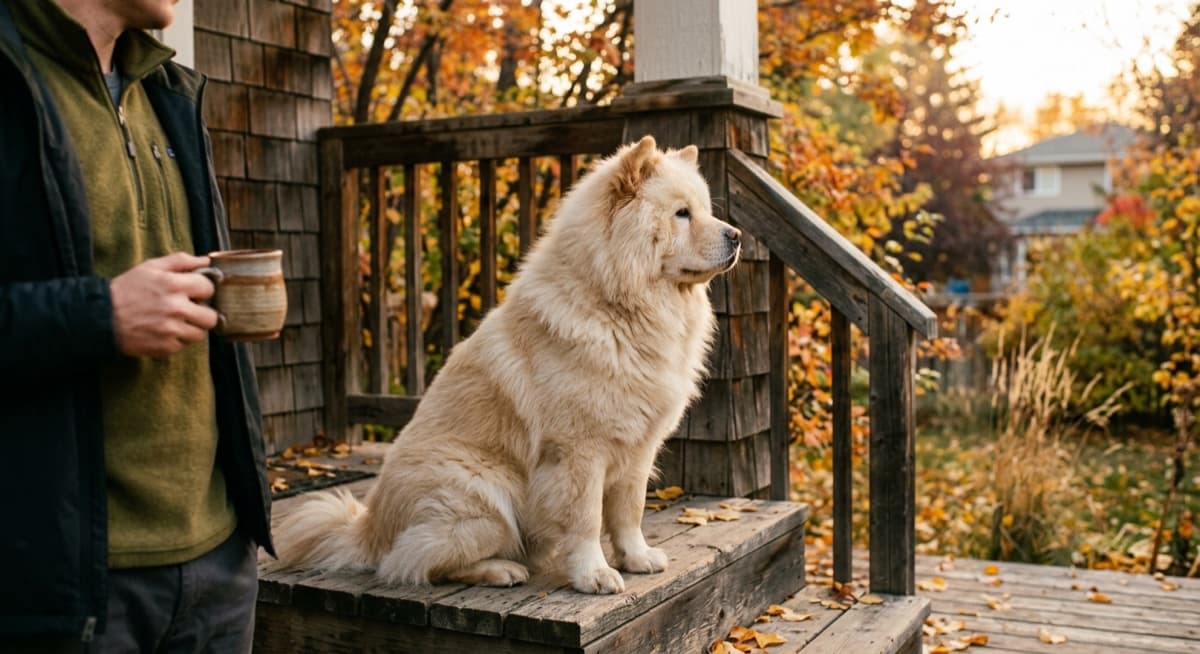
Honest Pros: Why People Love the Chow Chow
Deeply loyal one-household dog
A Chow bonds hard with its household and stays loyal for life. The breed is reserved with strangers, not aloof with family. Calgary owners describe their Chow as a quiet shadow that follows them room to room, sleeps near (not on) the bed, and reads emotions accurately. Loyalty is the breed's strongest trait.
Clean and almost cat-like indoors
Chow Chows are famously fastidious. They groom themselves like a cat, avoid muddy puddles, and many are essentially self-housetrained as puppies (with consistency). For a 45 to 70 lb breed, the indoor footprint is unusually clean.
Quiet — not a barker
Most Chows are notably quiet for their size. They alert-bark at the door but do not nuisance-bark at sidewalk traffic, other dogs, or random noises the way many guarding breeds do. Calgary condo and townhouse owners often choose the breed specifically for the quiet reputation.
Low daily exercise needs
Two 20 to 30 minute walks a day plus moderate yard or living-room movement covers the full exercise plan for most adult Chows. They are not jogging dogs and not endurance hikers. They walk steadily, watch their household, and rest. For a large breed, the energy load on the owner is genuinely low.
Lower shedding than the coat suggests (when well-groomed)
Surprising for a thick double-coated breed: a well-groomed Chow sheds less around the house than many shorter-coated dogs because the dense undercoat is captured during brushing rather than dropped on the floor. The catch is that brushing is non-negotiable. A neglected Chow coat mats badly and the shed load explodes. Plan on 3 to 4 brushings a week, more during the heavy shed cycles of spring and fall (the “coat blow”).
Calm dignified temperament suits adult households
Chow Chows are not goofy, not bouncy, and not hyperactive. They are watchful and dignified. Adult households, single owners, and couples without young kids often find the temperament refreshing compared to higher-energy breeds. The AKC describes the Chow as “dignified and aloof,” and that is what owners actually get.
Honest Cons: What the Pretty Pictures Do Not Show
Aloofness mistaken for poor socialisation
Chows do not greet strangers with a wag. They observe, decide, and move on. People who do not know the breed read that as “poorly socialised,” which generates pressure at vet clinics, daycares, and dog parks. The aloof greeting is normal breed temperament and should not be trained out — but the misread does mean the dog needs an owner who advocates for it.
Breed-specific reactivity risk if mismatched
A Chow that misses early socialisation in the 6 to 16 week critical window, lives in a chaotic household, or is handled with old-school dominance methods can develop reactivity toward strangers, other dogs, and handling (nail trims, ear cleaning, vet exams). Reactivity is preventable and largely about fit, but the breed is less forgiving than a Labrador or Golden when things go sideways. The Chow Chow Club Inc. (the AKC breed parent club) is direct about this in their owner literature.
Home-insurance restrictions are a real planning factor
Several Canadian home and tenant insurance brokers maintain restricted-breed lists, and Chow Chow is commonly on them. Some insurers cover with a liability surcharge, some exclude the breed, and some require alternative coverage. The honest move is to call your broker BEFORE you adopt and ask, in writing, whether your specific policy covers a Chow Chow. Calgary condo boards may impose breed restrictions separately. This is a directional reality, not a fixed rule — verify both with your own broker and your own building.
Shorter lifespan than most large breeds (8 to 12 years)
AKC lists the breed lifespan at 8 to 12 years, shorter than many large breeds and dramatically shorter than the small-breed averages new owners are often used to. Plan emotionally and financially for an 8 to 12 year companionship, not 15.
Deep-set eyes are prone to discharge and entropion
The trademark deep-set eyes that give the Chow its dignified look also predispose the breed to entropion (eyelid rolling inward), chronic tear staining, and persistent eye discharge that needs daily wiping. Many Chows need surgical correction for entropion as adults. Budget for the eye care and the vet conversations.
Hip and elbow dysplasia risk
As with most stocky large breeds, hip and elbow dysplasia are common in the Chow. Reputable breeders test parents through OFA or PennHIP, but adopters of older rescue Chows may not have parental data. The AVMA and AAHA both recommend early weight management, large-breed-appropriate puppy food, and avoidance of high-impact exercise (like jumping out of vehicles) for at-risk breeds.
Summer heat hostility
The thick double coat that makes a Chow Chow thrive in a Calgary winter punishes the dog in summer heat. Chows overheat easily above 25C and walking on hot asphalt is a heatstroke risk. Plan for early-morning walks, midday rest in air-conditioning, and zero hard exercise on heat-advisory days. This is non-negotiable.
Who Chow Chows Are RIGHT For
Experienced dog owners
Someone who has lived with a guardian or aloof breed before and reads canine body language fluently. The Chow rewards experienced handling and punishes panic, forcing, or old-school correction.
Single owners or couples without young kids
Adult-leaning households without toddlers or grade-school-age children. Older kids (10+) who respect boundaries do fine with a well-socialised Chow. The breed is not the right pick for a household with a baby, toddlers, or frequent young child visitors.
Dog-savvy single-pet households
Homes without cats, small pets, or resident dogs the Chow has not been tested with. Some Chows raised with a specific cat or dog from puppyhood manage well, but adding a Chow to an existing multi-pet home is risky. One-dog households are the safer match.
Owners willing to commit to early intensive socialisation
If you adopt a puppy, the 6 to 16 week critical socialisation window is on you. That means controlled positive exposure to dozens of new people, surfaces, sounds, environments, and gentle handling experiences (paws, ears, mouth, tail) every single day during that window. Force-free, positive-only methods. No exceptions. The IAABC and AAHA both publish socialisation checklists; use one.
People who want a loyal protective companion, not a social butterfly
If your ideal dog is a quiet shadow that loves you fiercely and ignores everyone else — the Chow is one of the best breeds in dogdom for that. If your ideal dog is a tail-wagging social butterfly at the off-leash park, pick a Lab, Golden, Aussie, or shepherd mix instead.
Who Chow Chows Are NOT Right For
First-time dog owners (in most cases)
The Chow Chow is mostly an experienced-owner breed. The aloof temperament, the early socialisation window, the home-insurance reality, the handling sensitivity, and the reactivity risk if mismatched all add up to a breed that does not forgive first-time mistakes the way a Labrador or Golden does. A first-time Calgary adopter wanting a manageable family dog should pick a Lab, Golden, Aussie, Cavalier, or many shepherd mixes ahead of a Chow.
Households with young kids
Toddlers, grade-school children, and frequent young-child visitors do not match a Chow. The breed has low tolerance for grabbing, climbing, sudden handling, and the noise level of small kids. The mismatch is not the dog's fault — it is the wrong fit for this family stage. Wait until your kids are older or pick a sturdier kid-tolerant breed.
Multi-pet households (cats, small dogs, other dogs)
Most Chows do best as the only pet. Dog-selectivity and prey drive toward cats and small animals are common. Adding a Chow to an existing multi-pet home is risky and many rescues will not place a Chow in that setup.
People seeking a social cuddly dog
The Chow Chow is not the breed for off-leash park social-butterfly weekends or a dog who greets every guest with a wag and a lean. Aloof is hardwired. Pick the breed for what it actually is, not the version in your head.
Hot-climate residents
Calgary winters are great for a Chow. Calgary summers are not. Anyone living somewhere hotter than southern Alberta needs a serious cooling plan. The thick double coat does not come off and shaving it damages coat regrowth.
Anyone struggling with home insurance
If your current broker has placed you on a restricted policy, you have a tenant-insurance ceiling, or your condo board enforces breed restrictions, do not adopt a Chow until both pieces are sorted. Verify in writing before you commit.
The Home-Insurance Restriction Reality
This is the single most underestimated factor in Calgary Chow Chow adoption. Several Canadian home and tenant insurance brokers maintain restricted-breed lists, and Chow Chow appears on many of them. Underwriting policy varies by insurer because each company uses its own loss data and risk appetite — there is no single national rule, no fixed bite-incidence figure that triggers restriction, and no province-wide ban.
What this means in practice for a Calgary adopter:
- Call your home or tenant insurance broker BEFORE you sign adoption paperwork. Get the answer in writing.
- Ask: “Does my current policy cover a Chow Chow? If not, can you place me with a carrier that does? Is there a liability surcharge?”
- If you are a renter, ask your landlord and your tenant-insurance broker. Both have a say.
- If you live in a condo or townhouse with a board, check the bylaws. Some Calgary boards maintain breed restrictions separately from insurance.
- If your broker excludes the breed, ask for a quote from an alternative carrier specialising in restricted breeds. They exist, often at higher premium.
Do not assume your current policy will roll over silently to cover a new breed. Insurers can void coverage retroactively for undisclosed restricted breeds, leaving you exposed to personal liability for any incident. This is the reality, not a scare tactic. Treat it as a hard checklist item before committing.
The 6 to 16 Week Critical Socialisation Window
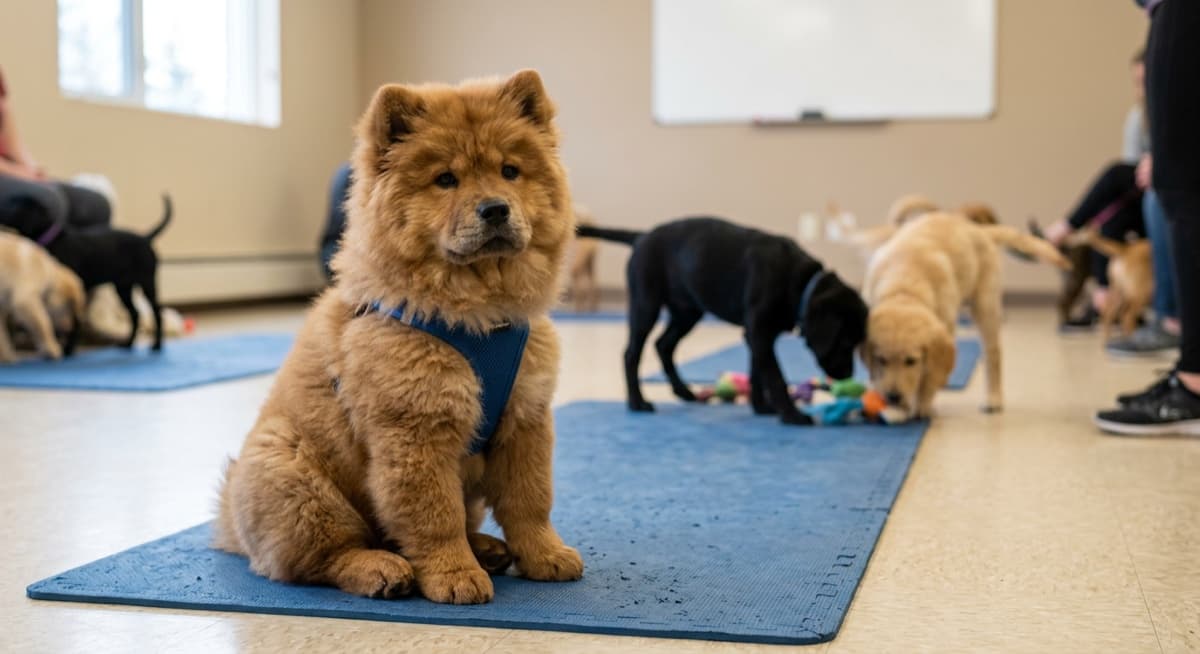
Every puppy has a developmental window between roughly 6 and 16 weeks of age where exposure to new people, dogs, surfaces, sounds, environments, and handling shapes lifelong sociability. Miss that window and you cannot fully recover it later. For most breeds the consequence is mild caution. For the Chow Chow, missing it is the difference between a calm dignified adult and a reactive one.
If you adopt a Chow puppy in Calgary, the socialisation plan looks like this:
- Daily controlled positive exposure to new humans (different ages, sizes, ethnicities, voices, hats, beards, mobility aids, kids if relevant).
- Gentle handling practice every day: paws touched, ears handled, mouth opened briefly, tail and rump touched, nails Dremel-introduced.
- New surfaces: gravel, grass, tile, hardwood, metal grates, snow, ice, plastic tarp.
- New sounds: vacuum, hairdryer, doorbell, traffic, train, fireworks (recorded at low volume).
- Puppy class with a force-free, vaccinated-puppy-friendly trainer. Avoid old-school dominance trainers. Look for IAABC or PPG certified trainers in the Calgary area.
- Vet handling practice: weekly “happy visits” to the clinic for a treat and no procedure, building positive vet association.
- NO flooding. Quality controlled positive exposure beats high-volume scary exposure every time.
If you cannot commit to this from week 6 through week 16, do not adopt a Chow puppy. Adopt an adult Chow that has already navigated the window successfully. The Chow Chow Club Inc. and the AKC both publish socialisation literature; use it as a checklist.
The First-Time-Owner Verdict
Directionally: most first-time owners should not pick a Chow Chow as their first dog. The breed concentrates several characteristics — aloof temperament, early-socialisation sensitivity, reactivity risk if mismatched, insurance complications, low handling tolerance — that all reward experience.
The narrow first-time exceptions:
- You are an adult-only household with no kids, no other pets, and a quiet daily rhythm.
- You have already verified home insurance and condo board status in writing.
- You are willing to invest in a force-free Calgary trainer from week one and attend puppy class for a Chow puppy.
- You are adopting a calm, well-tempered adult Chow from a reputable rescue that has assessed the dog with people, dogs, cats, and handling — not a puppy you carry through the socialisation window alone.
- You genuinely want a loyal aloof companion, not a sociable family dog. The picture in your head matches the breed standard.
If most of those check, a first-time Chow adoption can work. If any do not, pick a different breed for your first dog. Our breed page on the Chow Chow lists available rescue Chows in Calgary when inventory exists.
Adult vs Puppy: Which Chow Chow Should You Adopt?
For most Calgary adopters, an adult Chow is the safer pick. Personality is already revealed: how the dog behaves with kids, cats, dogs, strangers, vets, and handling is known to the rescue. You can match temperament to your home instead of betting on a developing one. You also skip the critical socialisation window stress.
A Chow puppy is the right pick if:
- You have experience socialising guardian-breed puppies and can execute the full 6 to 16 week plan.
- You have time at home during the window (parental leave, summer off, work-from-home).
- You are committed to a force-free trainer and a puppy class from week 10.
- You want to shape the dog from the start and accept the responsibility of the outcome.
Both adult and puppy adoptions are valid. Match the choice to your honest experience level, not the picture of a fluffy puppy in a Calgary backyard. Rescues like Calgary Humane, AARCS, and BARCS will help you choose if a Chow shows up in their inventory.
Foster-to-adopt is the safest test of fit
Calgary-area Chow Chow adoptions through reputable rescues often offer a 2 to 4 week foster trial. You meet the aloof temperament, the daily exercise rhythm, the handling sensitivity, the insurance reality, and the Calgary winter coat handling in real life. If the trial fits, you adopt. If not, the dog returns to foster with no fee lost. This is the safest way to know.
See Available Chow Chows →10-Question Self-Assessment
Answer honestly. If you answer “no” or “not sure” to more than two, the Chow Chow is probably not the right first dog for your household. That is useful information, not a judgment.
1. Have I lived with a guardian or aloof breed before?
If your previous dogs were all friendly social breeds (Labs, Goldens, Doodles, Cavaliers), you are jumping into an unfamiliar temperament. Honest answer matters more than enthusiasm.
2. Is my household adult-only or kids 10+?
Toddlers, babies, frequent young child visitors are a red flag. The Chow is not the kid-tolerant breed.
3. Do I have any other pets in the home?
Cats, small dogs, small pets are often a poor mix. One resident dog the Chow has been tested with may work. Multi-pet households are usually a no.
4. Have I confirmed home or tenant insurance coverage in writing?
Not “I think it will be fine.” In writing, from your broker, for the specific breed.
5. If I rent or live in a condo, have I confirmed building permission?
Some Calgary condo boards and landlords maintain restricted-breed lists. Verify before committing.
6. Am I willing to use force-free, positive-only training methods?
No alpha rolls, no leash pops, no e-collars. The Chow shuts down or escalates with harsh handling. If you believe a dog needs to be “shown who is boss,” choose a different breed (or, ideally, a different training philosophy).
7. Do I want a loyal protective companion, not a friendly social dog?
If your fantasy is dog park weekends with a tail-wagging social butterfly, the Chow is the wrong breed. Be honest with yourself about what you actually want.
8. Can I commit to weekly grooming (and daily during coat blow)?
3 to 4 brushings a week is the baseline. Spring and fall coat blow can mean daily. A neglected coat mats and the shed load on the floor explodes.
9. Do I have a real plan for Calgary summer heat?
Early-morning walks, air-conditioning, no midday exercise on heat-advisory days, no walks on hot asphalt. The breed cannot manage above-25C without owner planning.
10. Am I ready for an 8 to 12 year companionship and the eye-and-hip vet budget?
Shorter lifespan than most large breeds. Eye discharge daily, entropion surgery possible, hip and elbow dysplasia screening recommended. Plan for the costs honestly.
Calgary-Specific Factors
Calgary is unusually friendly to Chow Chow ownership in some ways and hostile in others. The honest picture:
- Winter climate: The double coat is ideal for Calgary winters. Most Chows are comfortable down to -20C and many prefer cooler weather. No winter coat needed in most conditions, though booties on heavily salted sidewalks help paw pads.
- Summer heat hostility: July and August Calgary heat advisories are genuinely hard on the breed. Plan for AC, early-morning walks, and zero hard exercise above 25C.
- Insurance landscape: Several Canadian brokers restrict or surcharge the breed. Confirm with your broker in writing before adoption.
- Condo and rental restrictions: Many Calgary condo boards maintain breed lists. Some Calgary landlords do as well. Verify before committing.
- Fenced yard preferred: Not required, but a fenced backyard makes outdoor decompression easier than relying on busy off-leash parks where social-butterfly dogs may overwhelm a Chow's aloof temperament.
- Off-leash parks: Use cautiously. Nose Hill, Bowmont, and Sue Higgins can work for a confident well-socialised adult Chow, but the breed often prefers solo neighbourhood walks to chaotic park scenes. Read the dog, not the dog-park scripture.
Frequently Asked Questions
Are Chow Chows good for first-time owners?
Generally no, with narrow exceptions. The Chow Chow is mostly an experienced-owner breed because the aloof temperament, the early socialisation window, the reactivity risk if mismatched, and the insurance and handling realities all reward experience. The first-time owners who succeed tend to be patient single-dog households without young kids, willing to invest in a force-free trainer from day one, and committed to the 6 to 16 week socialisation plan. Most first-timers in Calgary do better with a steadier first breed.
What are the biggest cons of owning a Chow Chow?
Aloof temperament often misread as poor socialisation, breed-specific reactivity risk if early socialisation is missed, home-insurance restrictions or surcharges from many Canadian brokers, a shorter lifespan than most large breeds (8 to 12 years), deep-set eyes prone to entropion and chronic discharge, hip and elbow dysplasia risk, and summer heat hostility from the thick double coat. None are deal-breakers alone — together they explain why the breed needs the right home.
Who should NOT get a Chow Chow?
Families with young kids, multi-pet homes with cats or small dogs, first-time dog owners (in most cases), households that want a friendly social dog, anyone who cannot resolve the home-insurance reality, hot-climate residents, and anyone with tenant or condo board breed restrictions they cannot resolve. The Chow is a loyal one-household companion, not a social butterfly. A mismatch is not the dog's fault.
Are Chow Chows good with kids?
Not the typical kid-friendly breed. Chows tend to be patient with their own household but low-tolerance for grabbing, climbing, sudden handling, and the noise level of toddlers. Older kids (roughly 10+) who respect boundaries do fine with a well-socialised Chow. Households with young children are generally a poor match. If you have a baby on the way or grandchildren who visit often, pick a different breed.
Are Chow Chows good with other pets?
Often not. The Chow is typically a one-pet household. Many Chows are dog-selective or dog-intolerant with unfamiliar dogs, and prey drive toward cats and small animals is common. Some Chows raised from puppyhood with a specific cat or dog manage well, but adding a Chow to an existing multi-pet home is risky. Talk to the rescue about how the specific dog tests with other pets before committing.
Are Chow Chows aggressive?
No breed is inherently aggressive, but Chow Chows are reactive-prone if mismatched. The breed is naturally aloof, protective of its household, and low-tolerance for handling mistakes. Without early socialisation in the 6 to 16 week critical window and ongoing force-free training, those traits can present as growling, snapping, or reactivity. Well-socialised, well-matched Chows in experienced homes are calm and confident. Behaviour is a product of breeding, socialisation, training, and fit — not breed identity alone.
Why do home insurers restrict Chow Chows?
Several Canadian home and tenant insurance brokers maintain restricted-breed lists, and Chow Chow is commonly on them. Underwriting decisions are based on the insurer's own loss data and risk appetite, not a single national rule. The honest move is to call your broker BEFORE you adopt and ask, in writing, whether your specific policy covers a Chow Chow. Some insurers cover with a liability surcharge, some exclude the breed, and some require alternative coverage. Calgary condo boards may impose breed restrictions separately. Verify both before committing.
Should I adopt a Chow Chow puppy or adult?
For first-time Chow owners, an adult is often the safer pick. A puppy means you carry the critical 6 to 16 week socialisation window personally and a missed window can shape reactivity for life. An adult Chow comes with personality already revealed: how it behaves with kids, cats, dogs, strangers, vets, and handling is known by the rescue. Experienced Chow owners who understand the socialisation work can do well with a puppy. New owners usually do better with a known adult.
Sources and further reading
- American Kennel Club (AKC), Chow Chow breed page — standard, temperament, lifespan, and breed history.
- Chow Chow Club Inc. (the AKC parent breed club): chowclub.org — breed standard, owner education, health information.
- American Veterinary Medical Association (AVMA) — large-breed orthopaedic health, socialisation, and bite-prevention literature.
- American Animal Hospital Association (AAHA) — canine life-stage guidelines, puppy socialisation checklist, and preventive care standards.
- International Association of Animal Behaviour Consultants (IAABC): iaabc.org — force-free behaviour and reactivity resources.
This article is informational only and not a substitute for veterinary, behavioural, or insurance advice. Consult a Calgary veterinarian, a force-free trainer, and your own insurance broker for personalised guidance.
Related Chow Chow guides
Chow Chow Adoption Calgary →
Where to find a rescue Chow Chow in Calgary, real adoption costs, what reputable rescues assess, and the foster-trial route.
Chow Chow Temperament and Aggression Calgary →
The aloof breed standard, reactivity risk and prevention, force-free handling, and why temperament is fit-driven not breed-driven.
Chow Chow Health Issues Calgary →
Entropion and eye care, hip and elbow dysplasia, shorter lifespan reality, summer heat management, and Calgary vet planning.
Chow Chows for Adoption in Calgary →
Live listing of available Chow Chows and Chow mixes across Calgary rescues when inventory exists.
New dog? Start with these care guides
Everything a new adopter needs to set up a safe, happy home.