The short answer
Cockapoos are popular in Calgary and rarely surrendered, so general rescue intake is uncommon. Apply broadly to Calgary Humane Society, AARCS, BARCS, Pawsitive Match, ARF Alberta, Cochrane Humane Society, and Heaven Can Wait, and set up notifications because listings move within days. Adoption fees are typically $400 to $800 versus $1,500 to $3,000 for a breeder Cockapoo puppy. The breed is the original American doodle, dating to the 1950s and predating the Labradoodle by 35 years. Adults run 12 to 25 lbs depending on the Poodle parent, live 12 to 16 years, and need weekly ear cleaning as a permanent routine because both parent breeds contribute long heavy ears that trap moisture.
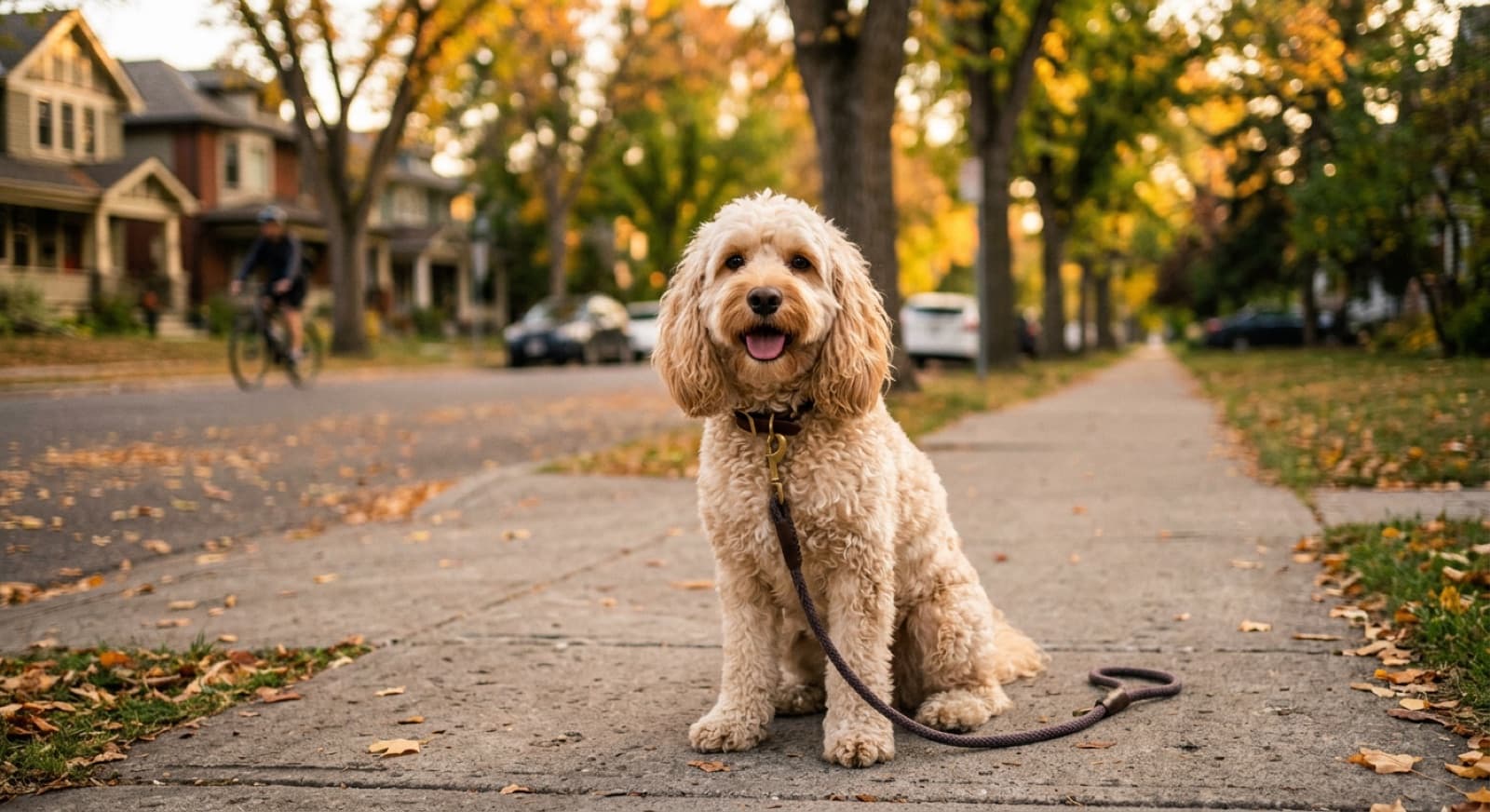
The Cockapoo is a Cocker Spaniel and Poodle designer cross that predates every other doodle. The first intentional litters in the United States are documented from the 1950s, roughly 35 years before the Labradoodle existed. Bred from the start as a companion dog rather than a working dog, the Cockapoo lands closer to a lap dog than the Labradoodle or Goldendoodle do, which is part of why the breed remains one of the most popular small designer crosses in North America. Today most Calgary adopters know the breed through friends, social media, or designer-breed marketing. The breed is genuinely workable for the right household, but the grooming workload, ear care commitment, and separation anxiety pattern catch many first-time owners off guard. This guide covers where Cockapoos actually appear in Calgary rescue, what they cost to live with, why so few surface in shelter intake, and how to evaluate a Cockapoo breeder honestly when rescue is not realistic for your timeline.
The Cockapoo at a glance
Cockapoos are a designer cross, not a recognised purebred. Neither the Canadian Kennel Club nor the American Kennel Club registers Cockapoos as a breed. The American Cockapoo Club has worked since 1999 to standardise the breed through multi-generation pedigrees, parent health testing, and a written breed standard. The Cockapoo Club of America runs a parallel registry. Most Calgary Cockapoos are F1 or F1B crosses, not multigenerational, which means individual coat type and adult size remain a partial lottery.
| Trait | Typical range |
|---|---|
| Adult weight | 6 to 30 lbs depending on Poodle parent size |
| Size variants | Toy 6 to 12 lbs / Mini 13 to 18 lbs / Standard 19 to 30 lbs |
| Lifespan | 12 to 16 years |
| Coat types | Wavy, curly, or straight; colours include buff, cream, chocolate, black, parti, sable |
| Energy level | Moderate; family-bonded |
| Exercise needs | 45 to 60 minutes daily plus mental work |
| Temperament | Affectionate, velcro, social, biddable, sometimes anxious when left alone |
The dog you actually live with depends on which Poodle parent was used in the cross and which Cocker variety (American or English). A Mini Poodle crossed with an American Cocker produces the classic 13 to 18 lb Calgary Cockapoo most adopters picture. A Toy Poodle parent shifts the adult into the 6 to 12 lb range. An English Cocker parent produces a leaner more athletic dog that is taller at the shoulder and often a bit more drivey. Most Cockapoos inherit the Cocker parent's affection and biddability with the Poodle parent's problem-solving intelligence, which is why the breed earns a strong reputation as a family companion.
Where to adopt a Cockapoo in Calgary
Calgary Cockapoo rescue intake is uncommon for the same reason most popular small breeds are scarce. The dogs are small, valuable, and easy to rehome through Facebook groups, family networks, or breeder take-back contracts. The result is that a typical Calgary rescue sees one or two Cockapoos a month, not one or two a week. The strategy is the same as any low-volume designer cross: apply broadly, set up alerts, and be ready to move quickly when a listing appears.
Calgary-area rescues to monitor:
- Calgary Humane Society: the largest local shelter; occasional Cockapoo and doodle-mix intakes from owner surrenders.
- AARCS: foster-based; structured “good with” evaluations are useful for a velcro small dog.
- BARCS Rescue: Calgary foster network; small and medium dogs frequently, with doodle-mix surrenders from time to time.
- Pawsitive Match: Calgary foster-based; companion and small breeds appear regularly.
- ARF Alberta: Calgary foster network; broad small and medium dog inventory.
- Cochrane Humane Society: Cochrane-based, serves the Calgary region.
- Heaven Can Wait: High River-based, Calgary placement common.
- Calgary Animal Services: the municipal facility; occasional surrendered Cockapoos when a family hits the grooming wall or ear health workload.
The single best move is to set up notifications on the LocalPetFinder Cockapoo breed page. Current listings from all Calgary rescues land there as they appear, and you will see a new arrival before most adopters do.
Two designer-breed networks are worth knowing for flexible adopters. The American Cockapoo Club and the Cockapoo Club of America both run informal owner-surrender and breeder-retirement pipelines. When a registered breeder retires a brood female at age 4 or 5, the dog is sometimes placed through these networks at a fraction of puppy pricing. Serious applicants who can demonstrate breed knowledge sometimes get matched through these channels months before a dog would otherwise appear in general rescue.
The 1950s origin: the first American doodle
The Cockapoo predates every other doodle cross by decades. While the Labradoodle traces to Wally Conron in Australia in 1989, intentional Cocker Spaniel and Poodle litters were already being bred in the United States in the 1950s. The motivation was not service work but companionship. American families wanted the affection and family wiring of the Cocker Spaniel paired with the trainability and lower-shed coat of the Poodle. The cross worked, the dogs were small enough to fit any home, and the breed quietly built a following for almost half a century before the doodle craze made the name a household reference.
The American Cockapoo Club was founded in 1999 to push the breed toward standardisation rather than leave it as an ad-hoc cross. The club promotes multi-generation breeding (Cockapoo to Cockapoo across at least three generations) to lock in coat type and temperament, and members agree to a written breed standard with documented parent health testing. The Cockapoo Club of America runs a parallel framework. Both organisations want the Cockapoo recognised as a developed breed rather than a designer label.
Two takeaways matter for Calgary adopters. First, the breed concept has a 75-year track record, which is much longer than the marketing-driven doodles created in the last two decades. The Cockapoo is not a 2010s designer fad. Second, the commercial market that grew up around the breed still varies enormously in quality. A backyard breeder selling unregistered “Cockapoo puppies” on Kijiji is selling a randomly bred cross with no health testing, no temperament selection, and no genetic predictability. A registered American Cockapoo Club breeder selling a multi-generation puppy is selling something closer to a developed breed. The price difference between those two paths is real, and so is the puppy.
What does a Cockapoo cost in Calgary?
Calgary fees vary by rescue and what is included. The realistic ranges below are directional, not quotes:
| Source | Fee range | Typically includes |
|---|---|---|
| Calgary Humane Society | $400 to $600 | Spay or neuter, vaccinations, microchip, vet exam |
| AARCS | $500 to $700 | Spay or neuter, vaccinations, microchip, foster history |
| BARCS / Pawsitive Match / ARF Alberta | $400 to $700 | Spay or neuter, vaccinations, microchip, foster notes |
| American Cockapoo Club retirement | $600 to $800 | Documented lineage, foster-based evaluation, breeder follow-up |
| Breeder puppy (standard or registered) | $1,500 to $3,000 | Variable health screening, varying contracts, 6 to 12 month waitlist |
The adoption fee is only the entry cost. Annual care for a Cockapoo in Calgary runs higher than many small breeds because of the every six to eight week grooming requirement and the ear-care supplies list. Plan for:
- Professional grooming: $70 to $110 per session every 6 to 8 weeks at Calgary salons. That works out to $500 to $900 per year. The wavy and curly coats do not shed out on their own; they keep growing and need trimming, de-matting, and face-and-feet sanitary trims on a steady schedule. Skip this and the coat mats to the skin, which then requires a shave-down.
- Ear care supplies: a vet-approved drying ear cleaner, cotton balls, and ear-canal hair trimming at every salon visit. Budget $80 to $150 per year. The weekly cleaning routine is non-negotiable; both parent breeds contribute drop ears that trap moisture.
- Home grooming tools: a slicker brush, metal comb, detangling spray, and grooming scissors for between-salon touch-ups. Budget $60 to $120 once, then refill consumables every year or two.
- Small-dog gear: a well-fitted Y-front harness (never a neck collar for walking, the breed's small trachea is sensitive), 6 foot leash, weatherproof boots and coat for winter. Budget $150 to $300 in the first month.
- Food and treats: $40 to $80 per month depending on quality tier and adult size. A 20 lb Mini Cockapoo eats roughly half what a 30 lb Standard Cockapoo eats.
- Vet and preventive care: roughly $400 to $800 per year for routine wellness, vaccines, parasite prevention, and dental. Add $150 to $300 per ear-infection vet visit if cleaning is missed, which is the single most common Calgary Cockapoo unplanned vet cost.
- Pet insurance: worth considering given the ear infection pattern and the stacked health risk from both parent breeds. Plan for $50 to $90 per month for a Cockapoo, with Calgary specialty care available through Western Veterinary Specialist Centre.
- Calgary dog licence: required for every dog three months and older under the Responsible Pet Ownership Bylaw 3M2006. A small annual fee that improves recovery odds if your dog ever goes missing.
First-year totals typically land between $2,400 and $4,200 once you add gear, training, grooming, ear care, and licence on top of the adoption fee. For a full breakdown of lifetime ownership cost in Calgary, see our Calgary adoption costs guide.
Why Cockapoos end up in Calgary rescue
Intake is uncommon. When surrenders do happen, the patterns are consistent year over year. Understanding them helps you build a household where it does not happen to your dog.
- Grooming workload fatigue. The single most common surrender driver for this breed. The every six to eight week salon visit at $70 to $110 catches families by surprise. So does the between-salon brushing requirement and the daily face-and-feet wipe. Owners who underestimated the workload sometimes let the coat mat to the skin, which forces a shave-down and a longer recovery.
- Chronic ear infection management. A close second. Families who skip the weekly ear cleaning routine end up at the vet repeatedly with $150 to $300 visits, and the cumulative cost plus the dog's discomfort sometimes triggers surrender between months 8 and 24. Owners often did not realise that ear cleaning is a permanent weekly task, not occasional maintenance.
- Separation anxiety pattern. The Cockapoo is a velcro breed bred for human companionship. A dog left alone for 9 to 10 hour Calgary workdays without structured daycare or daily enrichment frequently develops separation anxiety: barking, destructive chewing, soiling in the home, or self-harm from crate panic. This pattern dominates the 1 to 5 year young adult rescue cohort.
- Lifestyle changes. Babies, moves to smaller condos, divorces, owner illness. Common across breeds but particularly hard on a velcro small dog whose attachment to one primary human is intense.
- Backyard-breeder cast-offs. A meaningful share of poorly bred Cockapoos end up surrendered when behavioural or health issues surface that the seller misrepresented. Patellar luxation diagnosed at age 2 in an untested cross often forces a financial choice the family did not budget for.
None of these are problems with the breed concept. They are problems with the match, the source, or the household honesty before adoption. Calgary rescues that run foster-based programs (AARCS, Pawsitive Match, ARF Alberta, BARCS) are the best resource for a Cockapoo whose adult temperament and ear health history are already known, which avoids most of the patterns above. Read Is a Cockapoo right for you? before applying.
Size matrix: Toy, Mini, and Standard Cockapoo
A Cockapoo's adult size is set by which Poodle was used in the cross. The variation is wide enough that two Cockapoos can be 20 lbs apart and both be correct for the breed.
| Variant | Weight | Poodle parent |
|---|---|---|
| Toy Cockapoo | 6 to 12 lbs | Toy Poodle |
| Mini Cockapoo | 13 to 18 lbs | Miniature Poodle (most common in Calgary) |
| Standard Cockapoo | 19 to 30 lbs | Standard Poodle (less common) |
The Mini is the most common Calgary rescue size and the closest match to the original 1950s American cross. The Toy fits Calgary condo life and small apartments well, though small-trachea sensitivity makes a harness essential rather than a neck collar. The Standard is the least common because the size disparity between a Cocker Spaniel and a Standard Poodle makes the cross less popular; when you find one, it tends to come from a deliberate multi-generation breeder rather than a backyard pairing.
The other size-shaping variable is the Cocker parent. The American Cocker Spaniel (20 to 30 lbs, shorter muzzle, rounder head, heavier coat) is the most common North American parent and produces the classic rounded-face Cockapoo. The English Cocker Spaniel (26 to 34 lbs, longer muzzle, leaner athletic build, flatter coat) produces a slightly taller and leaner adult and is more common in UK lines. Always ask any rescue or breeder which Cocker parent is in the cross; it changes the dog you actually live with.
F1, F1B, F2, multigen: the generation framework
Generation labels describe the genetic recipe and predict coat reliability. The headline is the same as every other doodle: the further you move from F1, the more consistent the coat and the more reliable the low-shed claim becomes. Here is the short version. For the full disambiguation including what each generation looks like in adult coat photos, see our companion Cockapoo ear care and grooming guide.
| Label | Recipe | Coat reliability |
|---|---|---|
| F1 | Cocker x Poodle (50/50) | Lottery; roughly half wavy or curly, half Cocker-style hair coat |
| F1B | F1 Cockapoo x Poodle (25/75) | Reliably low-shed in most puppies |
| F2 | F1 Cockapoo x F1 Cockapoo | Most variable; hardest to predict |
| Multigen | Cockapoo x Cockapoo across 3+ generations | Consistent coat and temperament; American Cockapoo Club preferred |
For an allergic Calgary family that needs a reliable low-shed coat, the order of dependability is multigen Cockapoo, then F1B, then F2, then F1. An F1 from an ethical breeder is still a valid dog; it is just not the right pick for a family that genuinely needs low-shed reliability. The cost-and-wait tradeoff is smaller than for the Labradoodle because Cockapoo pricing is more uniform: most Calgary breeder Cockapoo puppies run $1,500 to $3,000 regardless of generation, with multi-generation American Cockapoo Club lines at the higher end.
Breed mix verification: what an honest rescue can tell you
Cockapoo identification at intake is harder than purebred identification. A surrendered dog labelled “Cockapoo” might be an F1 with documented parents, an F2 from a backyard pairing, or a small mixed-breed dog that simply looks Cockapoo-ish. Calgary foster-based rescues are usually upfront about this and label uncertain dogs as “Cocker Spaniel/Poodle mix” rather than overclaiming. Apply the same skepticism to listings outside foster-based networks.
What an ethical rescue can and cannot tell you:
- Can tell you: the dog's adult coat type (since F1 lottery is fully resolved by age 2), settled temperament, compatibility with kids, cats, or other dogs from foster observations, ear health history, and any documented vet visits.
- Cannot tell you with certainty: exact parentage (unless surrender paperwork includes the breeder), exact F1 vs F1B vs F2 generation, or whether the dog is American or English Cocker on the Cocker side. Listings that state these confidently without paperwork are usually guessing.
- DNA tests: Embark or Wisdom Panel DNA tests cost $130 to $200 and resolve parentage within 24 to 28 days. Most rescues do not pay for them; if the answer matters to you, factor a DNA test into your first-year budget.
The free-pet scam pattern is real for designer doodles in Calgary. The classic version: a Facebook or Kijiji listing offers a “free Cockapoo” with an emotional surrender story (military move, allergy in the family). The applicant is asked to pay a shipping or holding fee of $200 to $500. The dog does not exist. The pattern targets the breed's popularity and the urgency adopters feel when listings move quickly. Never pay a deposit to a private “rehomer” sight-unseen, and never meet at a transport pickup location without seeing the dog first in the surrender home. Legitimate Calgary rescues use foster homes, structured applications, and meet-and-greet visits; they do not ship dogs from out of province for an upfront fee.
Calgary climate fit: indoor-friendly small dog
The Cockapoo handles Calgary weather as well as most small companion breeds, which is to say with some sensible adjustments. A wavy or curly coat at full length provides moderate insulation to about minus 5 to minus 10 degrees Celsius; below that a winter coat is sensible because the dog is small and loses heat quickly. A clipped grooming style, particularly a summer short-clip, leaves the dog less insulated and shifts the winter-coat threshold upward. Treat the Cockapoo as a small indoor companion with limited outdoor cold tolerance, not as a working breed.
Practical Calgary winter routine:
- Walk in a winter coat below minus 10 degrees Celsius, sooner for clipped dogs.
- Booties help on packed snow because small paws ball up with ice between the toes more quickly than larger dogs. Salt irritation on Beltline and Inglewood sidewalks is real; a quick paw rinse on return solves it.
- Watch for ice-ball formation between the toes in long wavy or curly coats; trim the foot hair short during winter.
- Below minus 15 degrees, swap outdoor walks for indoor enrichment most days. Scent work, structured training with a force-free trainer like Raising Canine or Pup City Pup Academy, or social play with another small dog carries the breed through the coldest weeks better than forcing short cold walks.
- Dry the ears thoroughly after every walk in wet snow. Moisture in the ear canal during winter is just as much of an infection risk as summer swims.
Summer is more straightforward for the breed. Most Cockapoos tolerate Calgary summer temperatures up to about 22 to 25 degrees Celsius without complaint. Above that, walk before 8am or after 8pm. Practical Calgary summer routine:
- Many Cockapoos enjoy water; some do not, and the breed varies more than the Labradoodle on this. Test in a kiddie pool or shallow river spot before committing to swimming routines.
- Above 25 degrees Celsius, walk before 8am or after 8pm during July and August. The wavy and curly coats trap more heat than a single-coated breed.
- Provide constant water and shade. Small dogs heat up faster than large dogs.
- After every swim or wet-grass walk, dry the ears thoroughly. Cockapoos have drop ears and trap moisture more than a prick-eared breed. This is the single most important Calgary summer routine for the breed.
- Tom Campbell's Hill, Sandy Beach, Bowmont Park, and Edworthy Park all work as Calgary off-leash spaces for the breed. Stick to the small-dog area where one exists.
Browse adoptable Cockapoos in Calgary
See current Cockapoos and Cockapoo mixes across Calgary rescues in one place. Listings update regularly, and because the breed is small, family-bonded, low-shed in F1B+ generations, and apartment-compatible, dogs are often adopted within days. Set up notifications and apply quickly when a listing appears.
See Available Cockapoos →Frequently Asked Questions
Where can I adopt a Cockapoo in Calgary?↓
How much does it cost to adopt a Cockapoo in Calgary?↓
Are Cockapoos hypoallergenic?↓
Why do Cockapoos end up in Calgary rescue?↓
What is the difference between F1, F1B, and multigen Cockapoo?↓
Who invented the Cockapoo?↓
What is the difference between an English and American Cocker parent?↓
How much exercise does a Cockapoo need in Calgary?↓
Are Cockapoos good in Calgary winters?↓
What about Cockapoo ear infections?↓
What size Cockapoo should I expect in Calgary?↓
Should I adopt a puppy or an adult Cockapoo?↓
Continue reading
Adoptable Cockapoos in Calgary
Current Cockapoo and Cockapoo-mix listings across Calgary rescues, refreshed regularly. Set up notifications for new arrivals.
Is a Cockapoo right for you?
The household honesty test, the ear-care expectation reset, and the questions every Calgary adopter should answer before applying.
Cockapoo ear care and grooming
The weekly ear cleaning routine, every-six-week salon cadence, and the home brushing schedule that prevents matting to the skin.
Cockapoo Health Issues: Ears, Eyes, Knees
Cockapoo health issues to plan for: chronic ear infections, glaucoma and PRA, slipping kneecaps, an immune blood disorder, allergies and teeth.
New dog? Start with these care guides
Everything a new adopter needs to set up a safe, happy home.