The short answer
Cockapoo care has two heavy lifts. Weekly ear cleaning with a vet recommended solution, because the Cocker ear flap traps moisture and the Poodle canal hair holds wax. Daily 5 to 10 minute brushing, because Doodle coats matt fast. Add a professional groom every 6 to 8 weeks at $60 to $110 a session, total $500 to $900 a year in Calgary. Skip the brushing and you pay $120 to $160 for a shave down. Skip the ear cleaning and chronic ear infections run $200 to $400 per vet visit. The work is real but predictable, and the cost is roughly what families spend on a sport for a kid.
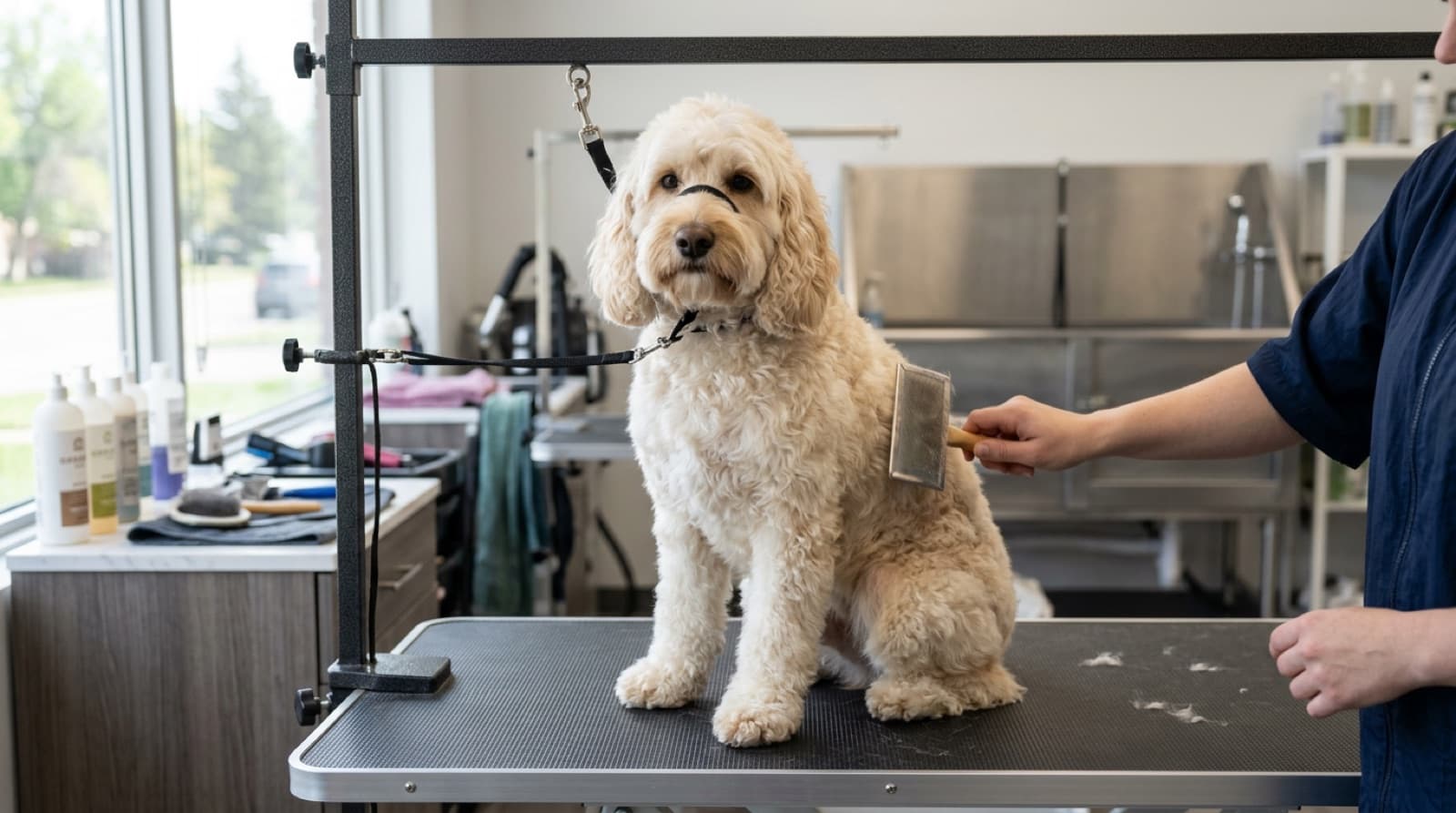
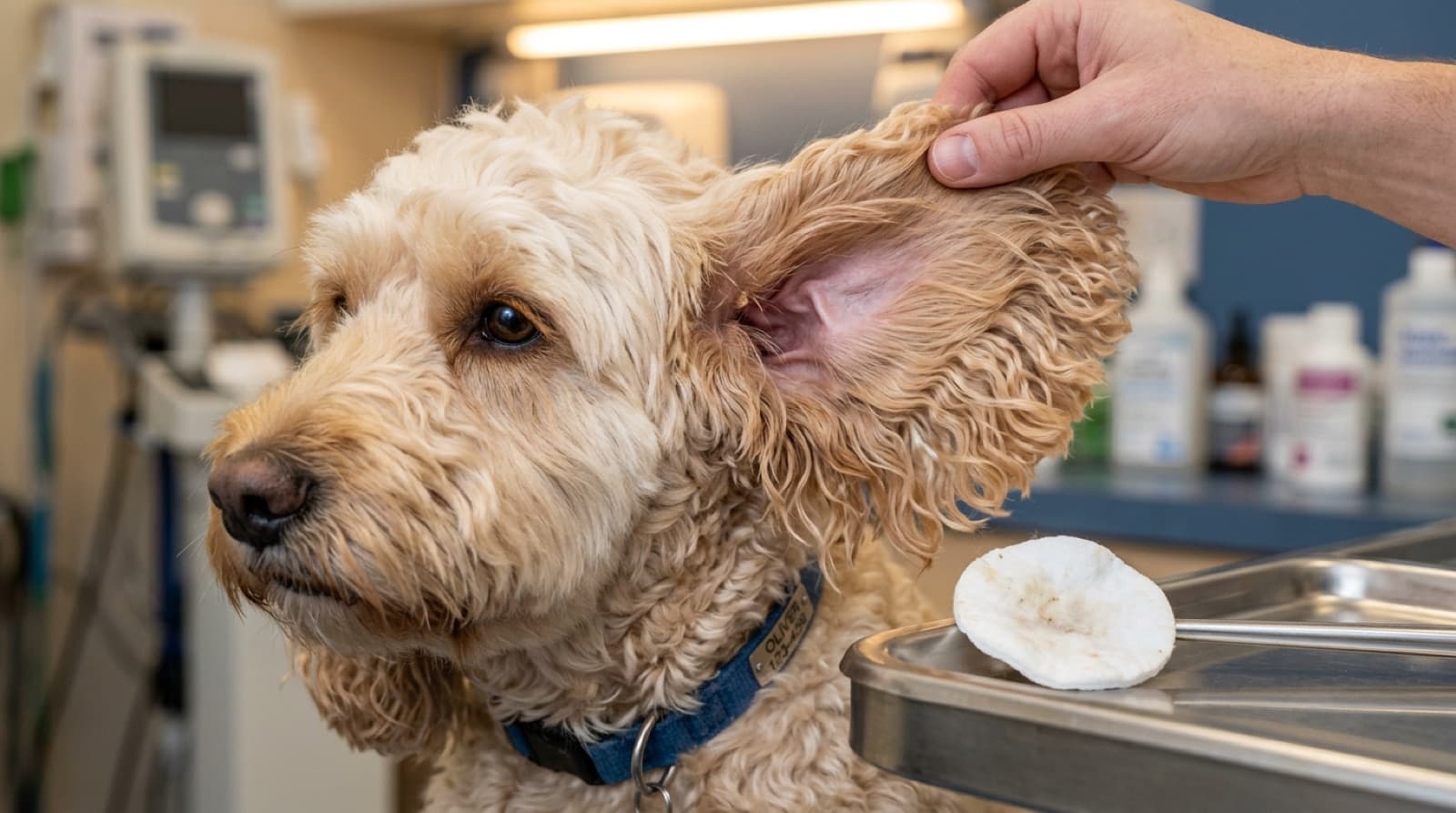
Why Cockapoos have the worst of both ear worlds
Most dog breeds give owners one ear problem to manage. Cockapoos give owners two, stacked.
From the Cocker Spaniel side: the long pendulous ear flap. Cocker ears hang past the bottom of the ear canal opening. The flap blocks airflow into the canal, which keeps the canal warm, humid, and dark. The American College of Veterinary Dermatology lists pendulous ear conformation as a primary risk factor for chronic otitis externa (outer ear infection) across breeds. Cockers themselves have one of the highest ear infection rates of any breed for exactly this reason.
From the Poodle side: dense hair growth inside the ear canal. Poodles and Poodle crosses grow hair down the canal walls, which most short coated breeds do not. The hair traps wax and debris against the lining and slows the natural outward migration of cellular debris that healthy ear canals rely on. The American Animal Hospital Association notes that breeds with hair filled canals need more frequent cleaning and, in many cases, periodic ear hair plucking by a groomer or vet.
Cockapoos inherit both. Long flap on the outside, dense hair on the inside, warm dark moist canal in between. It is essentially the perfect environment for yeast and bacteria to grow. Add a Calgary summer week with a single creek dip or a backyard sprinkler session, and an unclean canal turns into a vet visit fast.
This is not a reason to skip the breed. It is a reason to know the workload before adopting. Owners who clean ears weekly from day one and stay on top of professional grooming usually see zero or one ear infection in a Cockapoo lifetime. Owners who skip the routine often spend $1,500 to $3,000 over the dog's life on recurring otitis treatment. The math is firmly on the side of weekly cleaning.
Calgary climate makes the choice slightly easier than it would be in a humid coastal city. Calgary winters are dry and cold, which is a hostile environment for ear yeast. Summers are warm but mostly dry. The high risk windows are after bathing, after creek or pond swimming, and during the shoulder seasons when chinooks alternate wet snow melt with dry warm winds. Weekly is still the right baseline; just expect to bump to twice weekly during summer creek months.
The weekly ear cleaning routine
The general workflow below is the routine most Calgary vets walk new Cockapoo owners through. Product choice (which ear solution, whether to use cotton rounds or gauze, whether your dog needs canal hair plucking) is a conversation with your own vet, not something to take from a website. The structure of the routine is consistent across vet sources.
- Pick a calm time. After a meal or before a nap is easier than right after a walk when the dog is bouncing. Bring treats and a towel.
- Inspect first. Lift the ear flap and look inside. Healthy ears are pale pink with minimal odour and a thin film of pale tan or light brown wax. Redness, swelling, strong yeasty or sweet odour, dark brown chunky discharge, or yellow pus all mean stop and book a vet visit rather than clean.
- Apply the vet recommended solution. Fill the canal as your vet directed during the first exam. Do not improvise with hydrogen peroxide, vinegar, or alcohol; these can damage an inflamed lining and make things worse.
- Massage the base of the ear. 20 to 30 seconds of gentle massage at the cartilage just below the ear opening. You will hear a soft squelching as the solution moves through the canal.
- Let the dog shake. Stand back. Cockapoos shake hard and that shake is what carries loosened debris out of the deeper canal.
- Wipe the visible part. Use a cotton round to clean the outer canal and the inside of the ear flap. Stop where the canal turns inward; do not push anything down the canal toward the eardrum.
- Treat and let go. Reward generously. Most dogs learn to tolerate the routine within 4 to 6 weekly sessions.
Cornell University College of Veterinary Medicine maintains a useful overview of canine otitis externa for owners who want the medical background. Two takeaways: most ear infections in pendulous eared breeds are preventable with consistent cleaning, and most chronic cases trace back to inconsistent early routines rather than to underlying disease.
If you are nervous about doing it at the first try, book a 20 minute appointment with your Calgary vet specifically to be shown the technique on your own dog. Most clinics will charge the standard exam fee or less for this kind of teaching visit, and it is well worth the cost compared to learning by trial and error.
Recognising ear infections and when to escalate
Untreated ear infections in Cockapoos can permanently damage the canal lining and lead to hearing loss. Any combination of head shaking, scratching, odour, and discharge is a same week vet call. Do not start over the counter ear treatments without a vet exam first.
The earliest sign is usually behaviour, not appearance. A Cockapoo who suddenly starts shaking the head 10 to 20 times a day, scratching at one ear with the back paw, or rubbing the side of the face along the carpet is telling you something is wrong inside the canal before you can see anything from the outside.
The full red flag list:
- Head shaking beyond the normal post wake stretch shake
- Persistent scratching at one specific ear with the back paw
- Face rubbing on carpet, furniture, or grass
- Head tilt to one side at rest
- Odour that is sweet, yeasty, or genuinely foul
- Redness or swelling on the inside of the ear flap
- Discharge that is dark brown, chunky, yellow, or bloody
- Flinching when you touch the ear or the side of the head
- Hearing loss (the dog stops responding when called from another room)
- Loss of balance or stumbling (deeper inner ear involvement, urgent)
Any single sign is a vet visit within 3 to 5 days. Two or more together is a same week call. Hearing loss or balance issues are urgent. The longer an ear infection runs untreated, the more likely it is to progress from a surface yeast or bacterial overgrowth (treatable with cleaning and medication) to a deeper canal infection that damages the lining (treatable but with longer course and higher cost) and finally to a chronic case that may require surgical intervention.
For routine ear infections, your regular Calgary vet handles the case. For chronic or recurring infections that have not responded to multiple medication courses, ask for a referral to a veterinary dermatology specialist. Western Veterinary Specialist Centre and VCA Canada West Veterinary Specialists both have dermatology services in the Calgary area. For budget conscious owners, Calgary Pet Wellness and Spay or Neuter Clinic offers lower cost general exam visits that can serve as a first step before referral.
Typical Calgary cost ranges per visit:
- Routine ear exam plus cytology plus cleaning plus medication: $200 to $400
- Chronic case workup at a specialty clinic: $400 to $800 initial visit
- Total Loss Ear (TECA) surgery for end stage chronic disease: $4,000 to $7,000
Pet insurance covers most ear infections that are not pre existing at policy start, which is the single strongest argument for insuring a Cockapoo from puppyhood. See the Cockapoo health issues guide for the full pet insurance ROI breakdown for the breed.
The three Cockapoo coat types
Coat type drives the grooming workload more than generation does. A Cockapoo owner needs to know which of the three coat types their dog has before they can plan brushing cadence, groom frequency, and budget. The adult coat does not fully come in until 6 to 12 months, so for puppies the coat type is a best guess from breeder or rescue observation of the parents.
Fleece (most common): wavy, silky, soft. The Cockapoo coat most people picture. Low shedding, allergy friendly for most mild to moderate sensitivities. Sits between the tight Poodle curl and the straight Cocker hair. Daily 5 to 10 minute brushing keeps it tangle free. Professional grooms every 6 to 8 weeks. Mid range of the three for maintenance workload and cost.
Wool (curly, Poodle dominant): tight ringlets across the body, denser than fleece. Lowest shedding of the three. Highest maintenance because the tight curls tangle and matt the fastest. Daily brushing is non negotiable. Professional grooms every 4 to 6 weeks. Best choice for households with allergies. Highest cost of the three.
Hair (straight, Cocker dominant): looser, more like a Cocker Spaniel coat. Sheds more, looks less Doodle, lowest maintenance. 3 to 4 brushings a week is enough. Professional grooms every 8 to 12 weeks for routine bathing and light trim. Lowest cost of the three. Not suitable for allergy households.
Annual grooming budget by coat type in Calgary:
- Wool coats: $90 to $130 every 4 to 6 weeks = $780 to $1,400 annually
- Fleece coats: $60 to $110 every 6 to 8 weeks = $500 to $900 annually
- Hair coats: $50 to $80 every 8 to 12 weeks = $250 to $500 annually
The daily brushing routine
Daily brushing is the single most important habit for any Cockapoo owner. 5 to 10 minutes a day prevents matts. Skipping a week during the puppy to adult coat change almost guarantees you will pay for a shave down at the next groom. Skipping a week as an adult risks matts that need to be brushed out painfully or shaved off entirely.
The basic sequence:
- Light mist with detangling spray. Brushing a dry tangled coat tears hair and causes static. A light spritz of detangler softens the coat and reduces breakage.
- Slicker brush, line brushing technique. Part the coat horizontally with one hand and brush the section underneath with the slicker. Move from the skin outward in short strokes. Work systematically from chest to hips, then down each leg, then ears and tail. This is the difference between brushing the top of the coat (which feels productive but does not prevent matts) and brushing the layer near the skin (which is where matts actually form).
- Metal comb check. After the slicker pass, run a metal comb through the coat from skin to tip. If the comb passes freely, you are done. If the comb catches, go back with the slicker on that spot.
- Focus zones. The highest matting risk areas are behind the ears, under the armpits, along the inner thighs, around the collar, and at the base of the tail. Give those zones an extra 30 seconds each.
- Reward. Treat at the end every time. Cockapoos learn to enjoy brushing within a few weeks if the experience is gentle and consistent.
The full set up for at home brushing runs $80 to $150 once and lasts years:
- Medium slicker brush ($25 to $40)
- Metal greyhound comb ($15 to $25)
- Detangling spray ($10 to $20)
- Vet recommended ear cleaning solution ($15 to $25 per bottle, lasts 4 to 6 months)
- Cotton rounds for ear cleaning ($5 to $10)
- Nail grinder or clippers ($20 to $50)
- Sanitary scissors for sensitive areas (optional, or leave for groomer)
Brand recommendations are a personal preference and a vet conversation. Generic categories above are the structure; the specific products are something the groomer or vet picks for your dog.
Professional grooming in Calgary
Every Cockapoo needs a professional groomer. Daily brushing keeps the coat tangle free between visits, but the actual clip (body, face, ear shaping, paw pads, sanitary trim) is a skilled job that takes practice and the right tools. Calgary salons charge $60 to $110 for a routine Cockapoo groom, with wool coats at the higher end and hair coats at the lower end.
A typical groom includes:
- Bath with a coat appropriate shampoo
- Blow dry on a high velocity dryer (this is also a powerful matt finder)
- Full body clip at the length you specify
- Hand scissoring on the face, ears, and feet for the rounded Doodle look
- Ear cleaning and canal hair plucking if your dog needs it
- Nail trim
- Sanitary trim around the back end and belly
- Paw pad trim to remove the hair between the pads (important for winter traction)
Common Cockapoo styles:
- Teddy bear cut: the most popular. 1 to 2 inches on the body, rounded face, fluffy ears. Easy to maintain at home between grooms.
- Puppy cut: shorter overall (around half an inch to an inch). Lower maintenance, fewer matts, less Doodle look. Good summer choice or for owners who travel.
- Cocker cut: longer on the body and feathered legs, shorter on the face. More Cocker styling for owners who like the Spaniel look.
- Lion cut: short body, longer mane and tail tuft. Stylistic; uncommon in Calgary winter for warmth reasons.
Picking a Calgary Cockapoo groomer takes one or two trial visits. Look for someone with Doodle experience specifically rather than a generalist. Ask how often they groom Cockapoos, what coat lengths they recommend, whether they hand scissor the face and ears, and what their shave down policy is for matted dogs. Calgary force free trainers like Raising Canine and Pup City Pup Academy often share groomer referrals from their client networks. A good first groom is a 90 minute appointment with no rushing, treats during the session, and a result you and the dog are both happy with.
Why a matted Cockapoo ends up shaved
Most Cockapoo owners learn the matting rule the hard way at their first or second groom appointment. They skipped brushing during a busy week or two, brought the dog in expecting a normal $80 groom, and got told the dog has to be shaved down because the matts are too deep to safely brush out.
Why deep matts cannot just be brushed out:
- The matt pulls on the skin. A deep matt fuses the hair against the skin surface. Trying to brush it out yanks the skin with every stroke, which is painful and can cause skin damage.
- The matt holds against moisture. Matts at the skin trap moisture and skin oils, which can lead to skin infections (hot spots) under the matt that you cannot see from the surface.
- Brushing time becomes unrealistic. A fully matted Cockapoo could take 4 to 6 hours of careful detangling, which is more than any groomer can spend on a single dog.
- Animal welfare guidelines. Most Calgary salon groomers follow welfare codes that require shaving when detangling would cause pain.
A shave down is not a disaster. The dog gets a very short coat that grows back over 2 to 3 months. The cost is roughly double a routine groom ($120 to $160 versus $80). The bigger issue is that some Cockapoos become groomer averse after a difficult shave down session and develop anxiety around future grooming visits, which compounds the problem.
The fix is prevention. Daily 5 minute brushing during the puppy to adult coat change (6 to 12 months) and 3 to 4 sessions a week as an adult. The dogs who do best at the groomer are the dogs who do not need anything dramatic done because the owner kept the coat clear at home.
Calgary climate considerations
Calgary weather affects Cockapoo grooming choices in three specific ways.
Winter coat length (November through March). Keep the coat slightly longer (around 2 to 3 inches) for insulation. Cockapoos handle cold well down to about minus 10 degrees Celsius without a jacket, and most still need a fitted winter coat for walks below minus 10 to minus 15. The exception is a smaller Mini Cockapoo or a senior dog with thinner skin; those dogs need a jacket sooner. A close shave in deep winter leaves the dog cold and the owner relying on layers, which adds friction to every walk.
Summer coat length (May through September). A 1 to 1.5 inch body length is comfortable for most Cockapoos. Resist the urge to fully shave for summer. Cockapoo coats provide some sun protection and a complete shave exposes skin to sunburn risk on bright Calgary days. A shorter clip with the legs and belly tidied up handles heat well and keeps matting risk down during creek season.
Chinooks. Calgary chinooks swing temperatures by 20 to 30 degrees within hours. A coat length that works for minus 15 in the morning may overheat the dog by 5 above in the afternoon. The practical answer is to dress in layers (carry a removable jacket on walks) rather than to chase the perfect single coat length. Wet snow during chinook melt also creates a matting risk because alternating wet and dry tangles the coat fast; towel dry thoroughly after wet outings.
One more Calgary specific note: paw pad hair gets long fast on Cockapoos and traps snow and ice between the pads in winter. Ask your groomer to trim paw pad hair short at every winter groom. This is the single most impactful paw care change for Calgary Cockapoo owners. Many dogs who appear to refuse winter walks are actually just dealing with ice balls between the toes, and a paw pad trim solves it instantly.
The puppy to adult coat change
The Cockapoo coat goes through a major change between roughly 6 and 12 months. The soft puppy coat sheds out and the adult coat replaces it. During this window, two coats live on the dog at the same time, the old shedding underneath and the new growing through. This is when matting risk spikes most sharply in a Cockapoo lifetime.
The brushing cadence during the coat change:
- Months 1 to 5: 3 to 4 light brushings a week. Mostly to build the habit and condition the puppy to enjoy the routine. Matting risk is low because the puppy coat is soft and short.
- Months 6 to 12: daily brushing. 5 to 10 minutes. This is non negotiable. Most owners who end up at a shave down at 9 to 10 months missed the daily routine somewhere in this window.
- Months 12+: back to 3 to 4 brushings a week (fleece and hair coats) or daily (wool coats).
Professional grooming during this window:
- First puppy groom: around 12 to 16 weeks, after the full vaccination series. A gentle introduction visit. Light tidy, bath, blow dry. No major clipping. The goal is positive first experience, not a finished cut.
- 3 to 6 months: grooms every 6 to 8 weeks. Building tolerance to the full routine.
- 6 to 12 months: grooms every 6 weeks during the coat change. This is the window where many owners need an interim shave down because the daily brushing slipped.
- 12 months+: settle into the every 6 to 8 week routine that holds for the rest of the dog's life.
The coat change is also when you find out what your specific dog's adult coat type is going to be. A puppy that looked like a fleece coat at 12 weeks may come in as a hair coat at 9 months, or vice versa. This is normal. Plan grooming and brushing around the adult coat as it comes in, not around the puppy coat.
Browse adoptable Cockapoos in Calgary
Most Calgary Cockapoos in rescue are between 1 and 5 years old, which means their adult coat is fully established. You can see exactly what coat type, length, and shedding profile you are signing up for before committing to the grooming workload. That visibility is one of the strongest reasons to adopt a Cockapoo rather than buy a puppy.
See Available Cockapoos →Frequently Asked Questions
How often should I clean my Cockapoo’s ears?
Weekly is the baseline for most Cockapoos. Some dogs with deeper ear canals, more hair growth inside the canal, or a history of ear infections need cleaning two or three times a week. Calgary summer months and any week the dog has been swimming or had a bath are higher-risk windows because trapped moisture is what most ear infections grow from. The safest starting point is a weekly clean from the day you bring the puppy or rescue dog home, and you adjust the frequency up or down based on what your vet finds at the first annual exam. Ear cleaning products vary; use only the solution your vet recommends.
What are the warning signs of a Cockapoo ear infection?
Head shaking, scratching at the ear with a back paw, rubbing the side of the head along the carpet or furniture, tilting the head to one side, a noticeable odour from inside the ear, redness or swelling on the inside flap, brown or yellow discharge, or sudden flinching when you touch the ear. Any one of these warrants a vet visit within a few days. Two or more together is a same-week vet call. Chronic untreated ear infections can damage the ear canal lining, lead to permanent hearing loss, and in severe cases require surgical intervention at a specialty clinic. Calgary owners can access general care at Calgary Pet Wellness and Spay or Neuter Clinic for budget-conscious visits, and specialty referral cases go to Western Veterinary Specialist Centre or VCA Canada West Veterinary Specialists.
How much does Cockapoo grooming cost in Calgary?
A full professional groom runs $60 to $110 per visit at most Calgary salons, which is every 6 to 8 weeks for the average Cockapoo. Annual grooming sits in the $500 to $900 range depending on coat type and how often the dog needs a full clip. Wool coated Cockapoos cost more because they need full grooms every 4 to 6 weeks. Fleece coated Cockapoos sit in the middle. Hair coated Cockapoos cost the least because they need lighter trims every 8 to 12 weeks. Add roughly $80 to $200 a year for at home brushes, combs, detangler, and vet recommended ear solution.
Can I groom my Cockapoo myself?
Some of it, yes. Daily brushing, ear cleaning, nail care, and sanitary trims are realistic at home for owners willing to invest 10 to 20 minutes a day. Full clipping (body shave, head and face work, paw pad trim) is much harder than it looks. Cockapoo coats matt fast, and a clipper used incorrectly can leave the dog with a patchy uneven coat or razor burn. Most Calgary owners do daily maintenance themselves and book a professional groomer every 6 to 8 weeks for the full clip. Trying to do full grooms yourself usually means longer visits later when the groomer has to fix uneven cuts or shave out mats you missed.
My Cockapoo has matts. Can the groomer brush them out?
Sometimes, but only if the matts are recent and shallow. Deep matts that reach the skin cannot be safely brushed out without causing pain and skin damage, and any reputable Calgary groomer will recommend a shave down instead. A shave down costs $120 to $160 versus $80 for a routine groom, and the dog goes home with a very short coat for two to three months until it grows back. Beyond the cost, repeated bad mat experiences can make a Cockapoo groomer averse for life. The prevention rule is simple: 5 to 10 minutes of daily brushing during the coat change months (6 to 12 months old) and 3 to 4 brushings a week as an adult. Skipping a week during coat change almost guarantees matts.
What is the difference between fleece, wool, and hair coats?
Fleece is the most common Cockapoo coat. Wavy, silky, and low shedding. It is the easiest of the three to maintain and is what most people picture when they think Cockapoo. Wool is the curly Poodle dominant coat with tight ringlets. Lowest shedding of the three, but the most maintenance because it matts the fastest. Hair is the Cocker dominant coat with a straighter texture, sheds more, looks more like a Cocker Spaniel, and is the easiest to brush. Hair coats are not low shedding and are a poor choice for allergy households. Coat type is not always predictable from a puppy because the adult coat does not fully come in until 6 to 12 months.
Should I cut my Cockapoo shorter in summer or winter?
Calgary owners typically keep the coat slightly longer from November through March for insulation and shorter from May through September because matting risk goes up in warm months when the dog is more active and more often wet from creek dips and yard sprinklers. The exception is a Cockapoo who genuinely struggles in cold below minus 10 degrees Celsius; that dog should keep more coat through the deep winter and wear a fitted jacket on walks. A full summer shave down is not necessary and can leave the skin exposed to sunburn. A 1 to 1.5 inch summer length and a 2 to 3 inch winter length is a reasonable range for most fleece coated Cockapoos.
How does Chinook weather affect my Cockapoo’s coat?
Chinooks swing Calgary temperatures by 20 to 30 degrees within hours, which means a Cockapoo who started the morning needing a winter jacket can be overheated in the same coat by afternoon. The practical effect on grooming is that you cannot pick one coat length for the whole winter and forget about it. A moderate length around 2 inches gives the dog flexibility for both ends of a chinook swing. Always carry a removable jacket on winter walks so you can take it off when the wind shifts warm. Wet coats during chinook melt cycles are also a higher matting risk because the alternating wet and dry creates tangles fast; towel dry thoroughly after wet outings.
When should I switch from puppy grooming to adult grooming?
The transition usually starts around 6 months and finishes around 12 months when the adult coat fully comes in. During this window, the puppy coat sheds out and the adult coat replaces it, and matts form much faster than they will later in life. The brushing cadence should go from 3 to 4 times a week as a puppy up to daily during the coat change, then back down to 3 to 4 times a week as an adult. Professional grooming usually starts around 12 to 16 weeks (after the full vaccination series) with a gentle puppy introduction groom, then moves to full grooms every 6 to 8 weeks by 6 months. Many Calgary owners miss the daily brushing during the coat change and end up with their first shave down at 9 to 10 months.
How do I pick a good Calgary Cockapoo groomer?
Look for a groomer with Doodle or Cockapoo experience specifically rather than a generalist who works mostly on shorter coated breeds. Ask how often they groom Cockapoos, what coat length and style they recommend for a Cockapoo, whether they use hand scissoring for face and ear work, and what their shave down policy is for matted dogs. A good groomer will also handle the ear hair plucking that many Cockapoos need to keep the canal clear, and will trim sanitary areas and paw pads as part of the standard groom. Ask for before and after photos of Cockapoos they have groomed. Calgary owners often find a groomer through Calgary force free trainers like Raising Canine or Pup City Pup Academy who tend to share Doodle friendly grooming referrals.
Do Cockapoos need their ear hair plucked?
Many do, but it depends on the individual dog. The Poodle parent contributes hair that grows inside the ear canal, and when that hair is dense it traps moisture and wax against the canal lining, which is exactly the environment ear infections grow in. Some Cockapoos have minimal canal hair and never need plucking. Others have heavy canal hair and benefit from regular plucking during professional grooms. Your vet should tell you at the puppy or adoption exam which category your dog falls into. Plucking is mildly uncomfortable but not painful when done correctly by a trained groomer. Never try canal hair plucking at home without your vet teaching you the technique because pulling too deep can damage the canal.
Will pet insurance cover chronic ear infections?
Most Canadian pet insurance plans cover ear infections that are not pre existing at the time the policy starts. This is one of the strongest arguments for insuring a Cockapoo from puppyhood or from the day a rescue dog comes home. A single chronic ear case can run $200 to $400 per vet visit including the exam, ear cytology, cleaning, and medication, and chronic cases often involve 3 to 6 visits in a year. If the ear infection is diagnosed before insurance starts, it becomes a pre existing condition and the insurer will exclude further ear treatment from coverage. Read the chronic condition wording carefully on any policy you compare; some insurers reset chronic exclusions annually and others do not.
Adoptable Cockapoos in Calgary
Live listings of Cockapoos from the Calgary rescue network, updated regularly.
Cockapoo Adoption Calgary
The Calgary Cockapoo adoption hub. Rescue sources, real costs, surrender patterns, and breeder verification.
Is a Cockapoo Right for You?
Lifestyle fit, exercise demand, Calgary climate match, and the coat workload reality.
Cockapoo Health Issues: Ears, Eyes, Knees
Cockapoo health issues to plan for: chronic ear infections, glaucoma and PRA, slipping kneecaps, an immune blood disorder, allergies and teeth.
New dog? Start with these care guides
Everything a new adopter needs to set up a safe, happy home.