The short answer
No, there is no Pit Bull ban in Calgary. Alberta has no province-wide breed-specific legislation. Calgary Animal Services Bylaw 23M2006 covers every dog the same way, regardless of breed. Calgary uses a responsible-owner framework called the Calgary Model. A dog with a documented bite history can be designated a Responsible Pet Owner case or a vicious animal under the bylaw, and that designation applies to the specific dog and owner, not the breed. Bite rates in Calgary trended down under this model. Pit-type breeds are not statistically over-represented in serious bites when the data is normalized for population. Below is the full picture: the bylaw, the data, the surrounding cities, and why Calgary rescues are still full of Pit Bulls anyway.
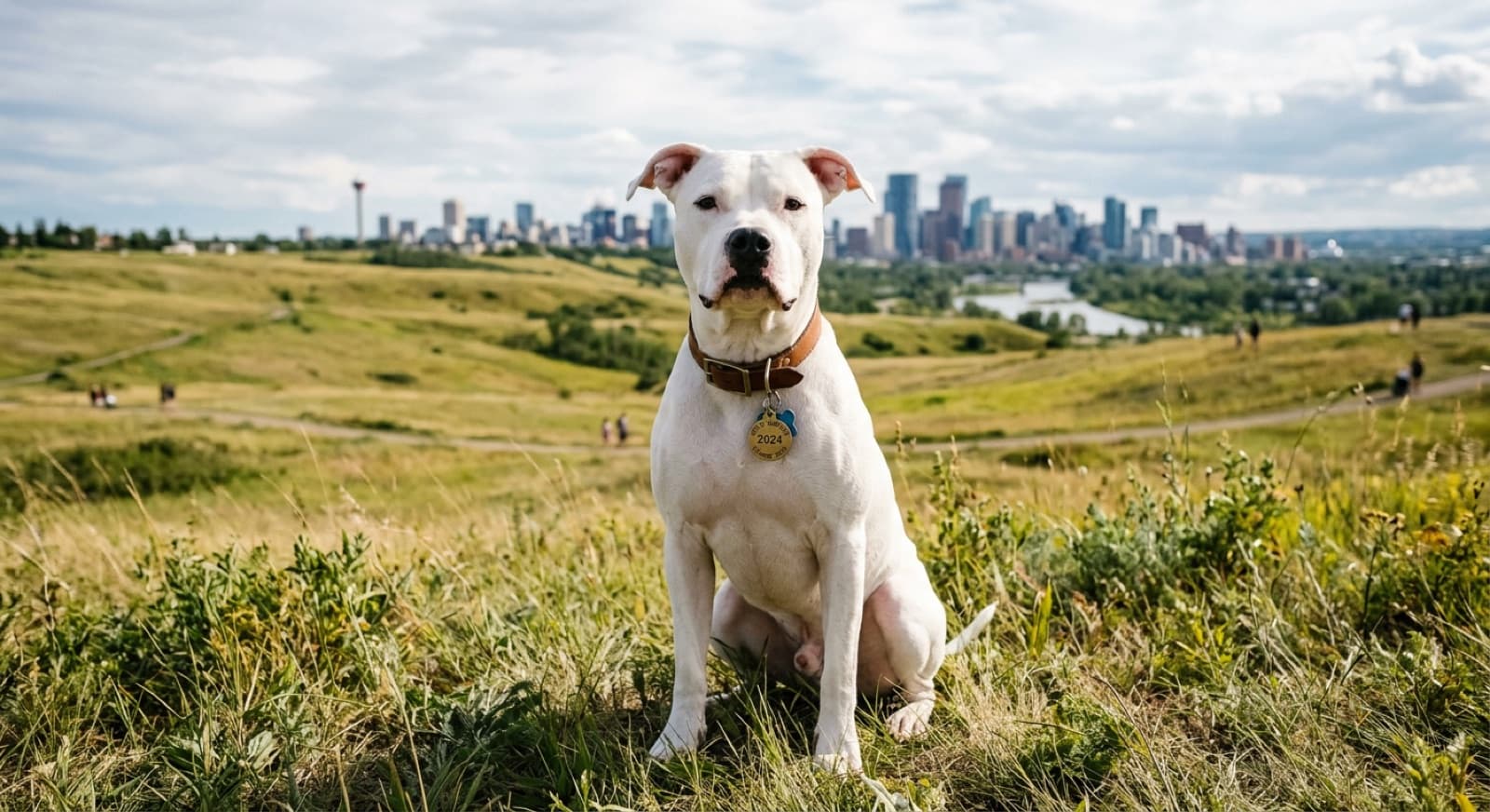
Calgary Animal Services Bylaw 23M2006: Breed-Neutral by Design
The Calgary Animal Services Bylaw is the legal document that governs dogs in the city. The number is 23M2006. It was passed in 2006 and has been amended several times since. The bylaw covers licensing, leash rules, off-leash park rules, fines, pet limits, and bite and vicious-animal rules. It does not name any breed.
Every section that addresses risk uses behaviour-based criteria. A dog at large is at large regardless of breed. A dog that bites is treated under the bite-investigation process regardless of breed. A dog formally designated dangerous or vicious gets that designation through an investigation by the Director of Animal Services, not through a breed list.
For the underlying bylaw structure that applies to every Calgary dog including Pit Bulls, see our full Calgary dog bylaws guide.
Licensing: Same tiers for all dogs. Spayed or neutered dogs pay the lower annual fee. Intact dogs pay the higher fee. The City does not ask for breed disclosure as a restriction trigger.
Leash rules: Apply to all dogs. On-leash by default in public, off-leash only in posted off-leash areas, 2 metre maximum leash length on pathways.
Bite incidents: Investigated by Animal Services and assessed under the bylaw’s vicious-animal provisions. The investigation focuses on incident facts and dog history, not breed.
Vicious-animal designation: Once issued, requires a vicious-animal license, secure containment, muzzling and a 1 metre leash in public, adult handler, and property signage. Available for any breed. Applied to specific dogs with documented incidents.
The Responsible Pet Owner (RPO) Framework
Calgary's alternative to BSL is the Responsible Pet Owner designation. It is the operational core of the Calgary Model. The RPO framework escalates obligations onto specific owners whose dogs have a documented record, regardless of what breed the dog is.
The escalation triggers are behaviour-based: a serious bite, repeated at-large violations, repeated noise complaints, or a documented attack on another animal. Once an owner is moved into the RPO track, the City can require conditions that look very similar to what BSL jurisdictions impose on entire breeds, but applied to the individual dog.
Conditions can include: mandatory muzzling in public, secure containment with specific fencing or kennel standards, 1 metre maximum leash, adult handler only, warning signage on the property, and a higher-tier license fee.
Why it works: the same dog with the same bite history gets the same conditions no matter the breed. A Labrador with two bites is treated the same as a Pit Bull with two bites. The system targets the actual risk variable, which is the specific dog and owner.
Enforcement: failure to comply with RPO or vicious-animal conditions can result in escalating fines, seizure of the dog, and in severe cases an order for euthanasia. The teeth of the bylaw are at the individual level.
What Calgary Bite Data Actually Shows
Calgary Animal Services tracks bite reports across the city. Two patterns appear in the public-facing summaries and external academic reviews.
First, total bite incidents trended downward across the years the Calgary Model has been in force, even as the city dog population grew. Higher licensing compliance, faster lost-dog recovery, and breed-neutral enforcement appear to be the drivers.
Second, when bites are normalized against the licensed population by breed, Pit-type breeds are not statistically over-represented. The breeds most often flagged in serious bites in Calgary cluster around large working and herding breeds, but the base rates are low across the board. The dominant pattern is that bites cluster around specific dogs and specific owner contexts, not specific breeds.
CDC research: the United States Centers for Disease Control concluded that bite-injury severity correlates with dog size, individual history, and human supervision, not breed. The CDC explicitly does not maintain a breed-based bite risk list.
Visual breed ID is unreliable: peer-reviewed studies comparing shelter staff visual breed ID with DNA testing of mixed-breed dogs found mismatches in roughly half of cases. Any bite statistic based on visual identification of a mixed-breed dog as “Pit Bull” is structurally noisy.
The American Veterinary Medical Association position: AVMA opposes breed-specific legislation. AVMA points to weak evidence, unreliable breed identification, and better outcomes from behaviour-based and owner-based laws.
Royal Society for the Prevention of Cruelty to Animals (UK): after decades of UK BSL covering Pit Bulls, the RSPCA position is that the law has not reduced bites. The UK is currently the most public example of BSL not delivering the promised public safety result.
Why “calgary pit bull attack” searches spike: any high-profile dog bite incident generates a search surge. The reporting often names the breed in the headline. The underlying Calgary data does not support a breed-specific causation story, but media framing creates the perception. This is a documented pattern in dog-bite media coverage across North America.
Surrounding Alberta Municipalities
Alberta has no province-wide BSL. Major Alberta cities and towns follow Calgary's breed-neutral approach. Here is the snapshot if you are moving within the region or thinking about a Pit Bull adoption with a possible relocation in mind.
The trend in Canada is away from BSL, not toward it. Ontario's 2019 repeal was a turning point. The remaining municipal BSL in Canada is concentrated in a small number of smaller centres, and most large urban bylaws have moved toward Calgary-style models.
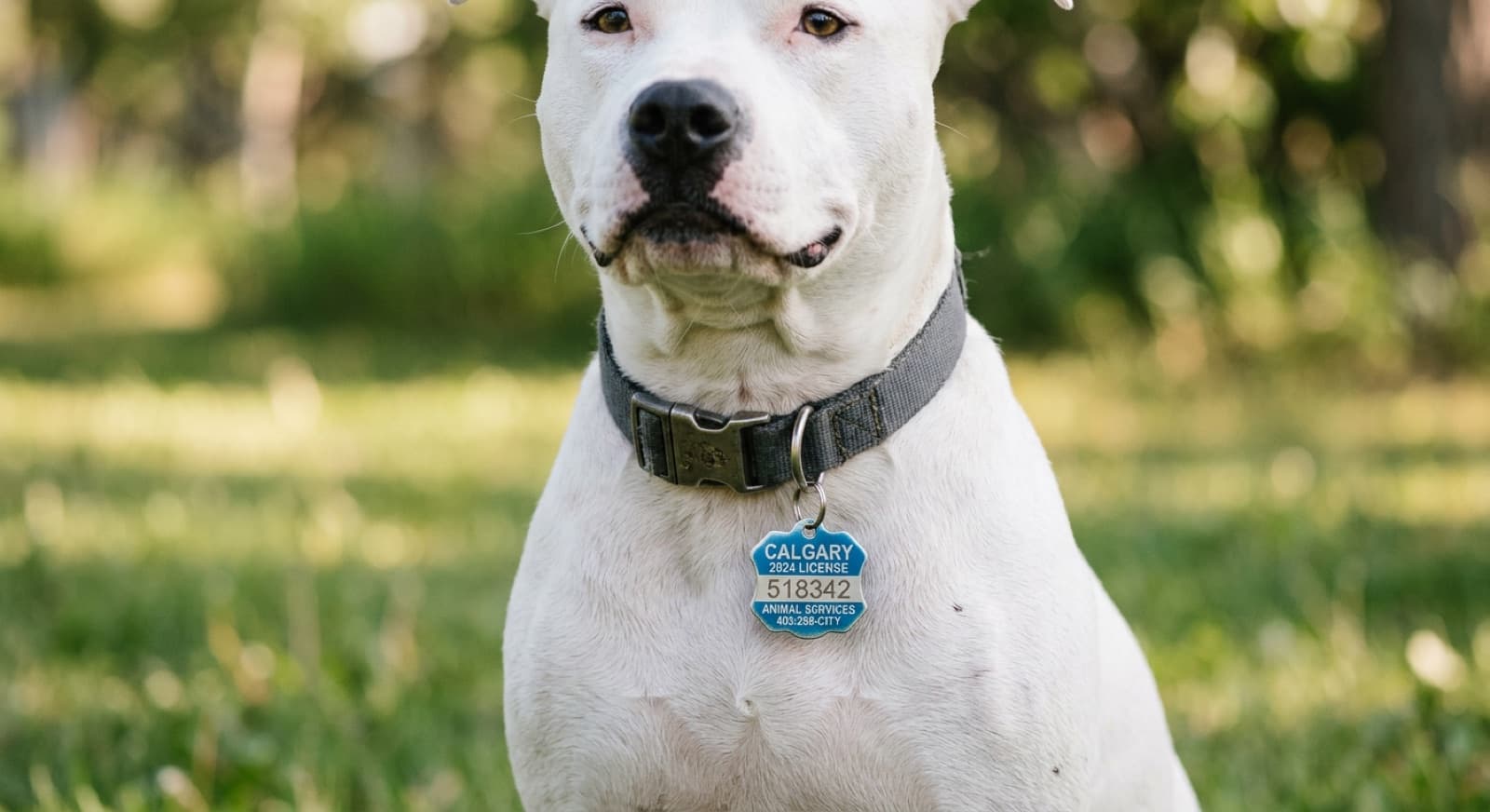
If There Is No Ban, Why Are Calgary Rescues Full of Pit Bulls?
The most common Reddit question across Calgary adoption threads is some version of “why are there so many Pit Bulls in shelters here?” The 470-comment threads that gather around the question usually surface the same five drivers. None of them are about danger.
1. Backyard breeding without spay or neuter discipline
Pit-type breeds are popular and easy to breed. Backyard breeders who do not alter their dogs flood the supply. A single unaltered female can produce 20+ puppies across her reproductive life. The math of oversupply runs through every general-intake shelter in Calgary.
2. BSL refugees from other provinces
Ontario's 2004 BSL displaced thousands of dogs before its 2019 repeal. BC condo bylaws and rental restrictions push owners to relocate. Alberta's breed-neutral position makes it a destination for owners who lost housing or jobs in BSL provinces. Some of those dogs end up in Calgary rescues when relocations fall apart.
3. Rental and condo restrictions cause surrenders
Calgary does not restrict the breed, but Calgary landlords and condo boards do. Many condo bylaws restrict guardian breeds including Pit Bulls. Insurance policies sometimes exclude or surcharge specific breeds. An owner who loses housing because of a breed restriction may surrender. Our Pit Bull housing and insurance guide covers the practical workarounds.
4. Stigma-driven impulse surrenders
Neighbour pressure, family pressure, or a single bite-scare incident drives some owners to surrender a dog who has done nothing wrong. The stigma is a social fact even where the law is breed-neutral.
5. Longer shelter stays compound the visibility
Pit-type breeds spend longer in Calgary rescues than the average dog. That is a function of demand, not supply. Once the population in any given week is counted, Pit Bulls look over-represented because they are the dogs who have been there the longest, not because they came in at higher rates.
Housing, Insurance, and ESA: Where Private Rules Bite
Calgary's breed-neutral bylaw does not extend to private contracts. This is the most important practical caveat for Pit Bull adopters.
Rental restrictions: Alberta landlords can refuse pets entirely or restrict by breed, weight, or count. Pit-type breeds are a common exclusion.
Condo bylaws: Alberta's Condominium Property Act gives condo boards broad pet-bylaw authority by majority owner vote. Many Calgary condo bylaws restrict guardian breeds. Existing pets are often grandfathered with documentation, but new adoptions are typically blocked.
Home and tenant insurance: Some Alberta insurers exclude or surcharge specific breeds, including Pit Bulls. A dog-bite exclusion on a home policy can render the policy useless if a bite occurs.
ESA registration: Emotional Support Animal status in Alberta is legally limited. Unlike service dogs (which have stronger protections under the Alberta Service Dogs Act), ESAs are not automatically protected from breed restrictions in rentals or condos. The legal landscape is complex and frequently misunderstood. Treat online “ESA registration” services with skepticism.
Always get pet approval in writing before adopting. Calgary rescues will ask for it. A handshake from a landlord is not enough. Insurance breed approval is a separate conversation from the rental approval. Verify both. See our full Pit Bull housing and insurance walkthrough.
Calgary's Pit Bull-Friendly Advocacy
Calgary has an active pro-Pit Bull advocacy community that has helped keep the city's bylaw breed-neutral over multiple review cycles. Two recurring organizing points are worth knowing about.
Bad Rap Calgary and aligned groups: volunteer advocacy organizations focused on responsible-ownership education, anti-BSL outreach, and pro-adoption events. They show up at City Hall when the bylaw goes through review.
Pit Bull Bash: a recurring Calgary advocacy event combining adoption fairs, owner education, and public visibility for adoptable Pit-type breeds. Events like these have measurably increased adoption rates for Pit-type rescues in cities that run them.
Why it matters for adopters: a strong local advocacy community means more foster homes, more training resources, more behaviour-friendly trainers, and more public pressure to keep the bylaw breed-neutral. Calgary's adopter ecosystem for Pit Bulls is stronger than most Canadian cities because of this advocacy.
What This Means If You Are Adopting a Pit Bull in Calgary
The legal news is good. The practical news is mixed. Here is the honest summary for someone working through the adoption decision.
You are legally fine. Calgary will license your Pit Bull at the same fee as any other dog. The city bylaw does not restrict your breed. The RPO designation only applies if your dog has a documented bite history.
Your housing may not be fine. Confirm in writing that your landlord or condo board allows the breed. Confirm in writing that your insurer covers the breed. Do both before adopting.
Your training matters more than the breed label. The single best predictor of a safe family dog is consistent positive-reinforcement training, early socialization, and a stable household. The breed of the dog is a smaller variable than how it is raised. See our Pit Bull training guide.
Adoption fees are reasonable. Calgary Pit Bull adoption fees through general rescues run $250 to $550. Most adoptable Pit Bulls in Calgary come with documented foster reports including kid, cat, and other-dog history. Read the foster notes before applying. Our Pit Bull adoption Calgary guide walks through every Calgary rescue with Pit-type inventory.
Pre-adoption homework matters. Read the cost-of-ownership and right-for-you guides before applying. Most surrender stories trace back to housing surprises or training underestimates, not the breed itself.
Browse adoptable Pit Bulls in Calgary
Live listings from 15+ Calgary rescues, refreshed regularly. Foster reports usually include kid history, cat history, other-dog history, and known triggers. The bylaw is breed-neutral, and Calgary rescues have a long track record of matching Pit-type breeds with the right households.
See Available Pit Bulls →Frequently Asked Questions
Is there a Pit Bull ban in Calgary?
No. There is no Pit Bull ban in Calgary, and Alberta has no provincial breed-specific legislation. The Calgary Animal Services Bylaw (23M2006) applies to all dogs equally. Calgary uses a responsible-owner licensing model. Any dog with a documented bite history can be designated a Responsible Pet Owner case or a vicious animal under the bylaw. The trigger is the dog's behaviour, not the dog's breed.
Are Pit Bulls legal in Alberta?
Yes. Pit Bulls are legal across Alberta. There is no provincial breed-specific legislation, and no major Alberta city currently has a Pit Bull ban. Cochrane, Airdrie, Strathmore, Lethbridge, Red Deer, and Edmonton all follow Calgary's lead with breed-neutral bylaws. Wood Buffalo (Fort McMurray) repealed its earlier breed restrictions in 2019.
What is the Calgary Model for dog bylaws?
The Calgary Model is a responsible-ownership framework developed under former Animal Services chief Bill Bruce. It focuses on three things: high licensing compliance funded by license fees, strong enforcement of bylaw violations regardless of breed, and education programs for owners. The model is internationally recognized in municipal animal control circles and cited as a positive Canadian case study by jurisdictions repealing or considering breed-specific legislation.
Do Calgary dog bite statistics support breed bans?
No. Calgary Animal Services bite-incident data does not support breed-specific bans. Bite rates trended downward under the responsible-owner model. When normalized for population, Pit-type breeds are not statistically over-represented in serious bites. CDC research separately found that bite-injury severity correlates with dog size and individual history, not breed. Visual breed identification of mixed-breed dogs is also unreliable, with shelter staff misidentifying a Pit-type breed in roughly half of cases compared to DNA testing.
What is the Responsible Pet Owner (RPO) designation?
The RPO designation applies to any Calgary dog owner whose dog has a documented bite history or repeated bylaw violations. It is breed-neutral and behaviour-triggered. Conditions can include mandatory muzzling in public, secure containment at home, a 1 metre leash maximum, signage on the property, and a higher-tier license fee. The escalation path is similar in effect to BSL but applied to the specific dog and owner, not the breed.
Why are so many Pit Bulls in Calgary rescues if there is no ban?
Five reasons. Backyard breeding without spay or neuter discipline creates oversupply. BSL refugees from Ontario and BC condo bylaws end up in Alberta rescues. Rental and condo breed restrictions in Calgary cause surrenders even though city bylaws do not restrict the breed. Stigma drives impulse surrenders when owners face neighbour pressure. And longer shelter stays make Pit Bulls look over-represented in any given snapshot of the shelter population. None of those reasons reflect breed danger.
Can my Calgary landlord ban Pit Bulls even though the city does not?
Yes. City bylaws do not override private rental and condo rules. Alberta landlords and condo boards can set breed restrictions, weight limits, or pet caps. Many Calgary condo bylaws restrict guardian breeds including Pit Bulls. Home and tenant insurance policies in Alberta sometimes exclude or surcharge specific breeds. The legal city of Calgary position is breed-neutral, but housing and insurance markets are not. Always get pet approval and breed approval in writing before signing a lease or buying a condo.
Does Calgary require a special license for a Pit Bull?
No. A Pit Bull is licensed the same way as any other dog in Calgary. The City does not ask for breed disclosure for the purpose of restriction. Standard license tiers apply: spayed or neutered at the lower fee, intact at the higher fee. A vicious-animal license is required only after a dog of any breed has been formally designated under the bylaw, which is a behaviour-based finding.
More Pit Bull guides for Calgary adopters
Pit Bull Adoption Calgary →
Every Calgary rescue with Pit-type inventory, adoption fees, and foster-report basics.
Pit Bull Housing & Insurance →
Calgary rental rules, condo bylaws, and insurer breed restrictions. Practical workarounds.
Is a Pit Bull Right for You? →
Honest pre-adoption self-assessment built from Calgary rescue patterns.
Pit Bull Training Calgary →
Force-free training plan, socialization windows, and Calgary trainer picks.
Bringing Home 3-3-3 →
The decompression timeline that prevents most early-surrender stories.
Pit Bull Cost of Ownership →
Adoption fee, vet, food, training, and 12-year lifetime cost in Calgary.
Pit Bull with Kids and Cats →
Compatibility, supervision rules, and introduction protocols.
Dog-Dog Aggression Management →
The honest framework on terrier reactivity, management, and training.
New dog? Start with these care guides
Everything a new adopter needs to set up a safe, happy home.