The short answer
Because a Pug's flat face makes cooling and cold-air breathing harder, Calgary's climate needs managing on both ends. In summer, heat is the top danger: walk early or late, keep it short, never leave a Pug in a car, and switch to indoor play on hot days. In winter, keep outdoor trips short below about -10 to -15°C, use a coat and booties, and enrich indoors. Year-round, use a harness, never a collar (a collar presses the airway), keep the dog lean, and pace exercise to the dog's breathing. Learn to tell normal Pug snorting from real distress, and treat blue gums or collapse as an emergency.
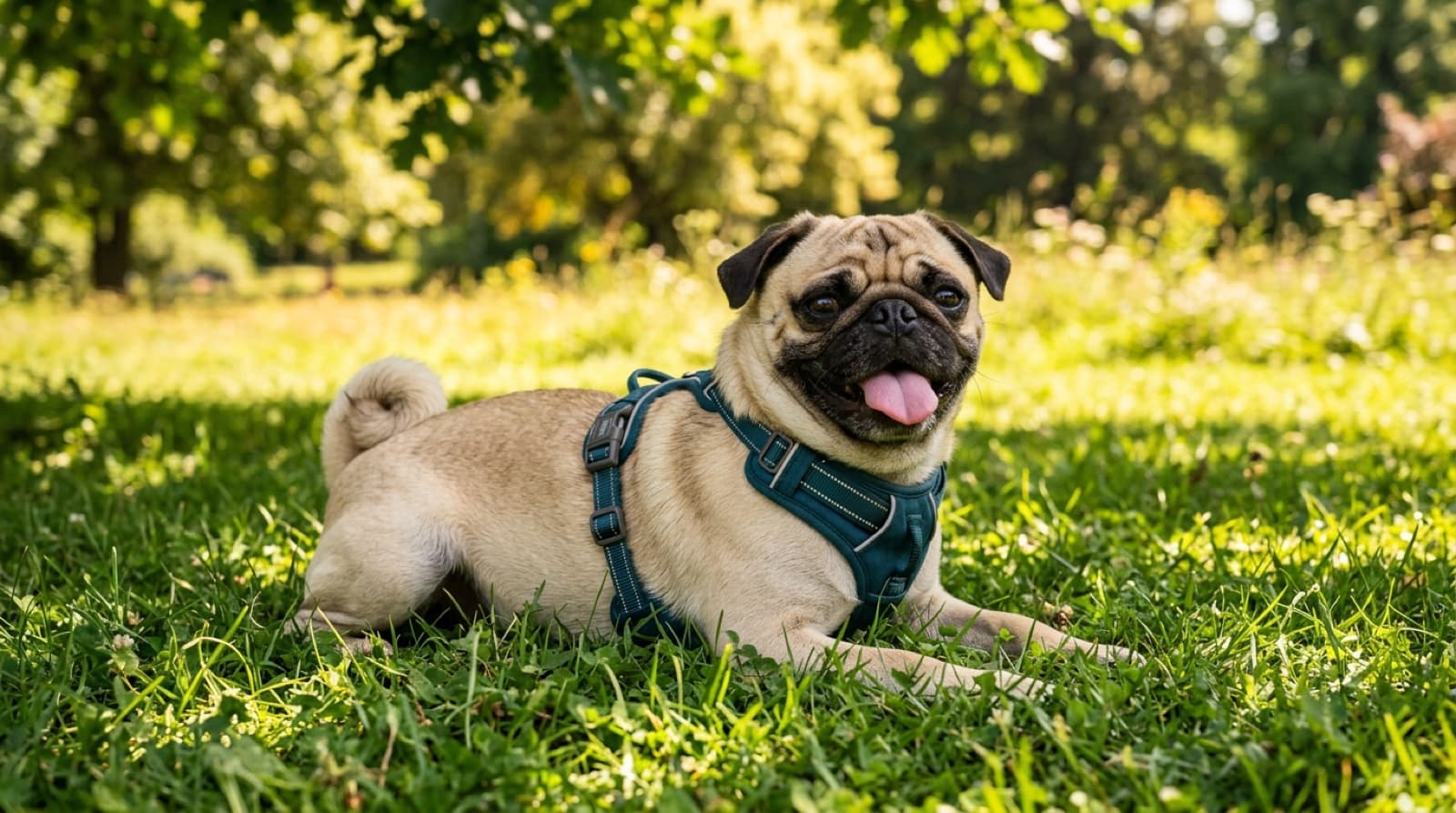
A Pug's charm and its vulnerability come from the same flat face. That shortened muzzle makes breathing less efficient, and it also makes the dog far more sensitive to temperature than a longer-nosed breed. In Calgary, that means a Pug faces two seasonal challenges most owners underestimate: dangerous summer heat and a genuinely cold winter, both of which are harder on a brachycephalic dog. The good news is that none of it is complicated. With a handful of habits, a Pug lives happily here year-round. This guide is the day-to-day playbook; for the medical side of breathing and the surgery decision, see the Pug health guide.
Summer heat: the number-one danger
Dogs cool themselves mainly by panting, and a flat-faced dog pants far less efficiently, so a Pug overheats faster than almost any other breed. Heat, not cold, is the thing most likely to put a Pug in a Calgary emergency vet. Build these habits for the warm months, including Stampede week and the hot stretches of July and August:
- Walk early or late. Early morning and after sundown only on warm days. Skip midday walks entirely in a heat wave.
- Keep it short and shaded. Choose grassy, shaded routes over hot pavement, which also burns paw pads, and bring water.
- Never leave a Pug in a parked car, not even for a few minutes with the windows cracked. Interior heat climbs dangerously fast.
- Substitute indoor play. On a hot day, sniff games and food puzzles in the air conditioning fully replace a walk.
- Know heatstroke signs: heavy or frantic panting, a bright red or bluish tongue, thick drool, stumbling, or collapse. Cool the dog with tepid (not ice-cold) water and get to a vet immediately.
There is no single safe temperature, but treat the low-to-mid 20s Celsius and up as a caution zone for a Pug, and widen that margin for an older or overweight dog, in humidity, or in direct sun.
Winter cold: short trips and the right gear
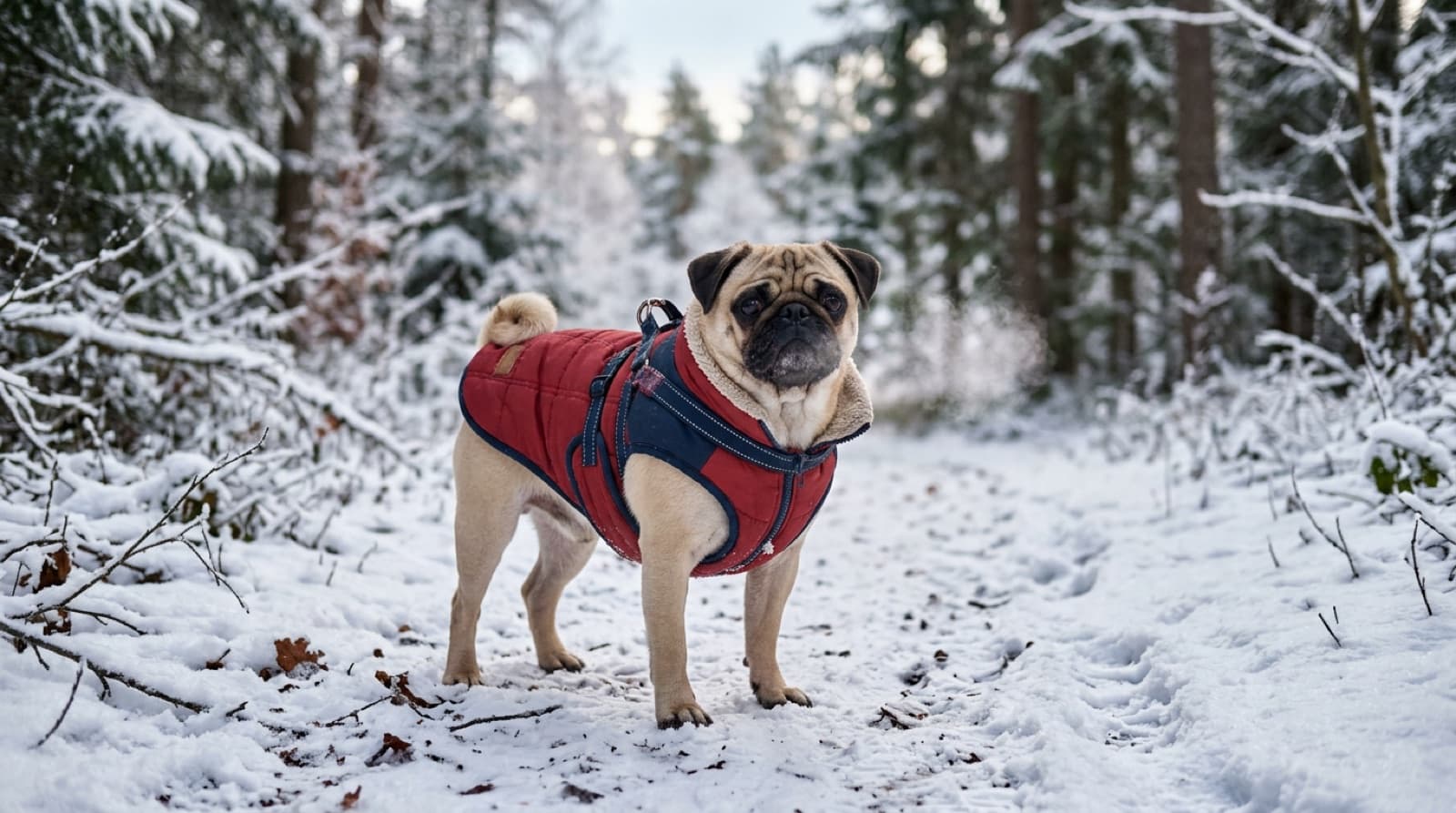
Pugs are not built for a Calgary winter. A single short coat, low body fat, short legs that sit them close to the snow, and a flat face that finds very cold air harder to process all add up to a dog that chills quickly. Below roughly -10 to -15°C, keep outdoor time short and purposeful:
- Quick potty breaks, then back inside. Save the real exercise for indoors when it is bitterly cold.
- Use a well-fitted winter coat that covers the chest and belly, where a low-slung dog loses the most heat.
- Booties protect paws from ice balls and from the road salt that coats Calgary sidewalks, which also irritates skin and stomachs if licked off.
- Enrich indoors. Food puzzles, short training games, and indoor fetch cover the exercise a Pug would otherwise get on a walk.
- Watch for shivering, lifting paws, or reluctance to move, all signs to head in. Chinooks swing Calgary temperatures fast, so check conditions before each trip.
The harness rule, exercise pacing, and weight
Always walk a Pug on a harness, never a collar. A collar presses directly on the windpipe, which is the last thing a dog with a narrow airway needs. A well-fitted harness spreads pressure across the chest so the dog breathes freely even when it pulls. For a brachycephalic breed this is airway protection, not a style choice.
Pace exercise to the breathing, not the clock. A couple of short walks and some indoor play is plenty. Go at the dog's pace, avoid hills and heat, and stop at the first sign of heavy or noisy breathing rather than pushing through. Laboured breathing means rest, not that the dog needs to build fitness. Mental enrichment tires a Pug pleasantly without airway or heat risk, which makes it the ideal default on days too hot or too cold to walk.
Keep the Pug lean. This is the cheapest, most effective breathing intervention you have. Extra weight crowds the airway and worsens heat tolerance, so measured meals, minimal treats, and a body condition where the ribs are easily felt make a real, visible difference in how a Pug breathes and moves.
Air travel and knowing when to call the vet
Flying is genuinely risky for flat-faced breeds, and many airlines restrict or ban them in cargo because heat and stress in the hold are dangerous for a compromised airway. If a Pug must fly, cabin travel is far safer than cargo; check each airline's brachycephalic policy well ahead and talk to your vet first. For most Calgary trips, a trusted sitter or breed-aware boarding is the safer, lower-stress choice.
Finally, learn the line between normal and worrying. Some snoring and snuffling is just Pug life. Breathing that is loud and laboured at rest, that does not settle after mild activity, or that comes with gagging, blue or grey gums, or collapse is not normal and needs a vet. Filming a short clip of the breathing helps your vet assess it, and vets grade brachycephalic breathing using the recognised Respiratory Function Grading Scheme. Treat bluish gums, collapse, or a genuine overheating episode as an emergency. When breathing trouble becomes persistent, the health guide covers BOAS surgery and the Calgary specialists who assess it.
Thinking about a Pug in Calgary?
If you can commit to the seasonal routine above, a Pug thrives here. They are rare in rescue, so set a free alert to hear the moment one is listed.
See the Pug breed page →Pug breathing & climate FAQ (Calgary)
How do I keep my Pug safe in Calgary summer heat?▼
Heat is the single most dangerous thing for a Pug, because a flat-faced dog cannot cool itself efficiently by panting. On warm days, walk only in the early morning or late evening, keep outings short, carry water, and stay on shaded, grassy routes rather than hot pavement. Never leave a Pug in a parked car even briefly, and skip midday walks entirely during a heat wave or Stampede-week hot spell. Watch for heavy or frantic panting, a bright red or bluish tongue, drooling, stumbling, or distress, and cool the dog and get to a vet immediately if you see them. Indoor play in the air conditioning is a perfectly good substitute for a hot-day walk.
What temperature is too hot for a Pug?▼
There is no single safe number, because humidity, exertion, weight, and the individual dog all matter, but Pugs start to struggle at temperatures that many other breeds handle comfortably. Treat anything from the low-to-mid 20s Celsius upward as a caution zone for a flat-faced dog, and be much more conservative during humidity, direct sun, or exertion. When in doubt, move the walk to early morning, keep it short, and rely on indoor play instead. An overweight or older Pug needs an even wider safety margin.
Can Pugs handle Calgary winters?▼
Not well without help. Pugs have a single short coat, low body fat, short legs, and a flat face, so they lose heat fast and cold air is harder on their airway. In a Calgary winter, especially below roughly -10 to -15 Celsius, keep outdoor trips short and purposeful: a quick potty break and back inside. A well-fitted winter coat helps, booties protect paws from ice and road salt, and indoor enrichment covers the exercise a Pug would otherwise get outside. Chinooks swing Calgary temperatures quickly, so check conditions before each outing rather than assuming.
Why should I use a harness instead of a collar on a Pug?▼
A collar puts pressure directly on the throat and windpipe, which is the last thing a dog with an already-compromised airway needs. A well-fitted harness spreads pressure across the chest and shoulders instead, so the Pug can breathe freely even if it pulls. For a brachycephalic breed this is not optional gear preference; it is basic airway protection. Attach the leash and any ID to the harness, and keep a collar only for tags if you prefer, never as the leash attachment point.
How much exercise does a Pug need, and how should I pace it?▼
Pugs need modest exercise, a couple of short walks and some indoor play a day, and the pacing matters more than the distance. Go at the dog's pace, avoid heat and steep hills, and stop at the first sign of heavy or noisy breathing rather than pushing through it. Laboured breathing is a signal to rest, not a sign the dog needs to build fitness. Mental enrichment (sniff games, food puzzles, short training sessions) tires a Pug pleasantly without airway or heat risk and is ideal on days too hot or too cold to walk.
How do I tell normal Pug breathing from a problem?▼
Some snoring, snorting, and snuffling is normal for the breed at rest and during excitement. The warning signs are breathing that is loud and laboured at rest, that does not settle after mild activity, or that comes with gagging, retching, blue or grey gums, or collapse. Sleeping in odd positions to keep the airway open, or waking gasping, also warrants a vet visit. If in doubt, film a short video of the breathing to show your vet, and treat any bluish gums or collapse as an emergency.
Why does keeping my Pug lean help its breathing?▼
Extra weight adds fatty tissue around an already-crowded airway and increases the work of breathing, so even a pound or two makes a noticeable difference in a small dog. A lean Pug breathes more easily, tolerates heat better, and moves more comfortably. Aim for a body condition where you can easily feel the ribs under a thin layer, use measured meals rather than free-feeding, and go easy on treats. Weight control is the cheapest and most effective breathing intervention you have.
Can Pugs fly on airplanes?▼
Air travel is genuinely risky for brachycephalic breeds, and many airlines restrict or ban flat-faced dogs in cargo for that reason, because heat and stress in the hold can be dangerous for a compromised airway. If a Pug must fly, cabin travel is far safer than cargo, so check each airline's brachycephalic policy well ahead, and talk to your vet first. For most Calgary trips, leaving the Pug with a trusted sitter or a breed-aware boarding option is the safer and less stressful choice.
When does a breathing problem need surgery instead of management?▼
Mild breathing noise managed with weight control and heat avoidance may never need surgery, but a Pug with loud laboured breathing at rest, frequent gagging, exercise collapse, or overheating episodes should be assessed for corrective airway surgery, ideally before secondary changes set in. This is a veterinary decision, best made with a Calgary surgical specialist who can grade the airway. Our Pug health guide covers BOAS surgery, the specialist referral hospitals, and pet insurance in detail.
More Pug guides
New dog? Start with these care guides
Everything a new adopter needs to set up a safe, happy home.