The short answer
The Pug's main health issues trace to its flat face and compact body: BOAS (brachycephalic airway syndrome), eye problems (ulcers, dry eye, pigmentary keratitis, and rare proptosis), skin-fold dermatitis in the facial wrinkles and tail curl, patellar luxation, and a strong tendency toward obesity that worsens all of the above. Rarer concerns include Pug Dog Encephalitis and hemivertebrae, and brachycephalic dogs carry somewhat higher anesthetic risk. Keeping a Pug lean, cleaning the folds, treating eye changes as urgent, and carrying pet insurance bought before any diagnosis are the levers that most protect both your dog and your budget. Always consult your Calgary vet.
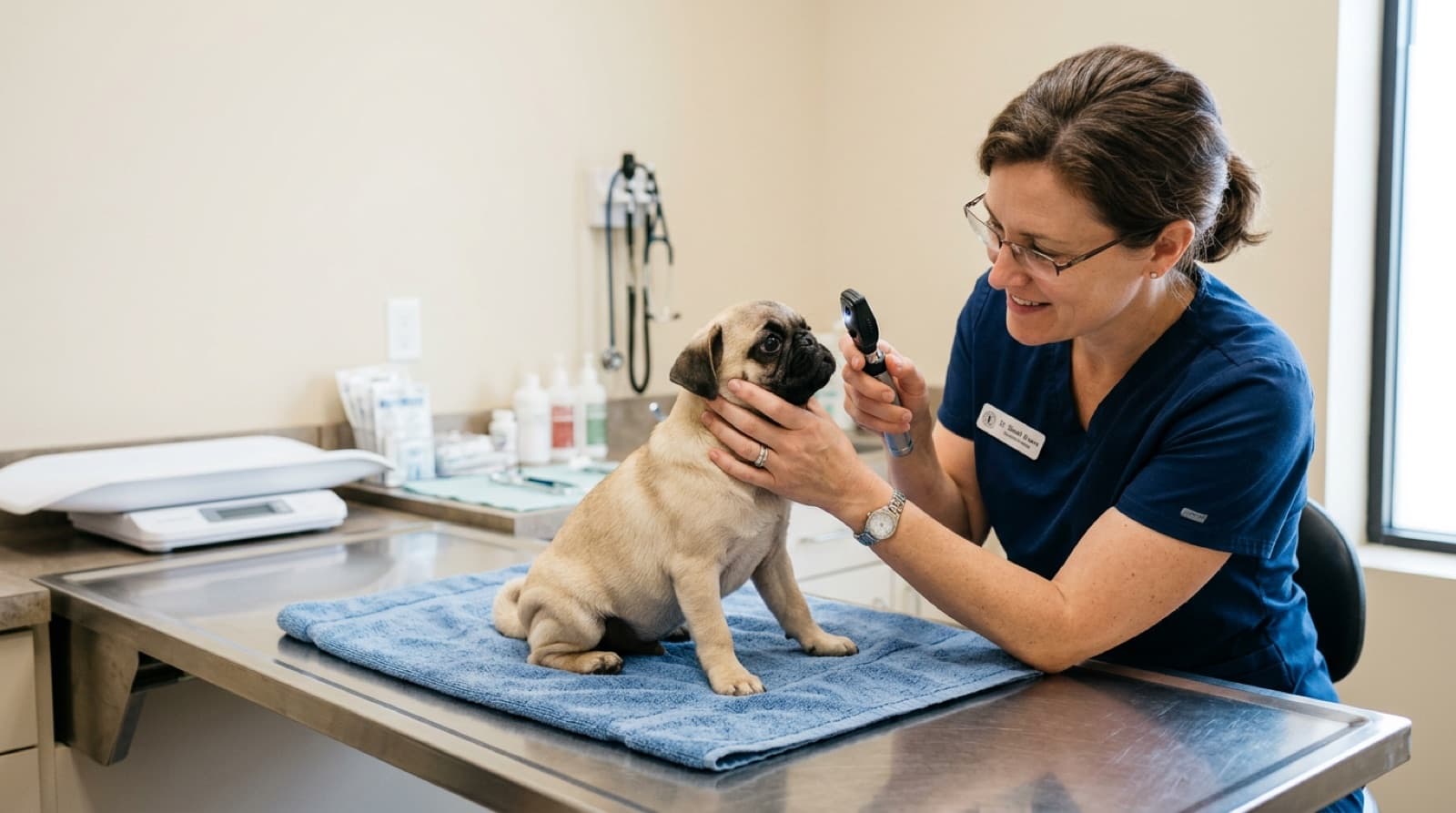
Pugs are one of the most rewarding companion dogs you can own, and also one of the most medically demanding small breeds. Almost every Pug health issue traces back to the same feature that makes them so appealing: the flat, wrinkled face and stocky body. The good news is that most of these conditions are predictable, which means you can plan for them. This guide walks through what to watch for, what it costs in Calgary, and who to call when something goes wrong. It is general information to help you be a prepared owner, not a substitute for your veterinarian's advice.
Breathing: BOAS is the defining Pug issue
Brachycephalic Obstructive Airway Syndrome (BOAS) is the condition that defines the breed medically. A Pug's skull is shortened but the soft tissue inside is not, so nostrils are often narrow, the soft palate is often too long, and the airway is crowded. The result ranges from the familiar snoring and snorting to gagging, exercise intolerance, and, at the severe end, collapse or dangerous overheating.
Mild BOAS is manageable: keep the dog lean, avoid heat and overexertion, and use a harness rather than a collar so nothing presses on the throat. More affected dogs benefit from surgery that widens the nostrils and shortens an overlong soft palate, and outcomes are best when it is done before secondary airway changes develop. The UK Kennel Club and University of Cambridge Respiratory Function Grading Scheme is the recognised framework vets use to grade brachycephalic breathing. If your Pug has loud laboured breathing at rest, frequent gagging, or any overheating or collapse episode, treat it as a reason to see your vet promptly, not something to wait out. Day-to-day breathing and Calgary's climate get their own dedicated care guide.
Eyes: prominent, exposed, and urgent when they go wrong
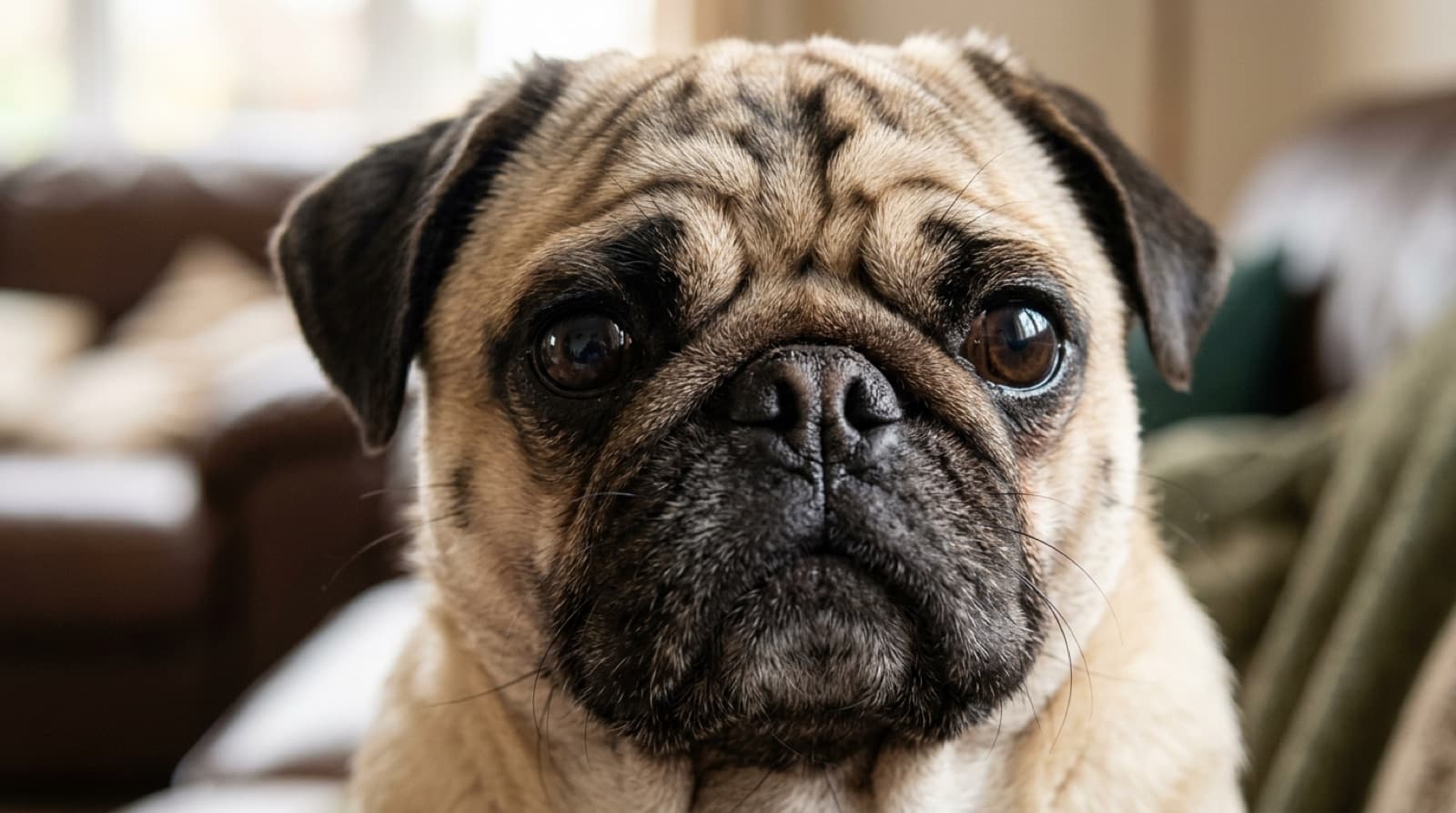
The flat face gives Pugs large, shallow-set eyes with little protection, so eye problems are common and often urgent. Watch for corneal ulcers (from scratches or dryness), dry eye, and pigmentary keratitis, where dark pigment spreads across the cornea and can gradually reduce vision. In rare trauma cases a Pug's eye can prolapse from the socket, which is a true emergency needing immediate care.
Build an eye check into your routine: keep the face clean and dry, and treat any squinting, redness, cloudiness, discharge, or pawing at an eye as urgent. Eye conditions in this breed move fast, and early treatment is usually the difference between a simple fix and a costly, vision-threatening one. Your family vet handles most eye issues and can refer to an ophthalmology service for anything complex.
Skin folds, knees, and the weight multiplier
Skin-fold dermatitis is preventable with routine. The facial wrinkles and the tight tail curl trap moisture and debris, so wipe the folds and under the nose rope a few times a week with a vet-approved cleanser and dry them well. Redness, odour, or a yeasty smell means it is time to see the vet before it becomes chronic.
Patellar luxation (a slipping kneecap) is common in Pugs, from mild and intermittent to surgical. Hip dysplasia and Legg-Calve-Perthes disease also occur. The Orthopedic Foundation for Animals (OFA) maintains the screening databases responsible breeders use for patella and hip evaluations.
Weight is the multiplier. Obesity compresses an already-tight airway, loads the knees and hips, worsens heat intolerance, and shortens lifespan. Pugs are food-driven and gain weight easily, so measured meals, minimal treats, and a lean body condition (ribs easily felt under a thin layer) are the most protective thing you can do for the breed. A lean Pug breathes better, moves better, and costs far less at the vet over its life.
Rarer risks: neurological disease and anesthesia
Pug Dog Encephalitis (necrotizing meningoencephalitis) is a rare inflammatory brain disease seen almost only in Pugs, usually in young to middle-aged dogs, causing seizures and neurological decline. It is uncommon and most Pugs never develop it, but seizures or sudden neurological changes always need prompt care. The curly tail is linked to hemivertebrae (malformed spinal bones), which occasionally causes nerve problems.
Finally, brachycephalic dogs carry somewhat higher anesthetic risk because the airway is harder to manage during induction and recovery. This is not a reason to avoid needed procedures; it is a reason to use a clinic that follows brachycephalic-aware protocols with careful airway monitoring. It is always fair to ask your vet how they handle anesthesia for flat-faced breeds.
Calgary specialty care and insurance
Your family veterinarian handles routine wrinkle, eye, weight, and airway monitoring and coordinates referrals. For surgery, ophthalmology, or complex cases, Calgary referral hospitals include Western Veterinary Specialist and Emergency Centre and VCA Canada West Veterinary Specialists. Build these relationships before you need them, so an urgent eye or breathing problem has a clear plan behind it.
Pet insurance is close to essential for this breed, and timing decides whether it helps. Any one of BOAS surgery, an eye emergency, or a patella repair can run into the thousands. Buy a policy while the Pug is young and healthy, because pre-existing conditions are excluded once diagnosed, so insurance taken out after a breathing or eye problem appears will not cover that problem. Compare lifetime coverage, per-condition caps, and the brachycephalic and bilateral-condition clauses before you choose. The adoption guide puts these costs in the context of the total price of Pug ownership.
Thinking about a Pug in Calgary?
Go in with eyes open on the health commitment above. Pugs are rare in rescue, so set a free alert to hear the moment one is listed.
See the Pug breed page →Pug health FAQ (Calgary)
What is the most common health problem in Pugs?▼
Brachycephalic Obstructive Airway Syndrome, usually shortened to BOAS, is the defining Pug health issue. The short muzzle packs normal nasal and throat tissue into a smaller space, which narrows the airway. Signs range from noisy breathing and snoring to snorting, gagging, exercise intolerance, and, in serious cases, collapse or overheating. Many Pugs live comfortably with mild BOAS through weight control and heat management, while more affected dogs benefit from corrective surgery. Any new or worsening breathing difficulty warrants a vet visit.
What is BOAS surgery and does my Pug need it?▼
BOAS surgery typically widens the nostrils and trims an overlong soft palate so air moves more freely, and it is most effective when done before secondary airway changes set in. Not every Pug needs it: mild cases are often managed with weight control and avoiding heat and overexertion. Dogs with loud laboured breathing at rest, frequent gagging, exercise collapse, or overheating episodes are the ones that usually benefit. This is a decision for your vet and, ideally, a referral to a Calgary surgical specialist who can grade the airway and advise. Do not treat it as optional cosmetic surgery, and do not delay if a dog is clearly struggling.
Why are Pug eyes such a problem?▼
The same flat face that shortens the muzzle also gives Pugs large, prominent, shallow-set eyes with limited protection. That leads to a high rate of corneal ulcers, dry eye, and pigmentary keratitis (dark pigment creeping across the cornea that can reduce vision). In extreme cases a Pug's eye can prolapse from its socket after trauma, which is a genuine emergency. Keep the face clean, watch for squinting, redness, cloudiness, or pawing at an eye, and treat any eye change as urgent. Early treatment usually saves both comfort and vision.
How do I care for a Pug's wrinkles and skin?▼
The facial wrinkles and the tight tail curl trap moisture, skin oils, and debris, which leads to skin-fold dermatitis if neglected. Wipe the facial folds and the area under the nose rope a few times a week with a vet-approved cleanser and dry them thoroughly, and check the tail fold too. Signs of trouble are redness, odour, a yeasty smell, or the dog rubbing its face. Consistent fold care prevents most infections; recurrent or severe cases need a vet, since chronic dermatitis is both uncomfortable and expensive to chase.
Are Pugs prone to knee and joint problems?▼
Yes. Patellar luxation, where the kneecap slips out of its groove, is common in Pugs and other small breeds and ranges from mild and intermittent to severe enough to need surgery. Hip dysplasia and Legg-Calve-Perthes disease also occur. Keeping a Pug lean is the single most protective thing you can do, since every extra pound loads the joints and the airway. Your vet can grade a luxating patella and advise whether monitoring or surgery is the right path.
Why does weight matter so much for a Pug?▼
Obesity is the multiplier that makes every other Pug problem worse. Extra weight compresses an already-compromised airway, loads the knees and hips, worsens heat intolerance, and shortens lifespan. Pugs are food-motivated and gain weight easily, so measured meals, limited treats, and a lean body condition are non-negotiable. You should be able to feel the ribs easily under a thin layer. A lean Pug breathes better, moves better, and costs less at the vet over its life.
What is Pug Dog Encephalitis?▼
Pug Dog Encephalitis (PDE), also called necrotizing meningoencephalitis, is a rare but serious inflammatory brain disease seen almost exclusively in Pugs. It typically appears in young to middle-aged dogs and can cause seizures, disorientation, and neurological decline. It is uncommon, and most Pugs never develop it, but any seizures or sudden behavioural or neurological changes need prompt veterinary attention. Pugs can also develop hemivertebrae (malformed spinal bones linked to the curly tail), which occasionally causes nerve issues.
Is anesthesia riskier for Pugs?▼
Brachycephalic dogs carry somewhat higher anesthetic risk because their airways are harder to manage during induction and recovery. This does not mean Pugs cannot be safely anaesthetized; it means the veterinary team should use brachycephalic-aware protocols, careful airway monitoring, and attentive recovery. It is a reasonable question to ask your clinic before any procedure, and a reason many owners choose a practice or a specialist experienced with flat-faced breeds for surgery.
Where can I take a Pug for specialist care in Calgary?▼
For surgery, ophthalmology, or complex cases, Calgary has referral hospitals including Western Veterinary Specialist and Emergency Centre and VCA Canada West Veterinary Specialists, which offer surgical and specialist services your family vet can refer you to. Your regular veterinarian handles routine wrinkle, eye, weight, and airway monitoring and coordinates any referral. Build the relationship early so you have a plan in place before an urgent eye or breathing problem arises.
Is pet insurance worth it for a Pug?▼
For this breed, generally yes, and timing is everything. Pugs carry a higher-than-average chance of airway, eye, skin, and orthopaedic costs, any one of which can run into the thousands. Buy insurance while the dog is young and healthy, because pre-existing conditions are excluded once diagnosed, so a policy taken out after a breathing or eye problem appears will not cover that problem. Compare lifetime coverage and per-condition caps, and read the brachycephalic and bilateral-condition clauses carefully before choosing.
How long do Pugs live?▼
Pugs commonly live 12 to 15 years, and a lean, well-managed Pug with good airway and eye care can reach the upper end of that range. Weight control, proactive eye and skin care, heat and cold management, and staying ahead of dental disease are the levers that most affect both lifespan and quality of life. Consult your Calgary vet for an individualised care and screening plan for your specific dog.
More Pug guides
New dog? Start with these care guides
Everything a new adopter needs to set up a safe, happy home.