The short answer
Rhodesian Ridgebacks are generally hardy, but two conditions stand out. Dermoid sinus is a breed-linked defect along the spine that reputable breeders screen for and that usually needs surgery. And as a large, deep-chested breed, the Ridgeback is at real risk of bloat (GDV), a stomach emergency: learn the signs (enlarging belly, unproductive retching, drooling, restlessness) because a bloating dog can go into shock within an hour or two. Also watch for hip dysplasia and degenerative myelopathy. This is general information, not veterinary advice: build a health plan with your Calgary vet, and know where your nearest 24-hour emergency vet is before you need it.
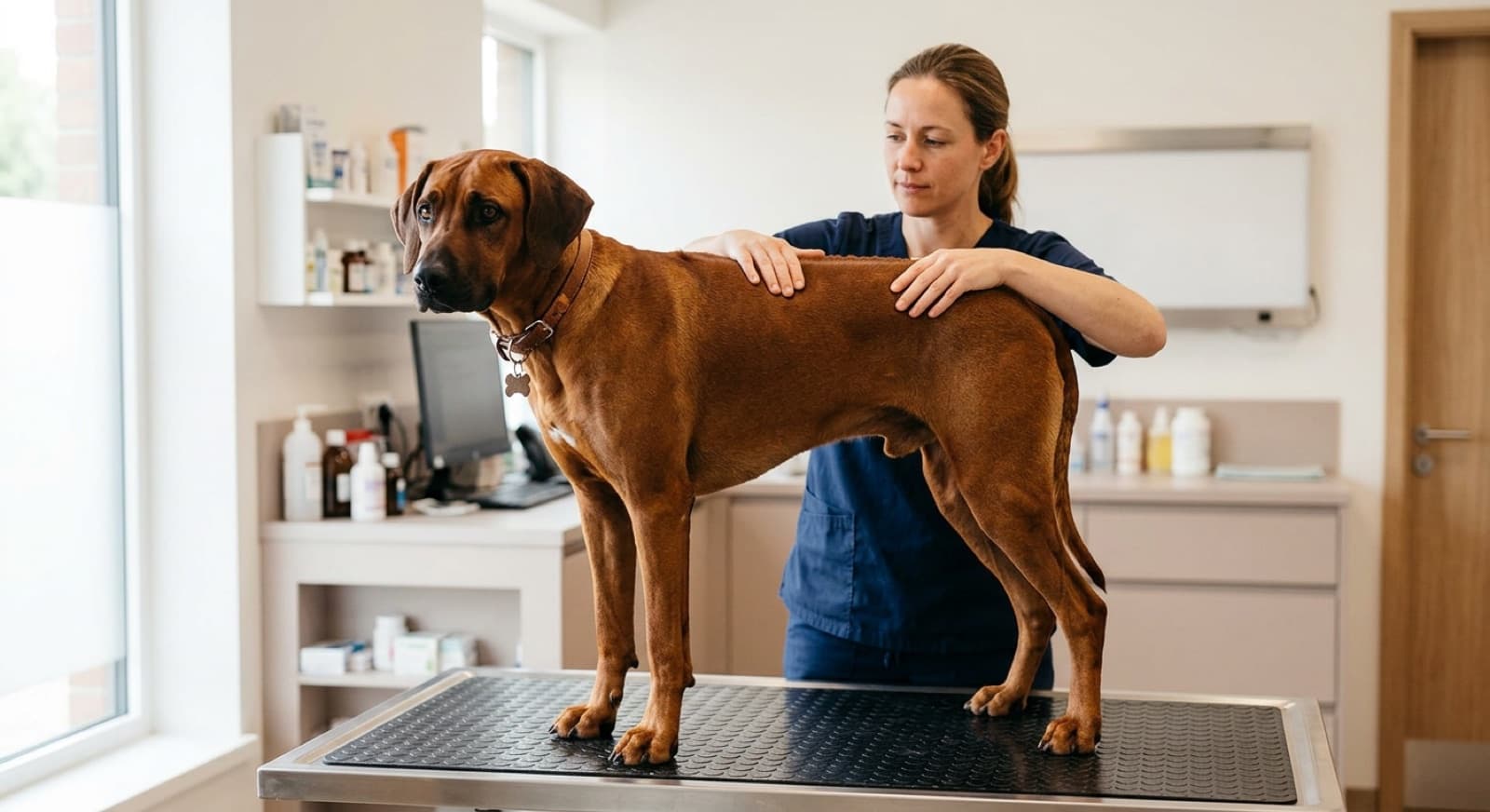
The Rhodesian Ridgeback is, for the most part, a solid and athletic breed with a good working lifespan. But two health issues deserve real attention from any owner: a defect that is largely unique to the breed, and a body shape that carries a genuine emergency risk. Understanding both, plus the everyday large-breed concerns, is what separates an owner who catches a problem early from one who does not. This guide walks through each with authoritative sources, then covers preventive care in Calgary.
Dermoid sinus: the breed-linked defect
Dermoid sinus is the condition most associated with the breed. It is a congenital defect, present from birth, in which a narrow tube-like tract runs from the surface of the skin down toward the tissues along the spine. It forms during development and is connected to the same region that produces the breed's signature ridge. Because that tract can trap debris, become infected, or in some cases reach the spinal cord, it usually needs to be surgically removed.
Responsible breeders check puppies for dermoid sinus, and the American Kennel Club breed information reflects that it is a known breed concern. If you adopt a Ridgeback and are not sure whether it has ever been checked, your Calgary vet can examine for a dermoid sinus. This is not something to diagnose or manage at home; leave it to the vet.
Bloat (GDV): the deep-chested emergency
This is the one that can kill a dog in an afternoon. As a large, deep-chested breed, the Rhodesian Ridgeback is among the dogs at real risk of bloat, or gastric dilatation-volvulus (GDV), where the stomach fills with gas and can twist on itself. According to the American Kennel Club, deep-chested dogs face the greatest risk, and without treatment a bloating dog can go into shock in only an hour or two.
Know the warning signs (per the AKC):
- An enlarging or visibly distended abdomen
- Retching, or trying to vomit with little or nothing coming up
- Drooling or salivation
- Restlessness and pacing
- Pain when the belly is touched
If you see these signs, this is a true emergency: go straight to a 24-hour vet, do not wait to see if it passes. Treatment involves deflating the stomach and, often, a gastropexy, a surgery that tacks the stomach in place to prevent it twisting again. Ask your Calgary vet whether a preventive gastropexy makes sense for your dog, and about feeding practices that may lower risk.
Hips, joints, and degenerative myelopathy
Like most large breeds, Ridgebacks can develop hip and elbow dysplasia, joint conditions that lead to instability and, over time, arthritis. Reputable breeders screen hips and elbows through health databases such as the Orthopedic Foundation for Animals (OFA). For an adopted adult, watch for stiffness, reluctance on stairs, or trouble rising, and keep the dog lean and well-muscled, which protects joints over a lifetime.
The breed can also carry degenerative myelopathy (DM), a progressive disease of the spinal cord that causes a gradual loss of hind-end coordination and, eventually, weakness. A DNA test exists for a risk gene, and it is usually a late-onset condition. If you ever notice your Ridgeback's back legs becoming wobbly or weak, that is a vet conversation. Thyroid issues (hypothyroidism) also appear in the breed and are easily checked with bloodwork.
Preventive care and insurance in Calgary
For most of its 10-to-12-year life, a healthy Ridgeback needs standard large-breed care: routine vet visits, quality food, weight management, exercise, and prevention. The two line items that make people consider pet insurance are the bloat risk (an emergency surgery is expensive) and orthopedic problems, which can require significant treatment. Price a few Canadian insurers while your dog is young and healthy, before anything becomes pre-existing, and read what each excludes.
The single most useful preventive habit for this breed is simple: know where your nearest 24-hour emergency vet is before you ever need it, because bloat does not keep business hours. Pair that with a lean body condition and a vet you trust, and you have done most of the heavy lifting. For the adoption picture and temperament, see our Rhodesian Ridgeback adoption guide.
Thinking of adopting a Rhodesian Ridgeback?
An adopted adult from a rescue that has done a vet workup often comes with much of its health history already known, which takes the guesswork out of a breed that carries a few specific risks. See what is available across Calgary rescues.
See Calgary Rhodesian Ridgebacks →Frequently Asked Questions
What are the main health problems in Rhodesian Ridgebacks?↓
What is dermoid sinus in a Rhodesian Ridgeback?↓
Are Rhodesian Ridgebacks prone to bloat?↓
What are the warning signs of bloat I should watch for?↓
Do Rhodesian Ridgebacks get hip dysplasia or degenerative myelopathy?↓
Is pet insurance worth it for a Rhodesian Ridgeback?↓
Continue reading
Where to adopt, costs, energy, and temperament.
Live listings across Calgary rescues.
Keeping a big hound lean and well-exercised.
Protecting a short-coated African breed from the cold.
New dog? Start with these care guides
Everything a new adopter needs to set up a safe, happy home.