The short answer
Yes, St. Bernards are excellent family dogs. They are famously gentle, patient, and tolerant with children, one of the classic nanny breeds. The honest caveat is size, not temperament: a dog that can outweigh an adult should always be supervised around small children so no one is knocked over, and a family needs the space, budget, and tolerance for drool that a giant breed requires. Teach kids to respect the dog and the dog basic manners, keep the household realistic about a giant's needs, and a St. Bernard becomes a wonderfully calm, loving presence in a family home.
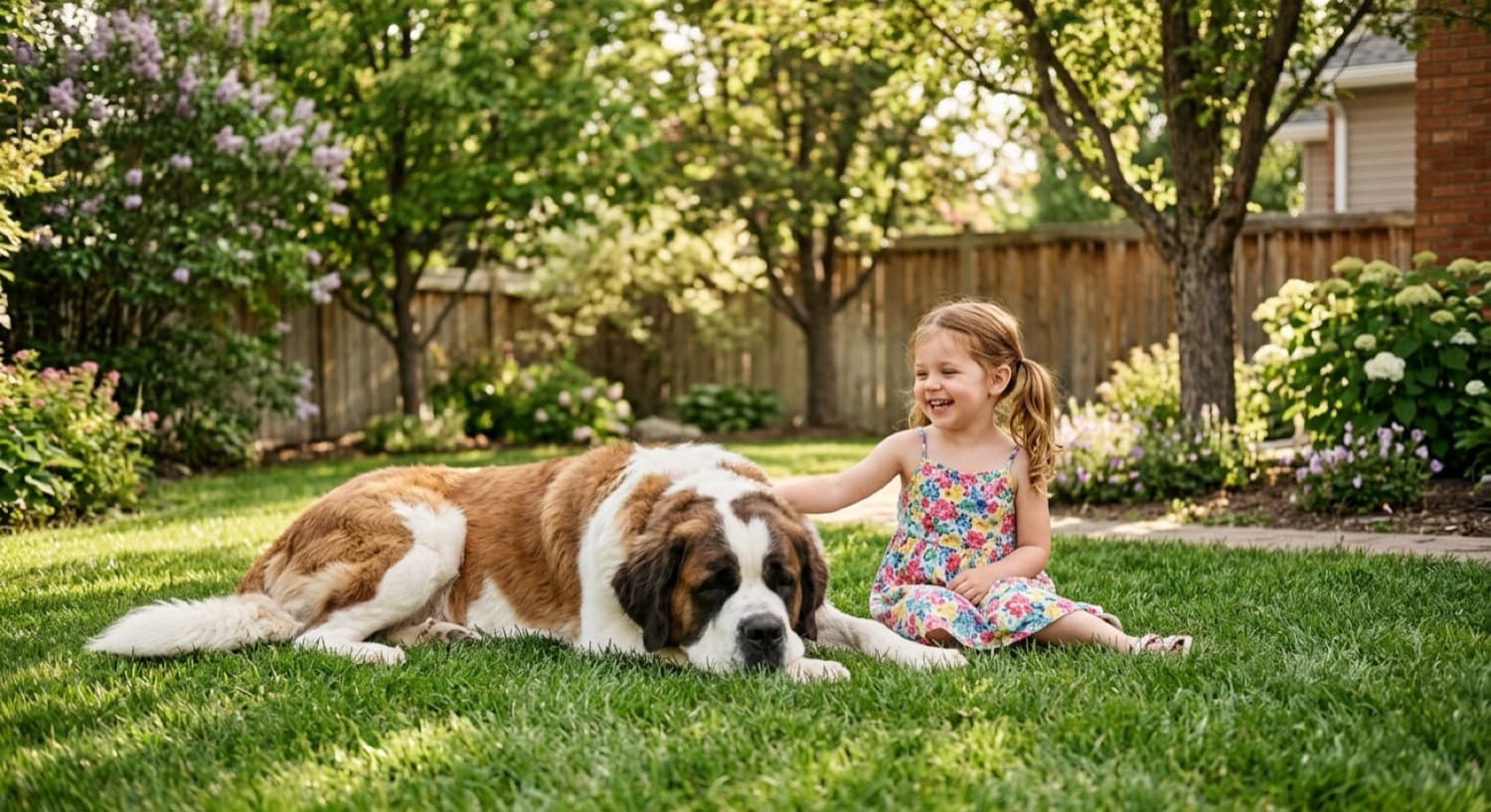
The image of a St. Bernard watching over children is one of the oldest in dog culture, and it is largely earned. This is a breed with a genuinely gentle, patient temperament that tends to be marvelous with kids. But choosing a family dog is never only about temperament, and with a Saint the size is a real part of the equation. This guide gives you both sides honestly, so a family can decide with clear eyes and set a giant breed up to thrive.
The temperament: a genuinely gentle giant
The St. Bernard's reputation with children is well founded. The American Kennel Club describes a genial giant that is watchful, patient, and careful with children, and that matches what families experience: a calm, affectionate, deeply tolerant dog that is easygoing indoors and devoted to its people. Saints are not high-strung or snappy by nature; the classic Saint is a mellow, loving presence.
That temperament is the foundation of the breed's appeal as a family dog, and it is real. A well-raised, well-socialised St. Bernard tends to take the chaos of family life in stride. But temperament alone does not make a giant breed automatically easy to have around small children, which is where the size comes in.
The size: supervision, not fear
Here is the honest part families need. A St. Bernard can outweigh an adult, and even the gentlest one is capable of accidentally knocking over a small child with a turn, a lean, or a swinging tail. This is not about the dog being dangerous; it is simple physics. The answer is straightforward: supervise interactions between a giant dog and small children, teach the dog basic manners so it does not jump or lean, and teach children to give the dog space, especially around food and rest. Done consistently, this makes a Saint a safe, gentle companion for kids.
Space matters too. A giant breed is far happier and easier in a home with room to move than in tight quarters where every turn risks a bump. If your household has the space and you build in supervision and basic training, the size becomes a manageable practical factor rather than a problem. Families that skip that planning are the ones who find a giant dog overwhelming.
The daily reality: drool, space, and calm
A St. Bernard is relatively calm and easygoing indoors and does not need intense exercise, which suits family life well, but it does need room and moderate daily walks to stay lean and healthy. Keep a growing puppy's exercise gentle to protect developing joints, and in a Calgary summer keep activity to the cooler hours, since the breed overheats easily. The everyday trade-offs are the ones common to giant breeds: the food bills, the shedding, and the drool, which is significant and permanent. A drool towel becomes a household fixture.
For a family ready for all of that, the reward is a patient, loving giant that is wonderful with children and a calm presence in the home. If the size, cost, or drool feels like too much, that is worth taking seriously now. For the fuller picture, see our St. Bernard adoption guide and our health guide.
Looking for a gentle giant for your family?
Adopting an adult St. Bernard or a Saint cross through a Calgary rescue lets you ask directly how a dog is with children, which matters more than any general rule. See who is available now.
See Calgary St. Bernards →Frequently Asked Questions
Are St. Bernards good with kids?↓
Is a St. Bernard too big for a family with young children?↓
Do St. Bernards drool a lot around the house?↓
How much space and exercise does a St. Bernard need?↓
Should a first-time owner get a St. Bernard as a family dog?↓
Continue reading
Cost, commitment, lifespan, and who the breed suits.
Heart, hips, bloat, eyes, and preventive care.
Live listings across Calgary rescues.
Browse family-friendly dogs available now.
New dog? Start with these care guides
Everything a new adopter needs to set up a safe, happy home.